
Everyone was pretty much off the boat by 9 am. Reasonable since the next load of passengers would be boarding in just 6 hours.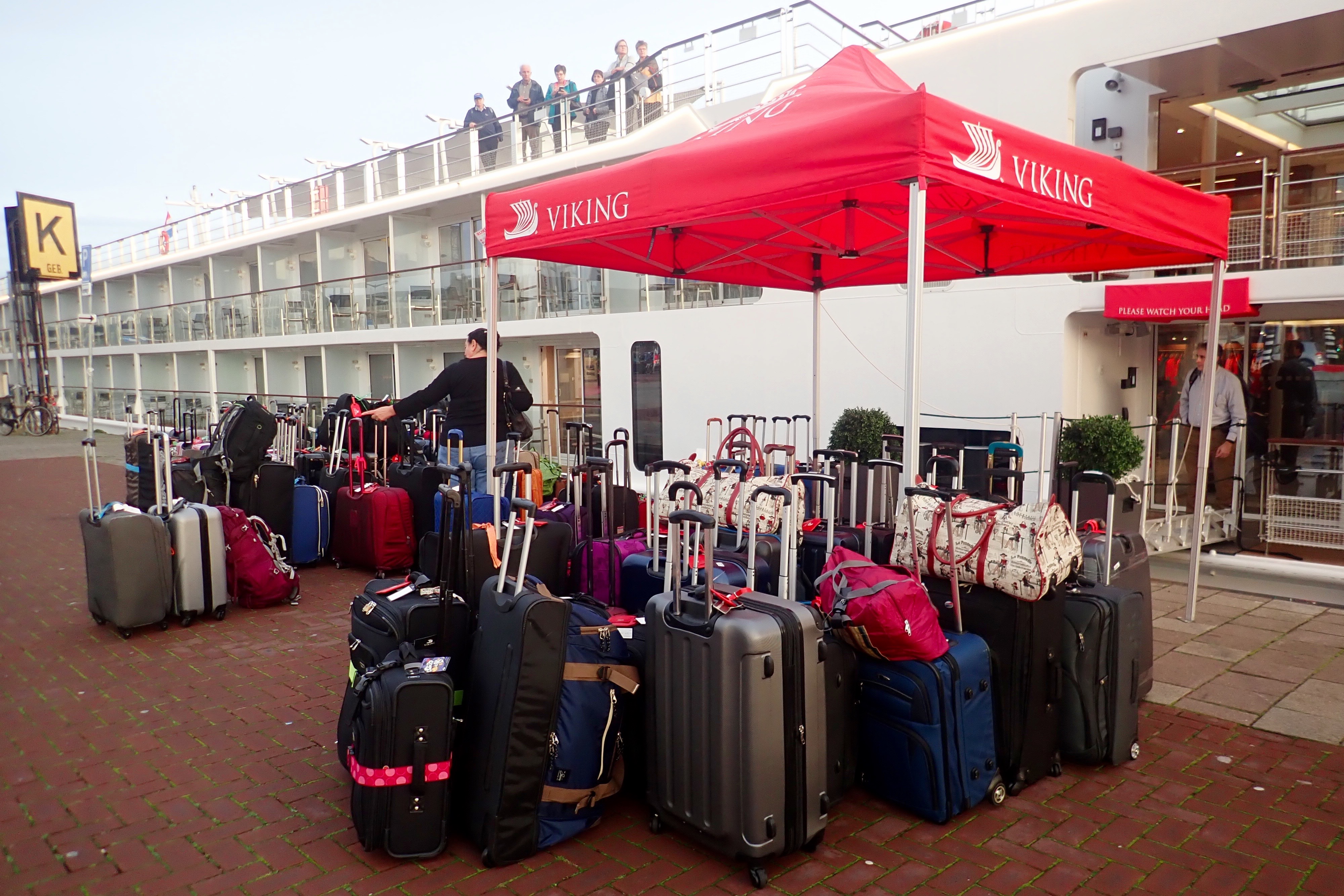
Those of us who had extended their stay in Amsterdam were transported to our hotel.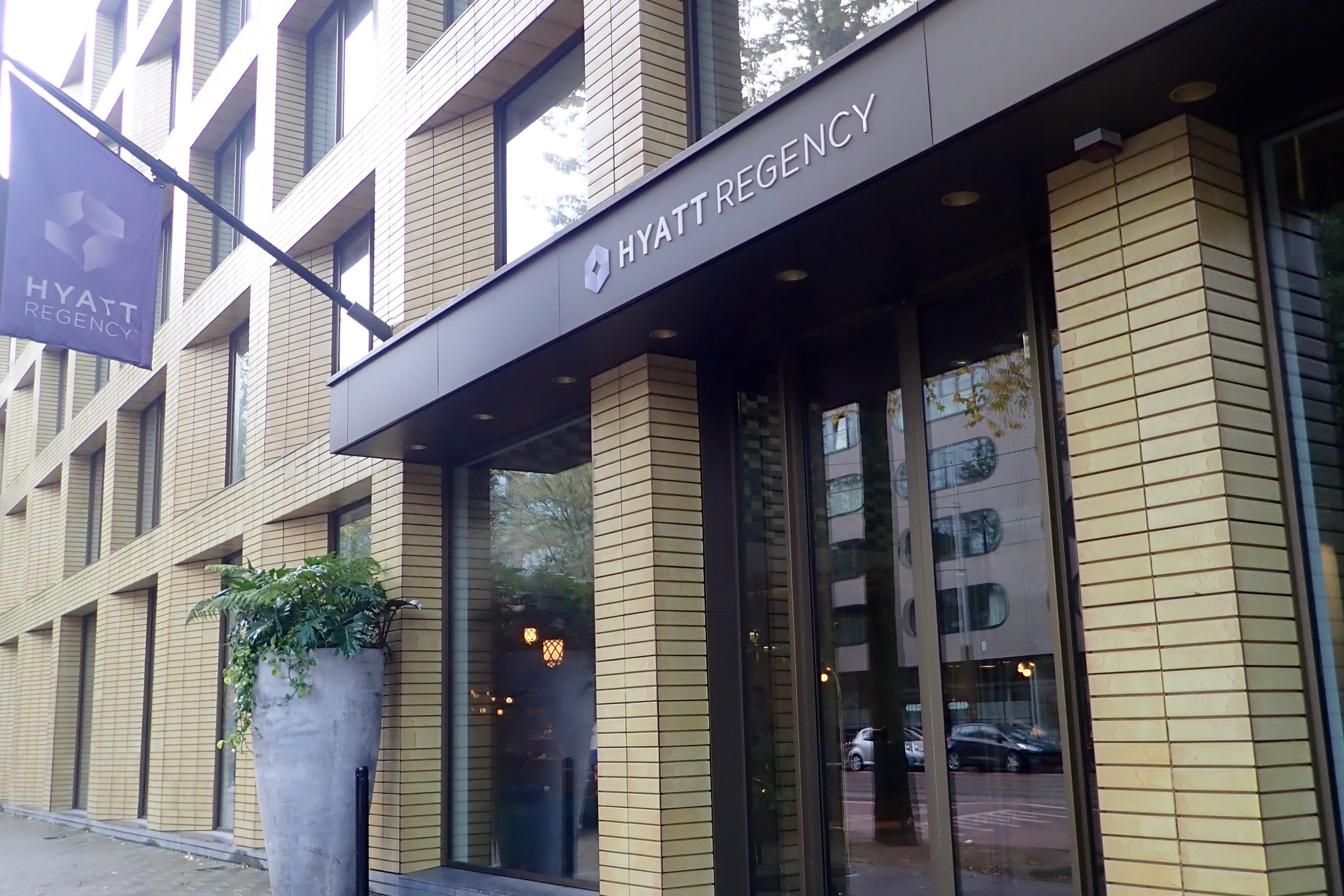
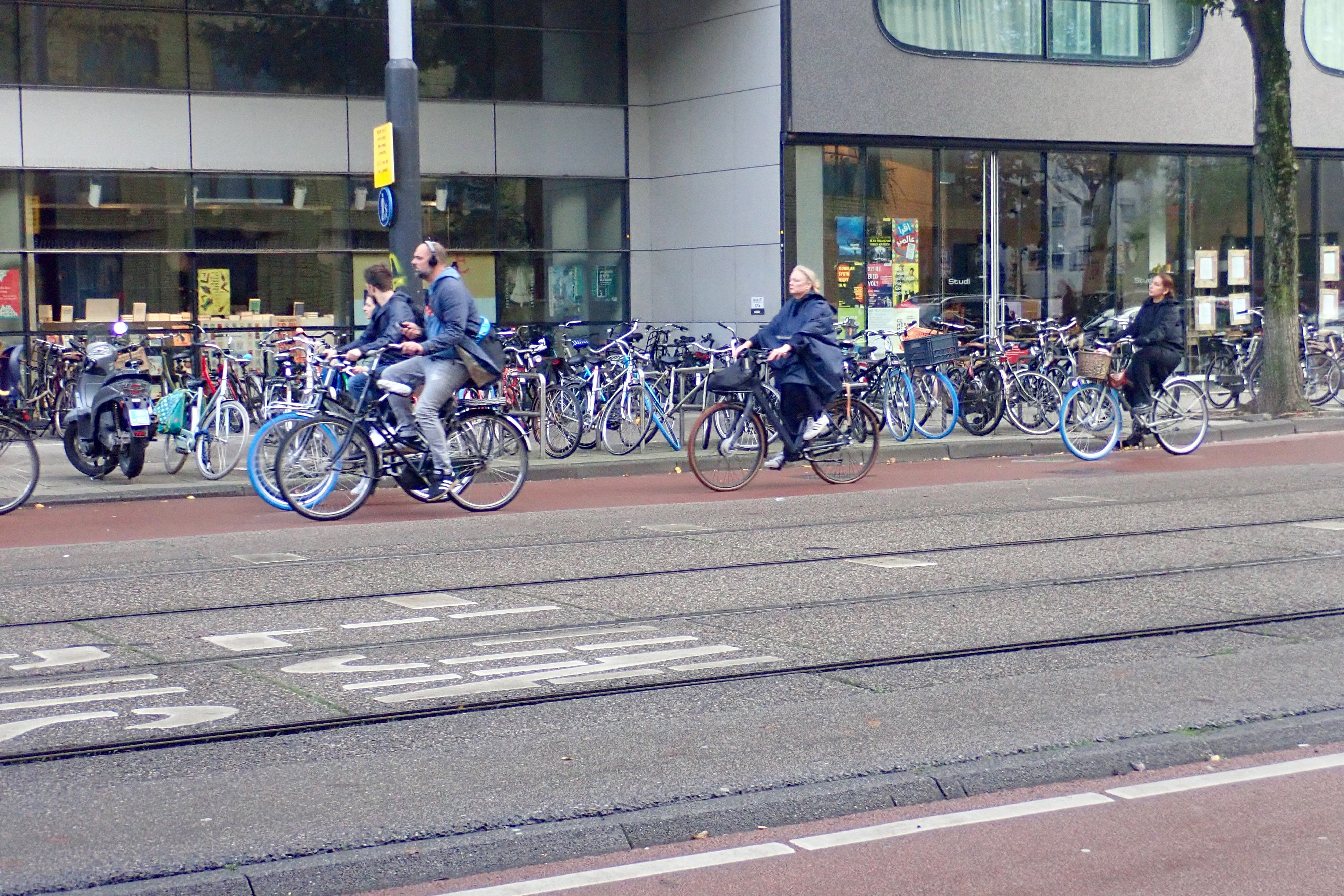
Typical traffic scenes. The reddish areas are for bicycles, skateboards, and Vespas (pedestrians take their life in their hands if you dare to set foot in this area). There is also a car parked on the sidewalk, a lane for buses/cars and tram tracks using the lanes. Everyone moves at breakneck speed. 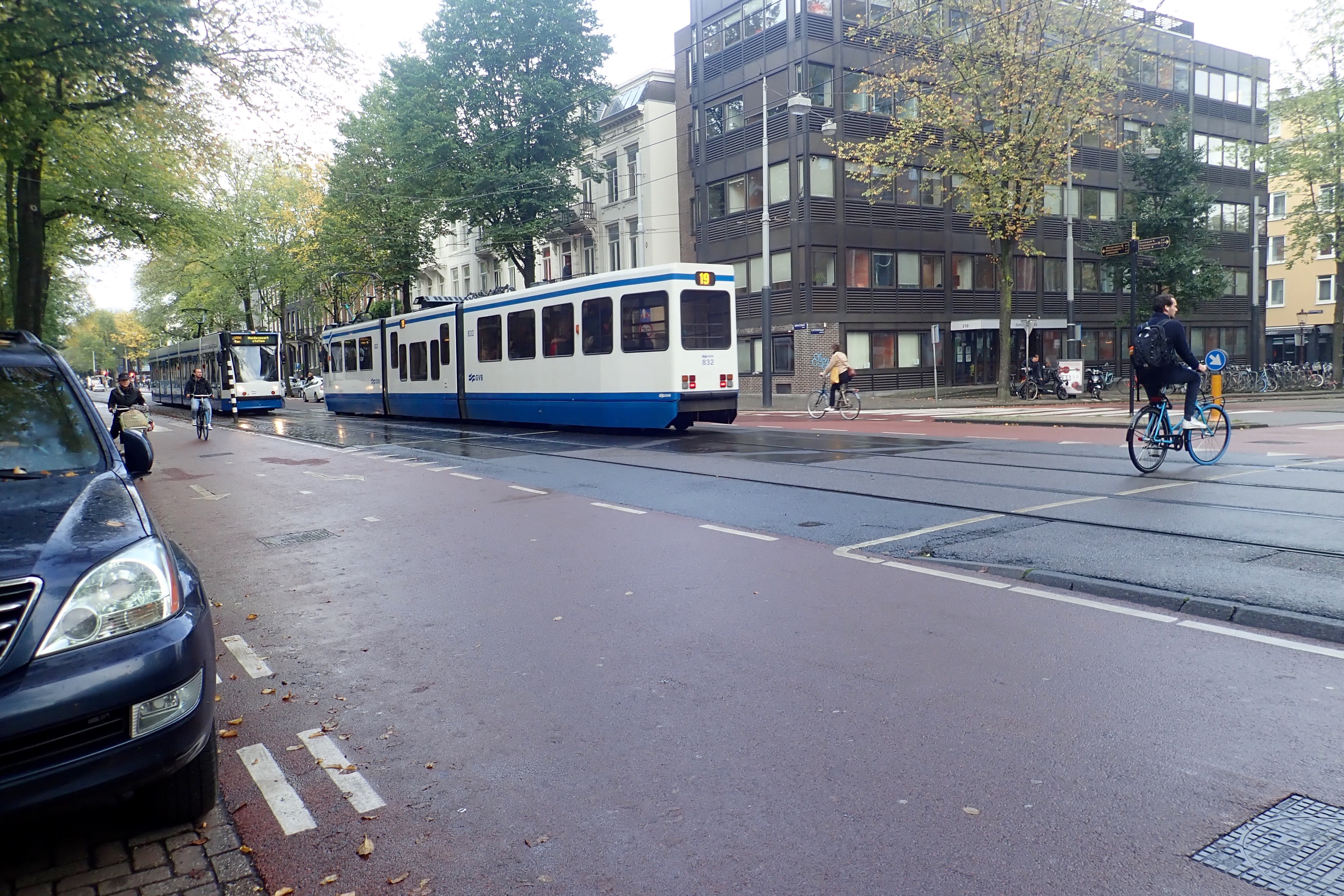
There is no jay-walking (way too dangerous), pedestrians use only the zebras (ZEB-ruhs, ZEB rhymes with Deb, aka crosswalks). There are green/red lights for bicycles, another for pedestrians. If it green walk signal starts blinking, hurry up! 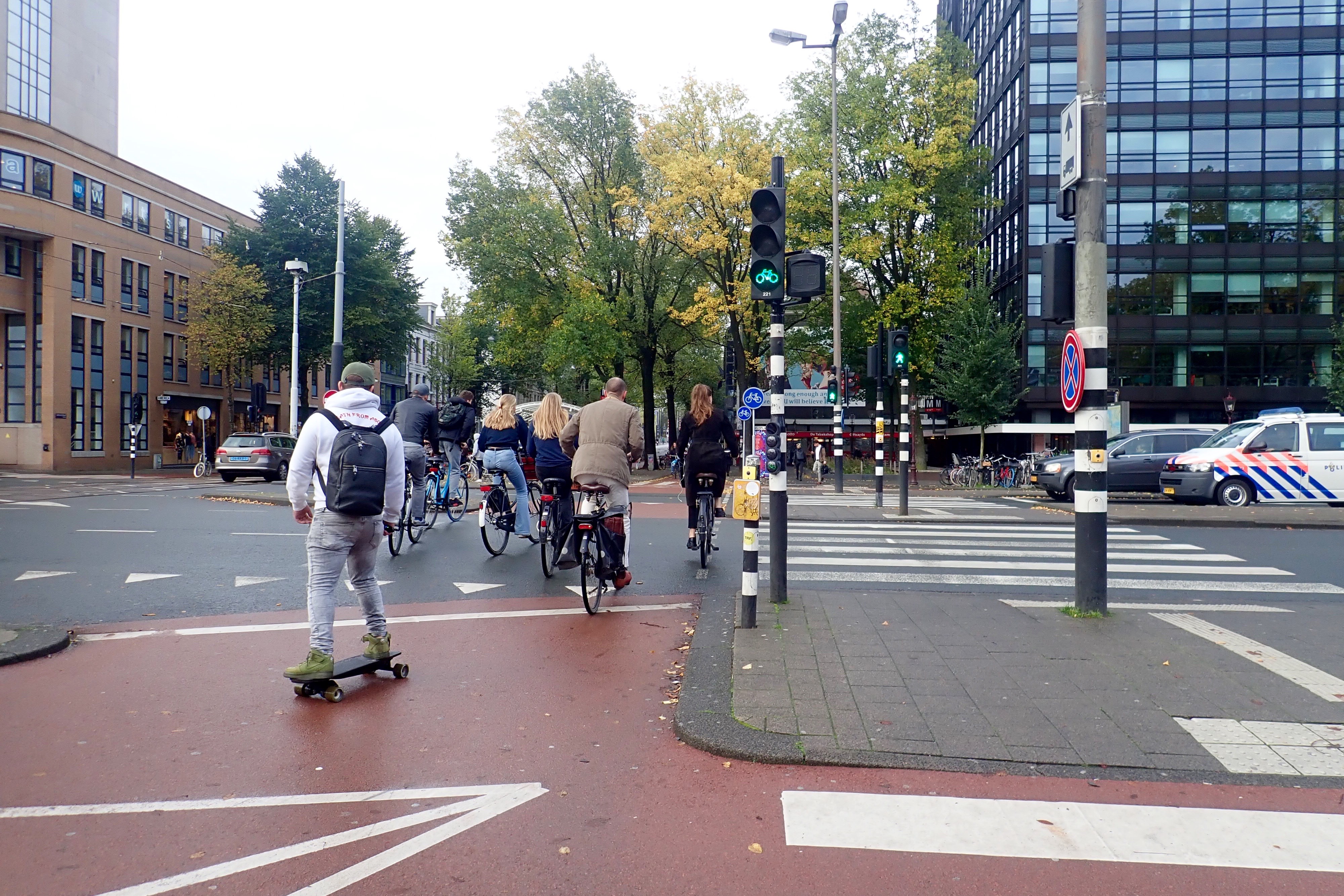
We took a walking tour in the morning. Houseboats along the canals are a popular place to live and very expensive.
This memorial stands at the site where the Nazis forced Amsterdam citizens to watch members of the Resistance get shot.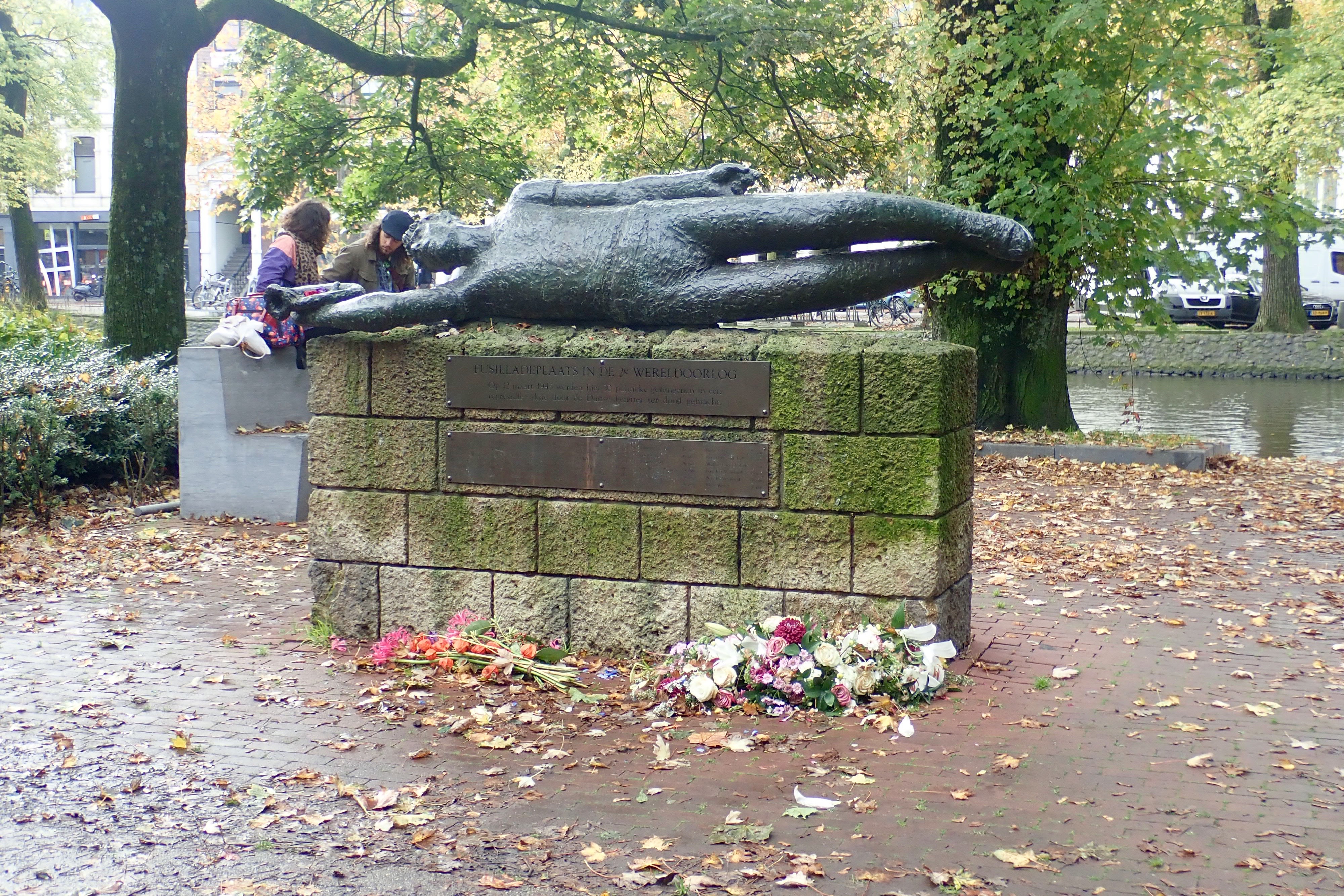
The National Gallery: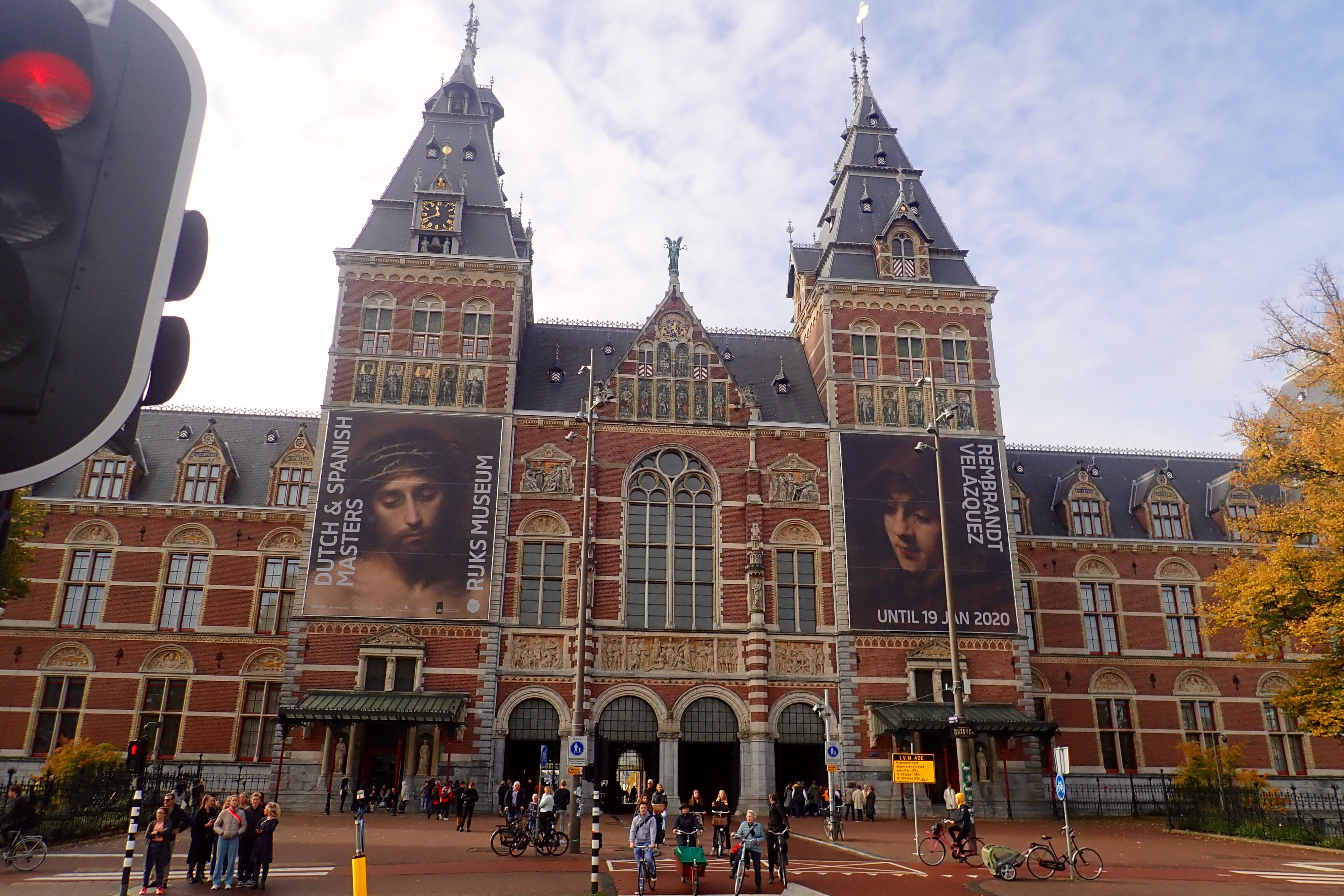
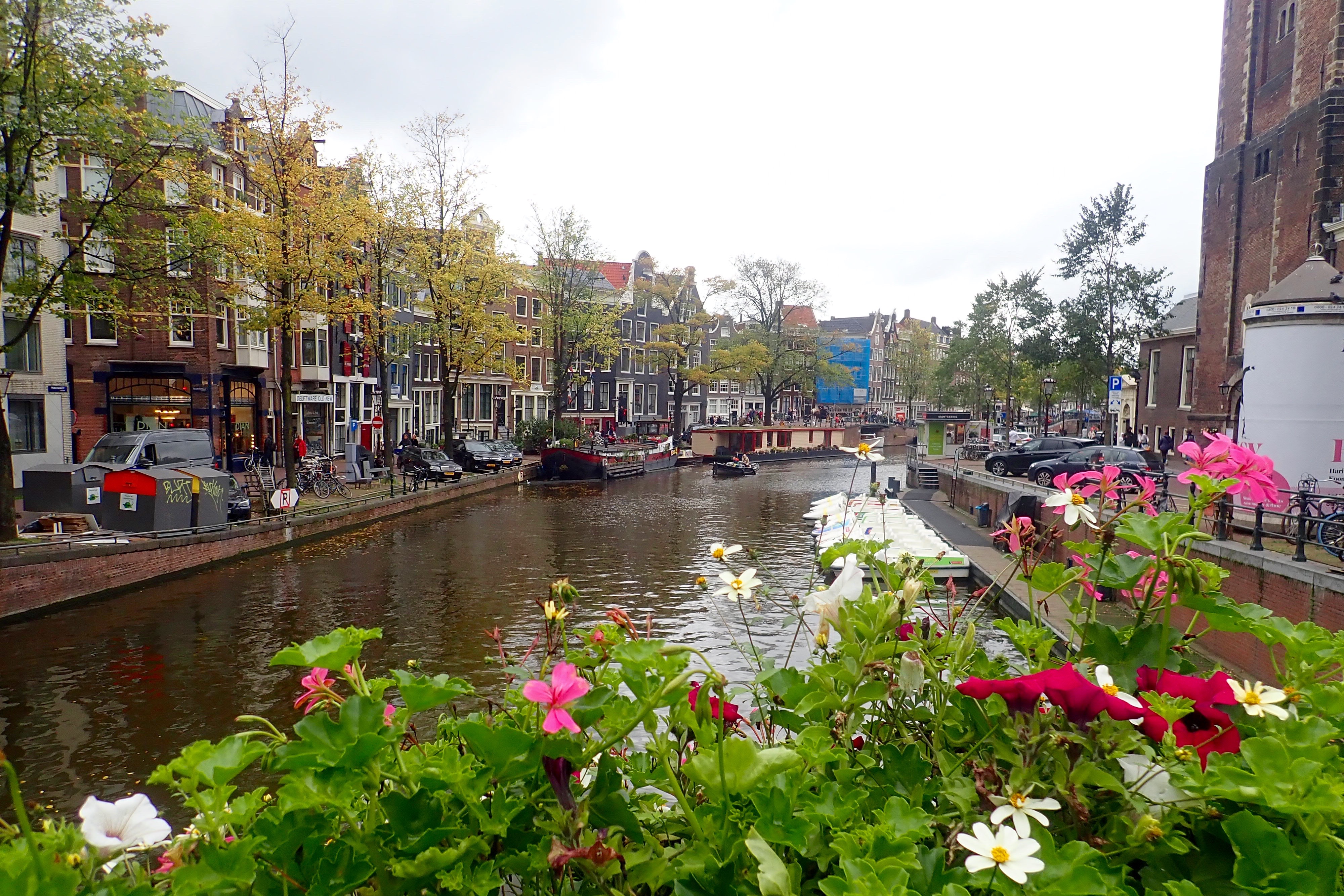
In the afternoon, we went on A Taste of Amsterdam tour and used the tram and subway system.
Our first stop was for tiny little pancakes cooked in a special cast-iron pan.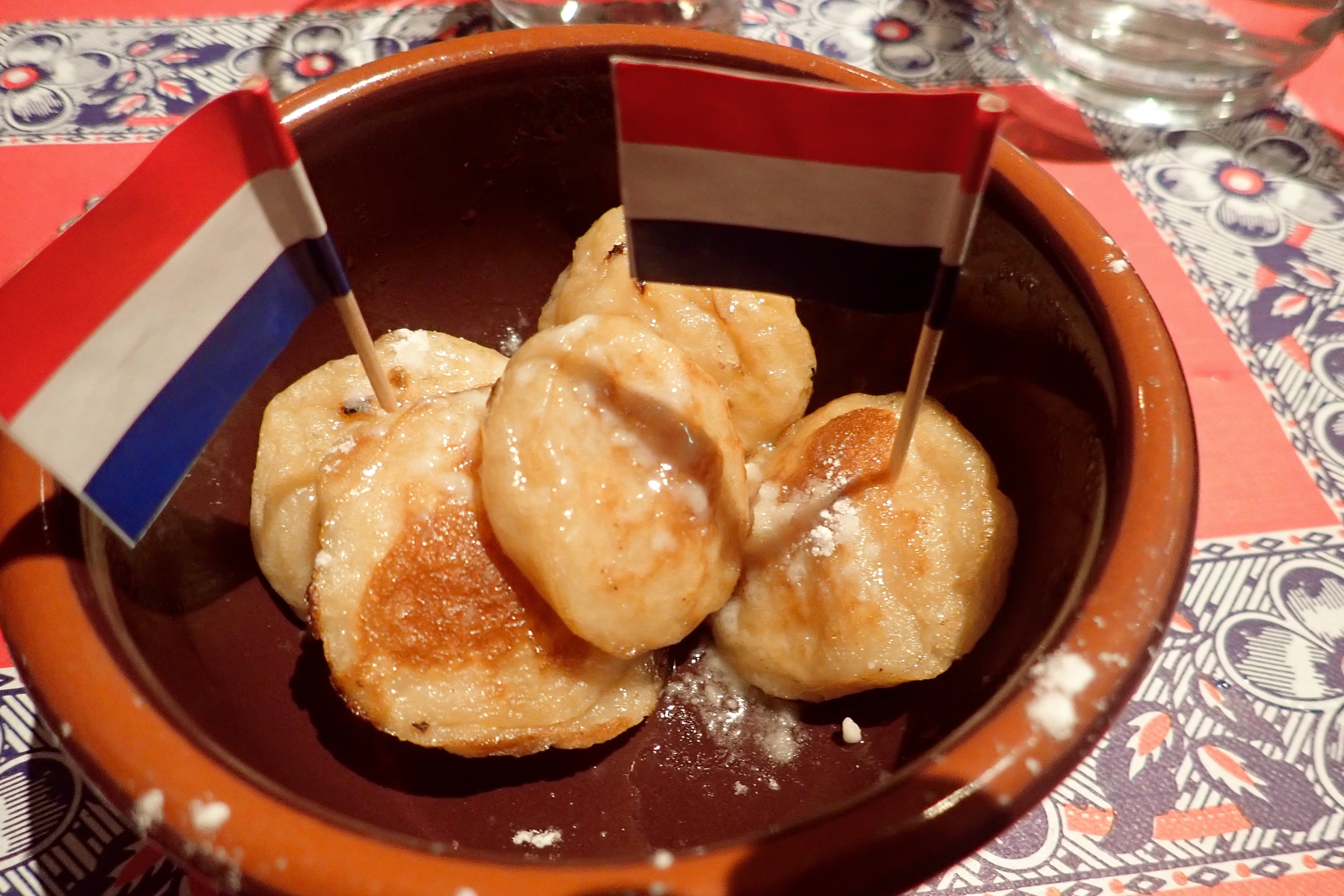
Then a cheese tasting.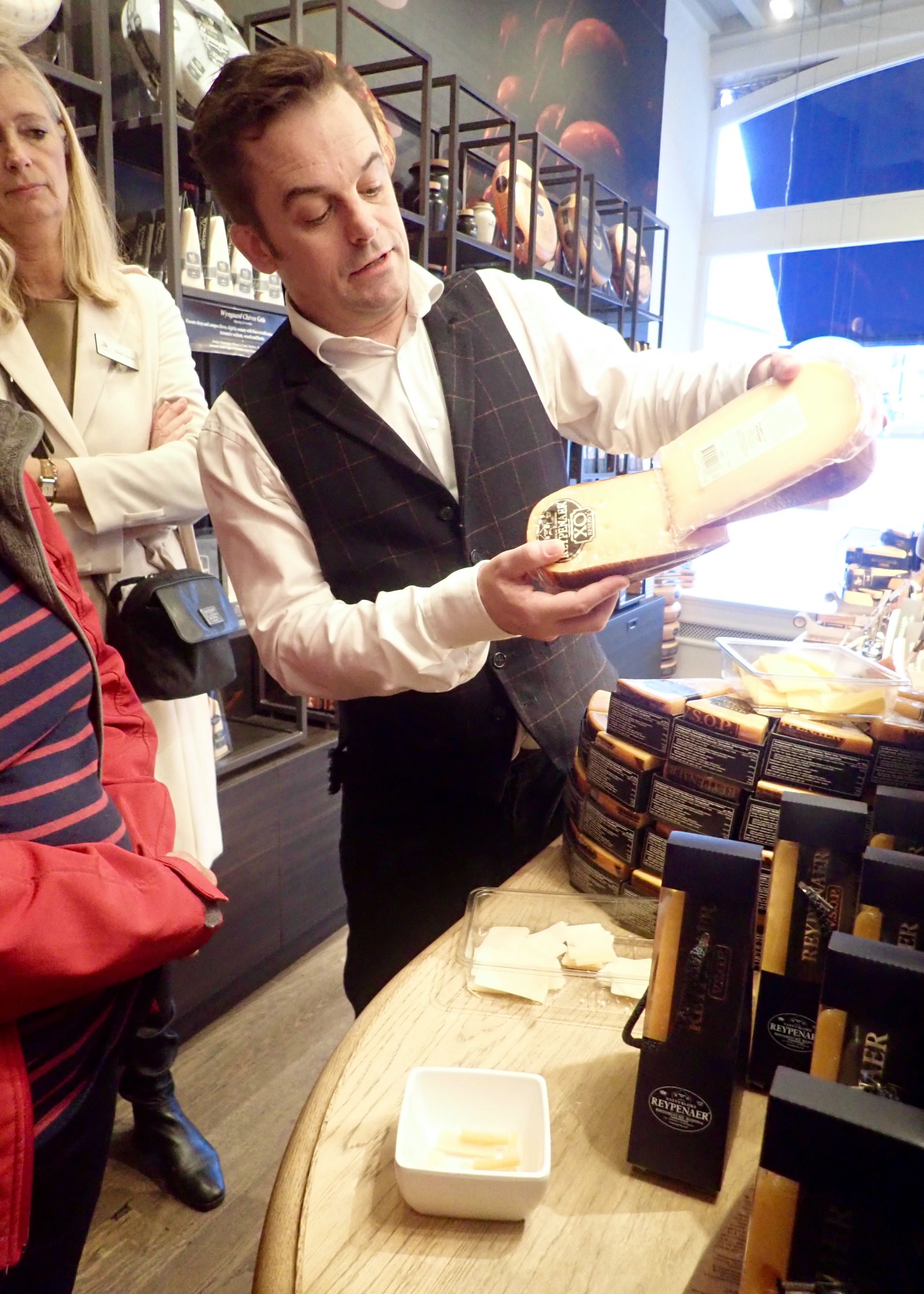
Finally a tasting of flavored gins (jenever). The tiny glass is filled to the very top, the proper way to begin is to slurp the first taste.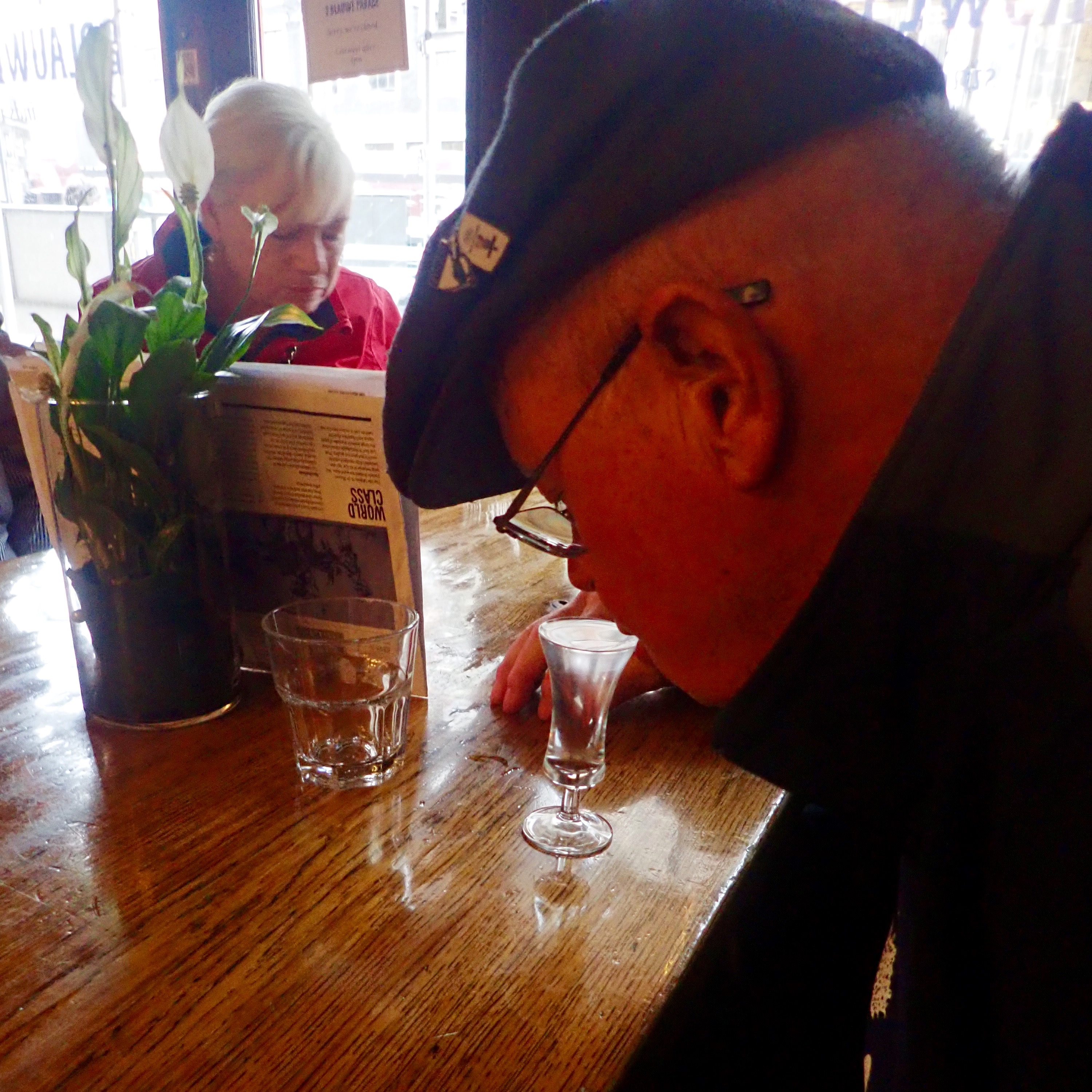
The width of the reddish house with the green arbor around the door is almost 5 feet – the narrowest house on the Canal Ring. It is occupied by a single woman. In the past, property taxes were assessed based on the width.
Back to the hotel during rush hour.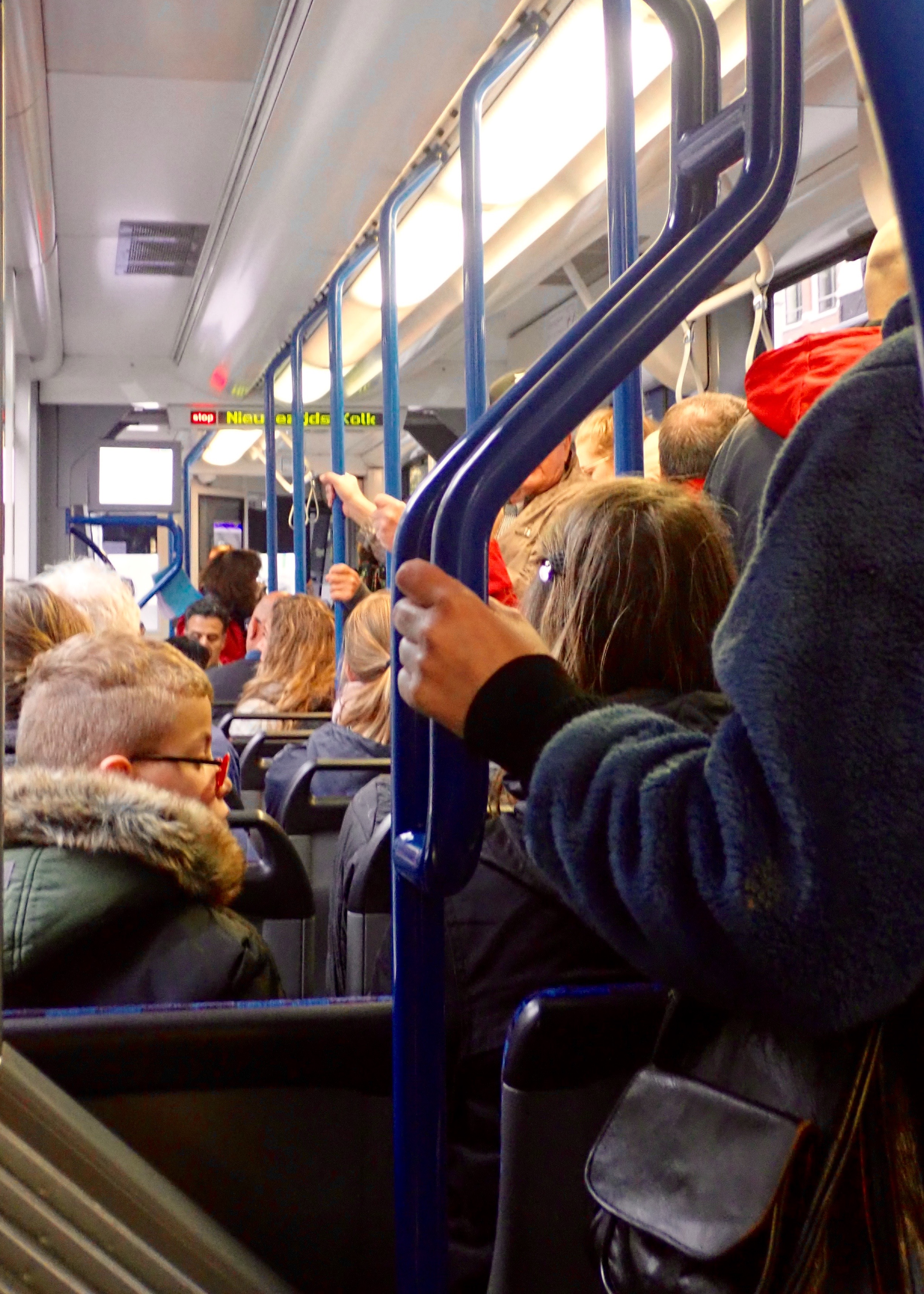
Author Archives: arletelouise
Kinderdijk Netherlands
In the late morning, everyone gathered in the lounge to listen to Richie, the program director, sing a few songs. Richie just completed his first 5 weeks as a program director for Viking. Before that he was part of a touring company on ocean cruises for 14 years – his most recent role as Frankie Valle. He first appeared on the London stage when he was 10 in Les Miserables and has performed for the Queen. Viking struck gold when they hired him.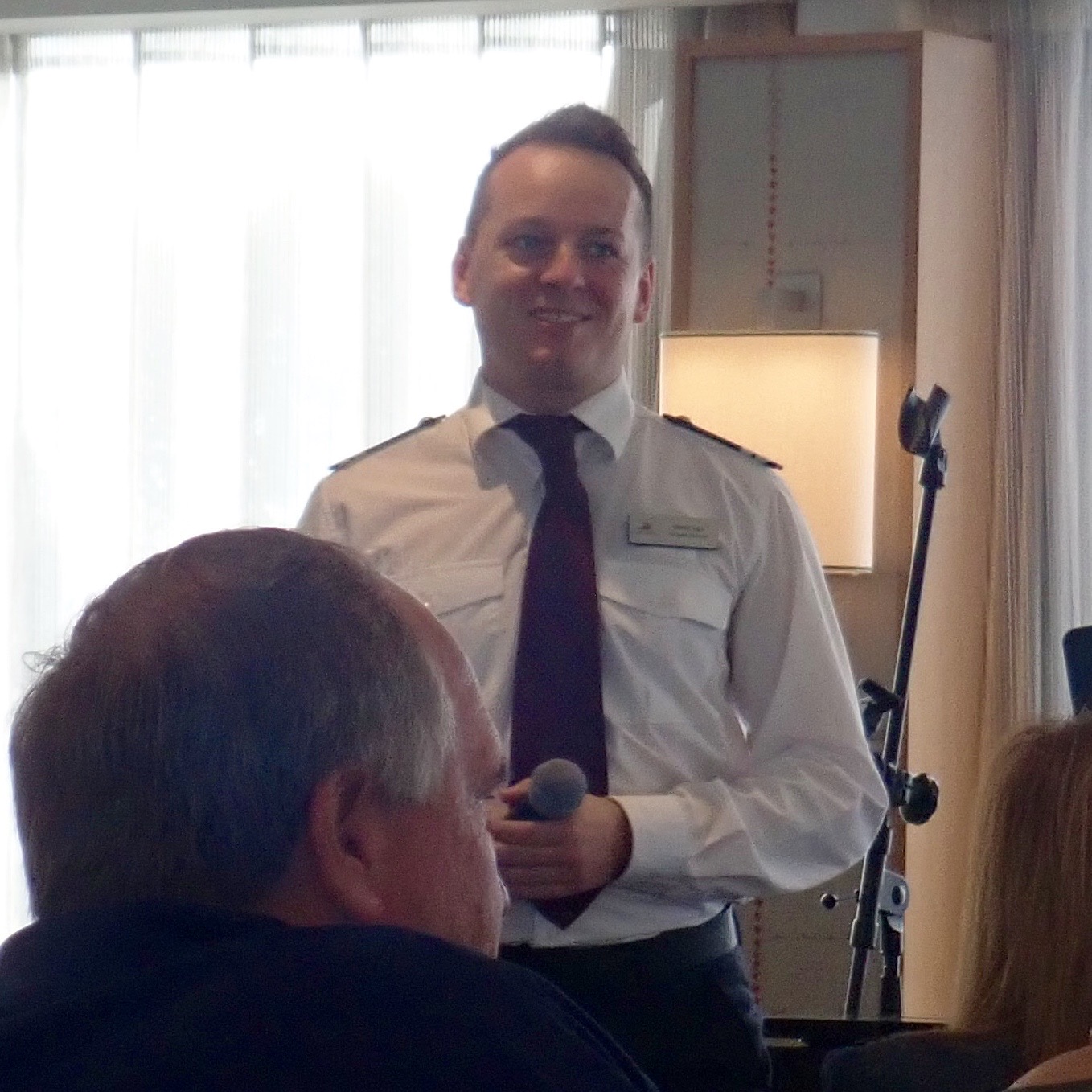
In the afternoon, we went on a tour of the windmills of Kinderdijk. Much of the Netherlands is below sea level. Polders are reclaimed land surrounded by dikes. The water level inside the polder is lower than the river level. When the water in the polder gets too high, it must be pumped out and dumped back in the river. Beginning in the 16th century, windmills did this job. Kinderdijk has a collection of 19 windmills.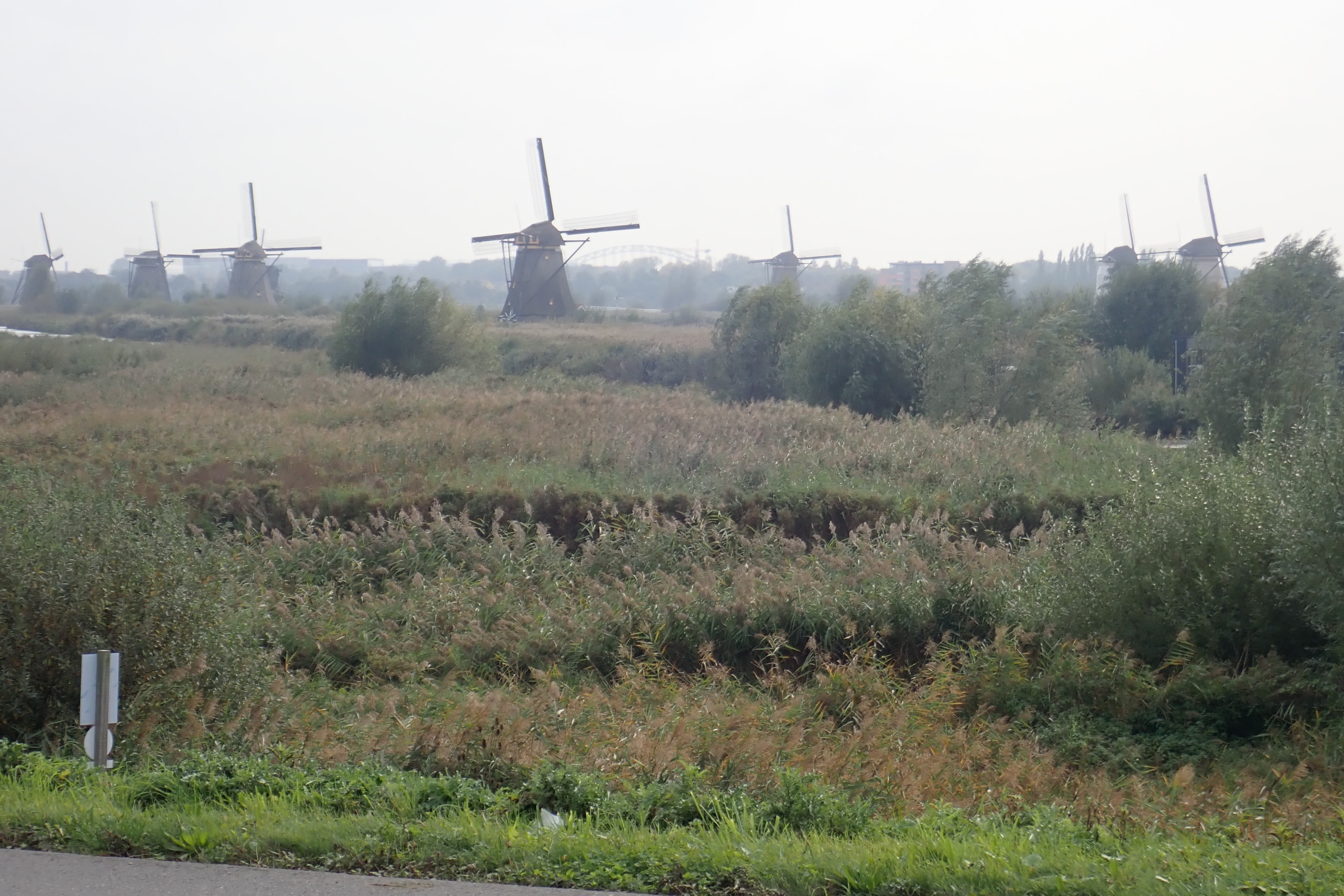
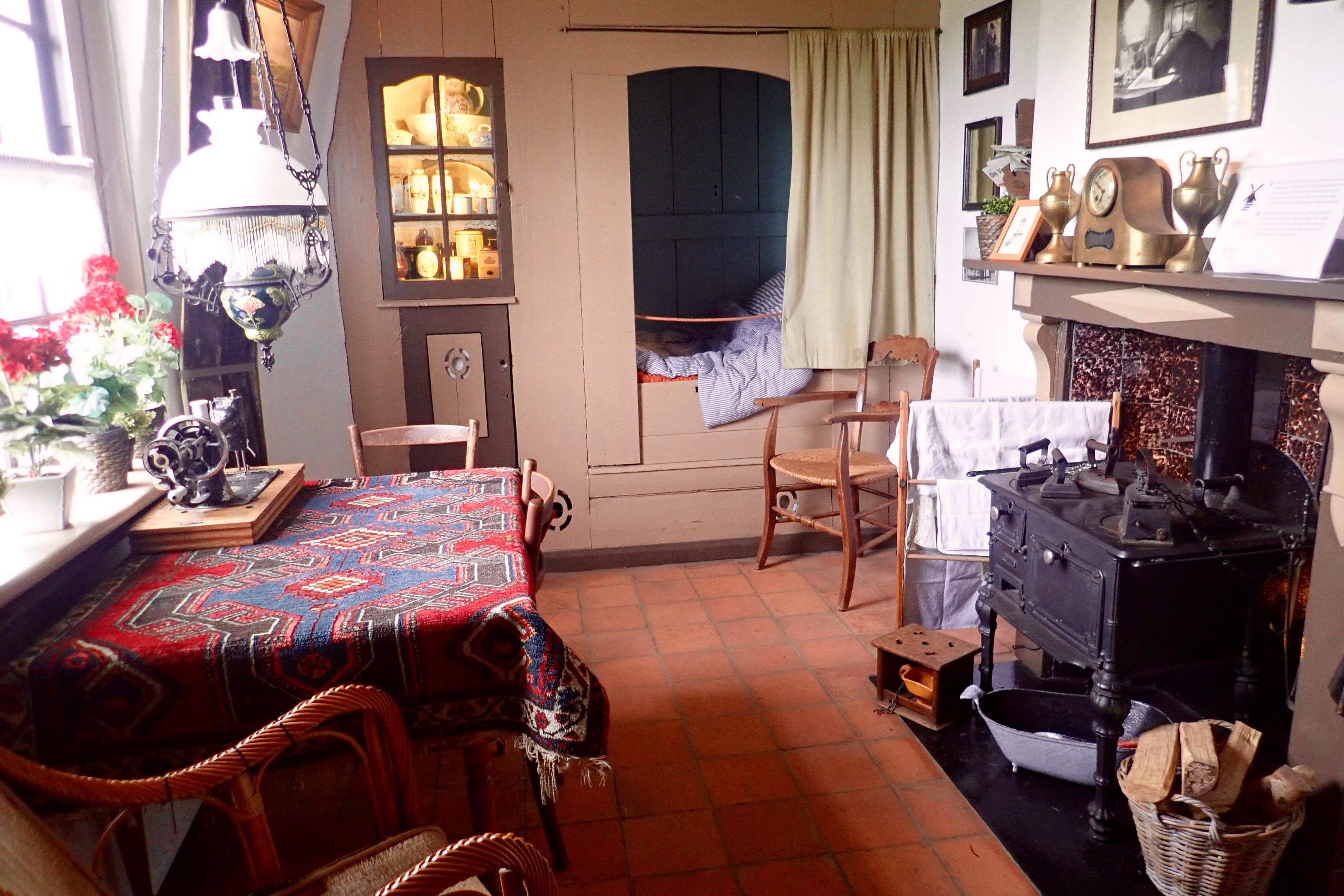
Life inside a windmill: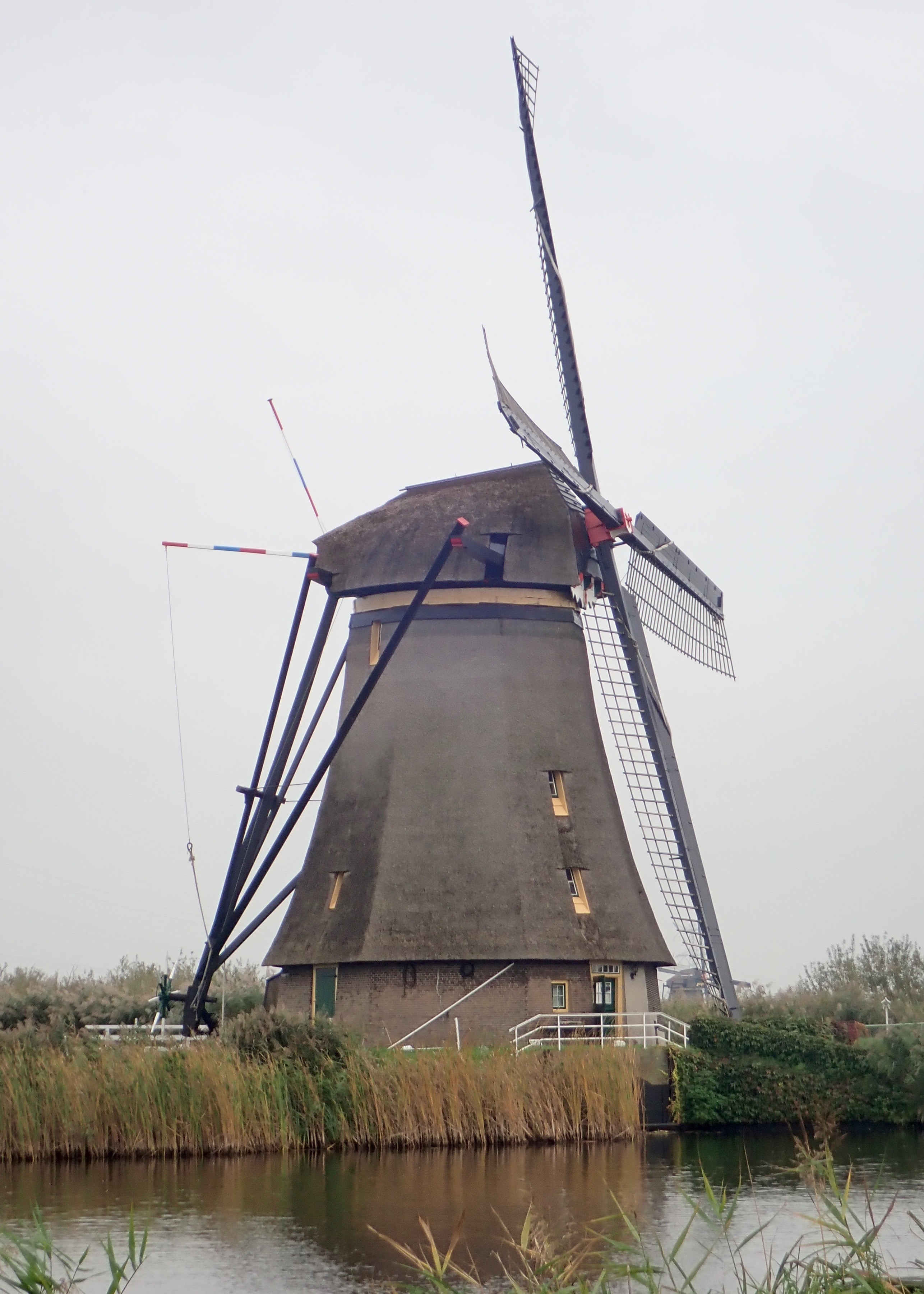
steep steps, many opportunities to hit your head, small spaces for beds and storage.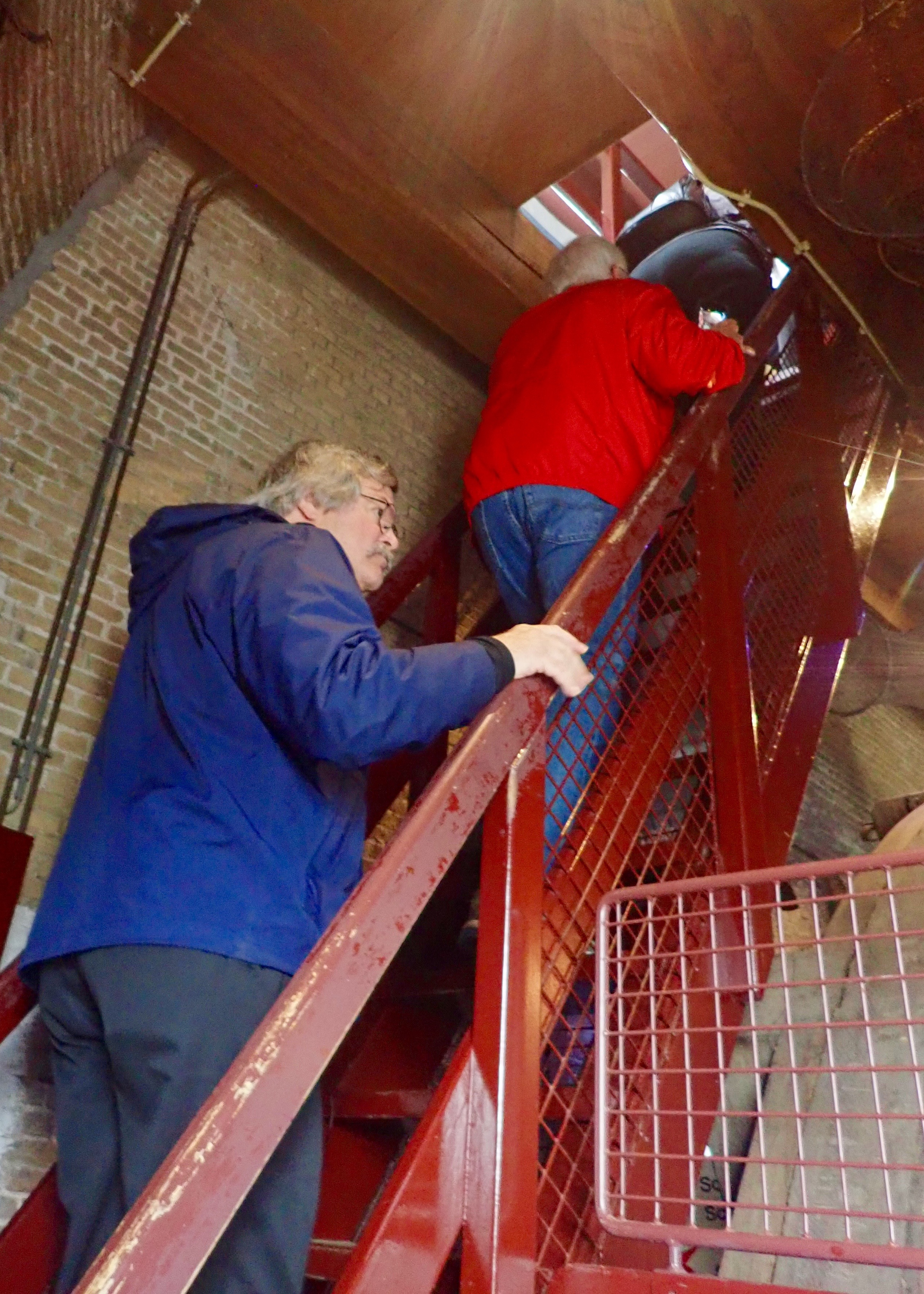

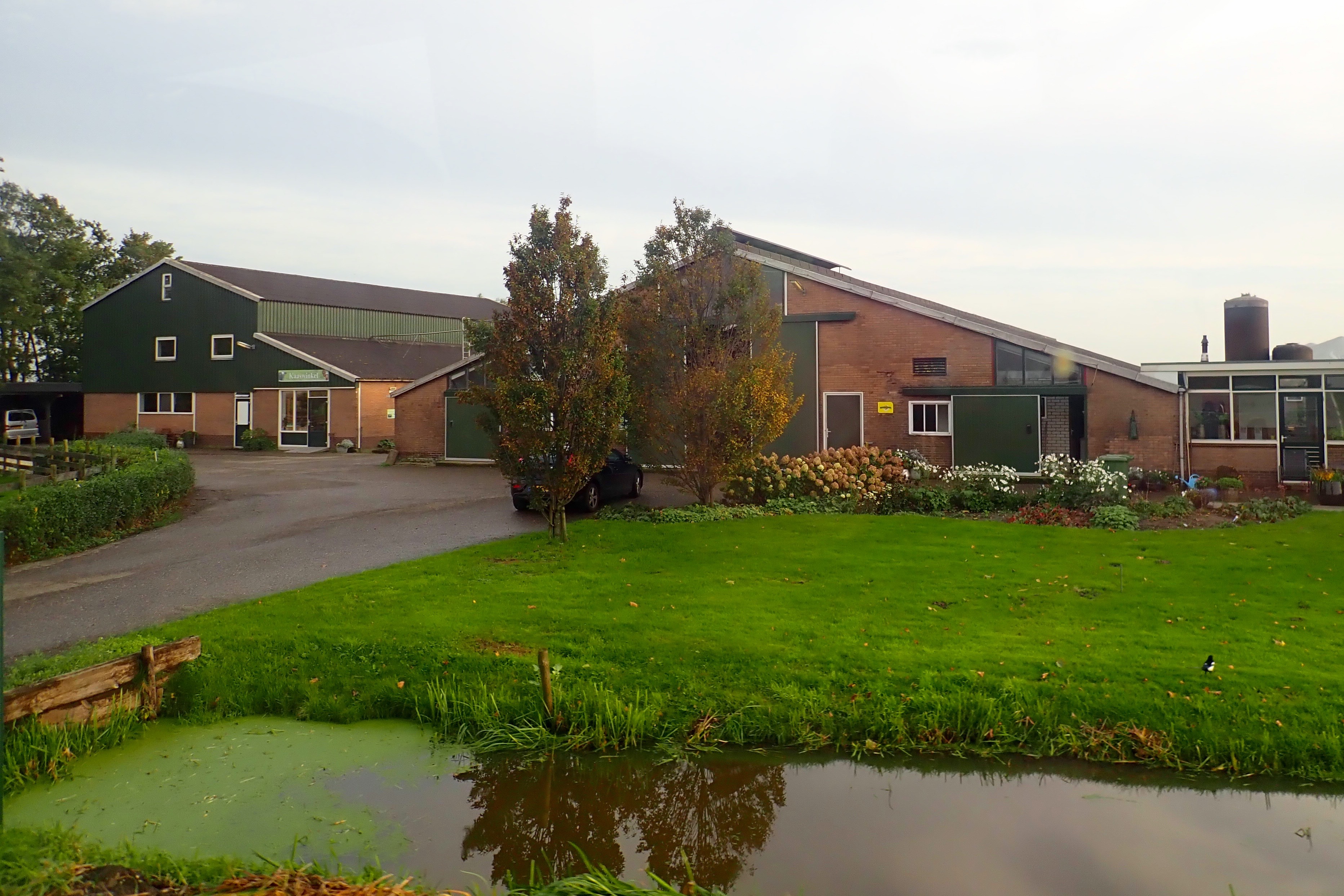
Then we drove through the countryside to a “cheese farm”.
The farmer’s wife makes the cheese – mostly gouda, with many variations. 1600 gallons of milk/day yields about 1200 pounds of cheese – every day!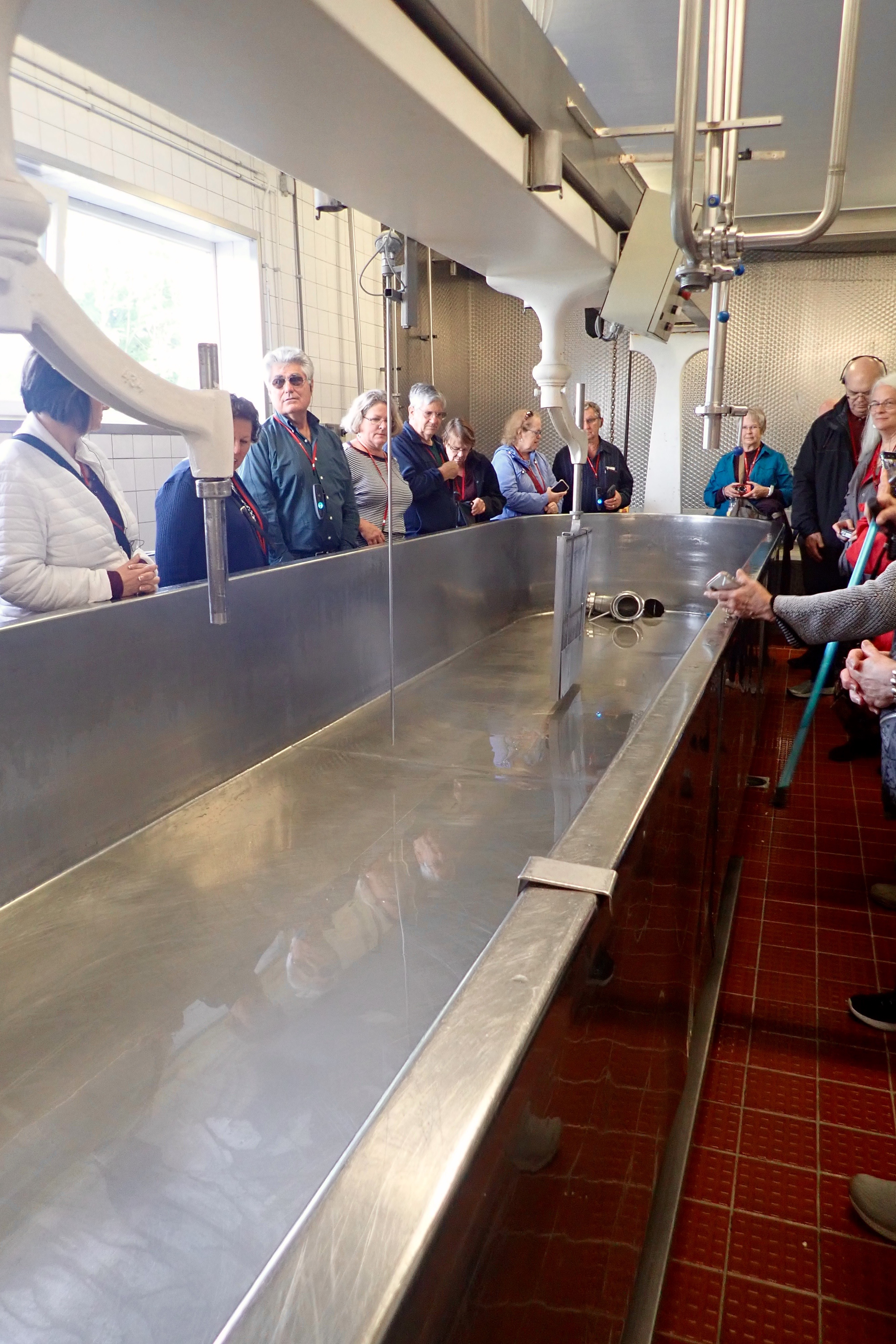
Three days in a salt brine bath.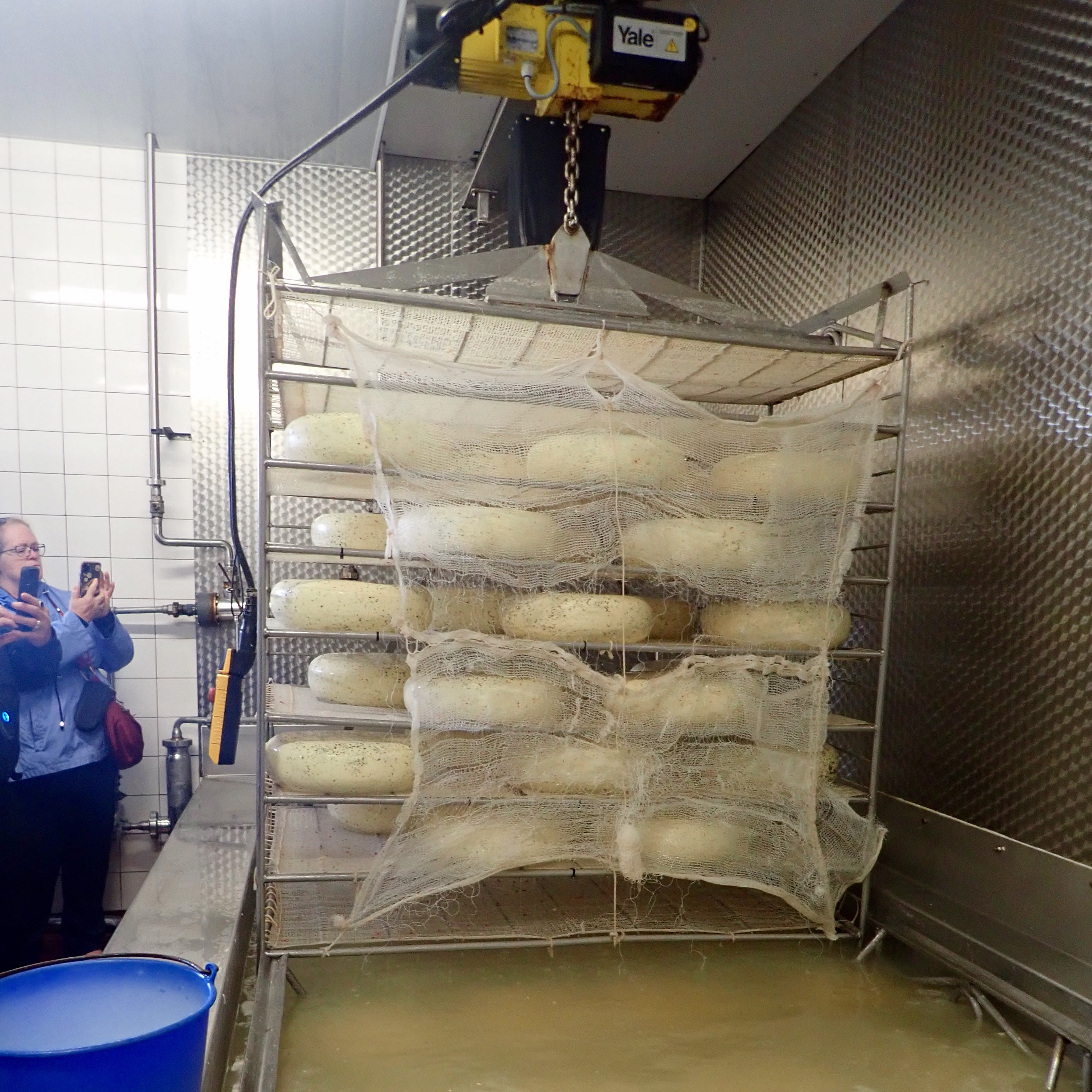
The temperature- and humidity-controlled aging room: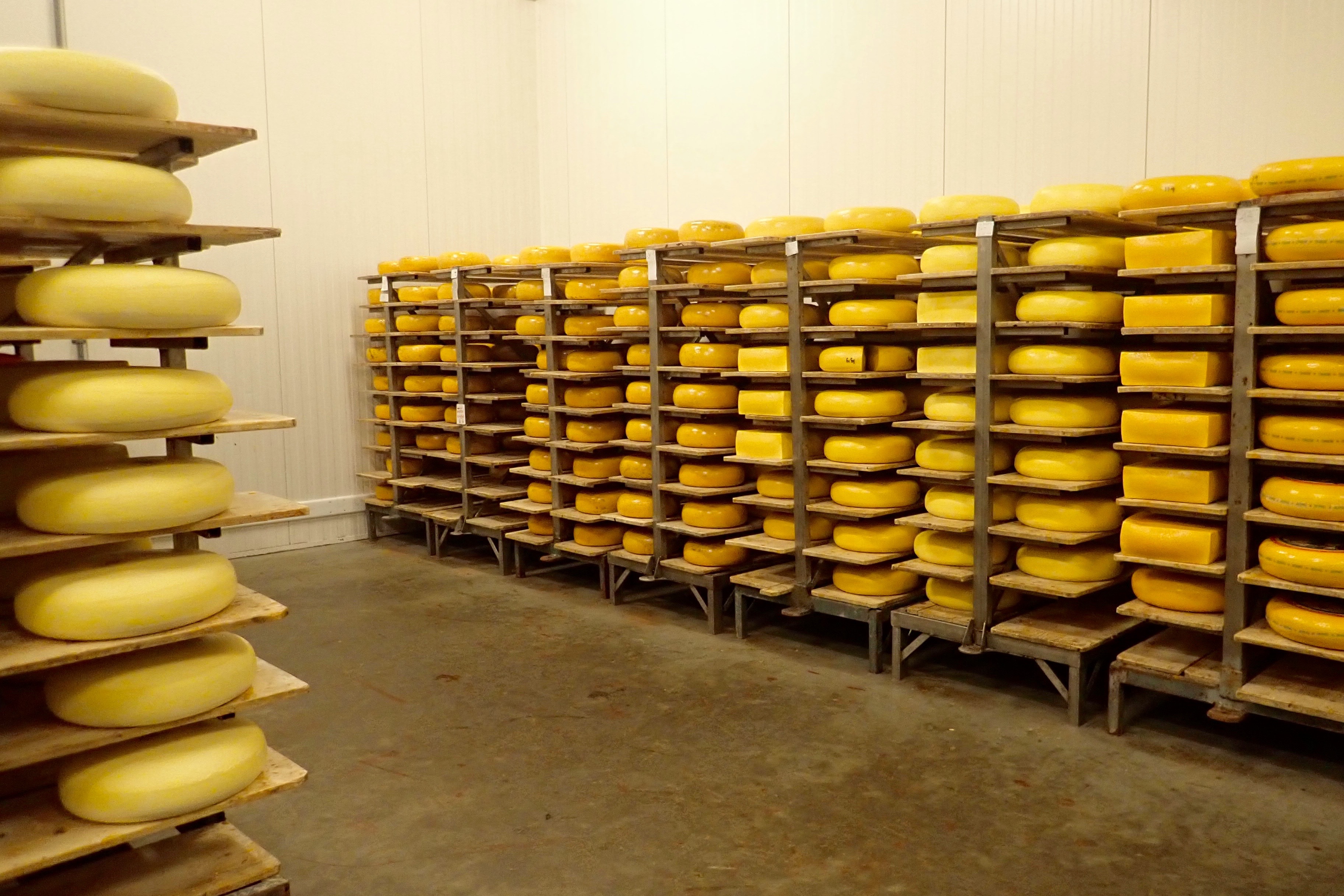
Then the farmer showed us his part of the business. About 5 babies are born every week. These cows are close to delivering.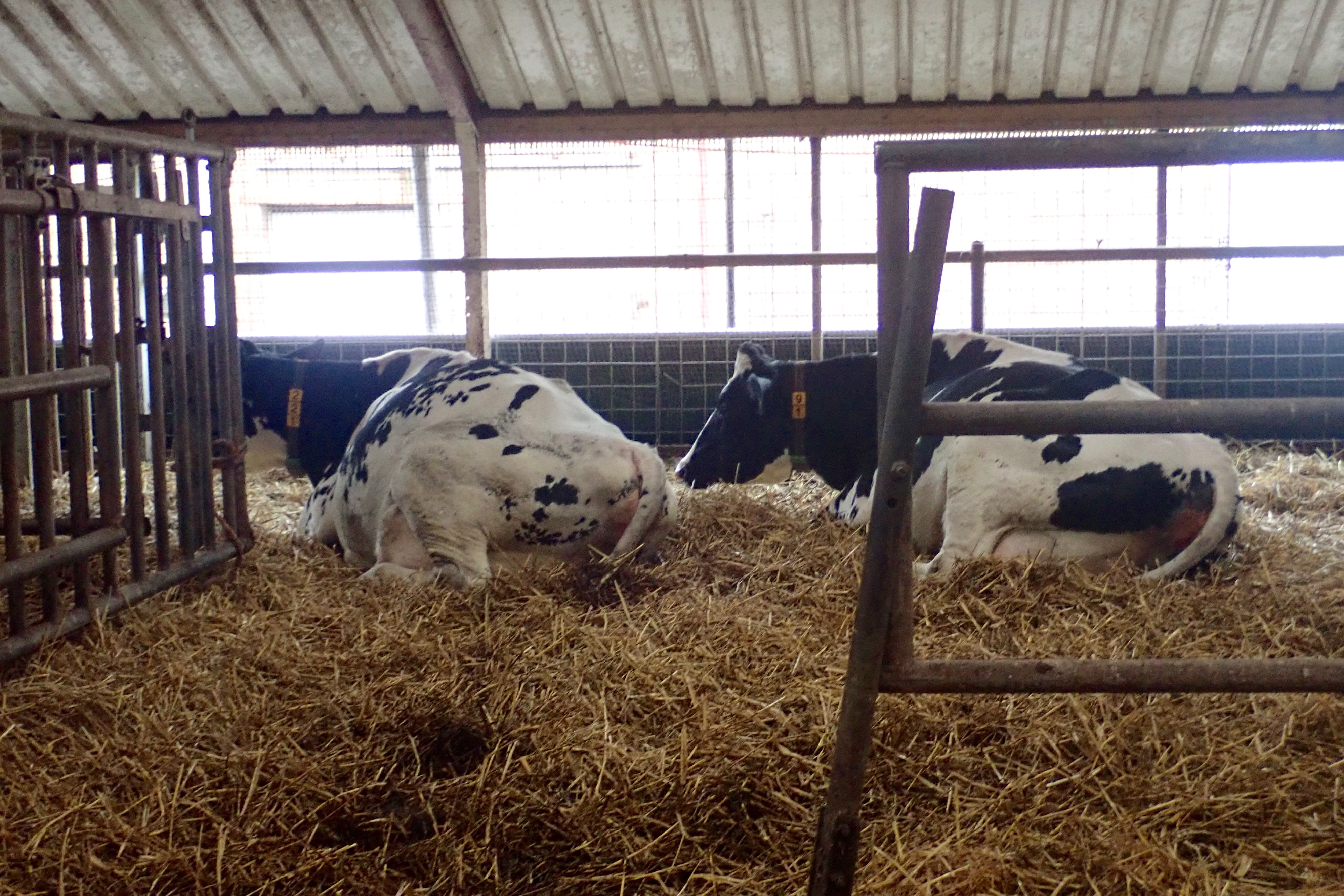
He has 258 milk-producing cows but also an ongoing breeding operation. He sells 45% of the calves but keeps the best for himself.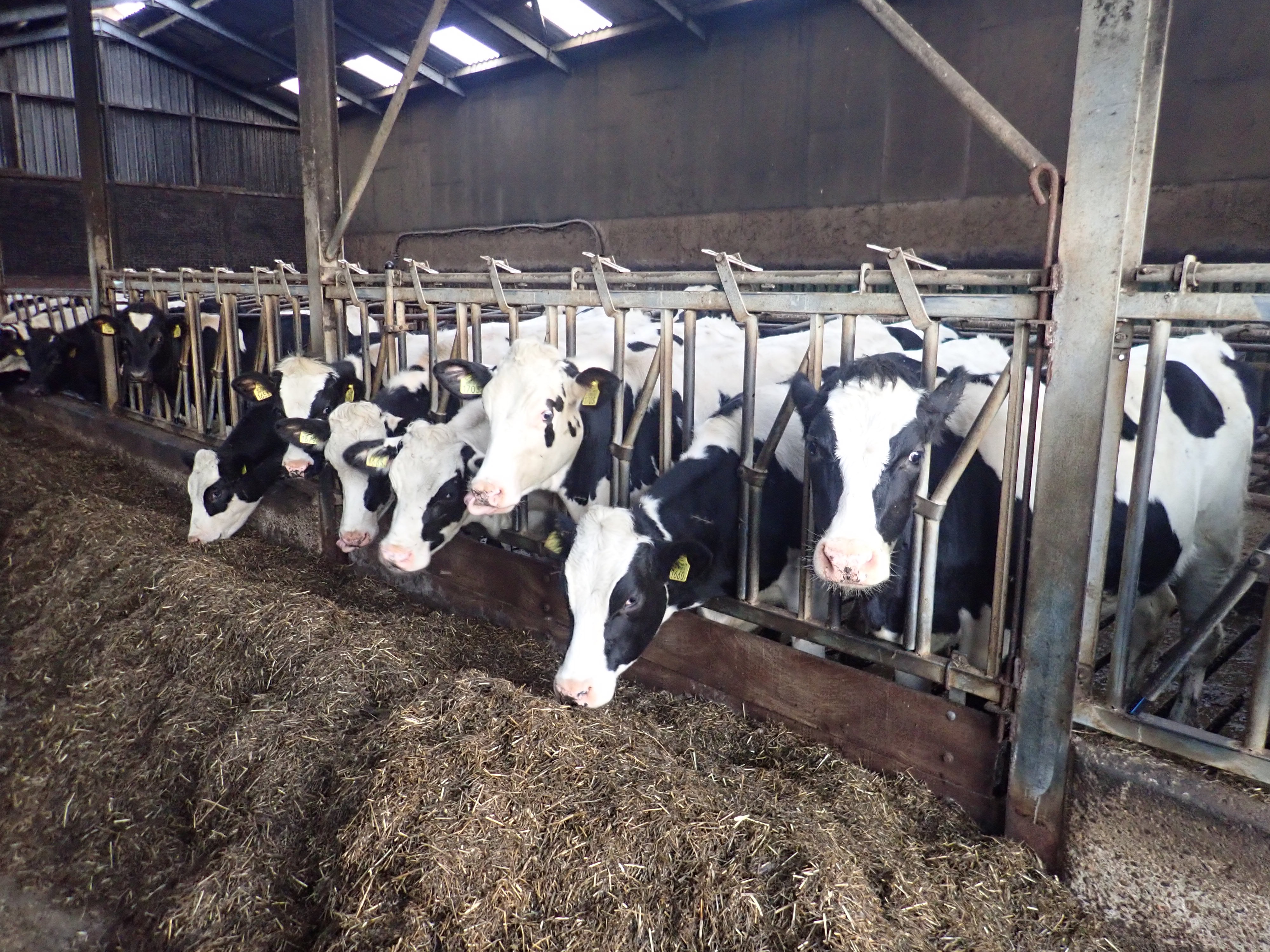
This is our last dinner on Viking Gefjon. Favorite waiter: Aldrin, but everyone called him Buzz. He really liked it that Lenin was Filipino and I had three grandchildren. He works 8 months on Viking ships, then goes home for 4 months. He will be home in just a few days.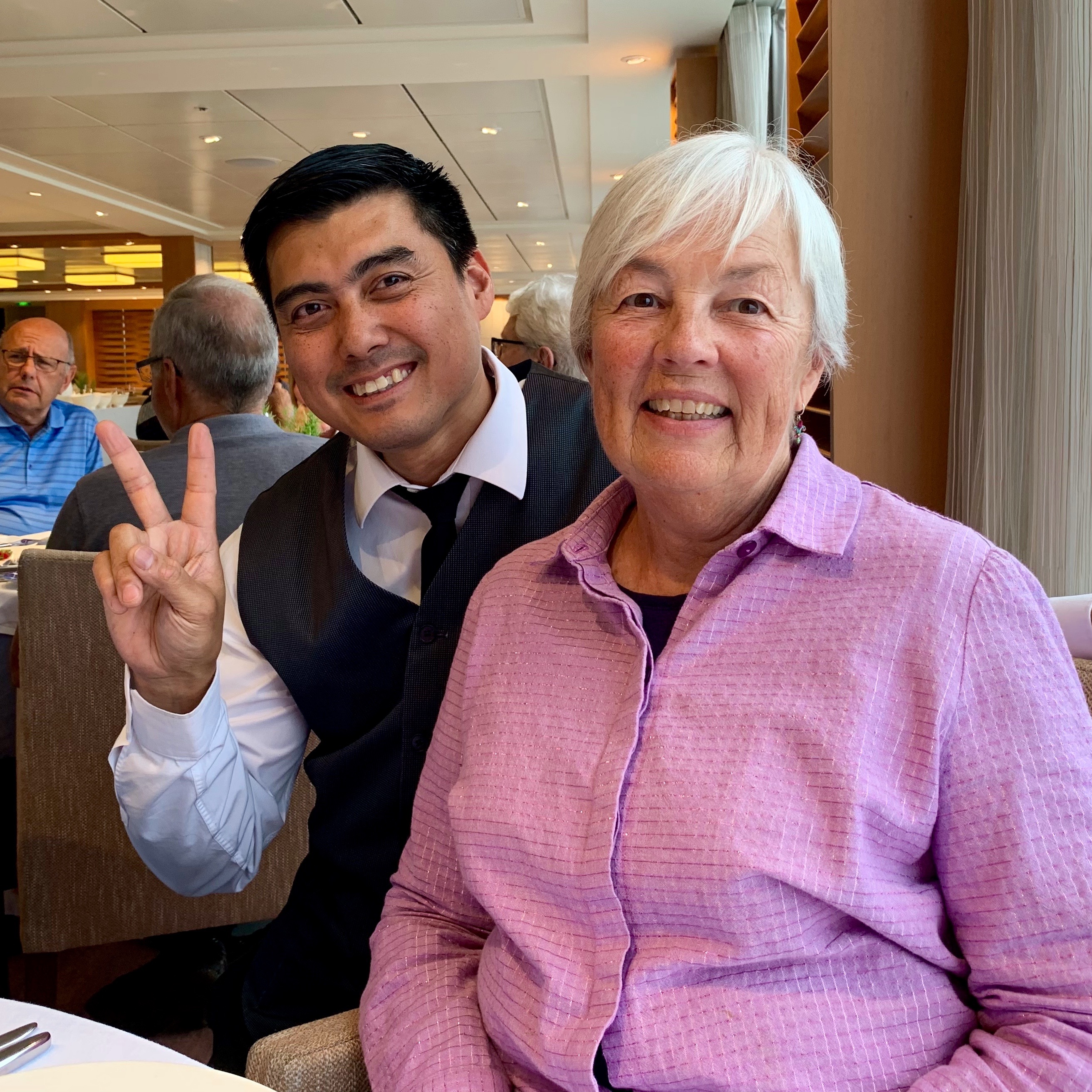
Tonight we sat with some of our favorite people. Pat and Richard from Montreal: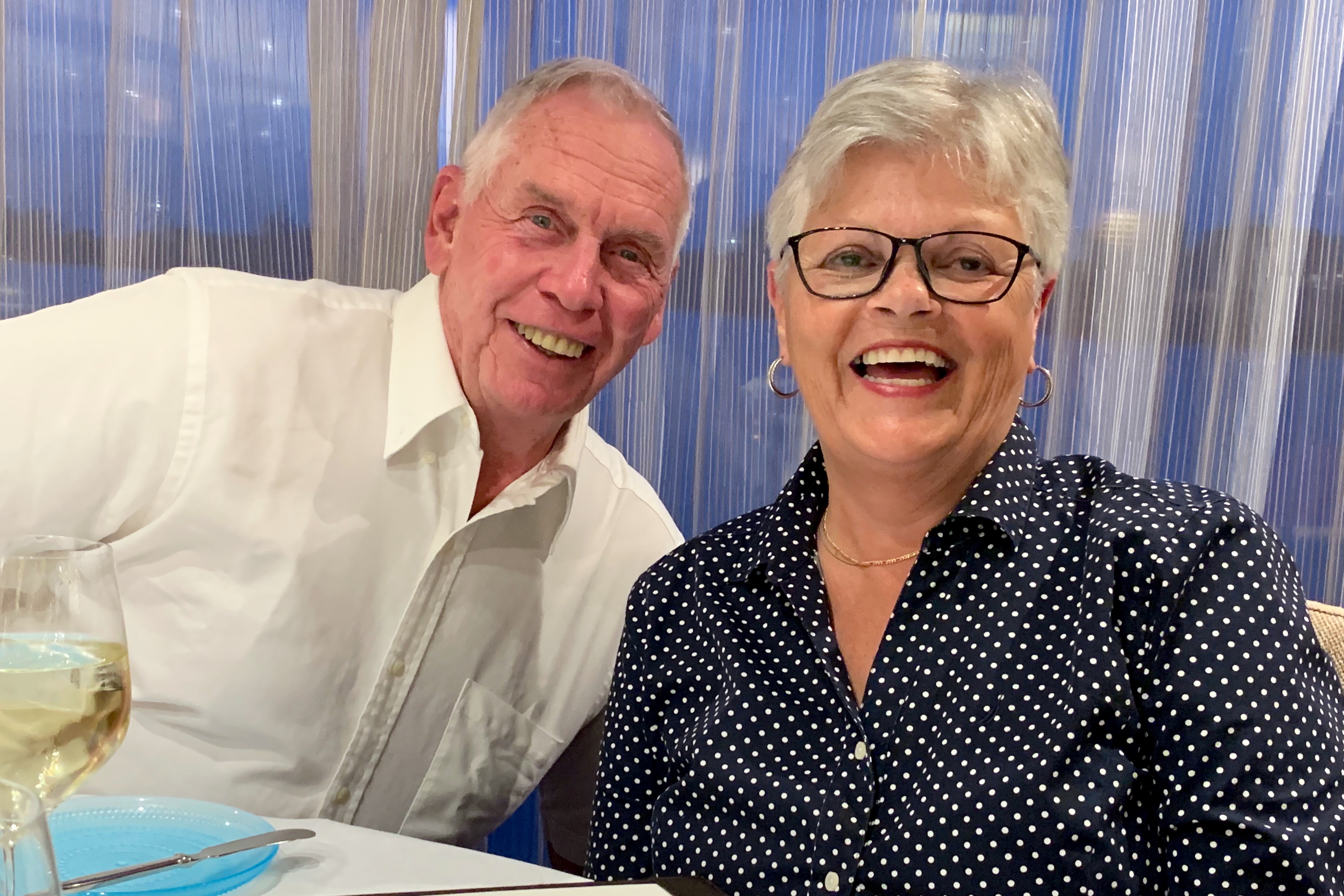
Theresa and Jeff from N Carolina: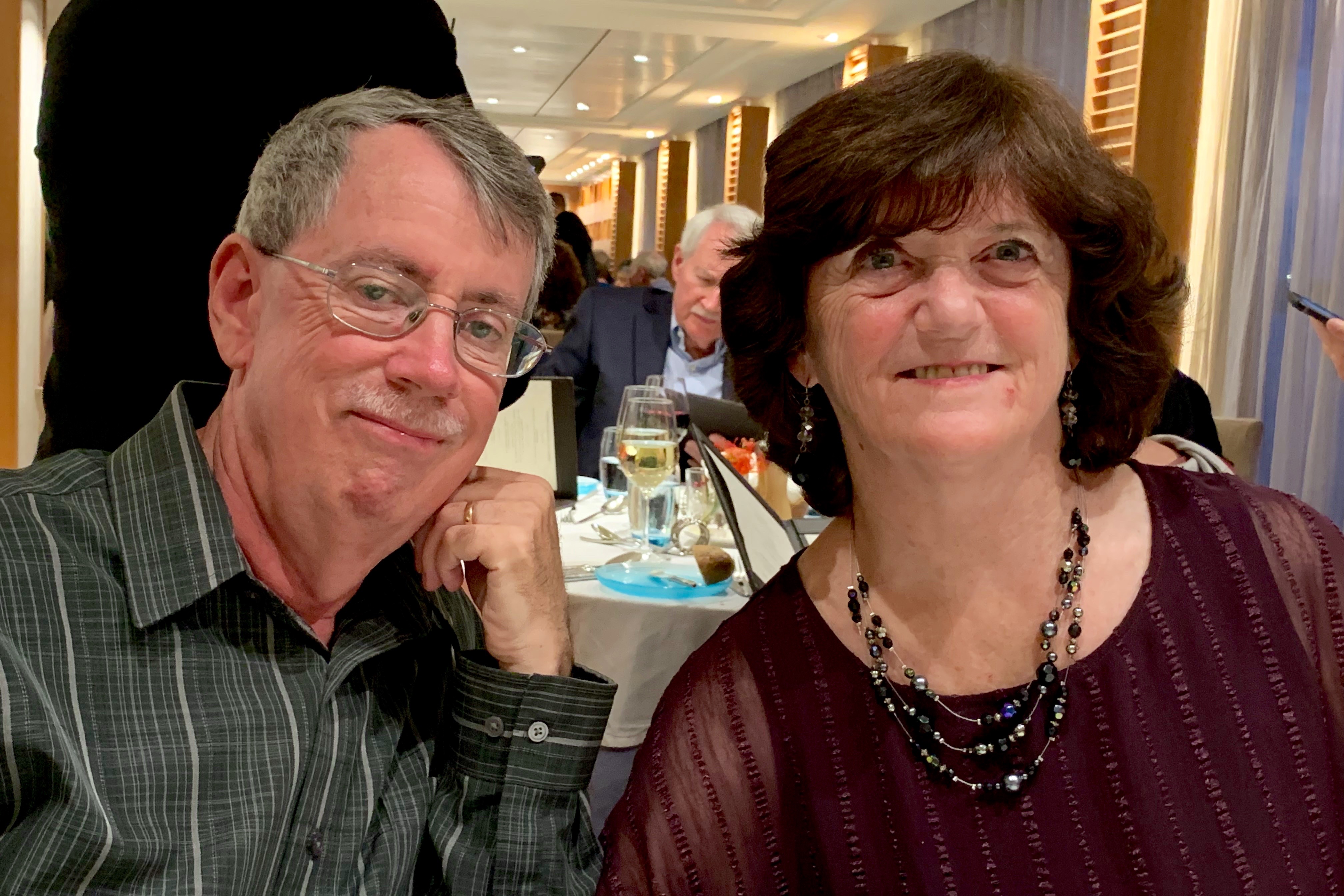
And finally, what I hope is the last dessert for a while – carrot cake. The food on this trip has been way too good.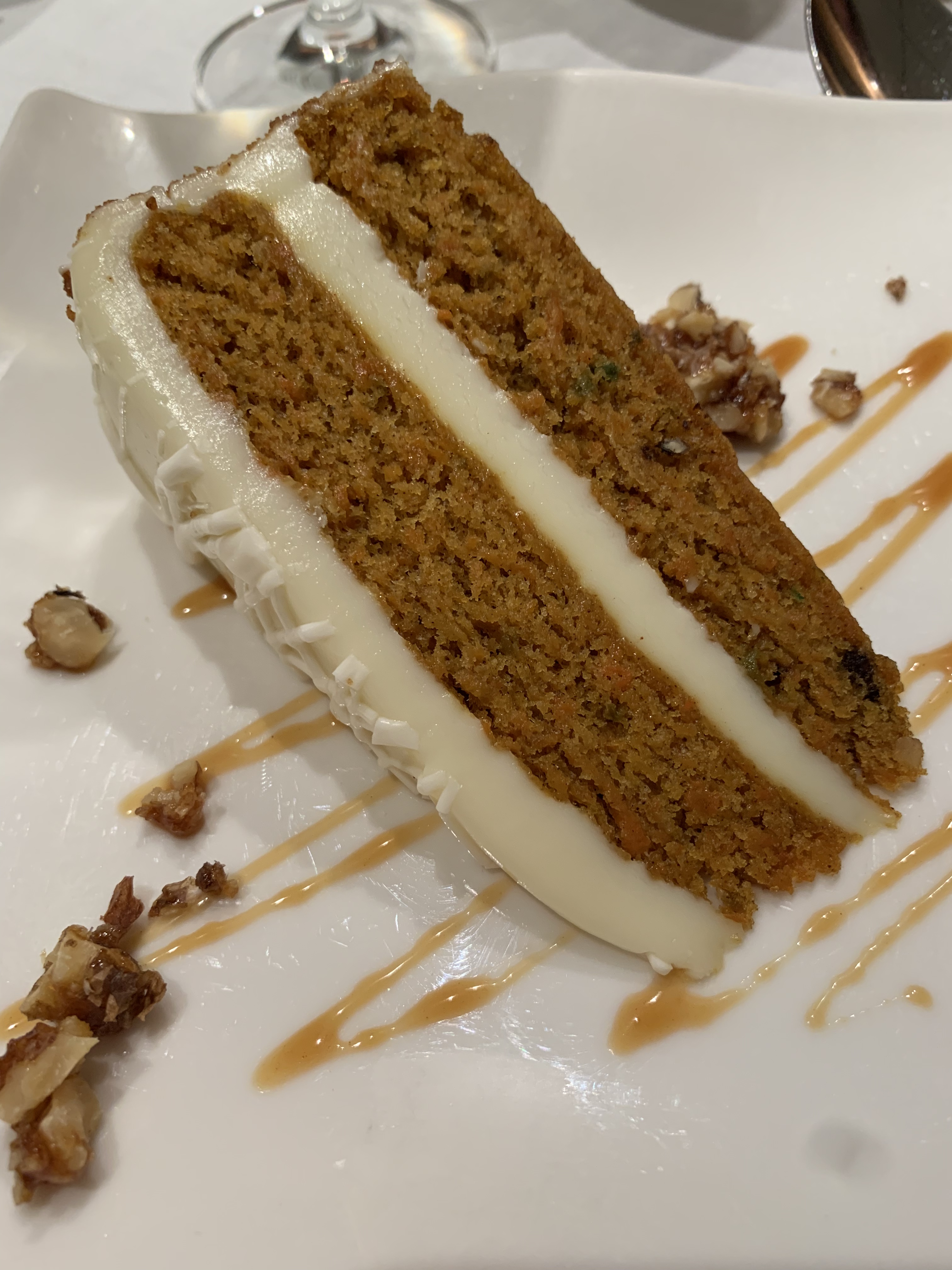
Cologne
We took a walking tour of Cologne in the morning. We crossed the train bridge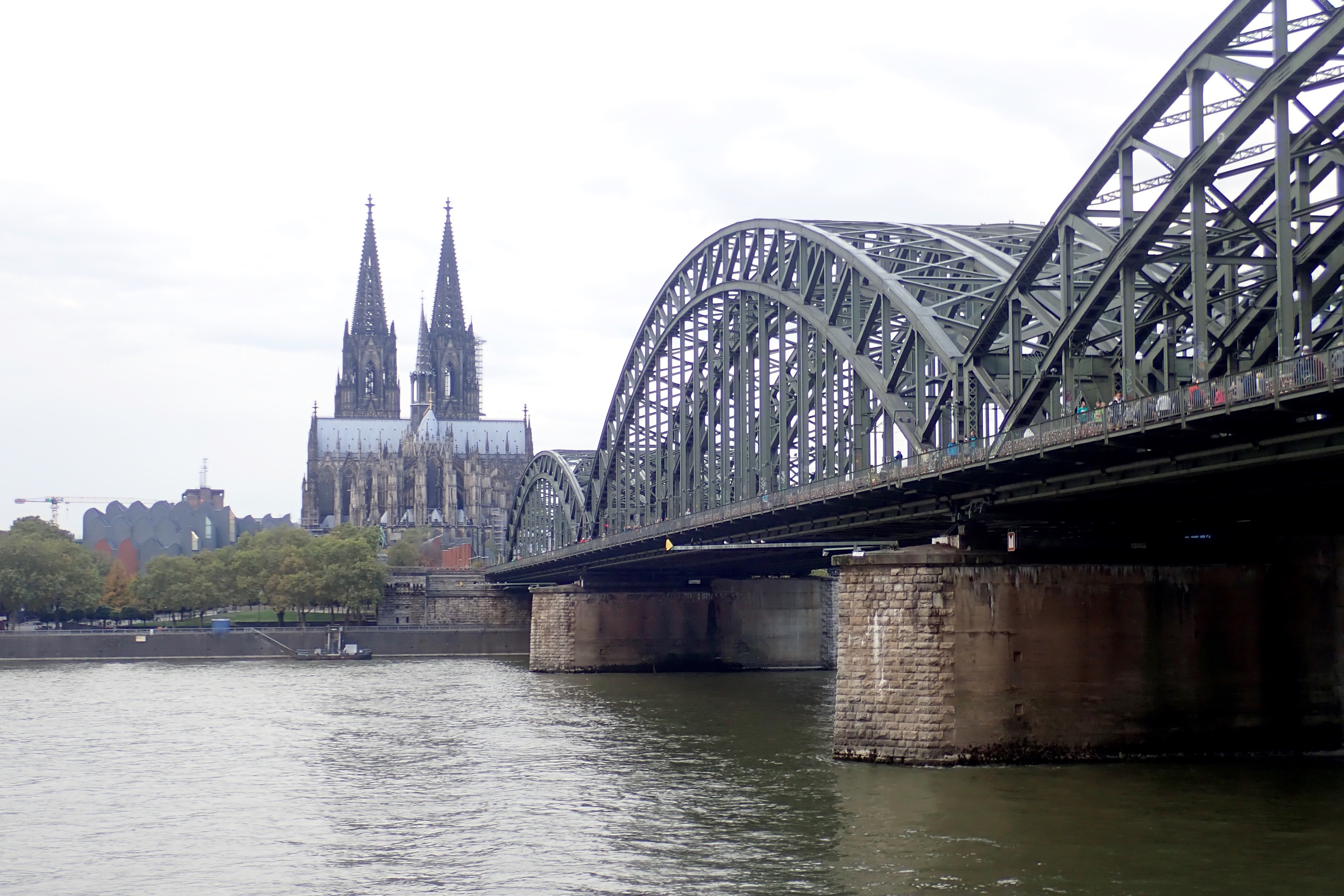
on the pedestrian/bicycle path which was packed with engraved padlocks.
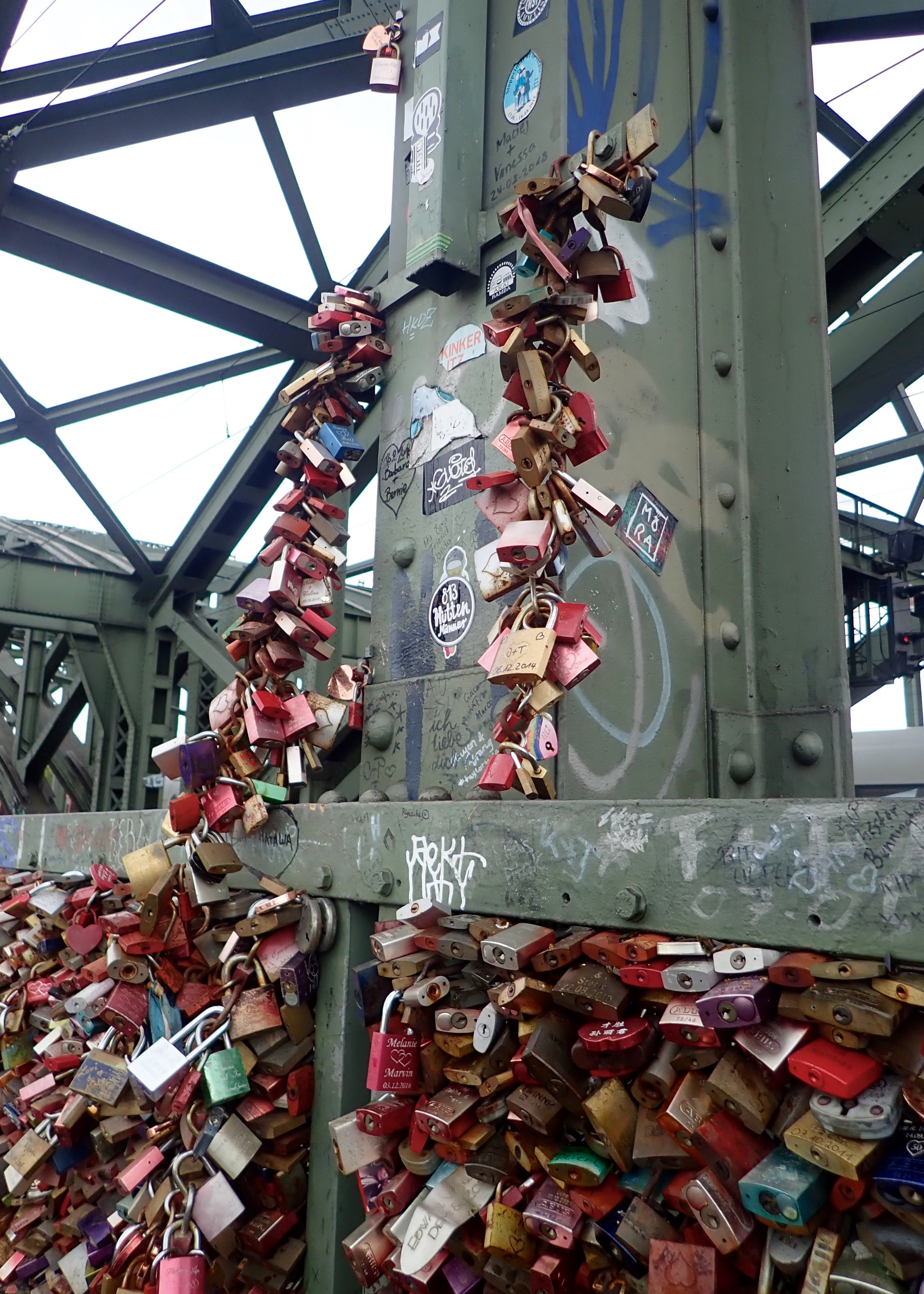
More than 1300 trains cross this bridge every day with connections to all major European cities.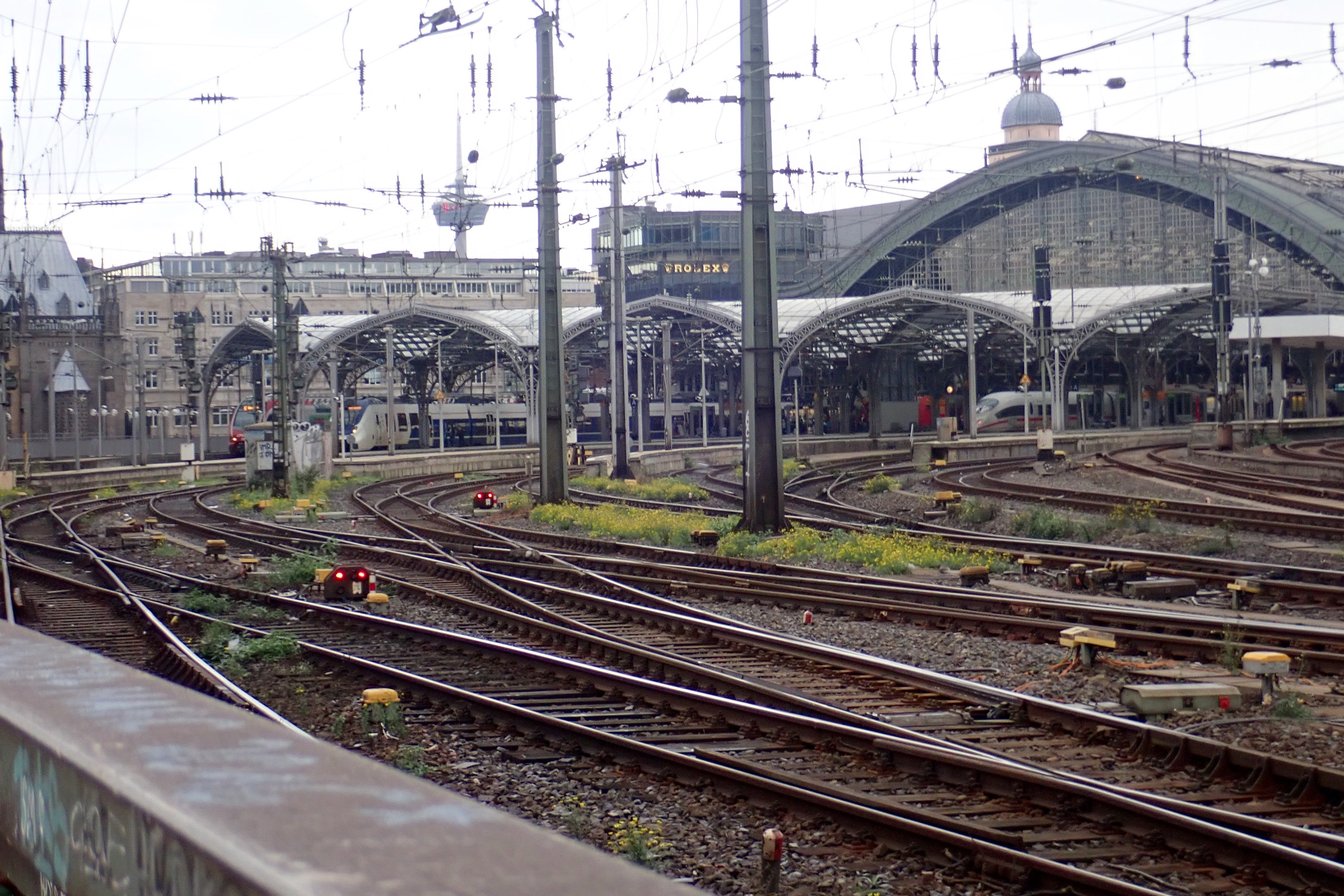
Construction of the Cologne Cathedral began in 1248, halted in 1473, restarted in 1840s and completed in 1880 – the original design was maintained.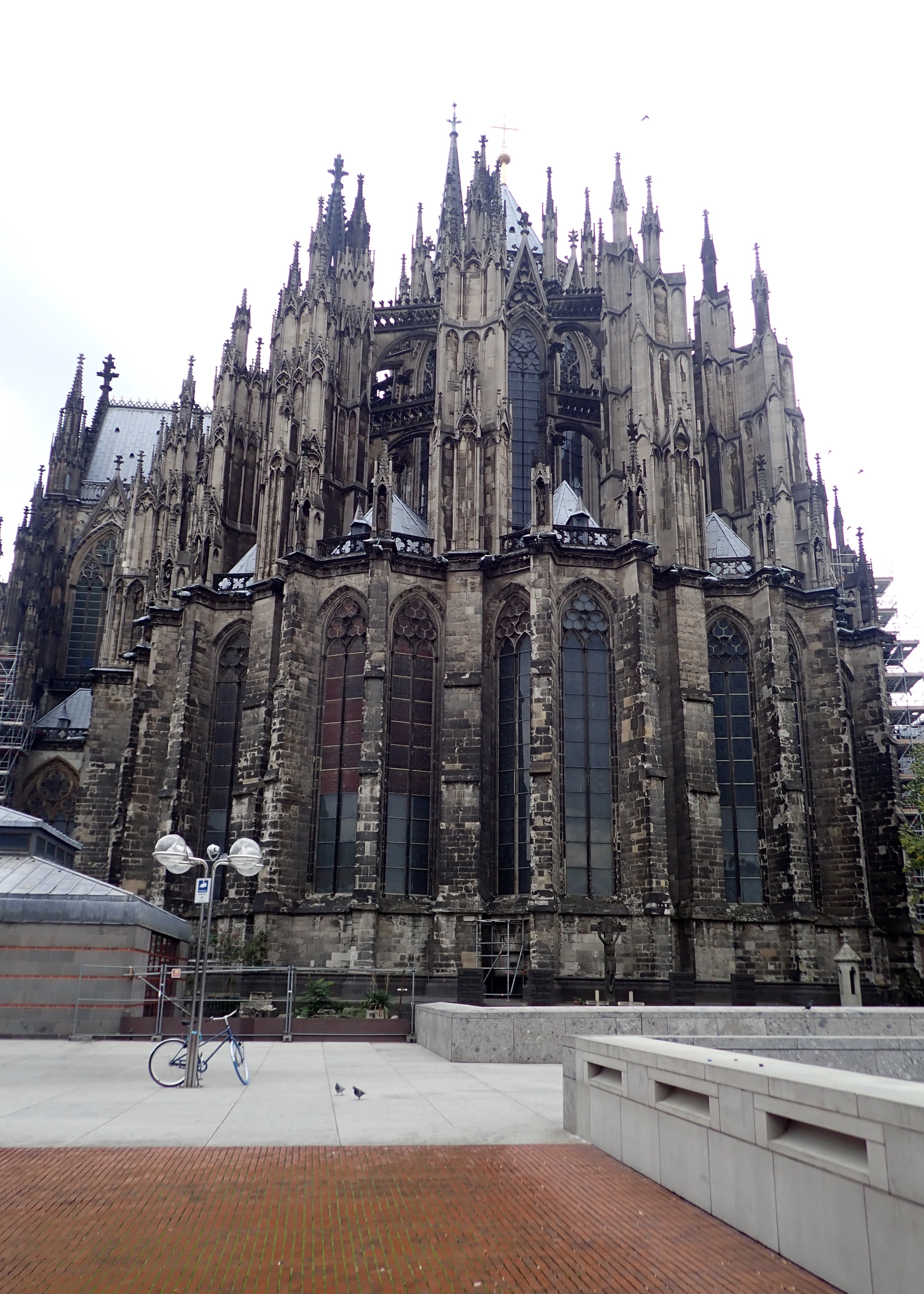
There was a big marathon today in downtown Cologne. Lots of people and closed streets.
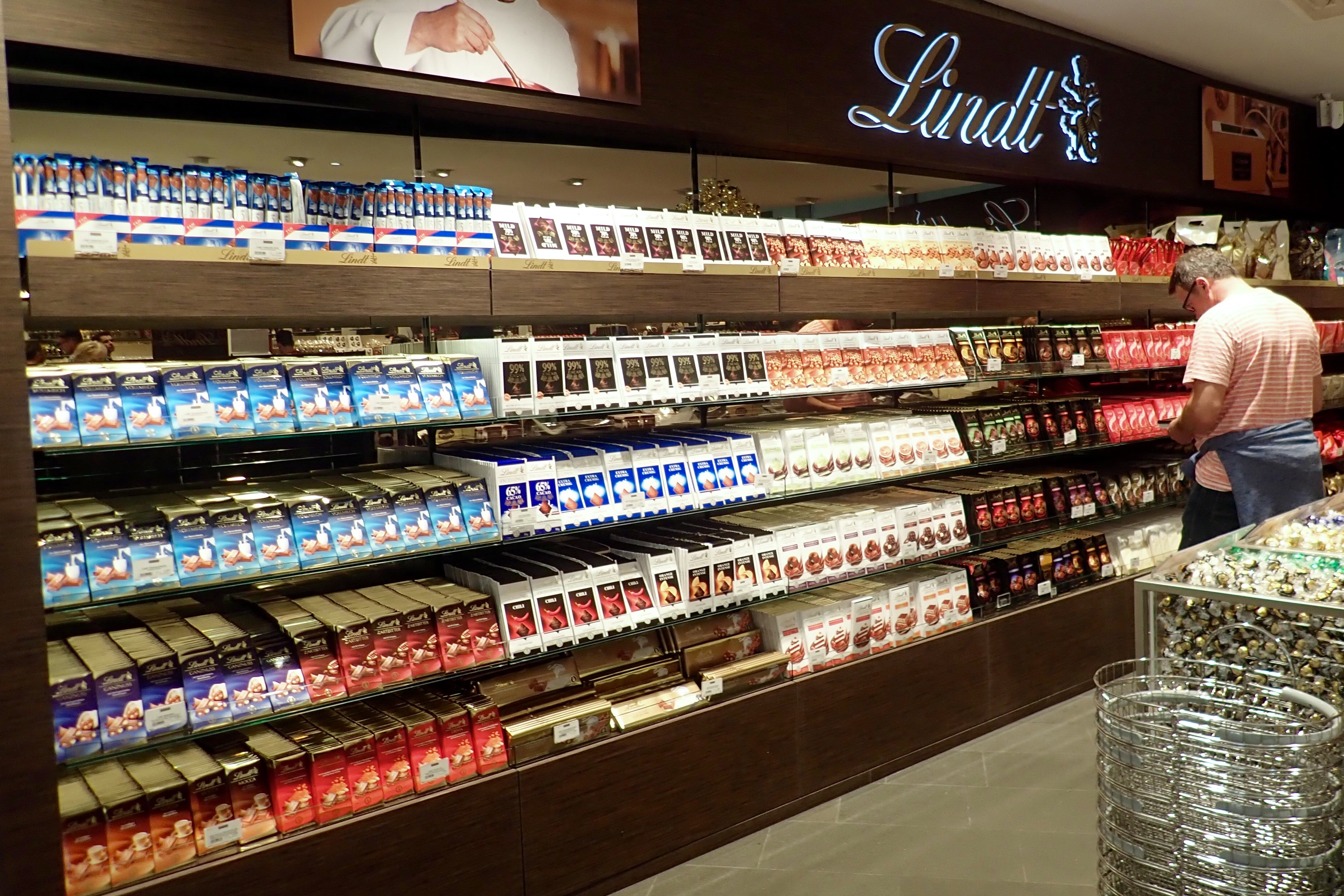
After the tour was over, we walked to the Lindt Chocolate Museum and store.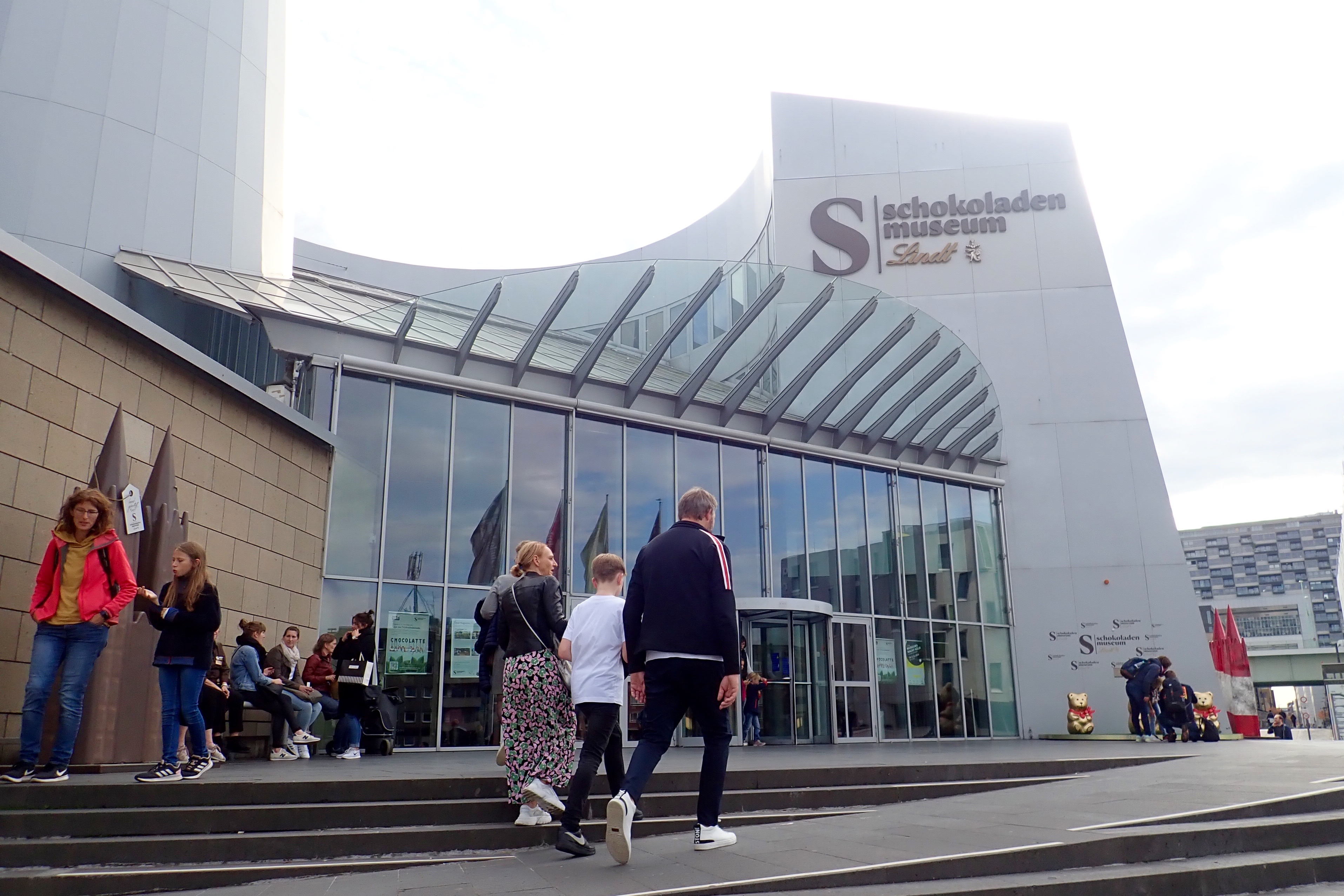
In the late afternoon, everyone was invited to the lounge for a farewell cocktail party with the captain, the hotel director and program director.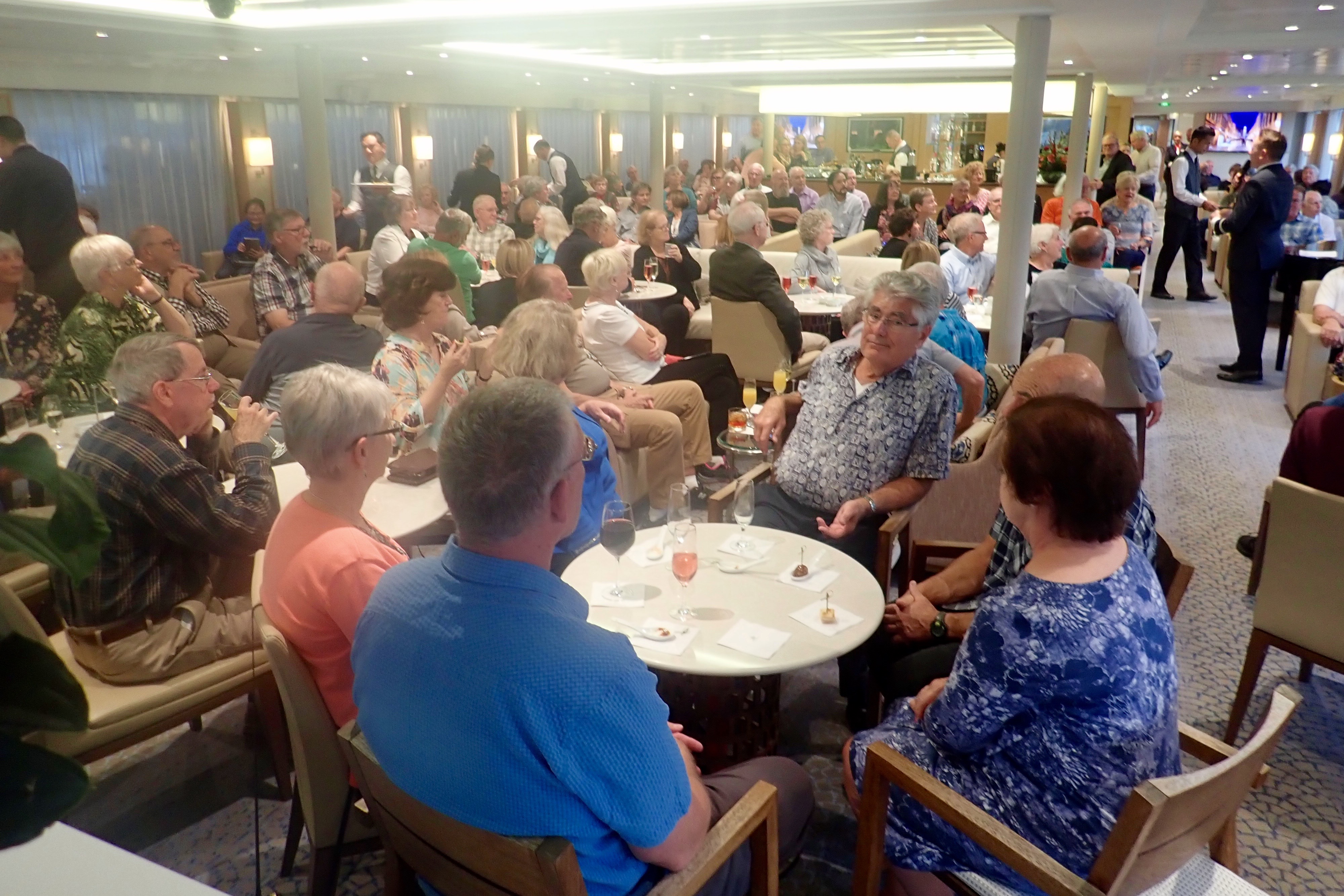
Instead of having dinner onboard, we went on an excursion called The Beer Culture of Cologne. Kolsch is the beer to have in Cologne – Kolsch can not be made anywhere else, each beer house has its own interpretation.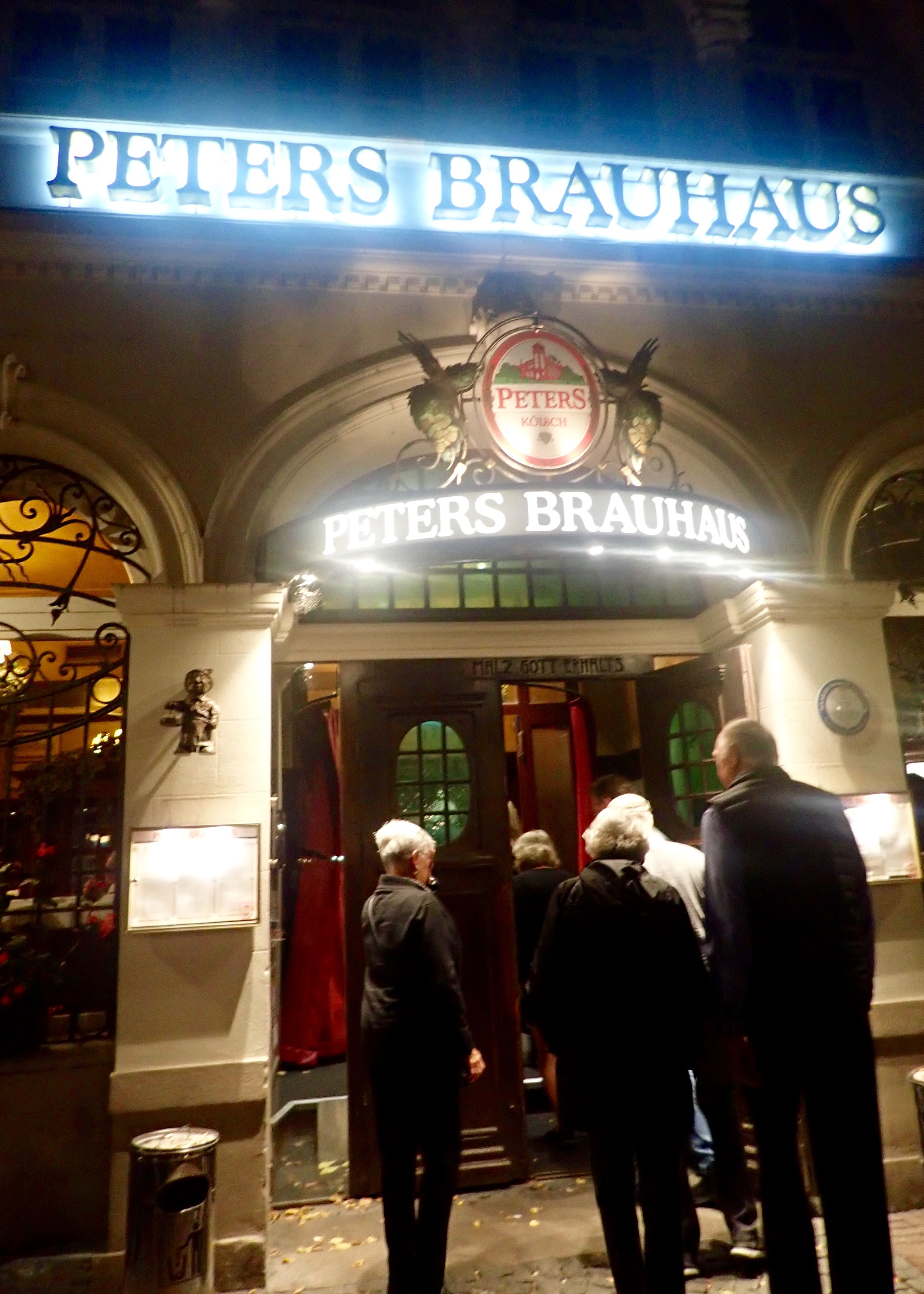
At our first stop, Peter’s Brauhaus, we got several small plates of German specialities along with the beer.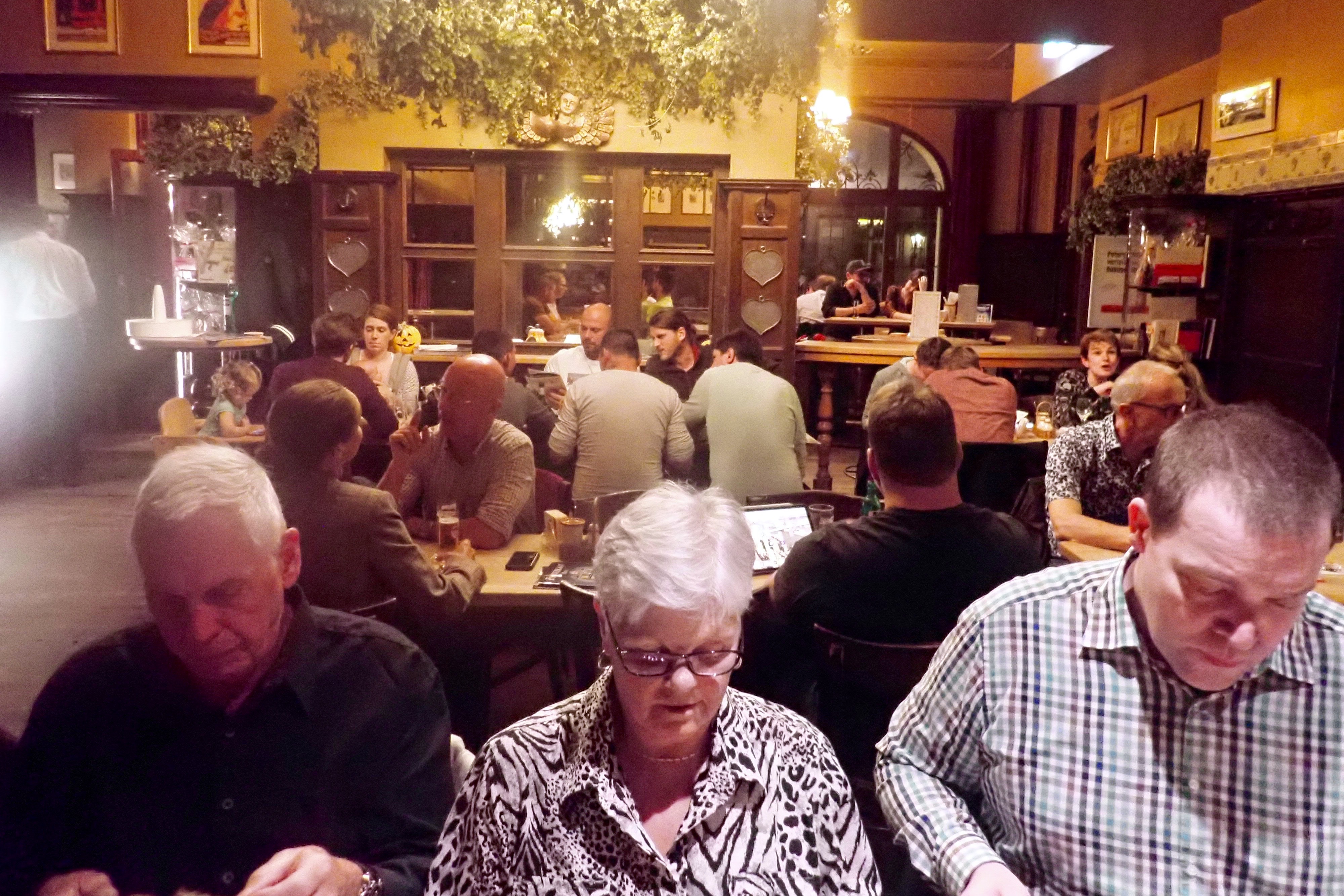
The glasses hold maybe 7 oz to make sure the beer stays cold until finished.
You never have to ask for another beer, they just keep coming until you put your coaster on top of the glass.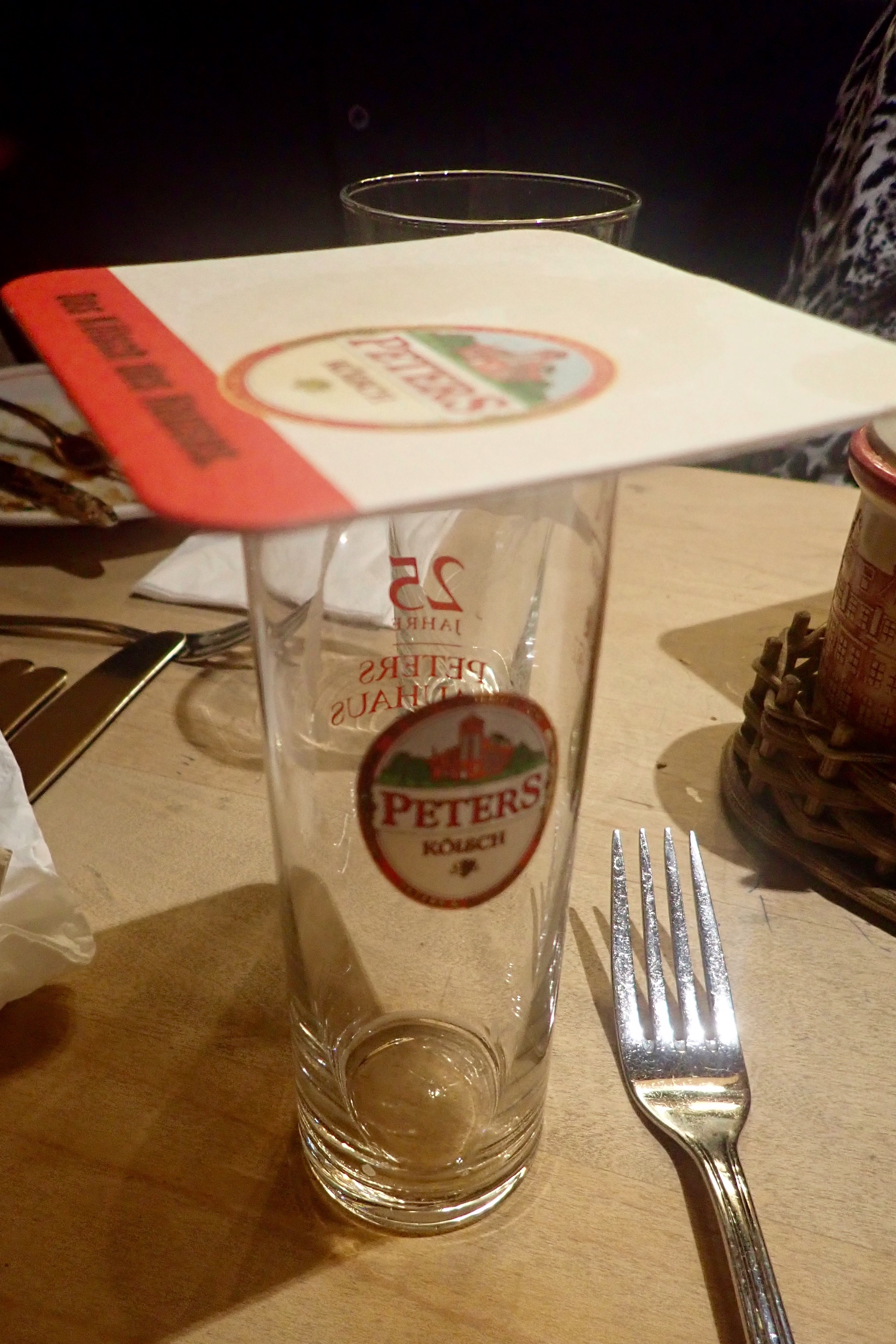
Second stop: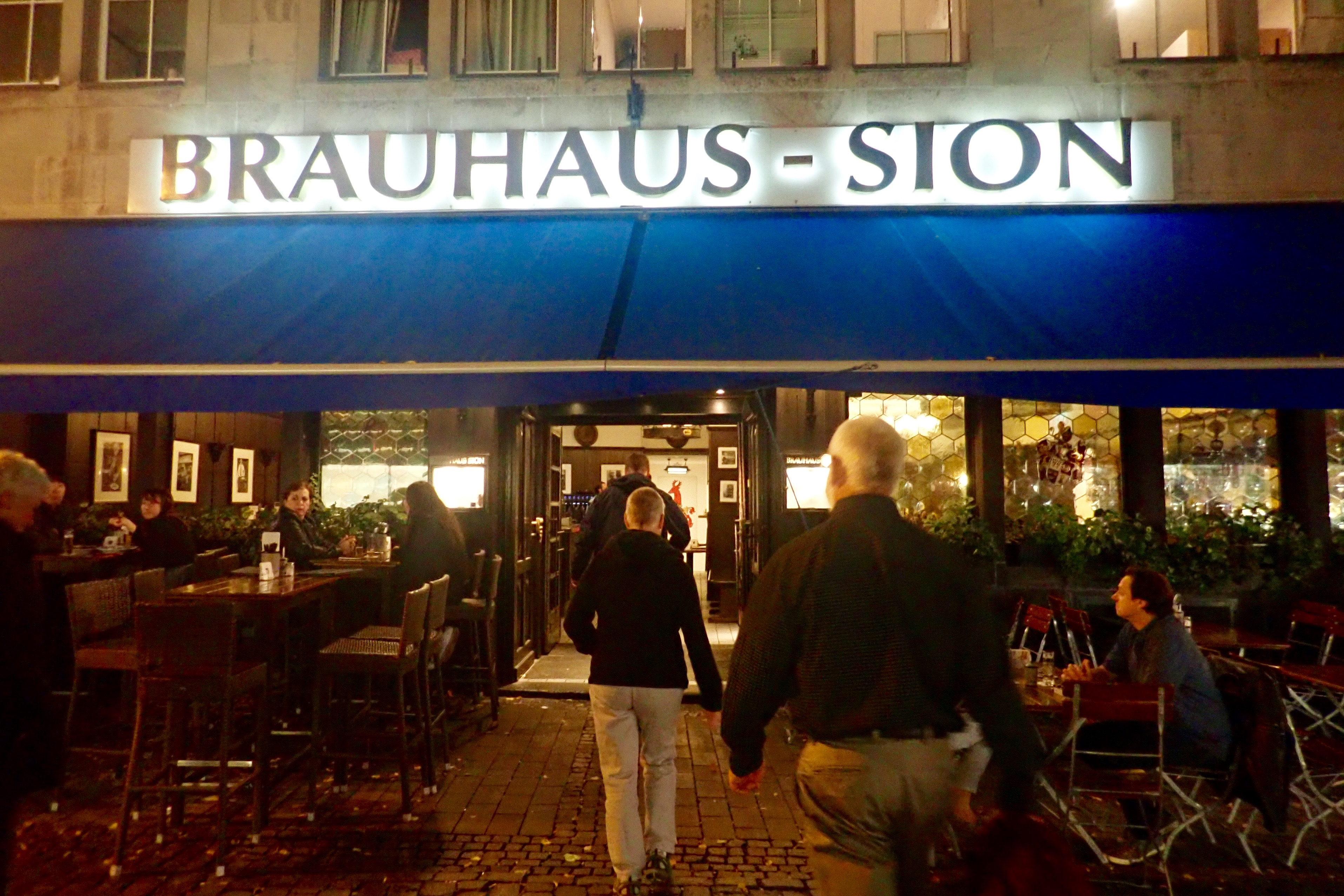
Note the beer carrier – the same style is used in every brauhaus: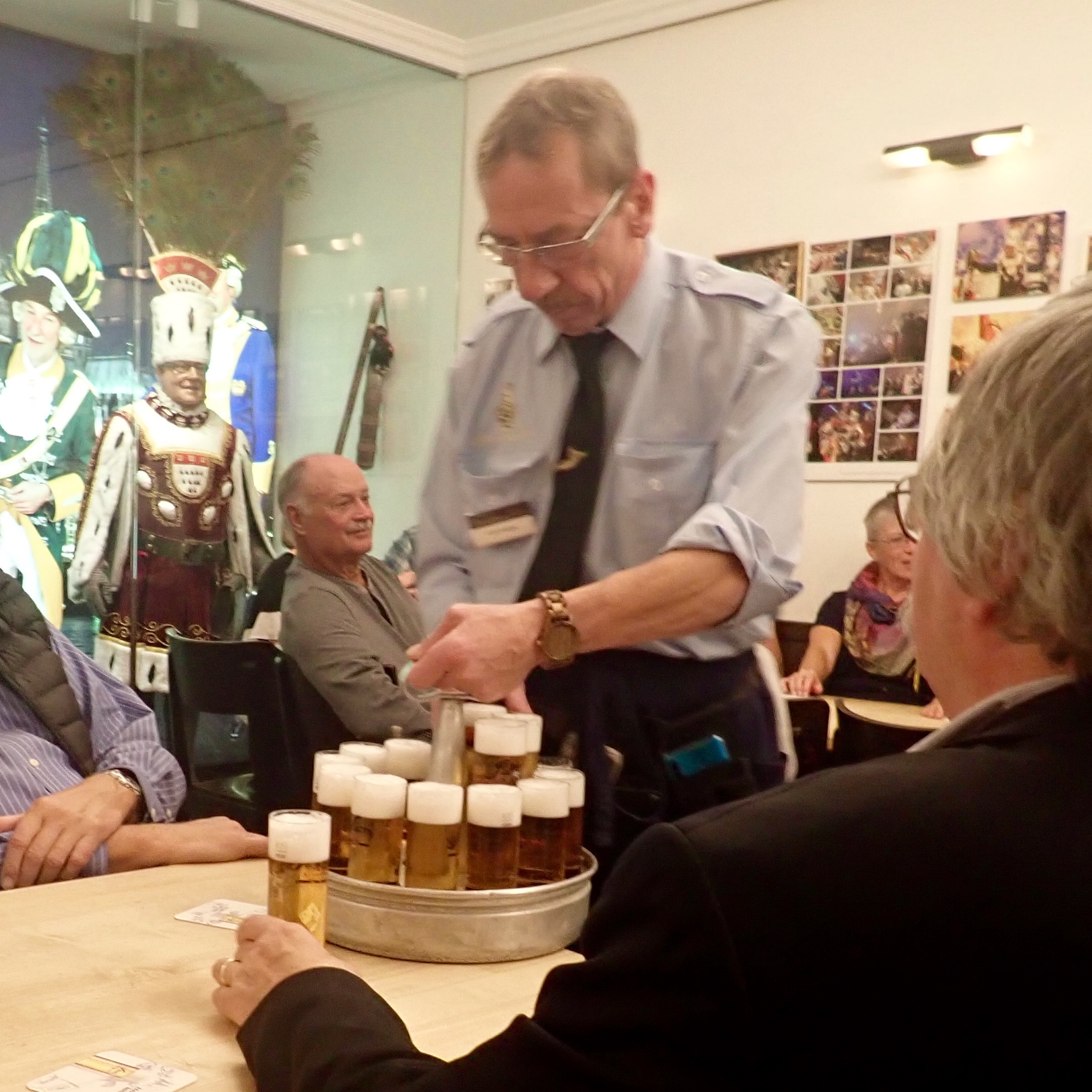
Stop #3 – Pfaffen Brauerei Aussehank (the last one!):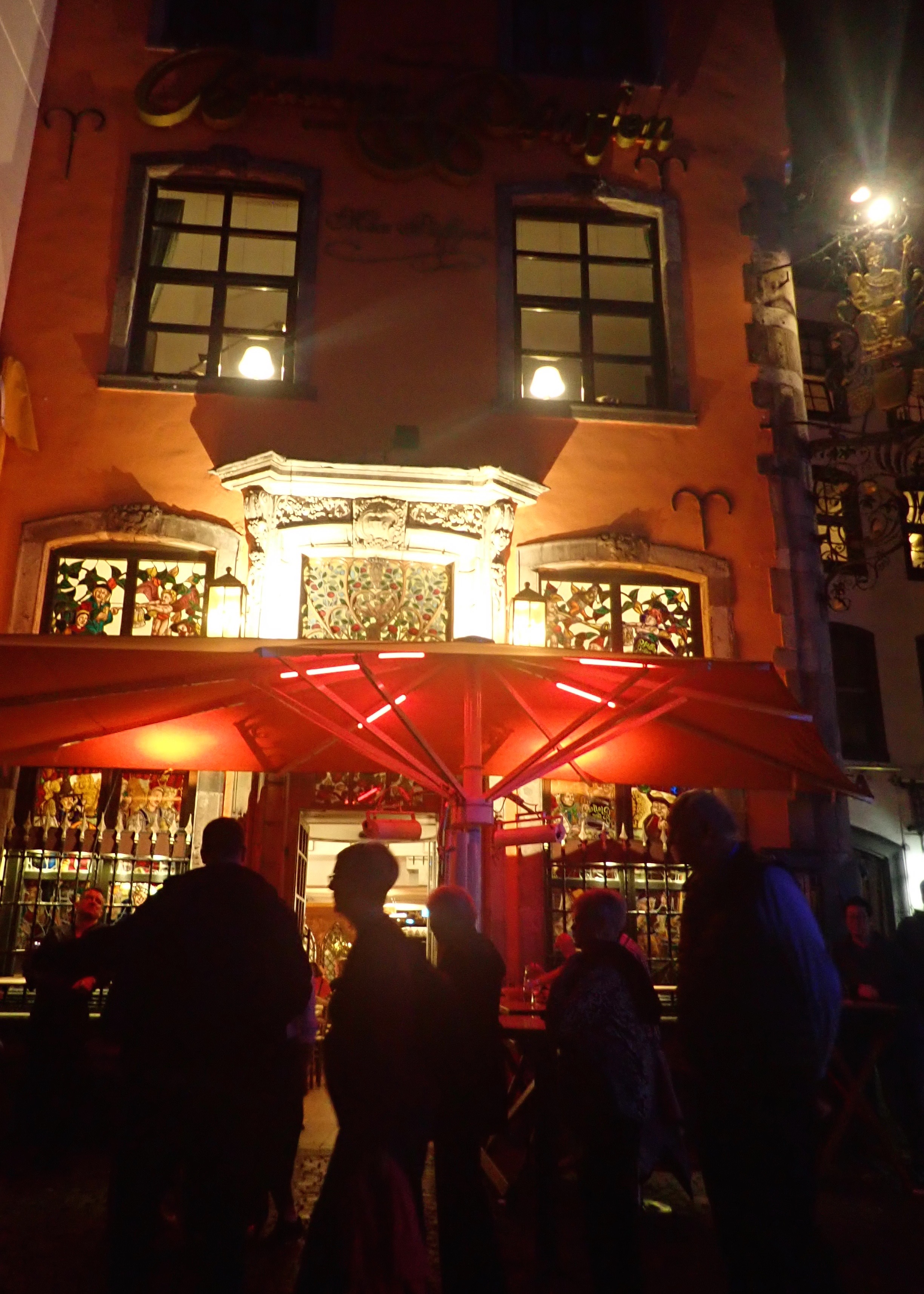
A view of the cathedral. We set sail in about a half hour.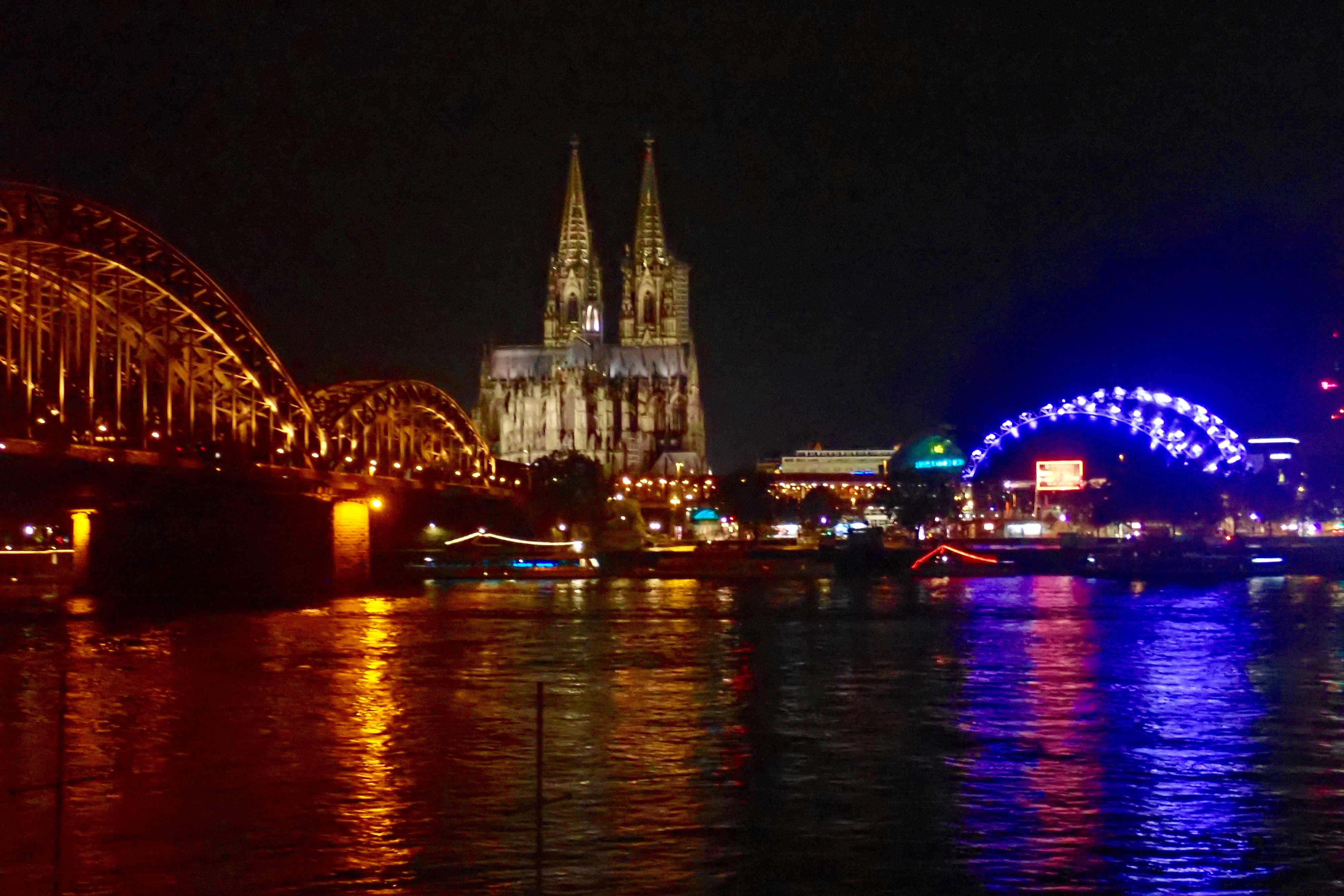
Koblenz
I discovered Eggs Benedict on this cruise and look forward to them every morning. It’s actually a reasonable portion as long as I stop there.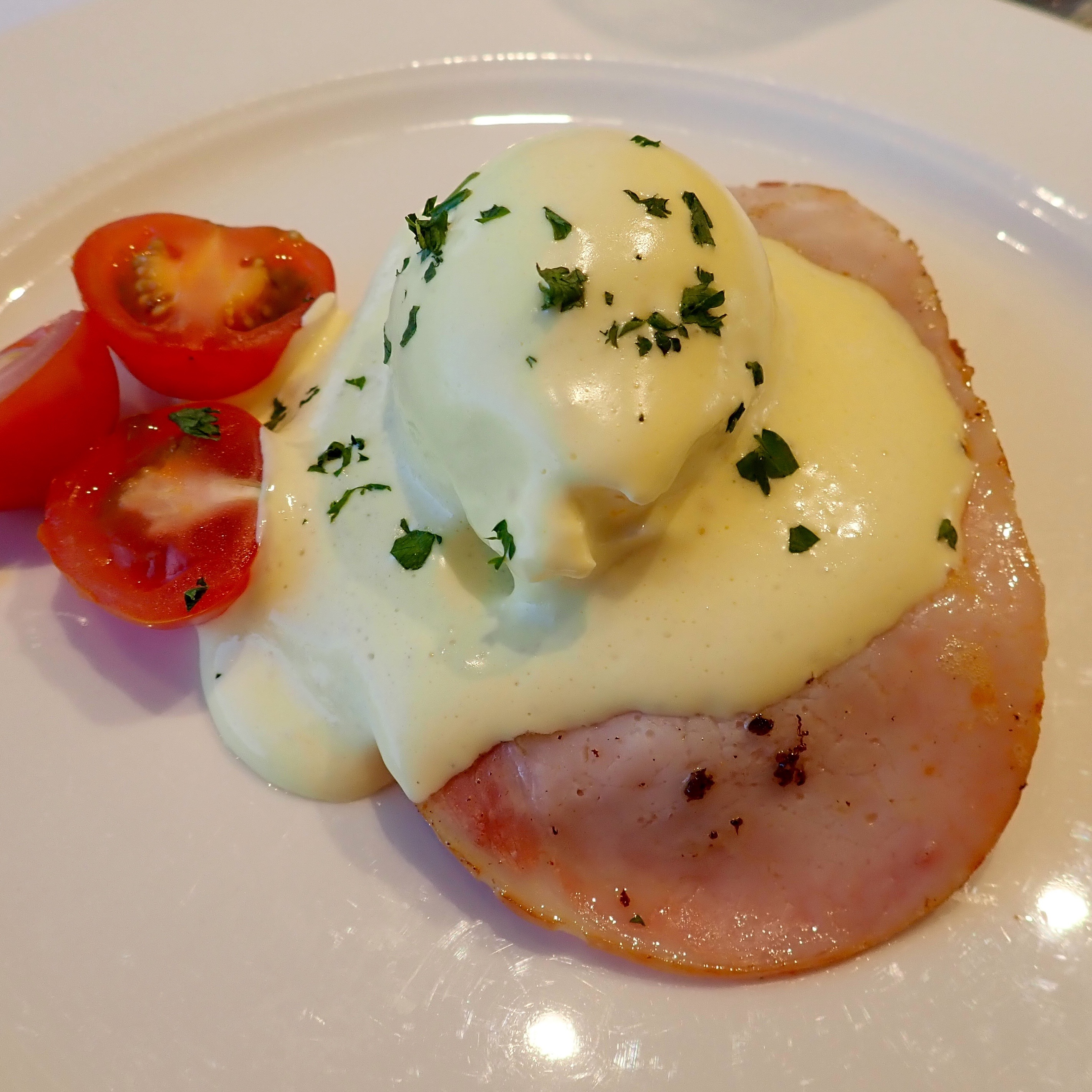
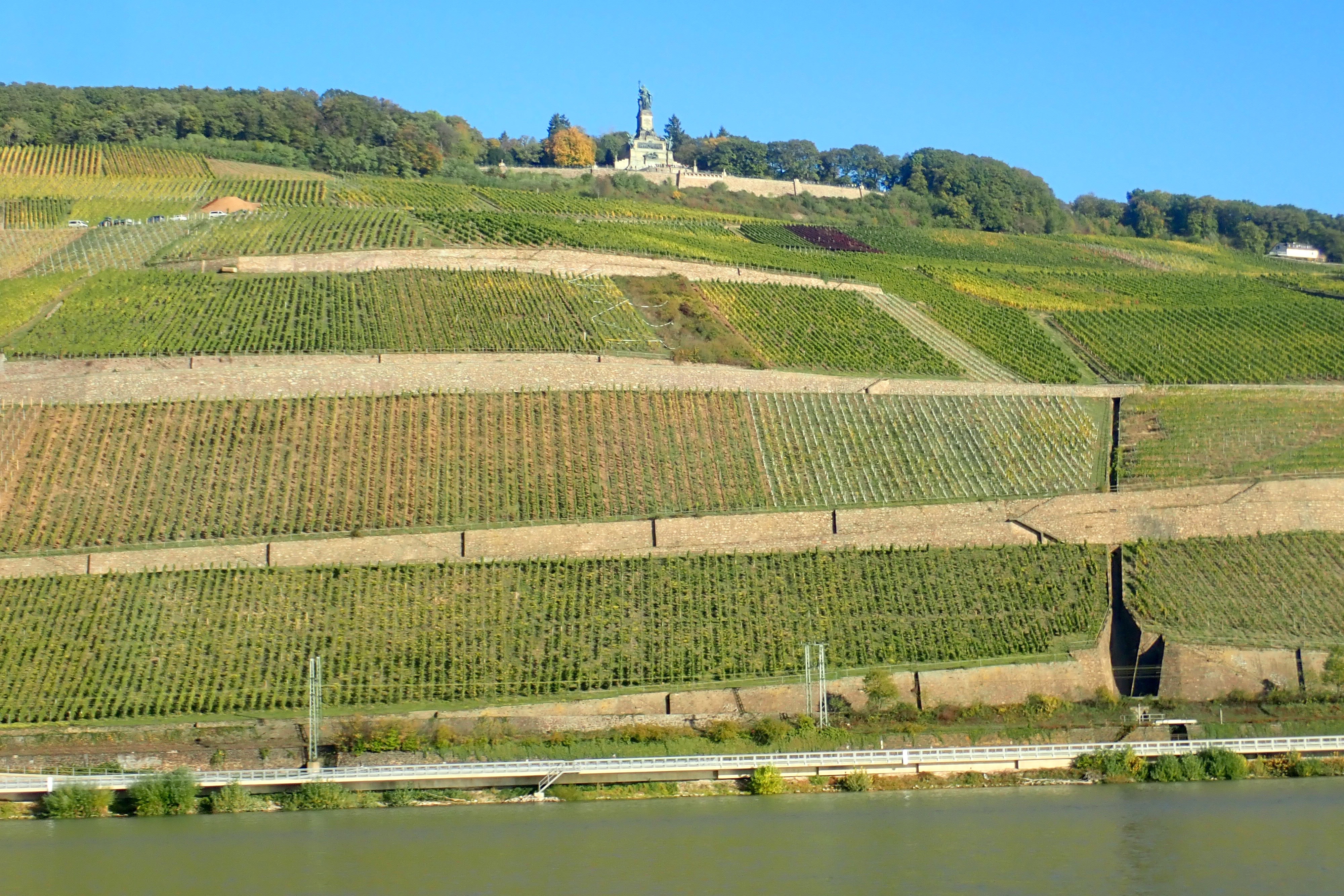
The weather was beautiful today and reached about 70 degrees – it was perfect for the narrated cruise through the Middle Rhine in the morning. Castles – vineyards – towns .. repeat, repeat, repeat for the next 2 hours.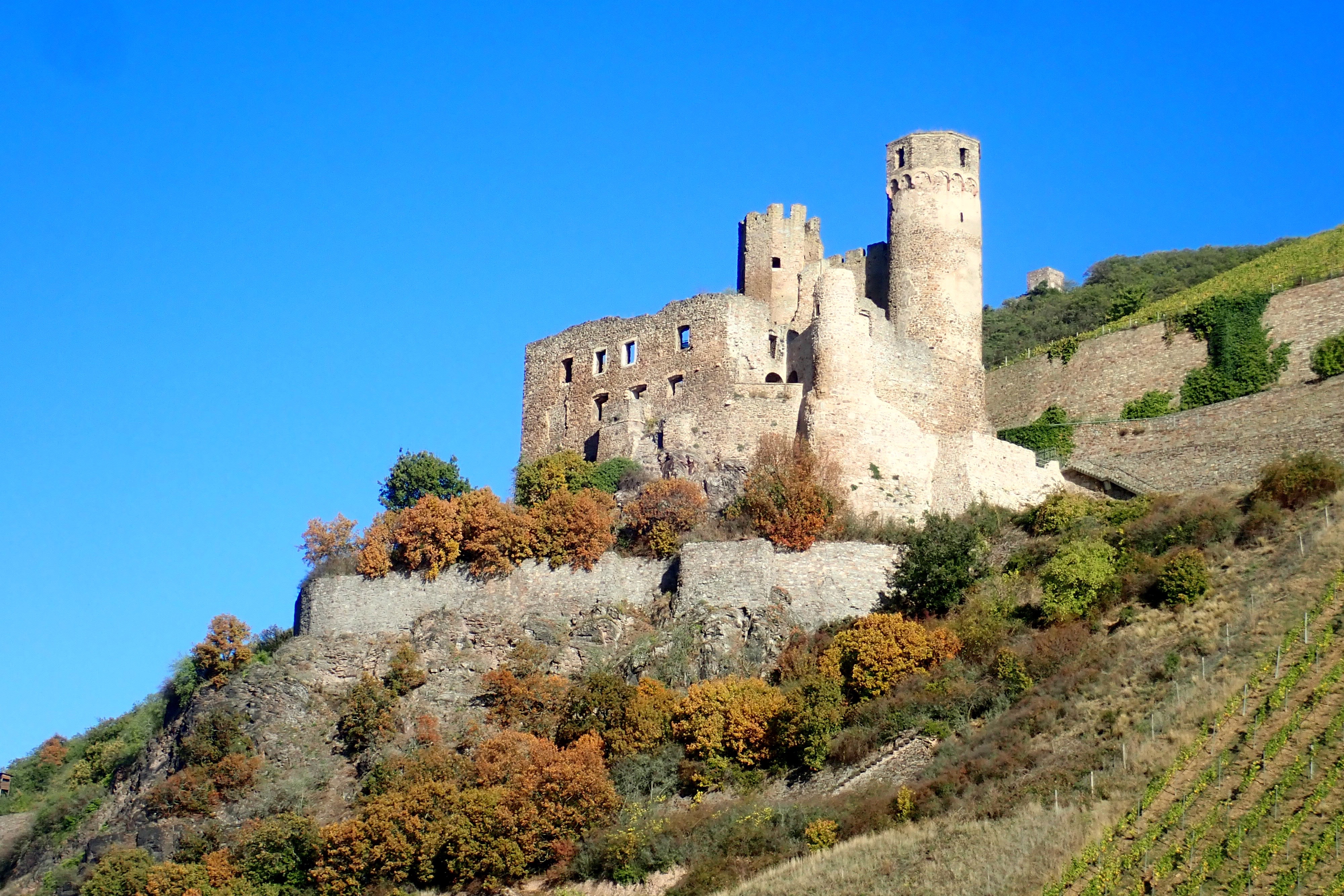
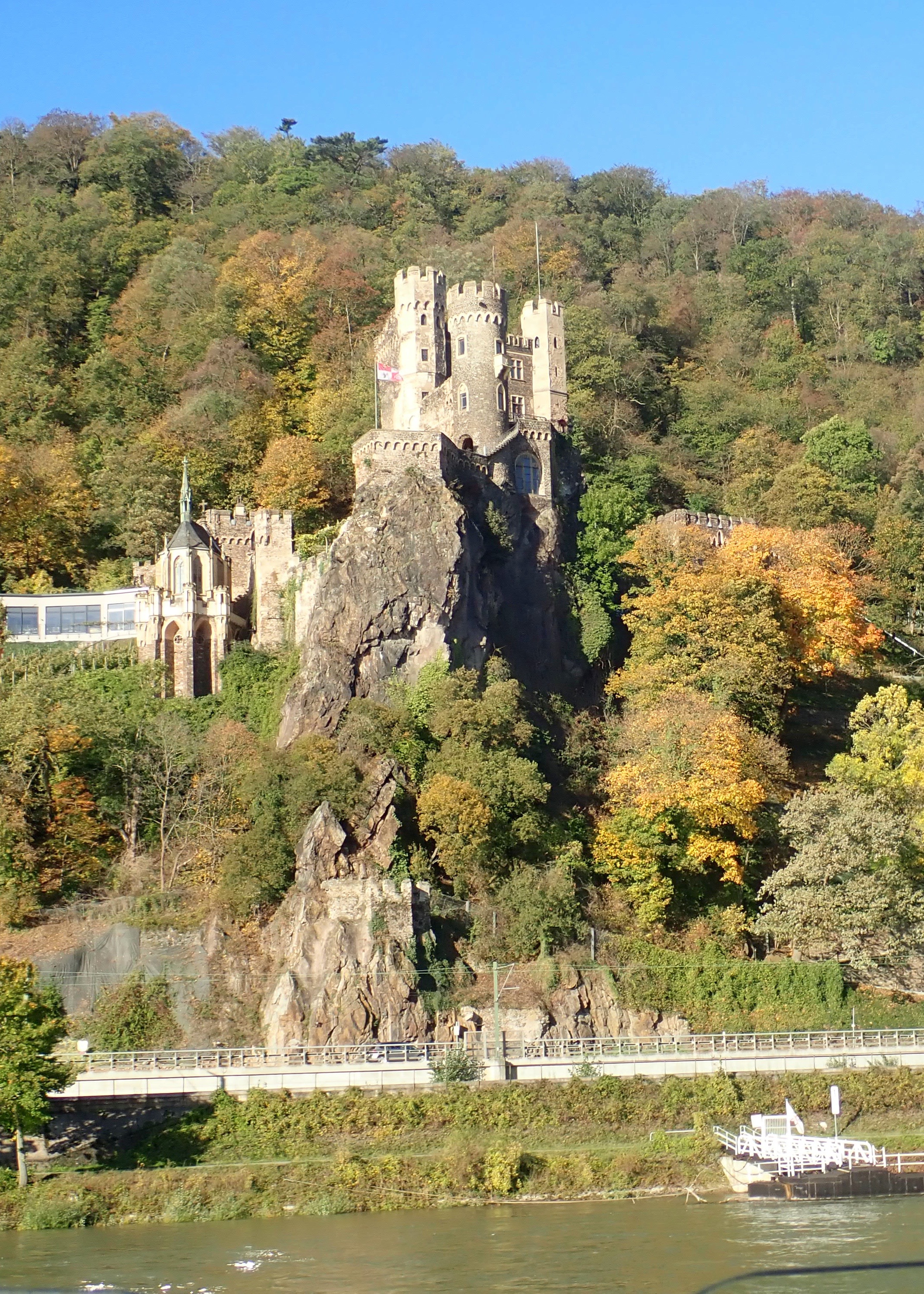

Lorelei Rock:
After lunch, we took a Moselle River wine tasting excursion. Very steep hillsides: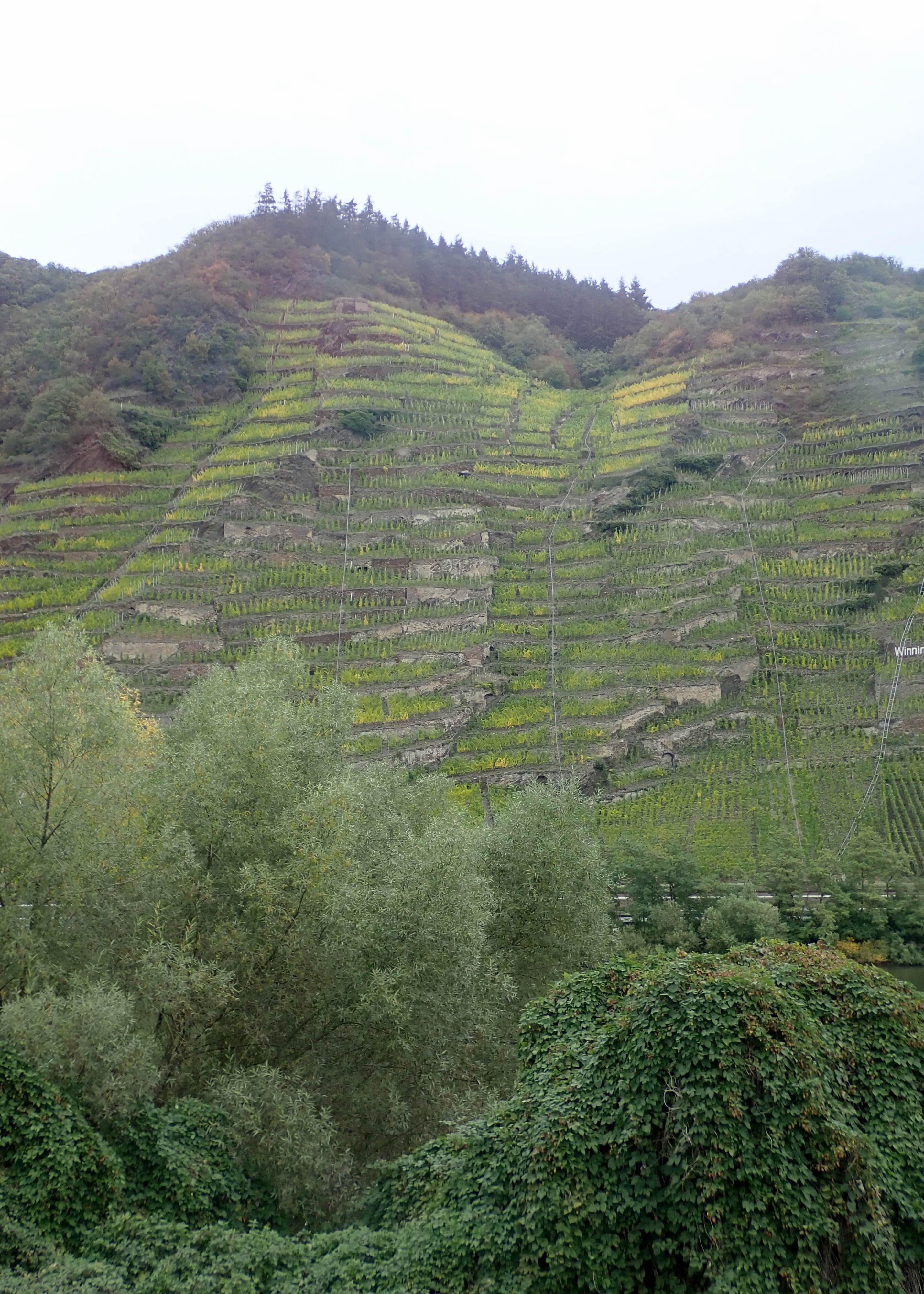
From a lookout point: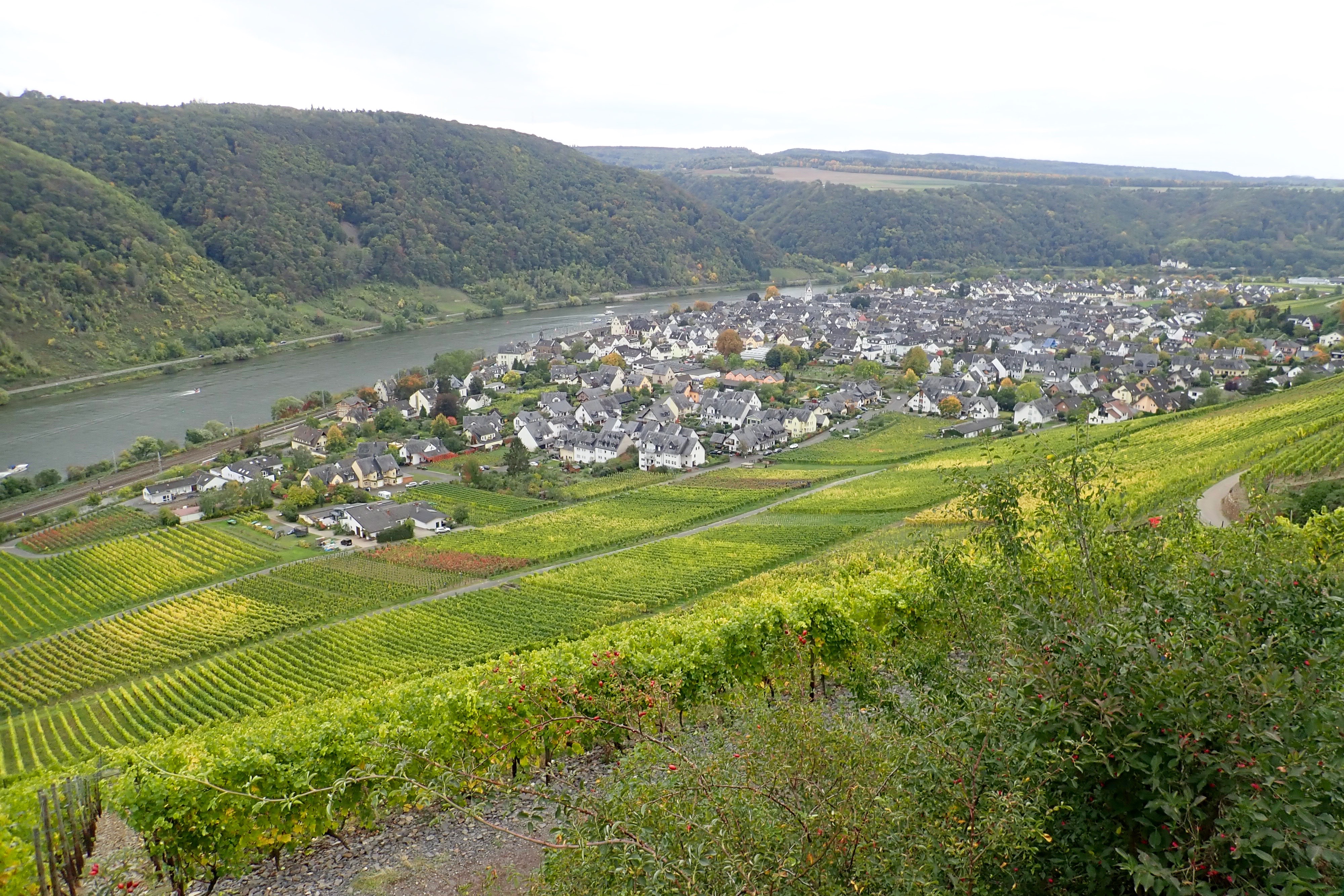
We stopped at Weyh Weingut to learn more. This vineyard has been in the same family for 100 years, 4 generations.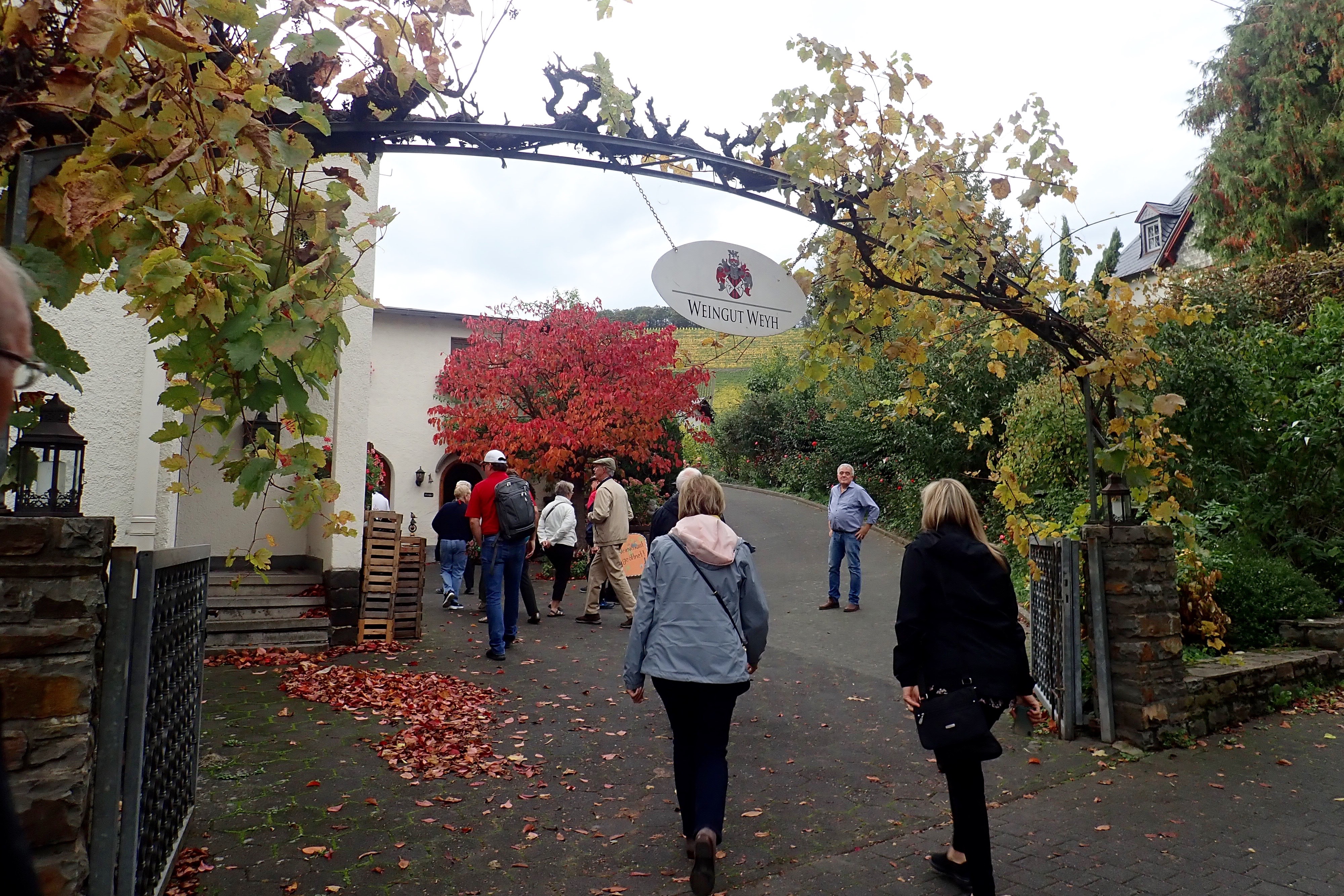
The grapes were recently harvested by hand. 15 acres of grapes will yield about 65,000 bottles of wine.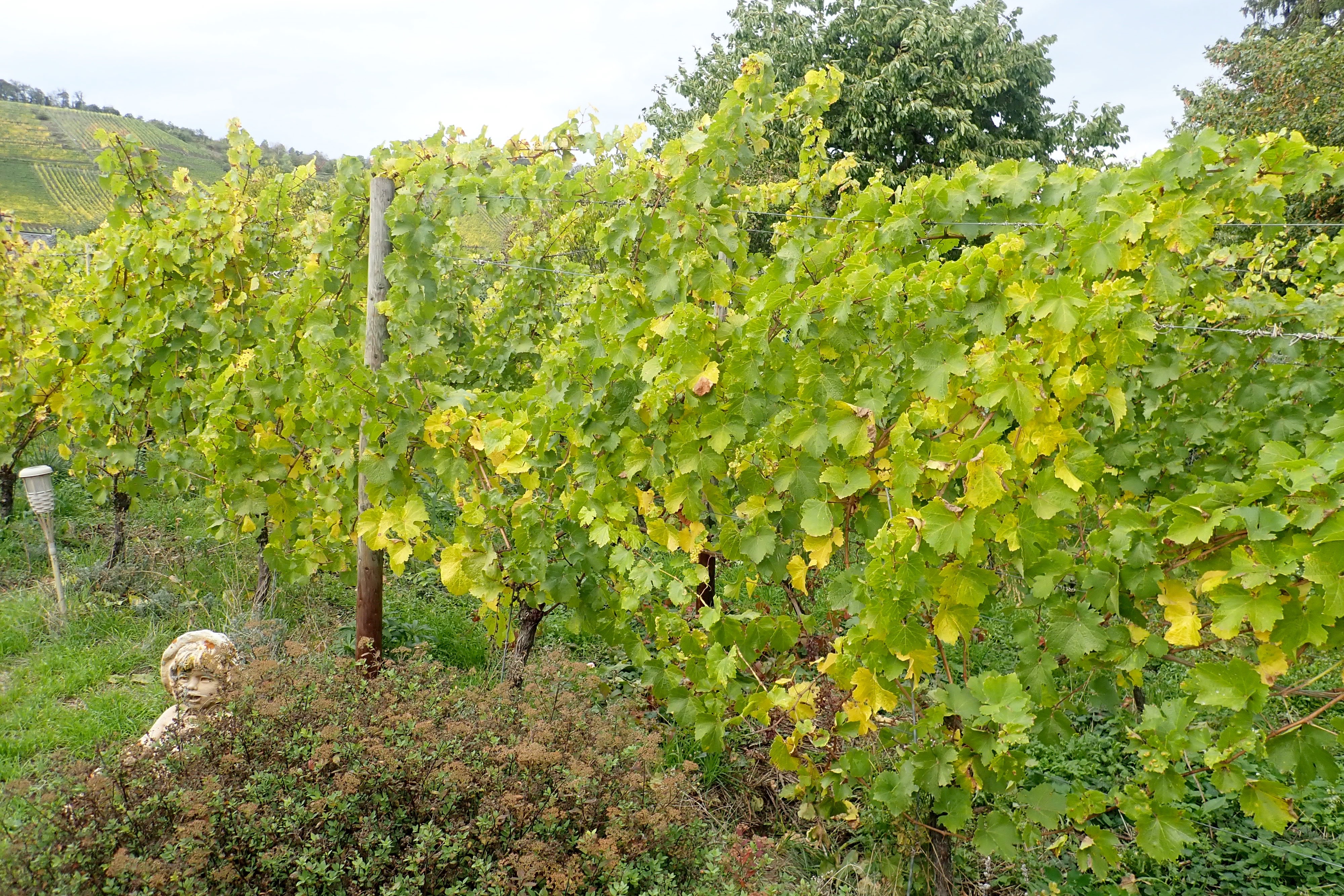
Then we tasted 4 distinctly different rieslings. (Merrilyn, I bought a bottle of Uhlen Laubach Riesling trocken for our next Th@M.)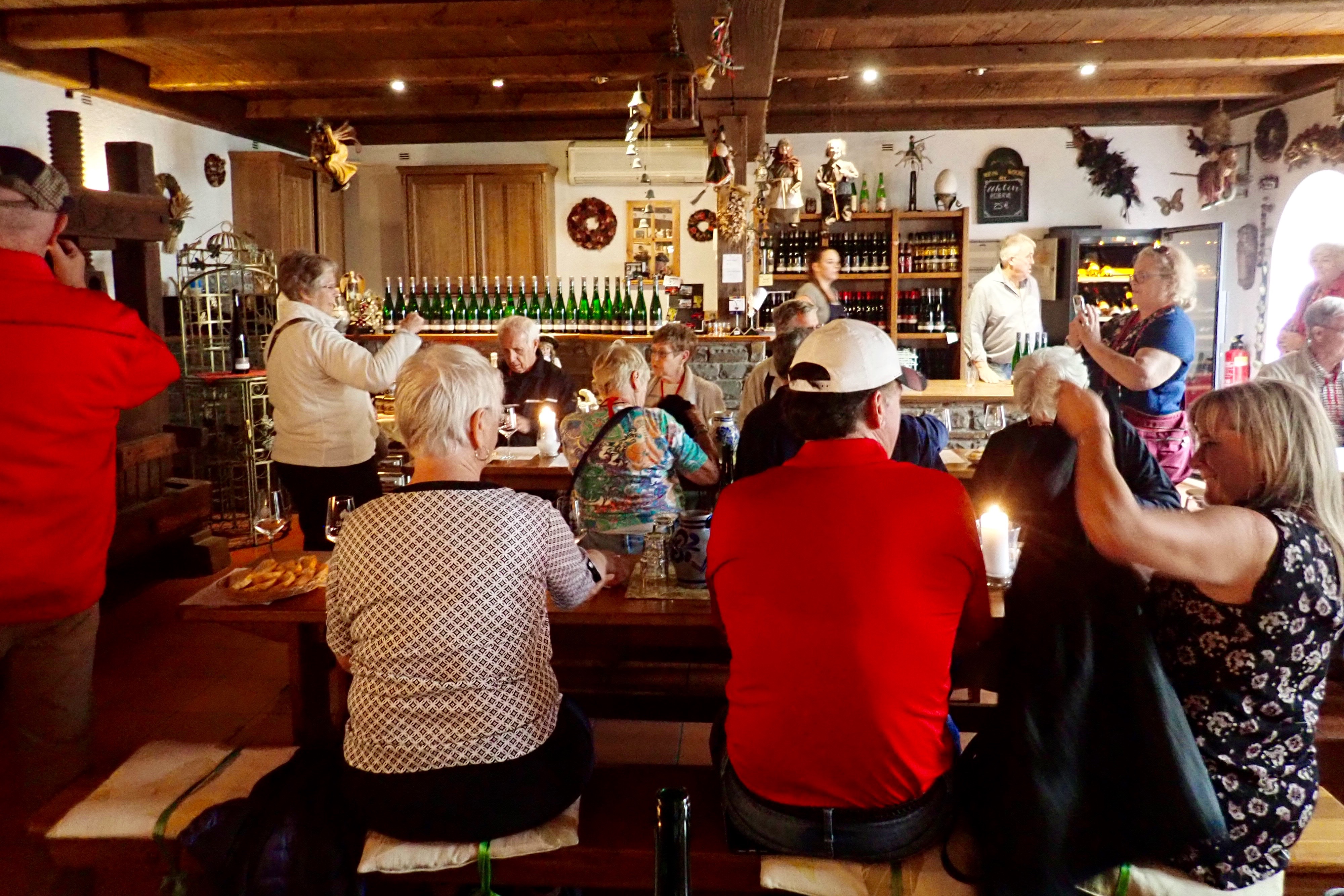
We had a great group to visit with at dinner. Lower right is Wyn, her husband Ron took the picture, from Manassas VA. At the left, Jeff and Theresa from Durham NC. At the far end of the table, Richard and Pat from Montreal Canada.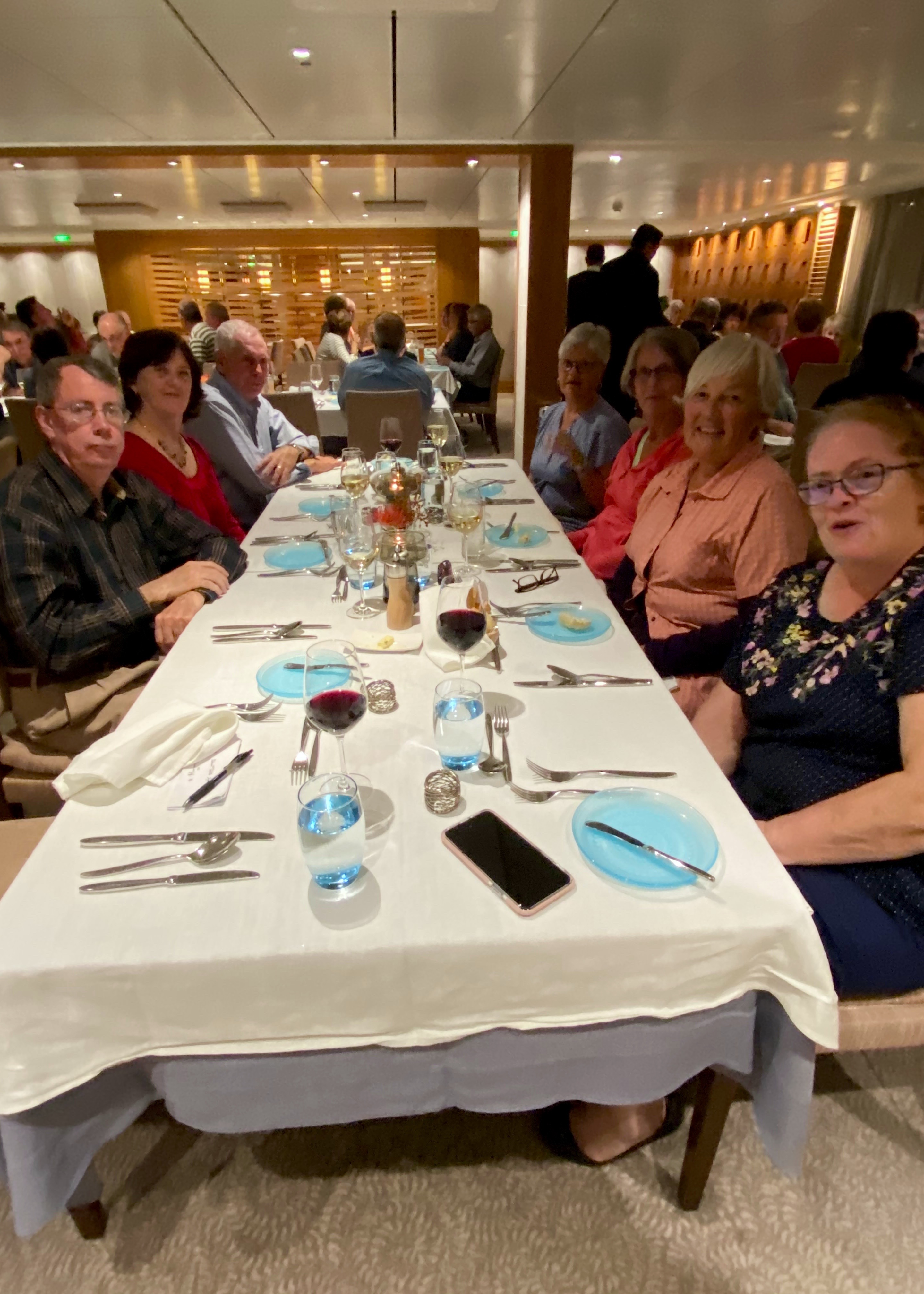
Wertheim
It was a short ride from the ship to the center of town on these little “trains.”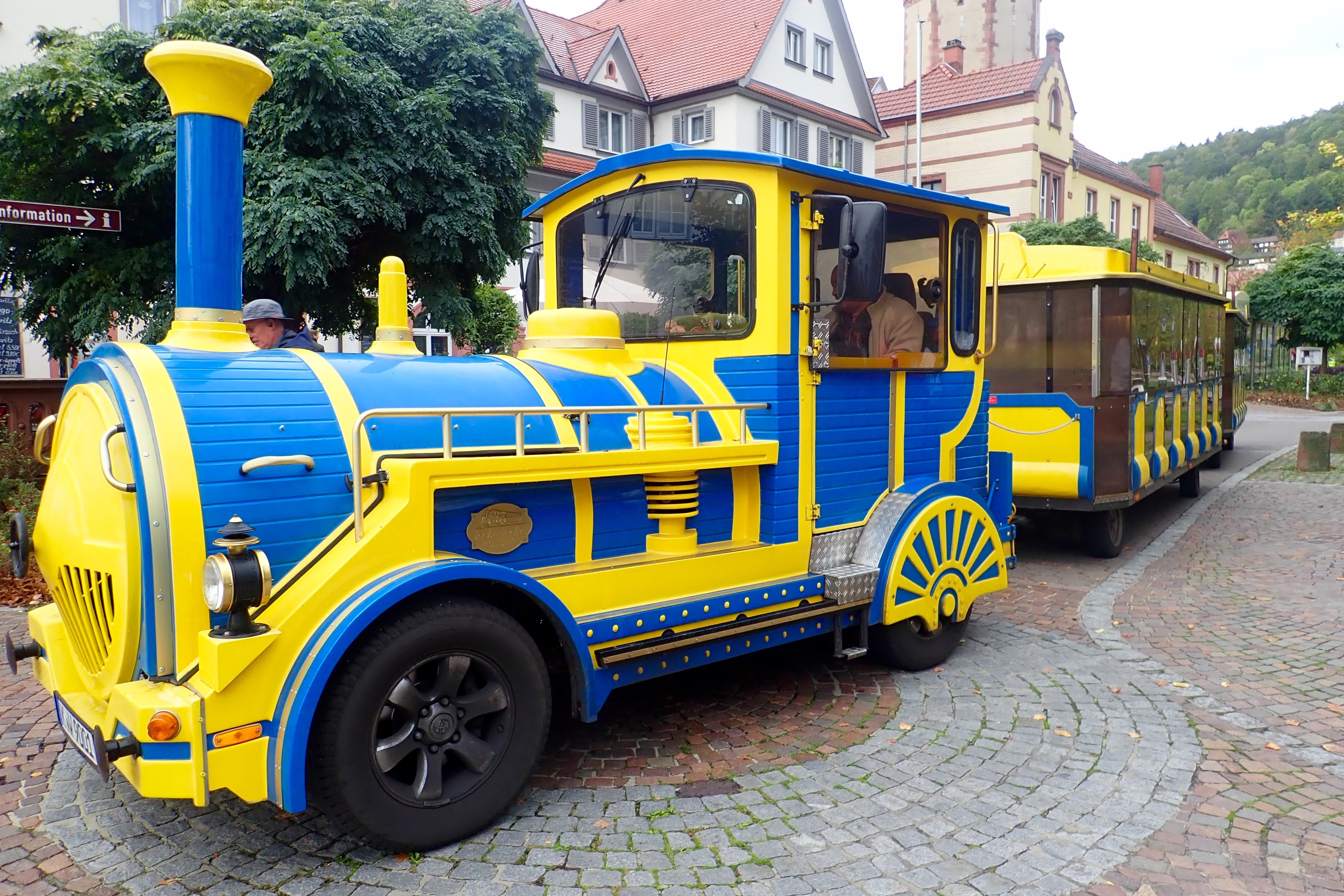
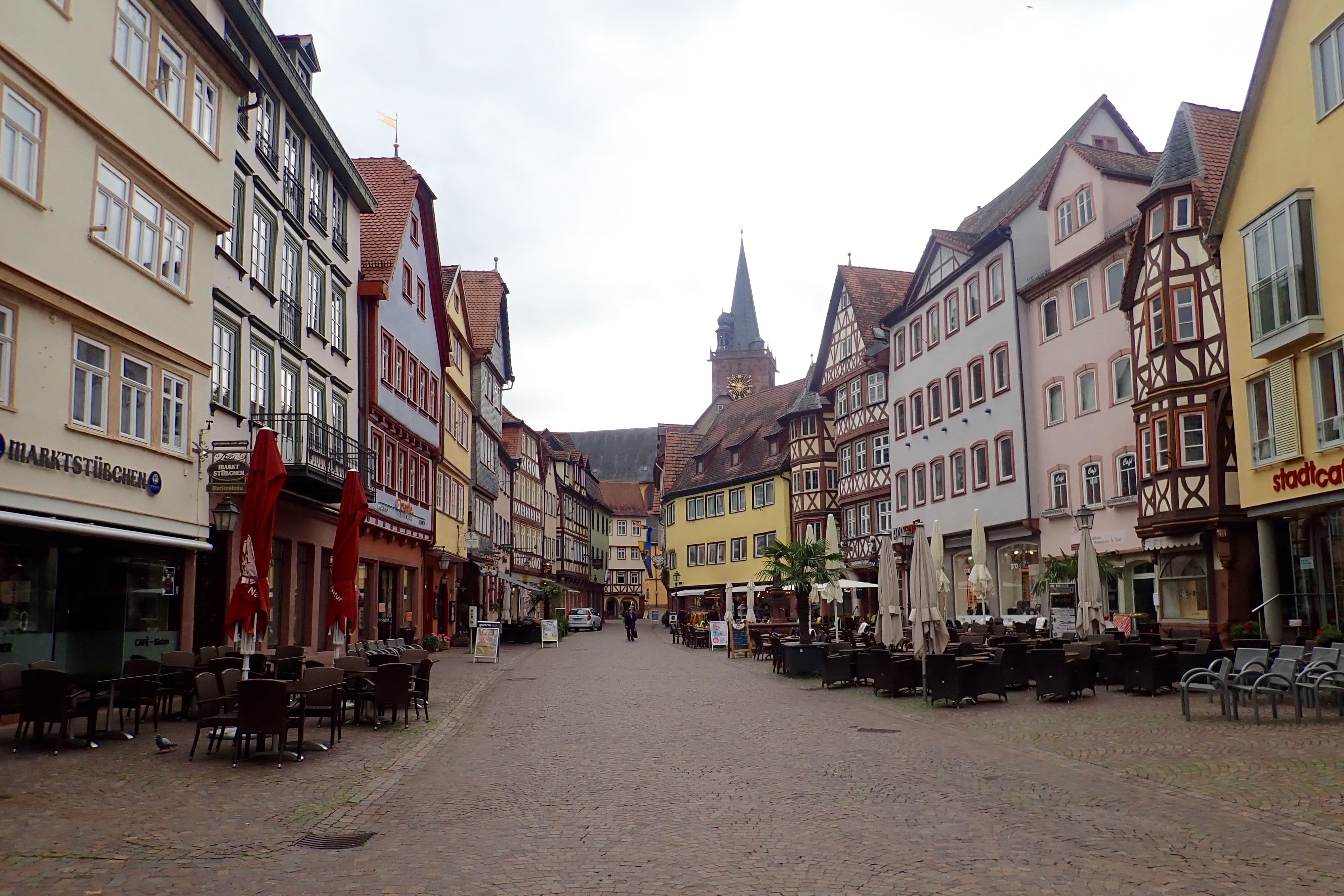
After 800 years of flooding, this tower leans a bit: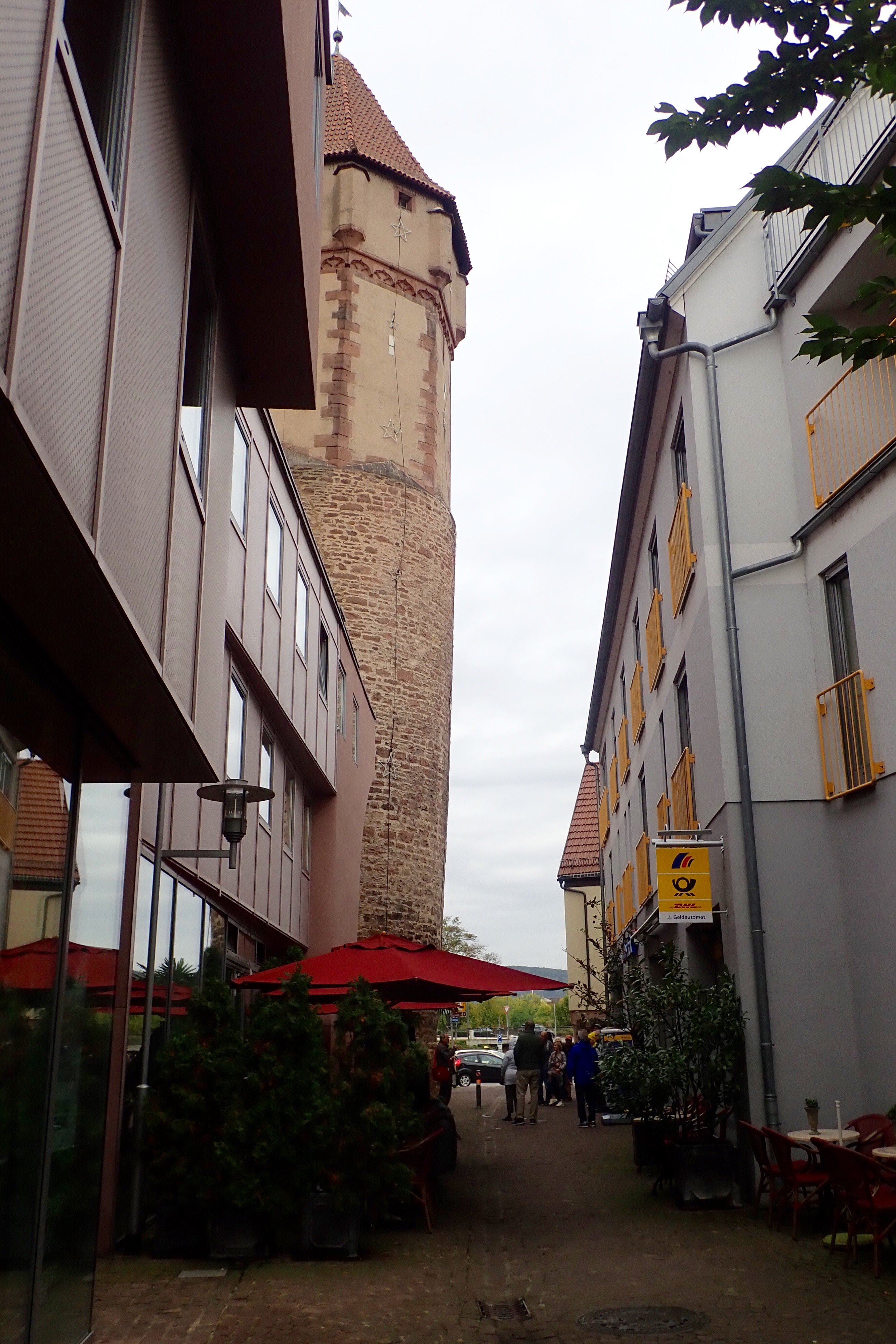
Property taxes were based on the width of the ground floor as it faced the main street – therefore width was increased as the stories go higher.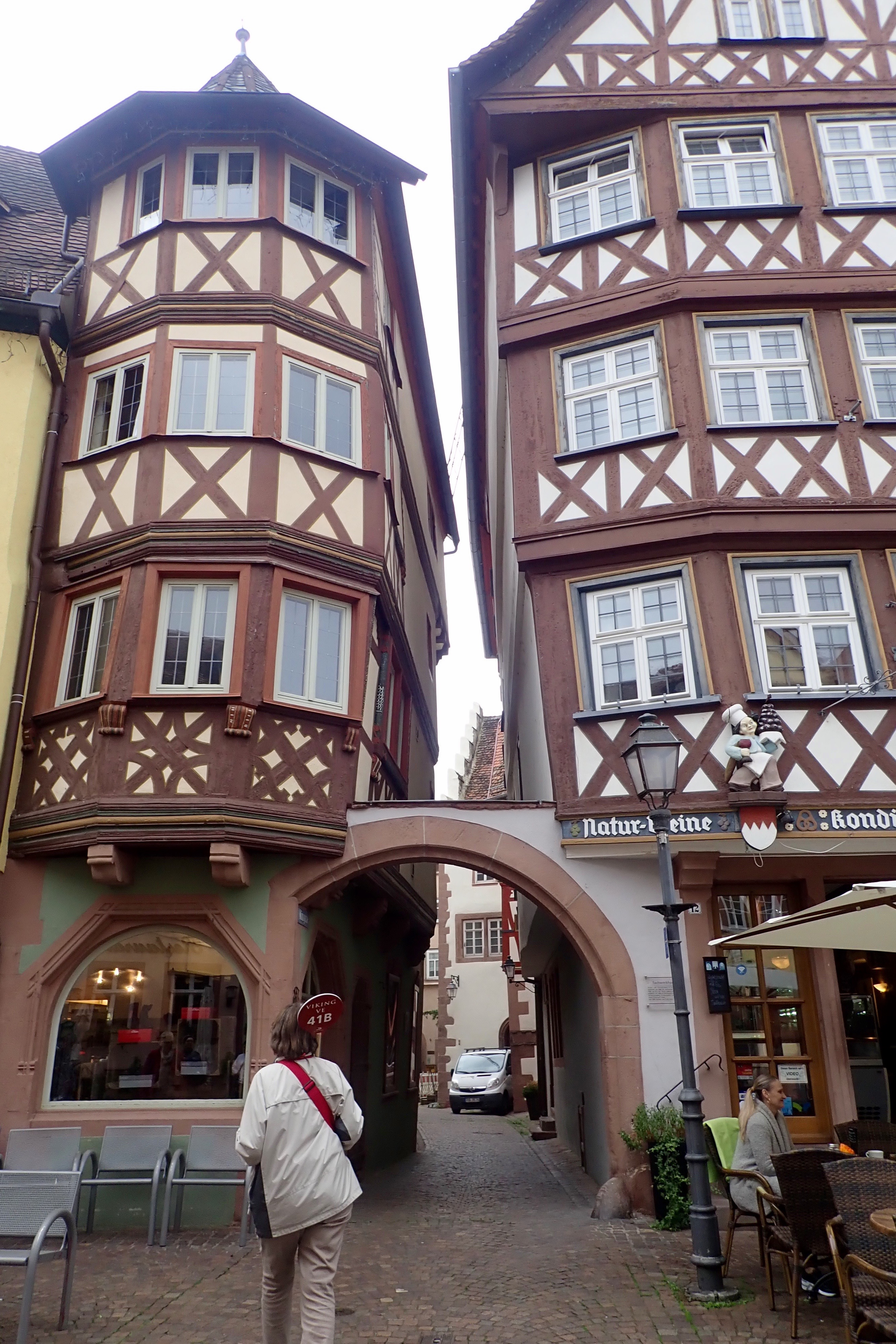
A yellow house was a sign of wealth,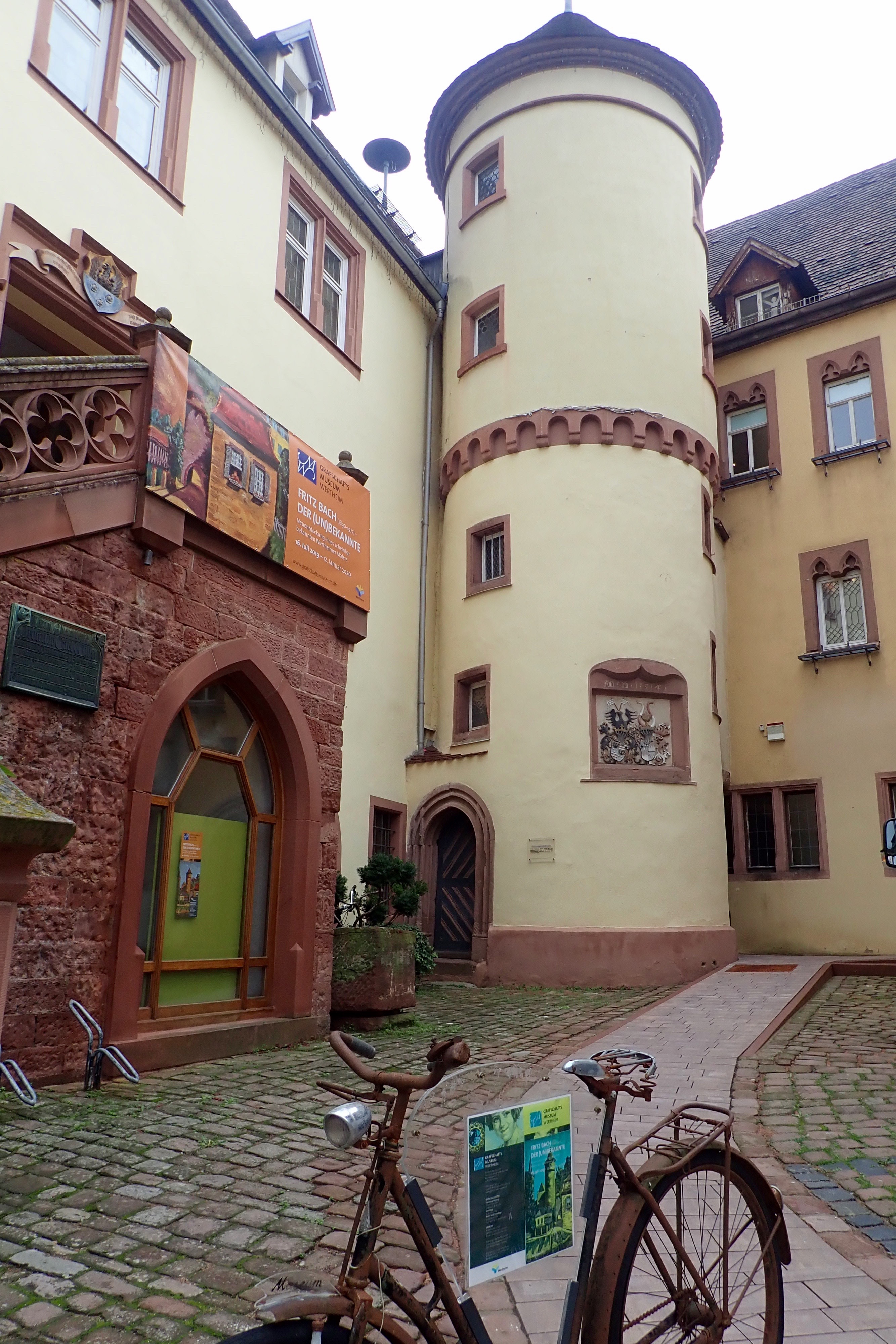
but this shade of blue indicated the greatest wealth. A rarity, the only “smalt blue” half-timbered house known to exist; it was built in 1593.
Along the Tauber River.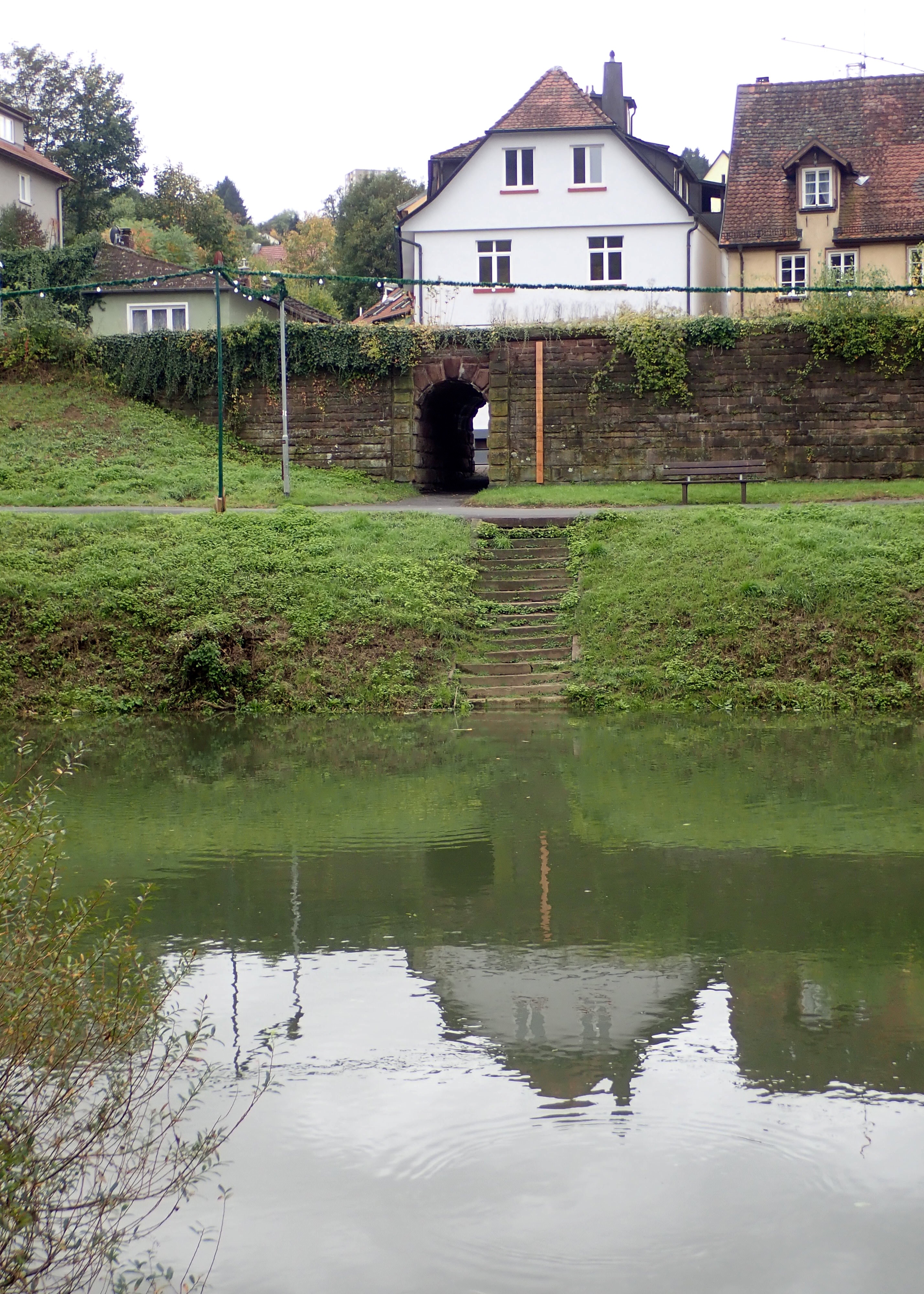
High-water marks over the past centuries: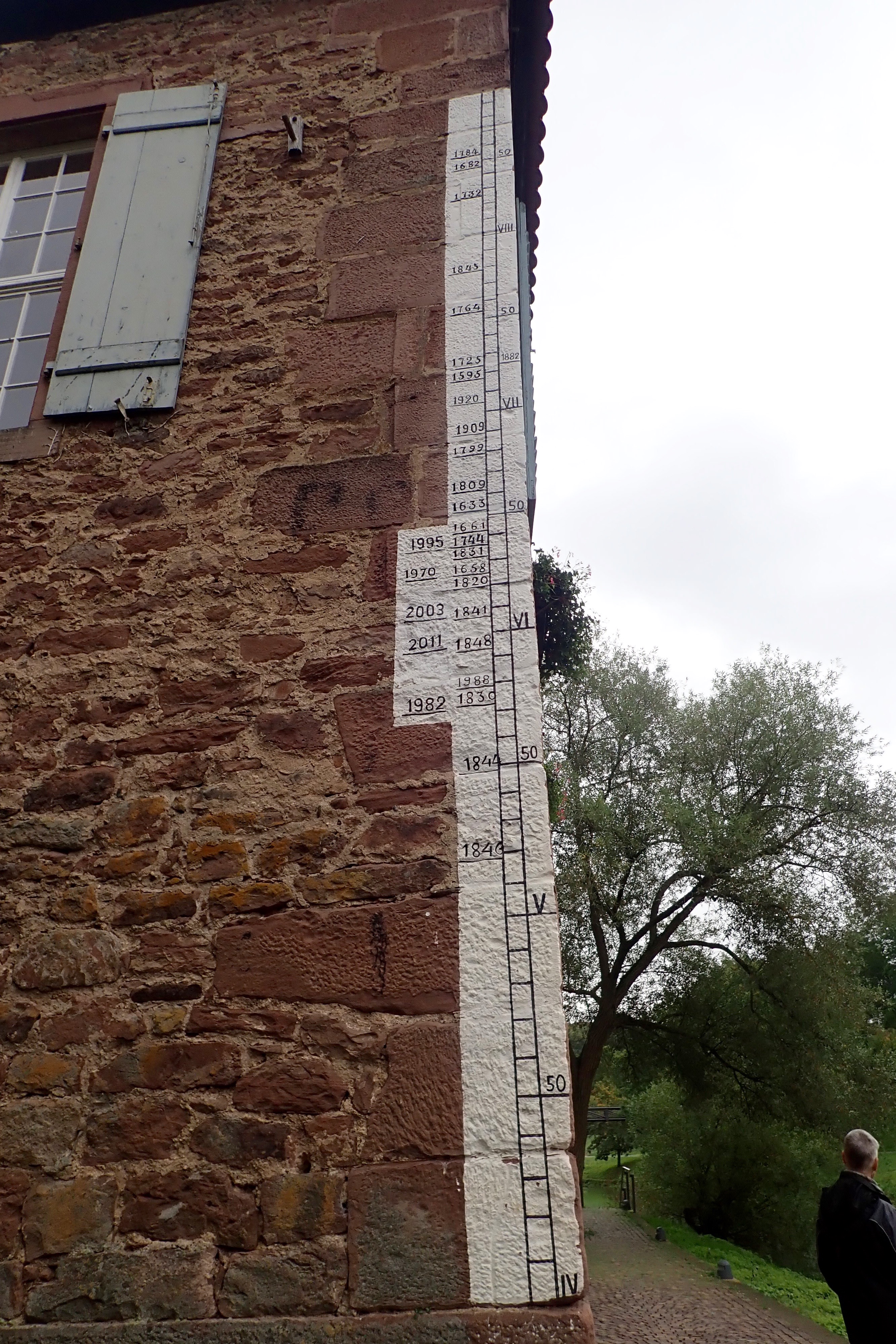
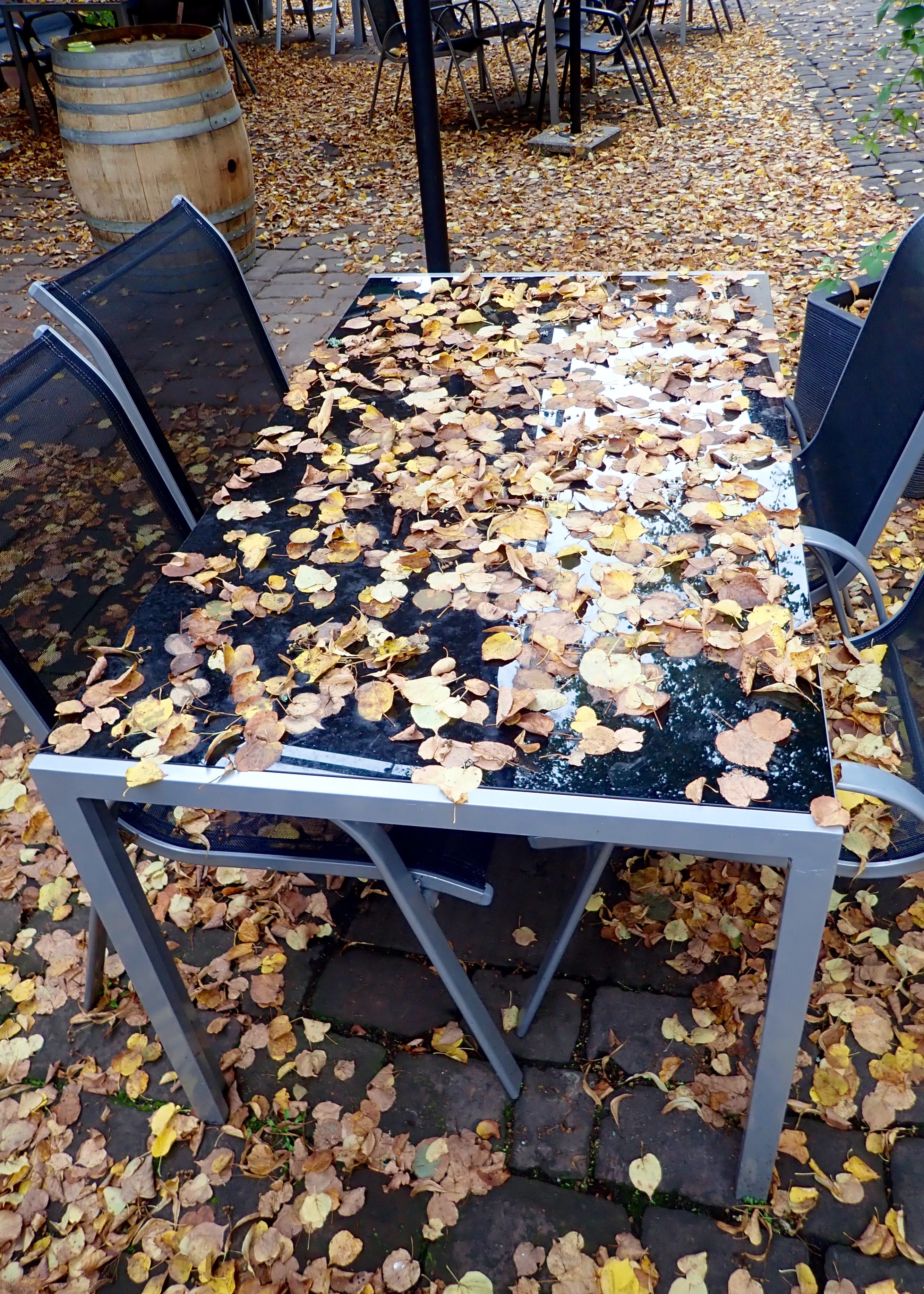
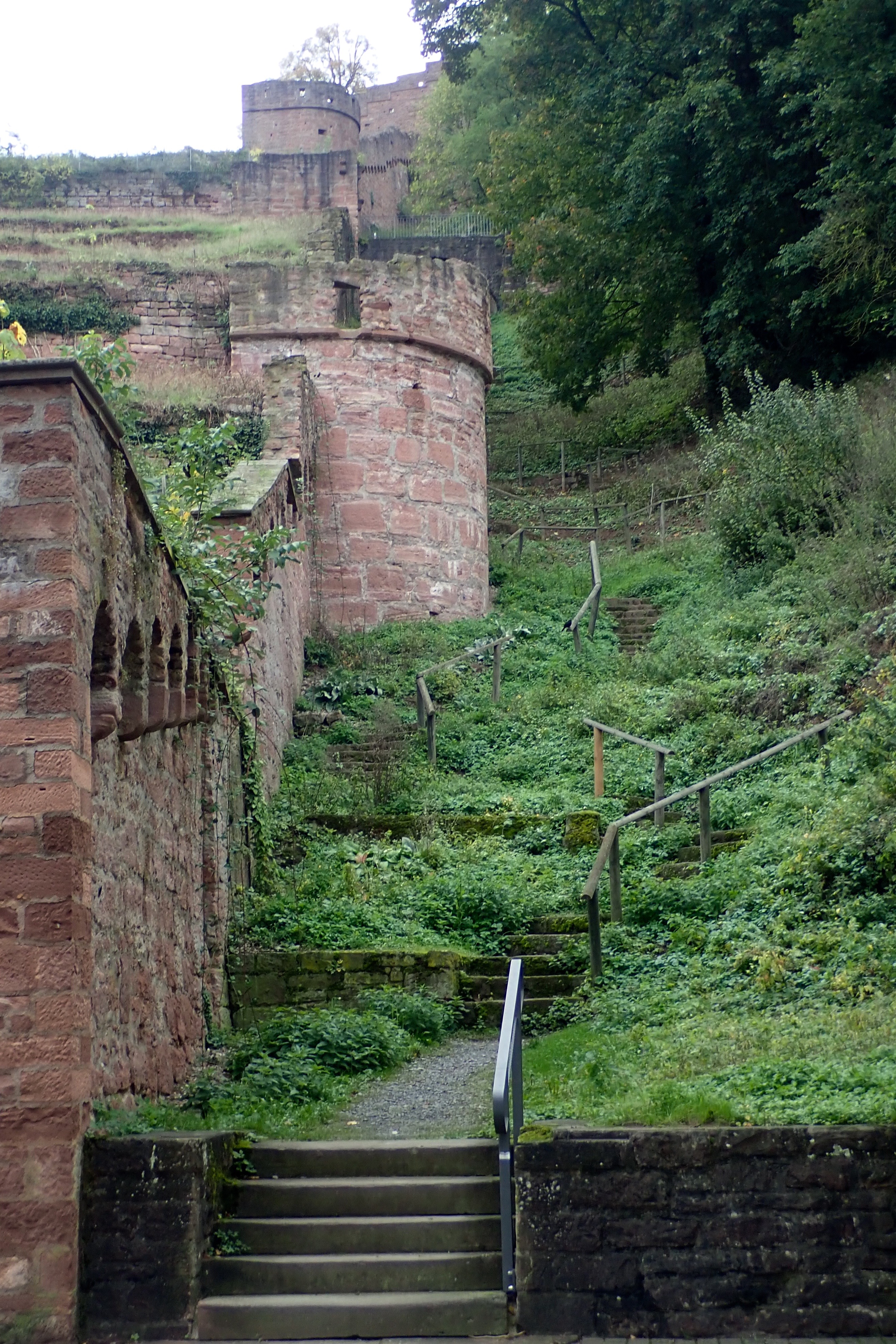
We walked back to the ship for an early-afternoon departure: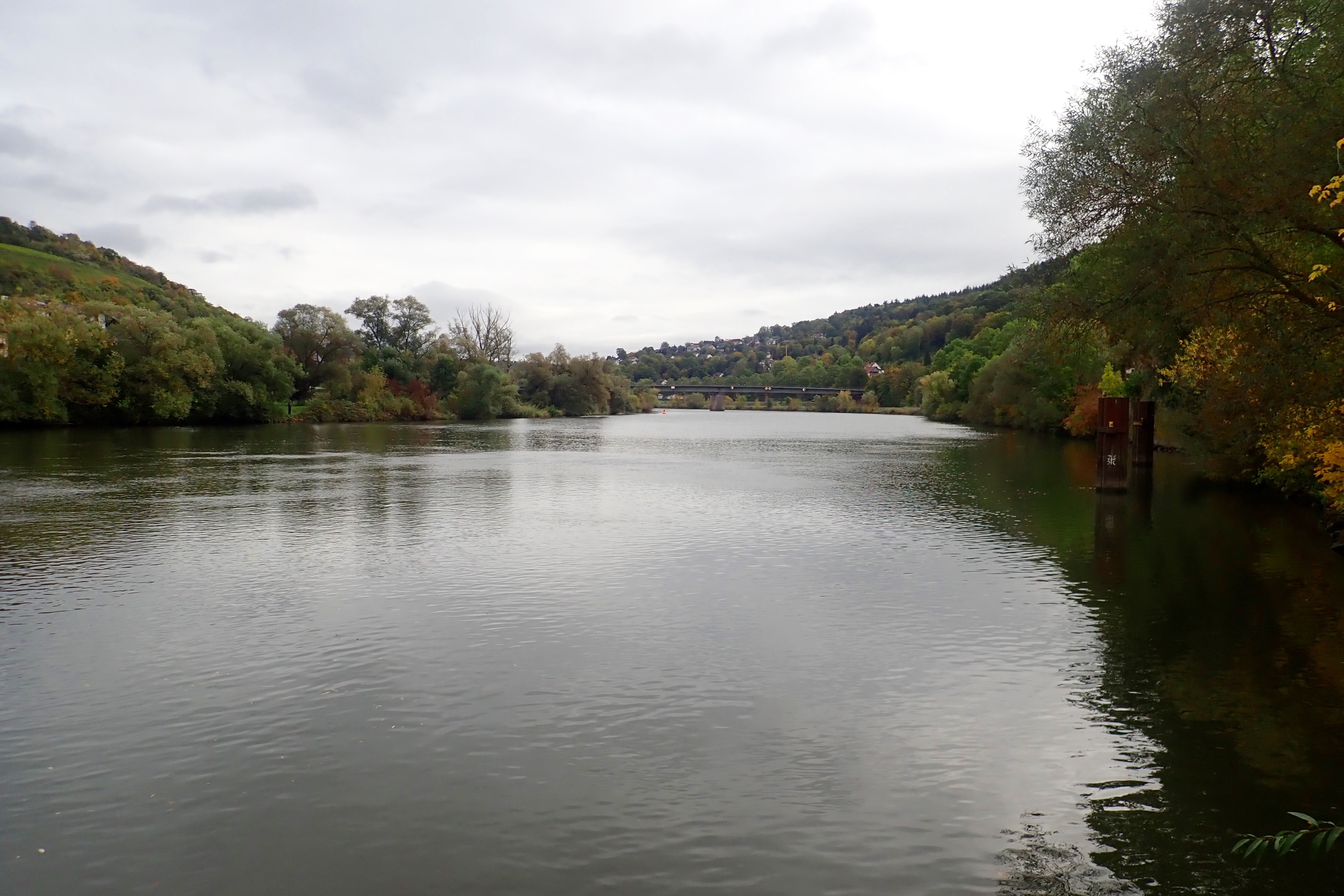
A more relaxed late afternoon with a Viking promotion presentation at 5:30 where it was announced that two new ocean ships will be introduced to the fleet in about a year with destinations in Antarctica and Greenland/North Pole. Sounds a bit cold to me. For dinner it was a traditional German feast followed by “Name that Tune” in the lounge at 9 pm. Having no musical knowledge of that sort, I went back to our cabin, but Ade has a great time.
Wurzburg
The view from our little window this morning: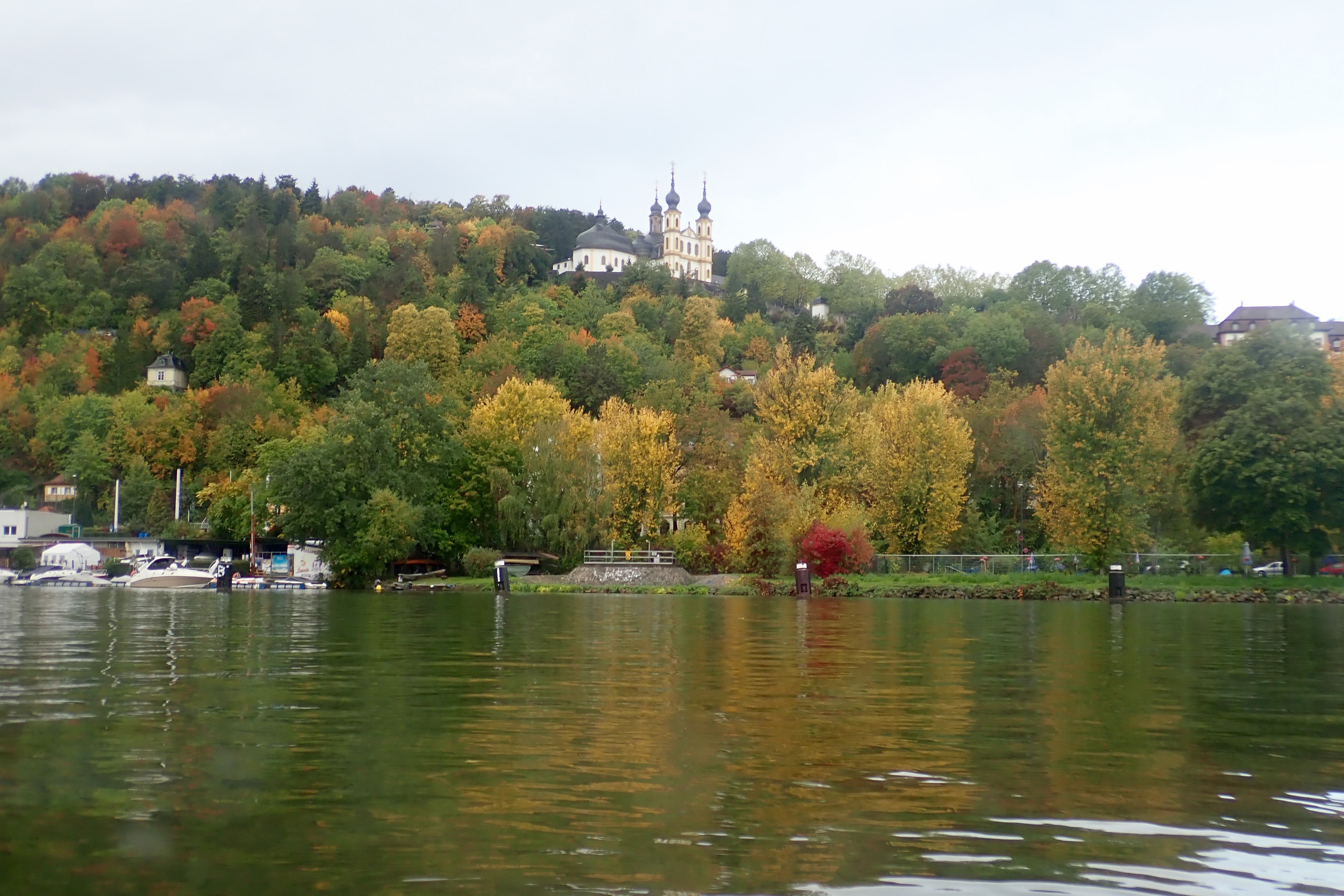
Wurzburg Residenz – the Prince Bishop’s town house – his castle was further away and up a hill.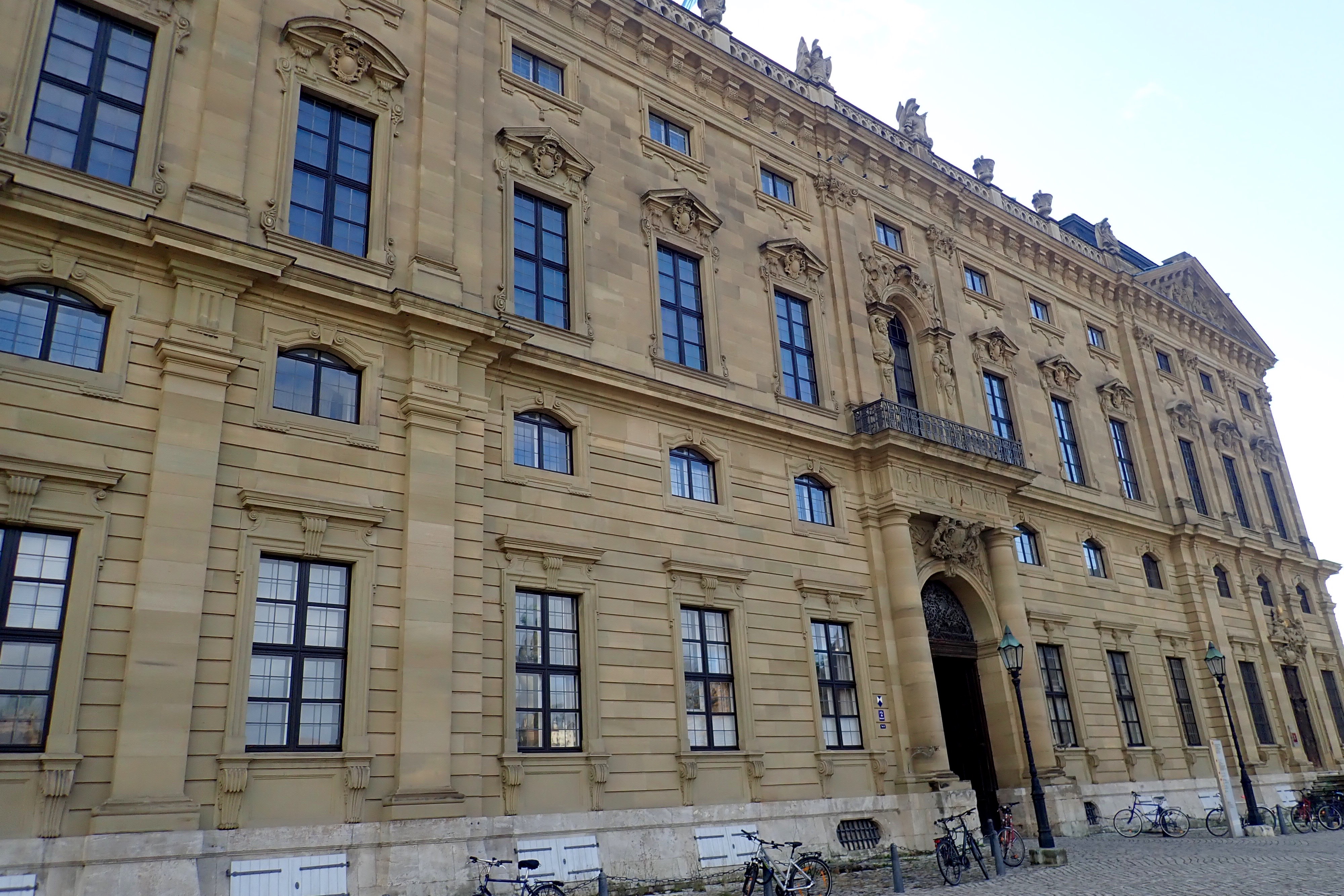
No photos allowed inside – the rooms going from opulent to more opulent. The back side of the Residenze from the gardens: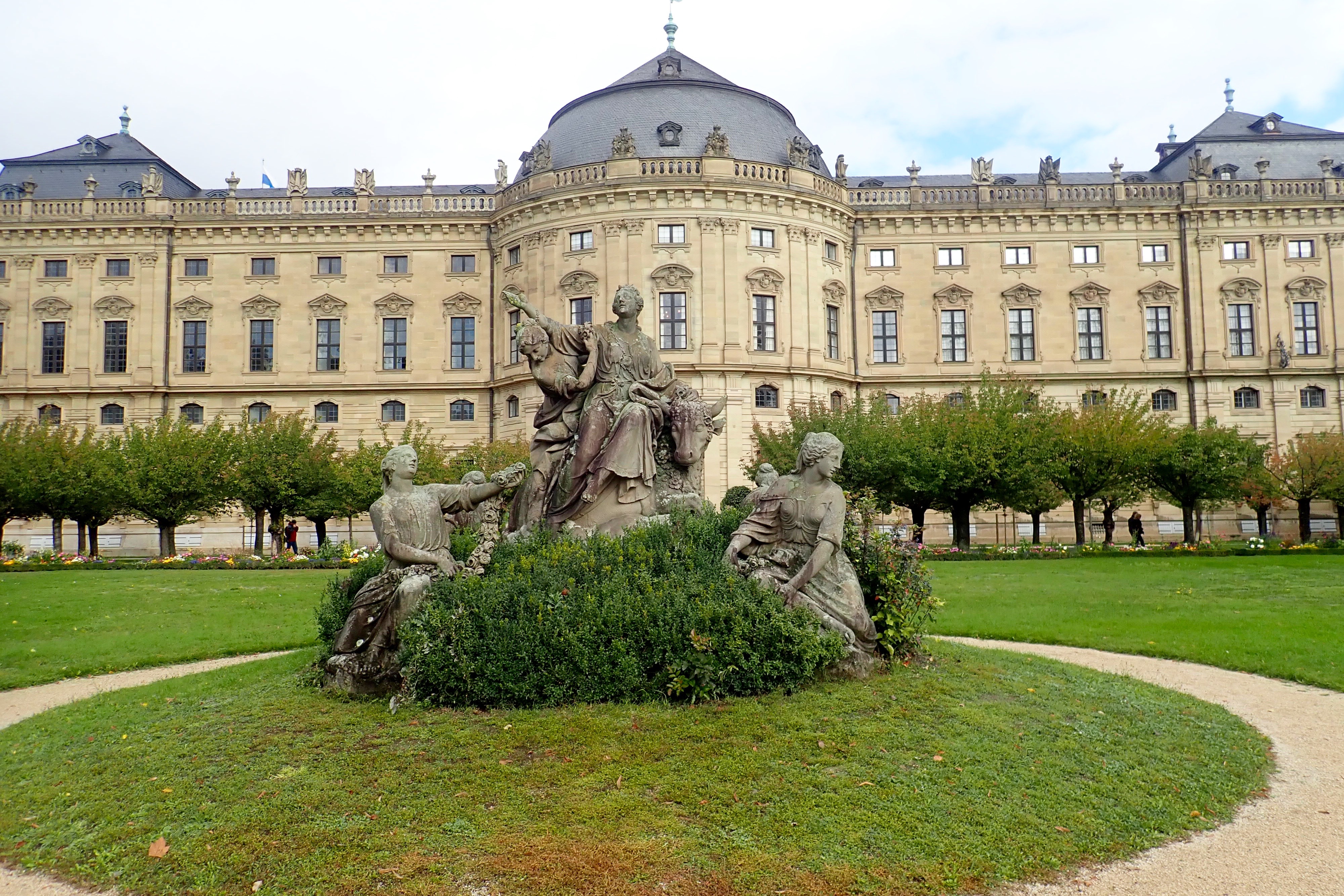
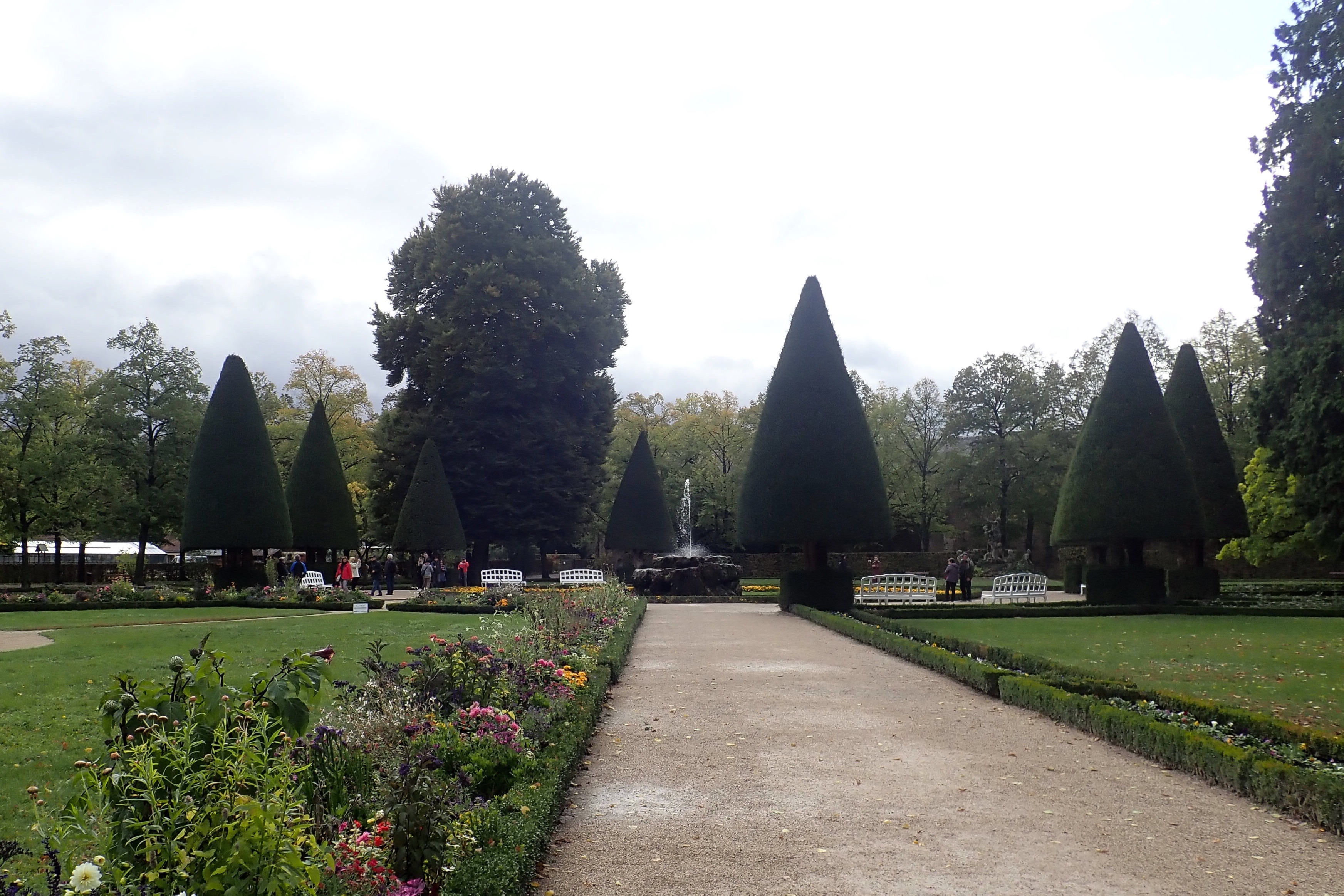
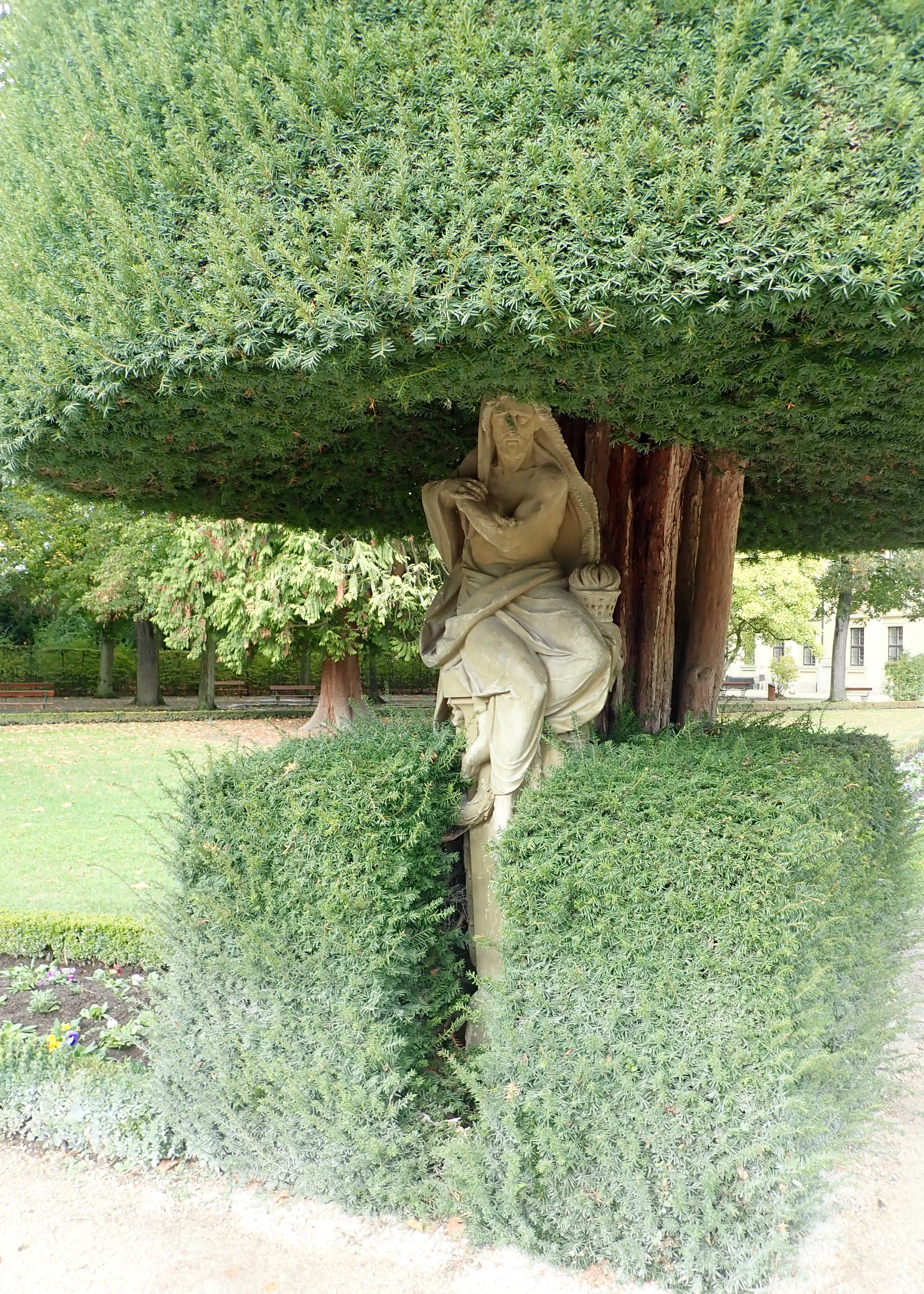
Then a walk through the rest of town.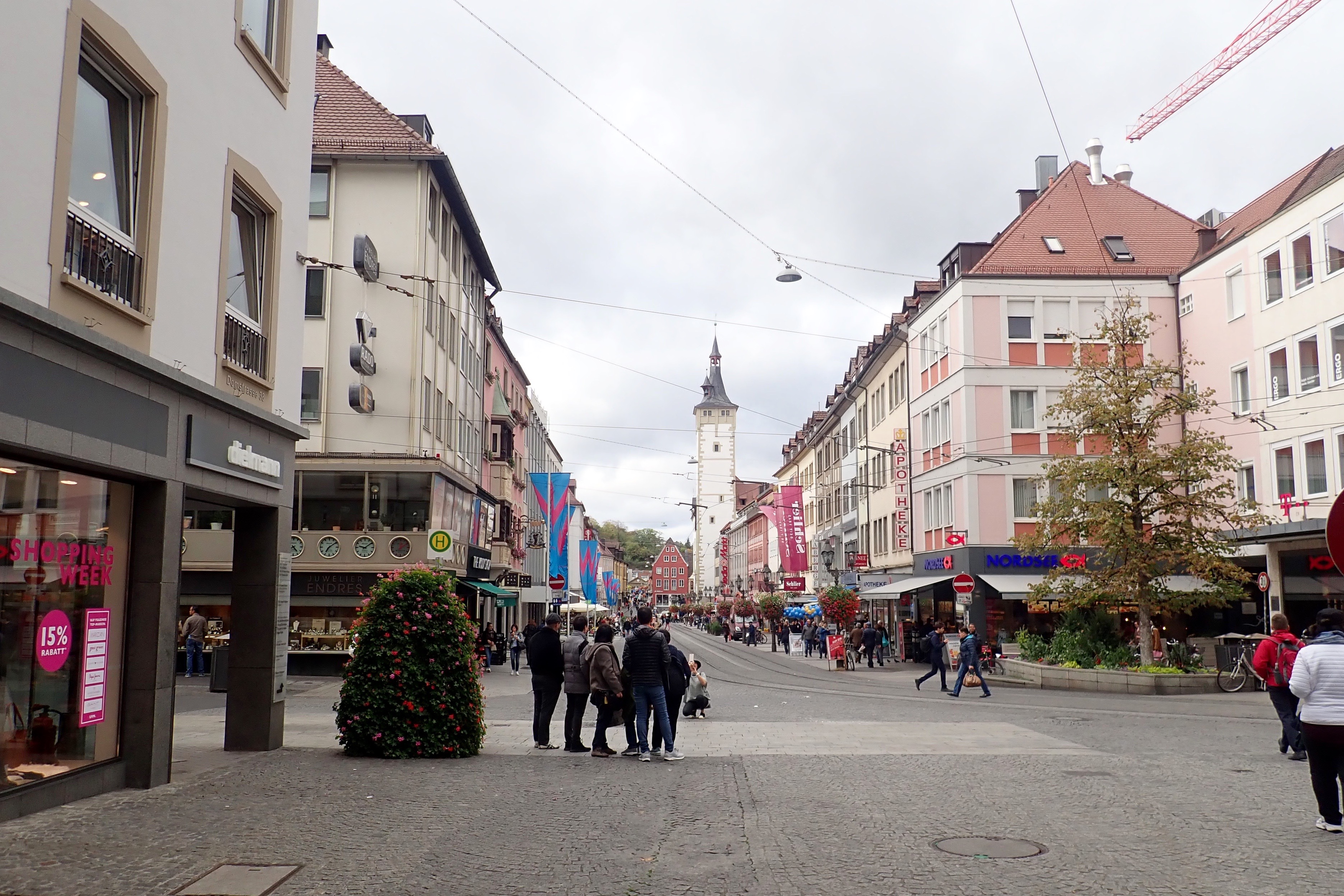
No terracing for vineyards here, vertical planting works better: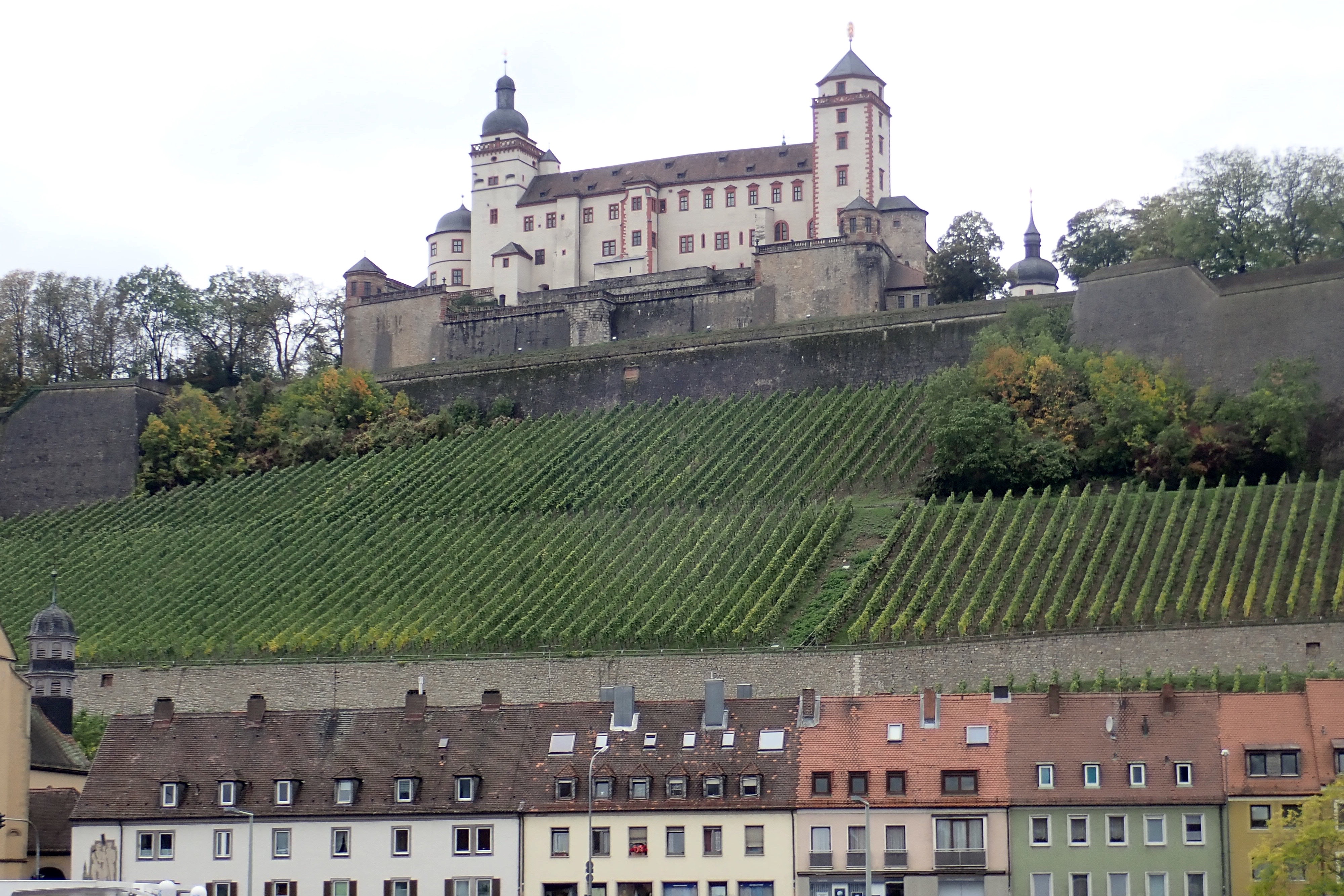
In the evening after dinner, there was a glass-blowing demonstration by Hans Ittig. 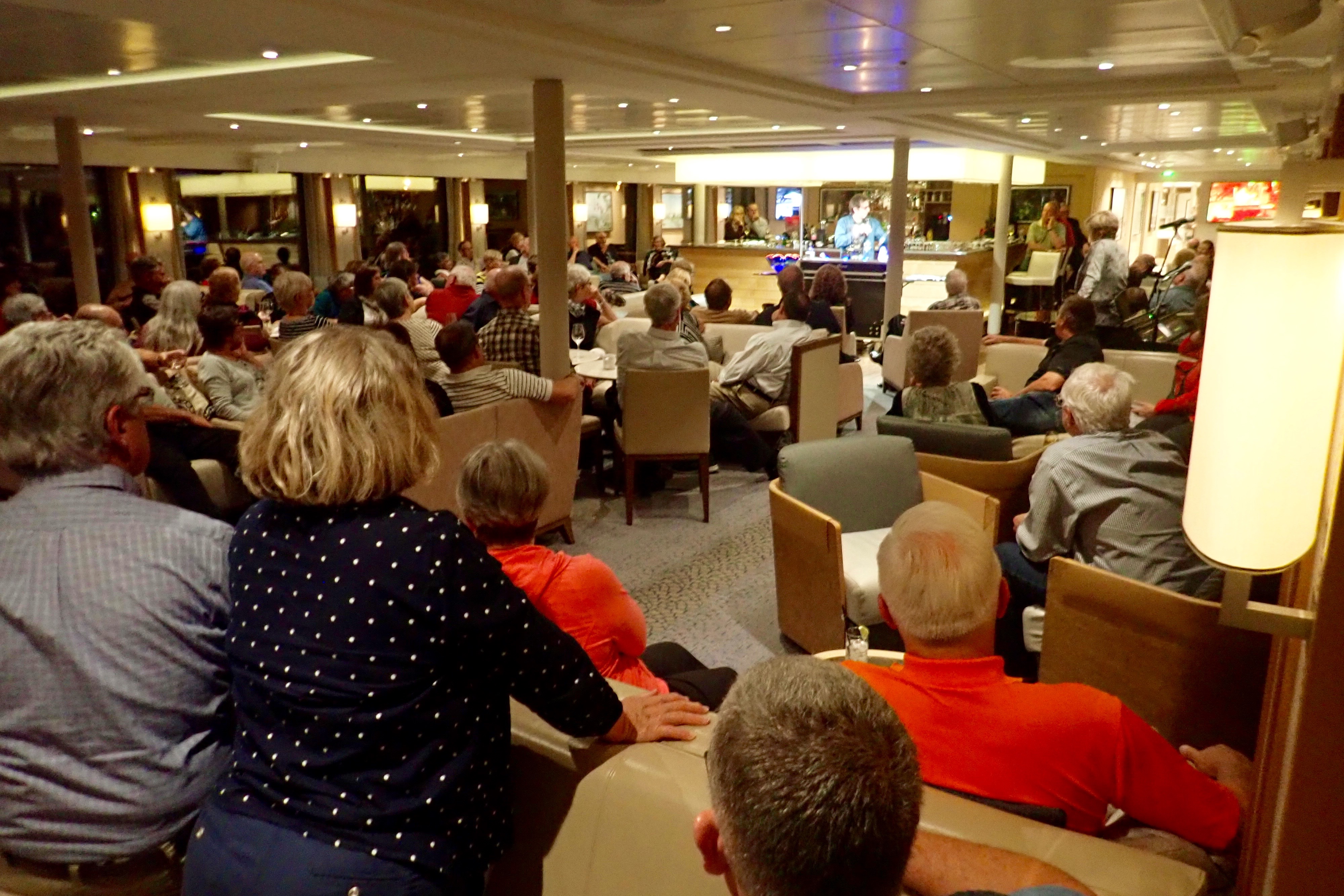
A very good marketing technique – we will be in the town where his shop is tomorrow!
Bamberg
Last night at the 6:45 port talk (just before everyone goes to dinner), Richie the program director asked everyone what Bamberg was famous for. Well, Bamberg lace of course. I was wrong. It’s smoked beer, sometimes called “bacon beer.”
How the mail is delivered:
There are more than 70,000 stumbling stones embedded in the cobbled streets of over 1200 European or Russian towns. They are the largest decentralized monument in the world. Each one names someone who was killed by the Nazi regime. There are over 300 in Bamberg.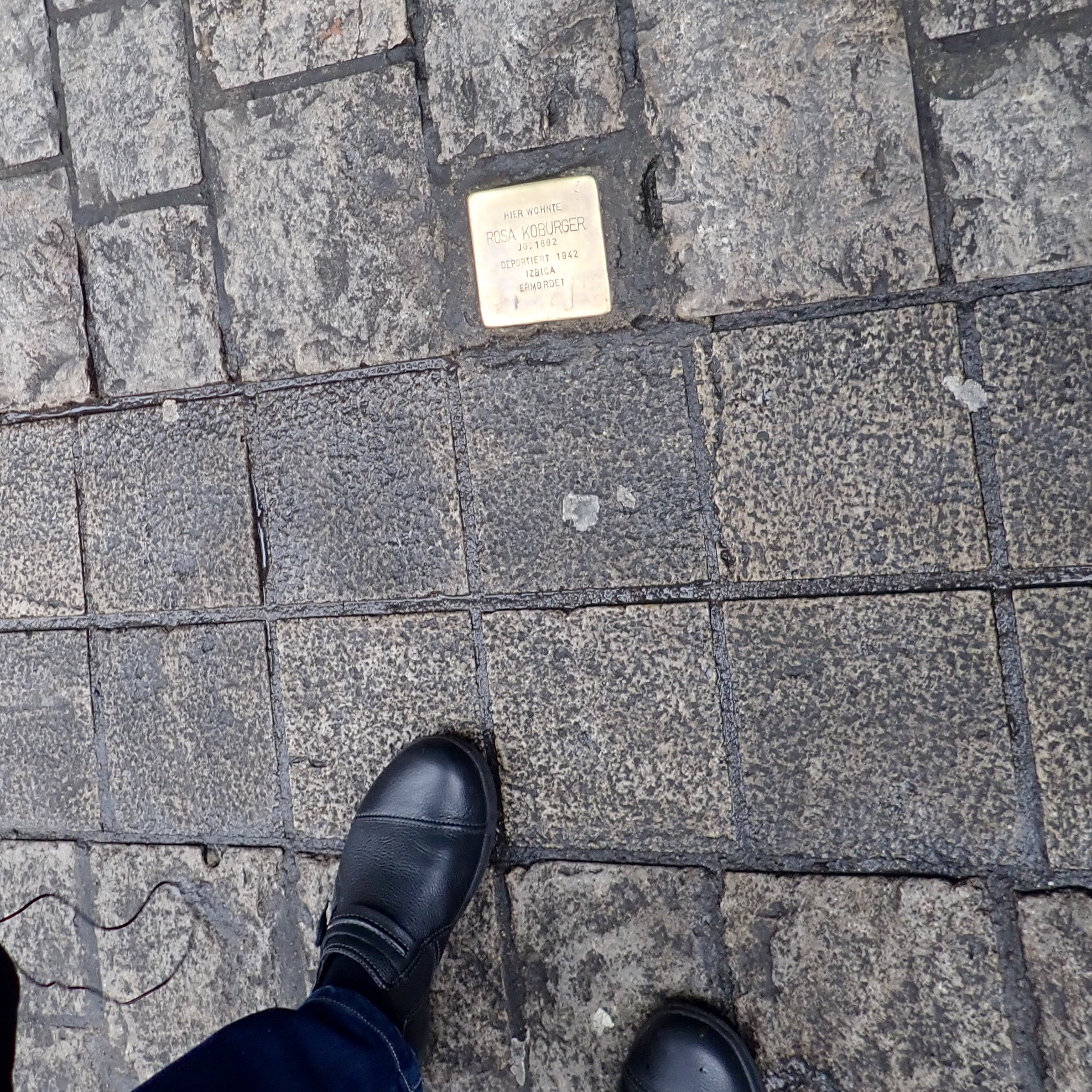
Bamberg Cathedral. Note the scaffolding between the towers, the word GOOD can be seen. At night it lights up, but one O blinks on and off resulting in the repeating phrase “GOOD GOD.”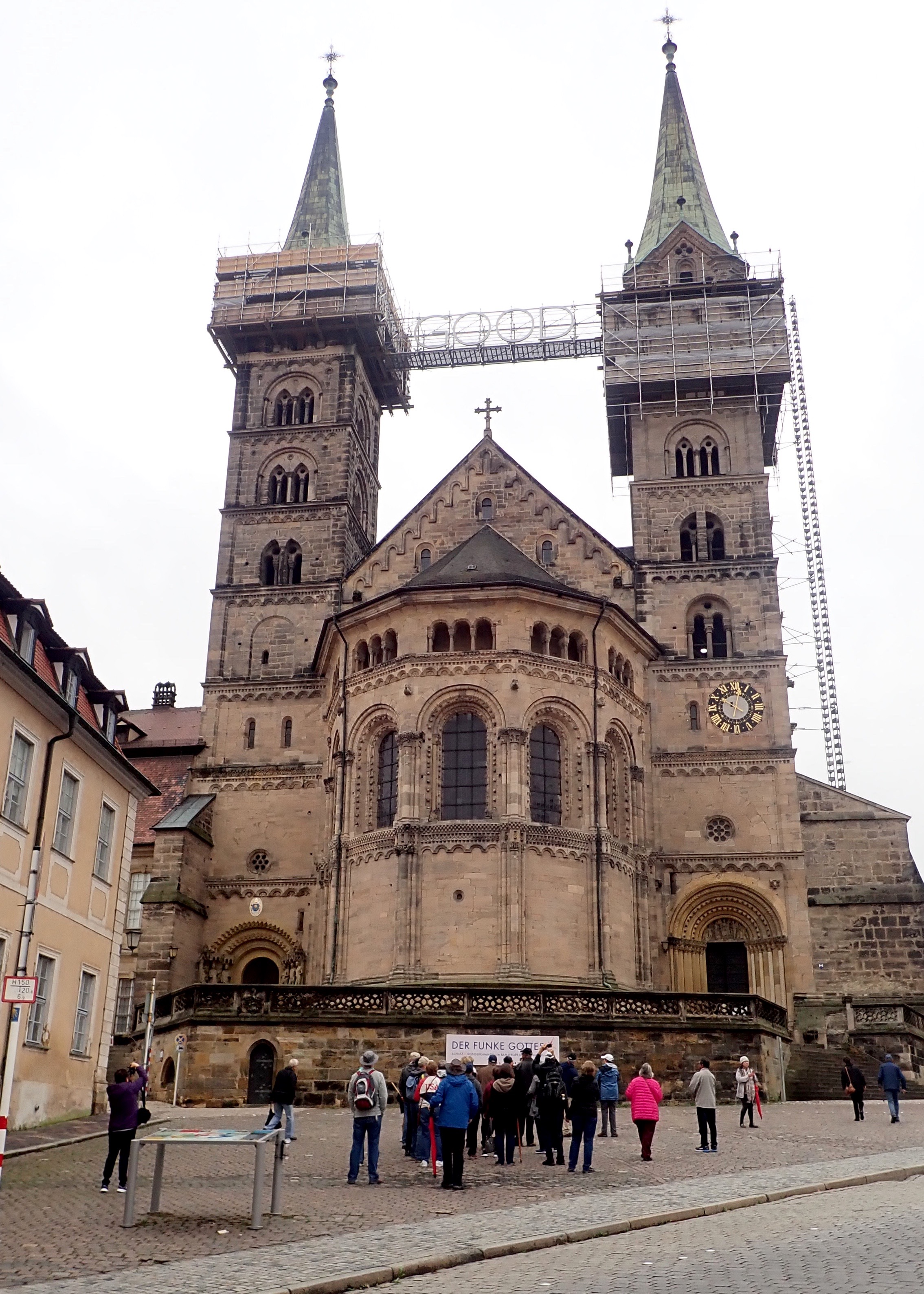
The rose garden: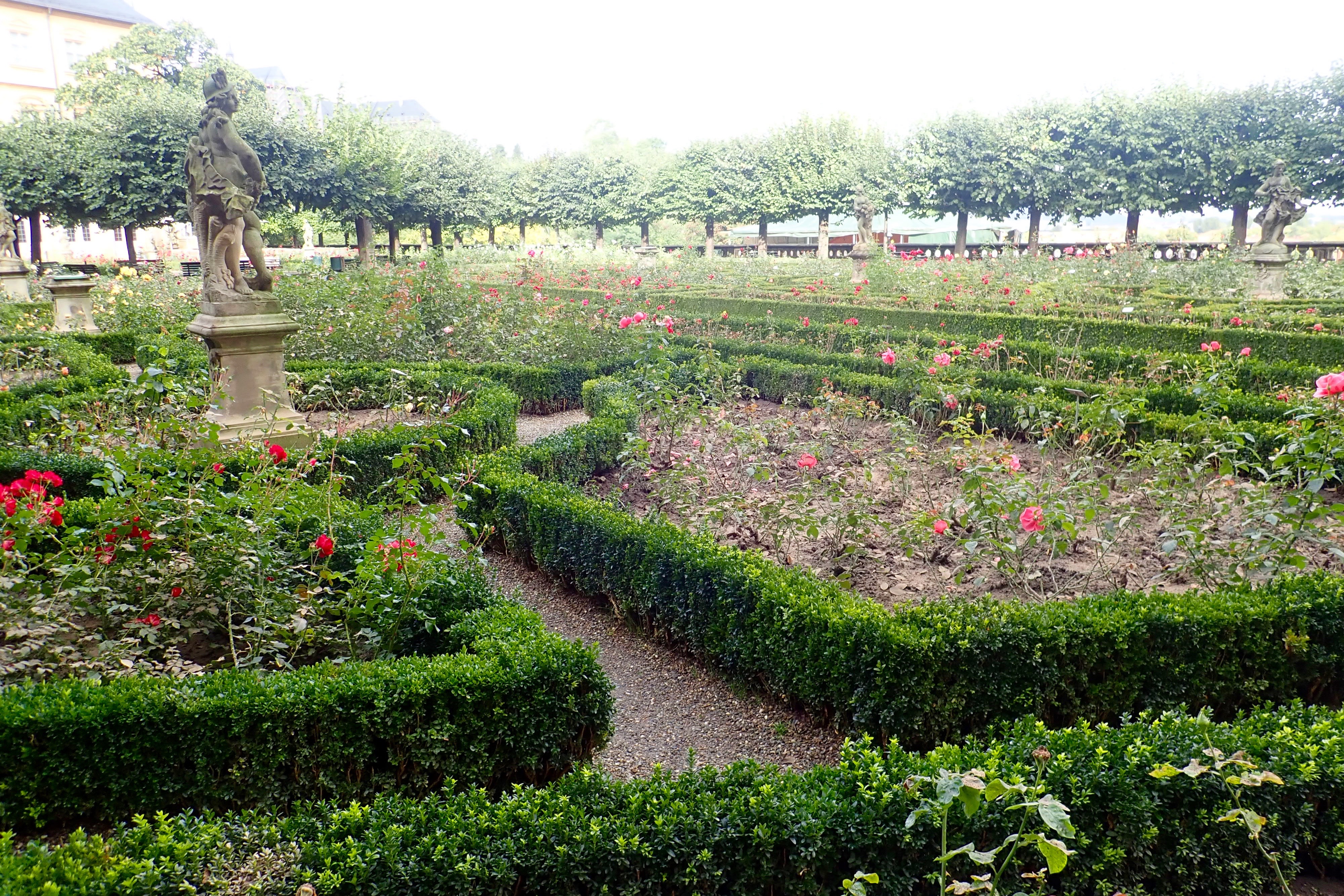

Another unique thing about Bamberg is their pretzels are white. We found a bakery that made their own and tried one. Delicious!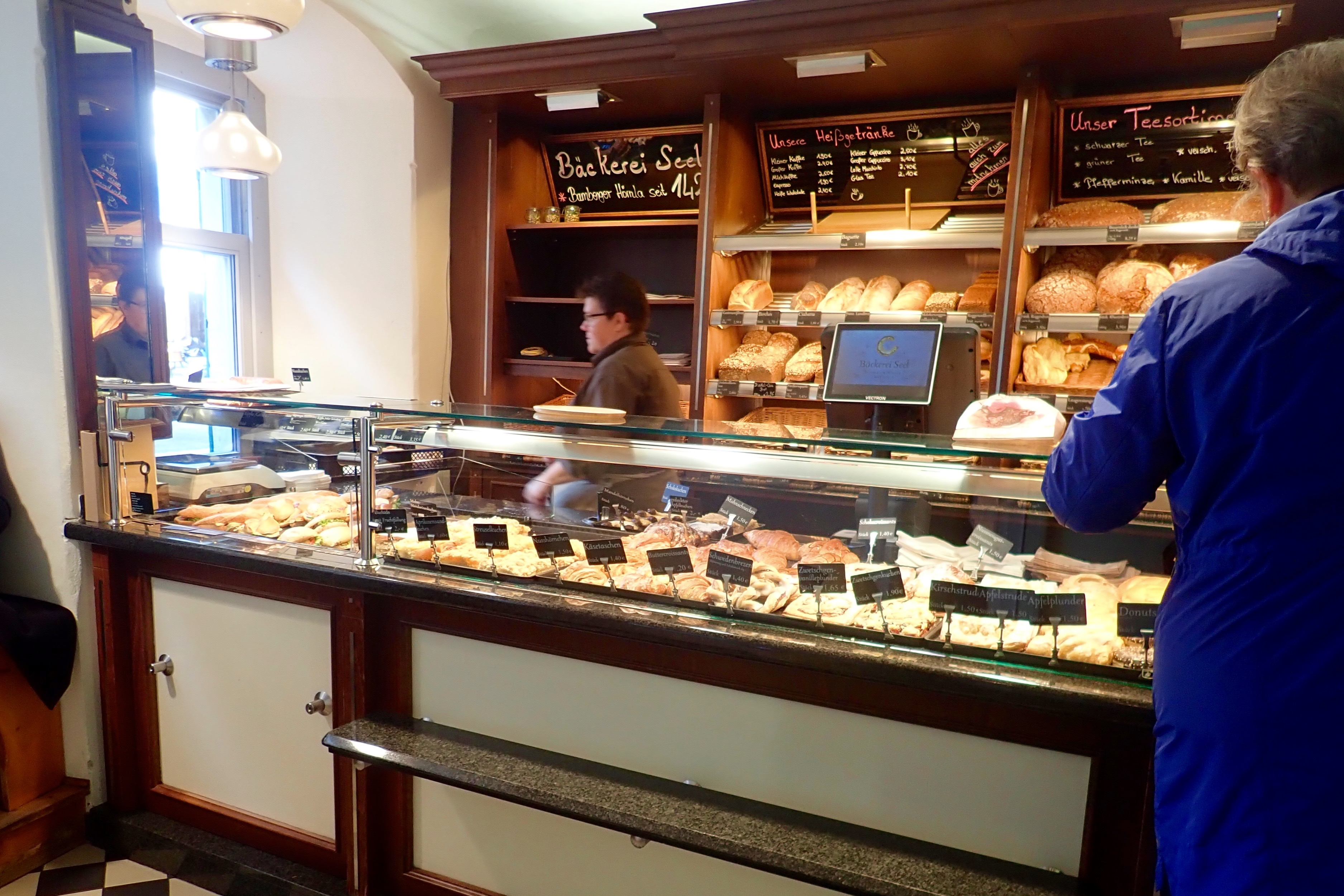
Fresh wreaths at the farmer’s market: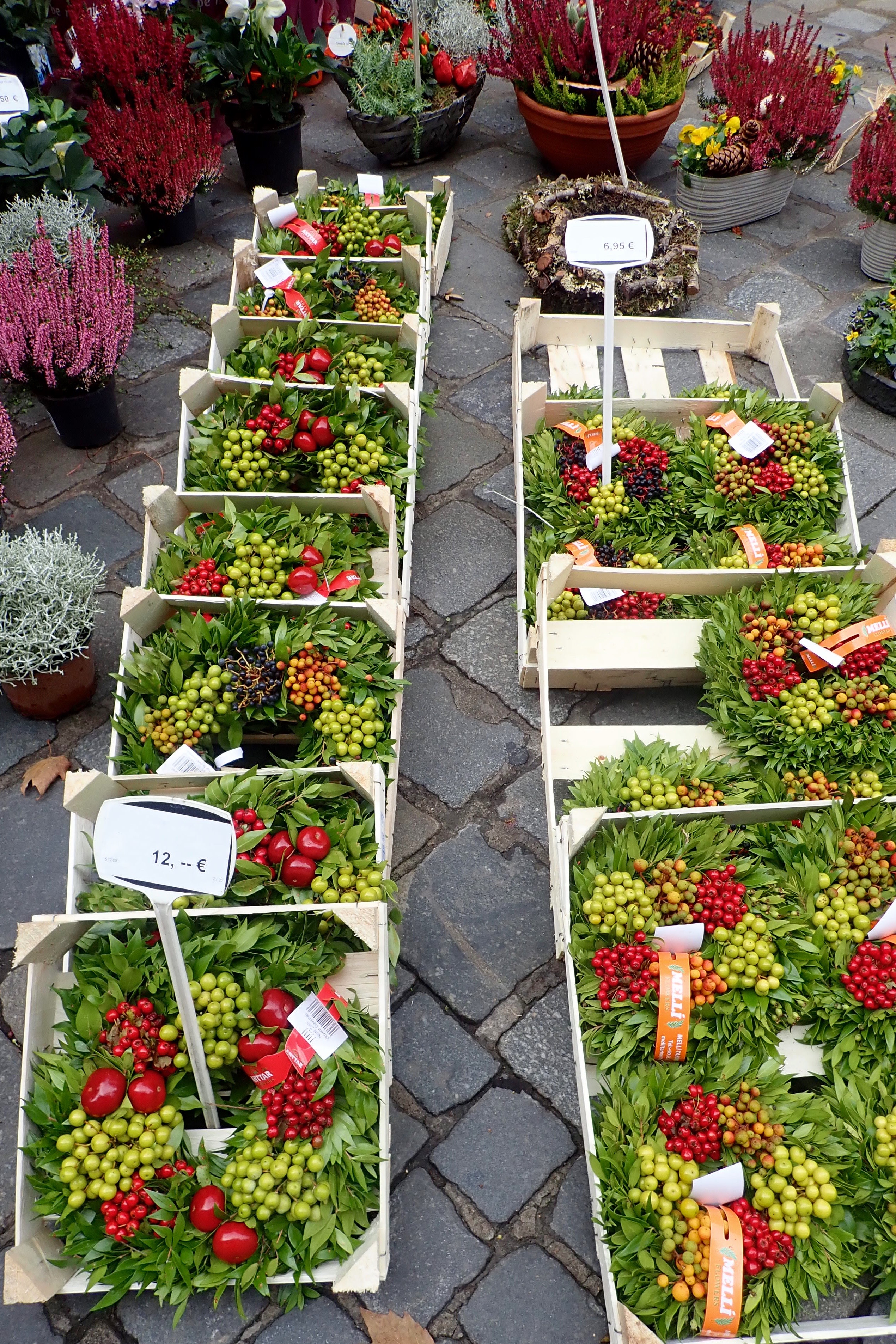
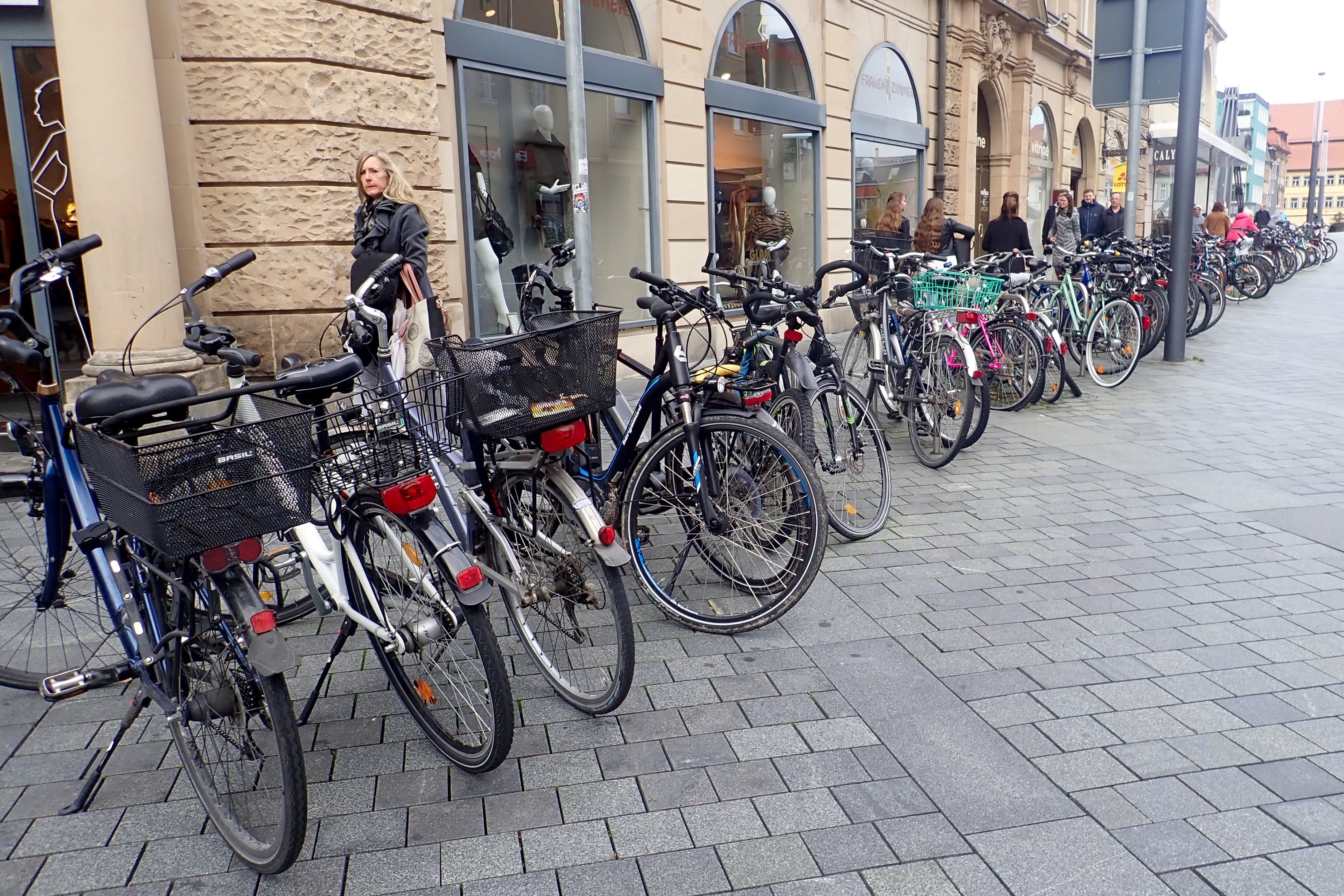
Do not step into the designated path of an oncoming bicycle – more dangerous than stepping in front of a car.
Nuremberg
A very rainy cold day. We took a city bus tour in the afternoon with a very knowledgeable guide – so knowledgeable that Nuremberg’s 1001-year history was a confused word salad for me. We disembarked at the Imperial Palace of Nuremberg.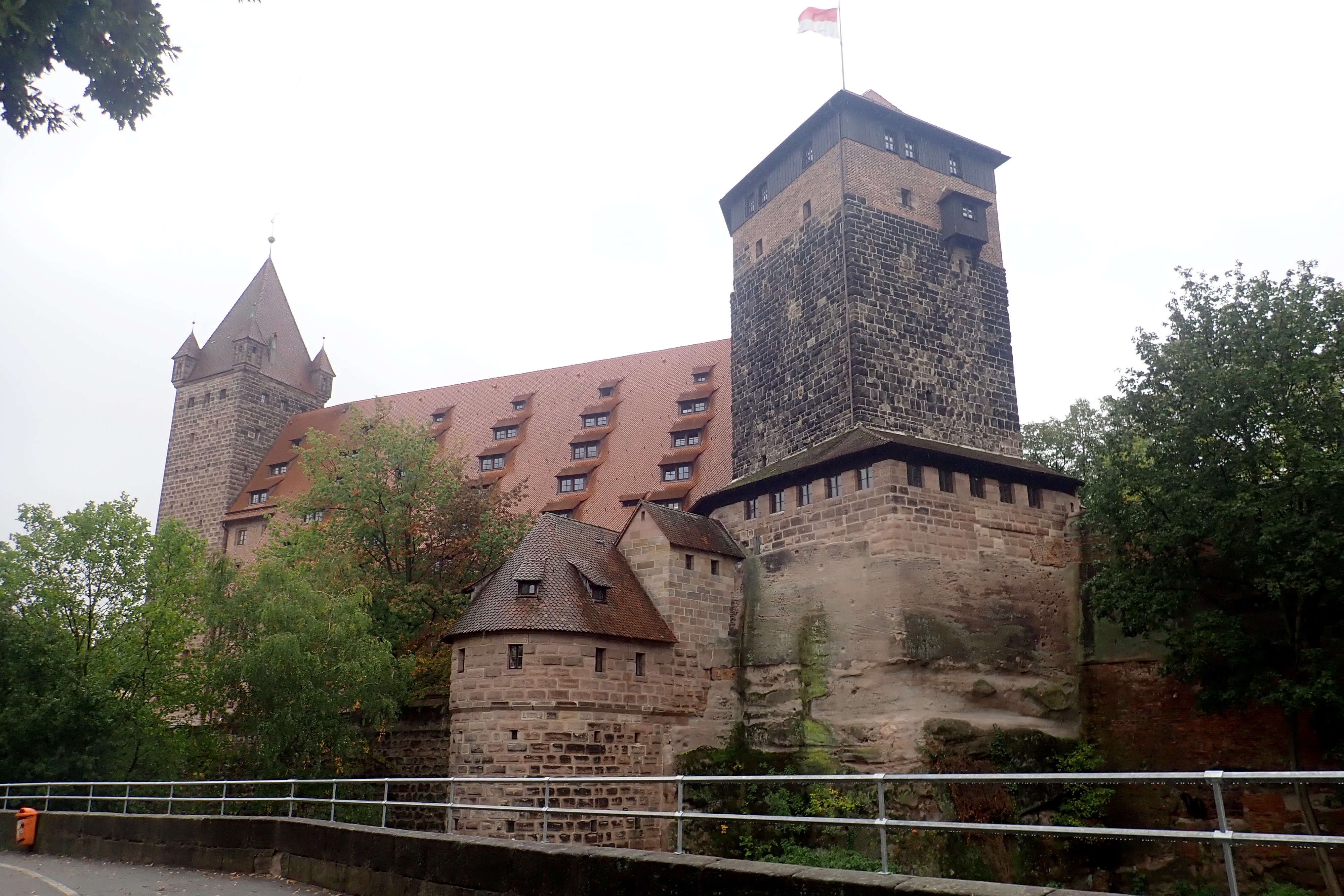
Careful! The red zone is for bicycles – you take your life in your hands if you interfere with a cyclist’s progress.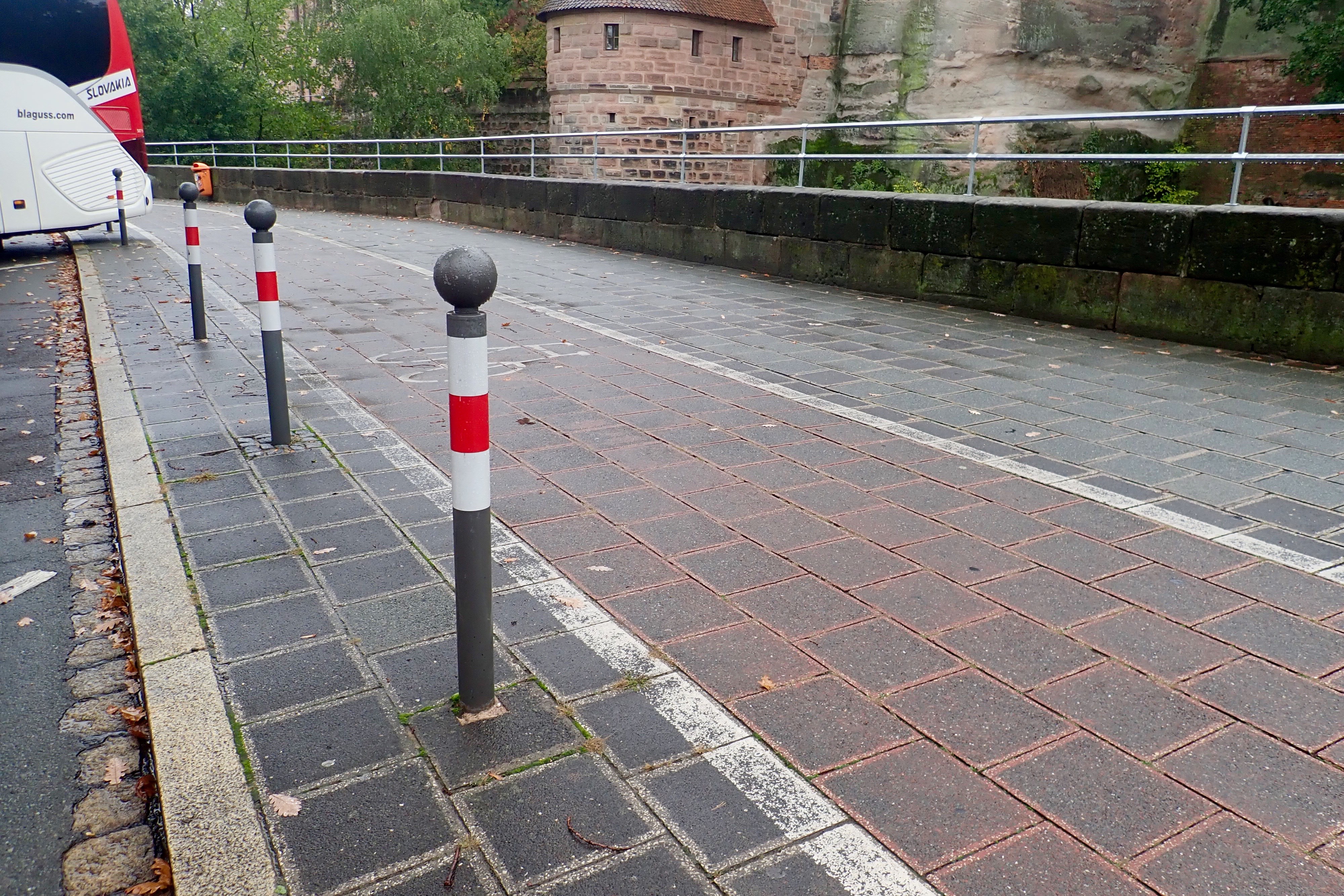
The first 2 (of 3) walls separated by a dry moat.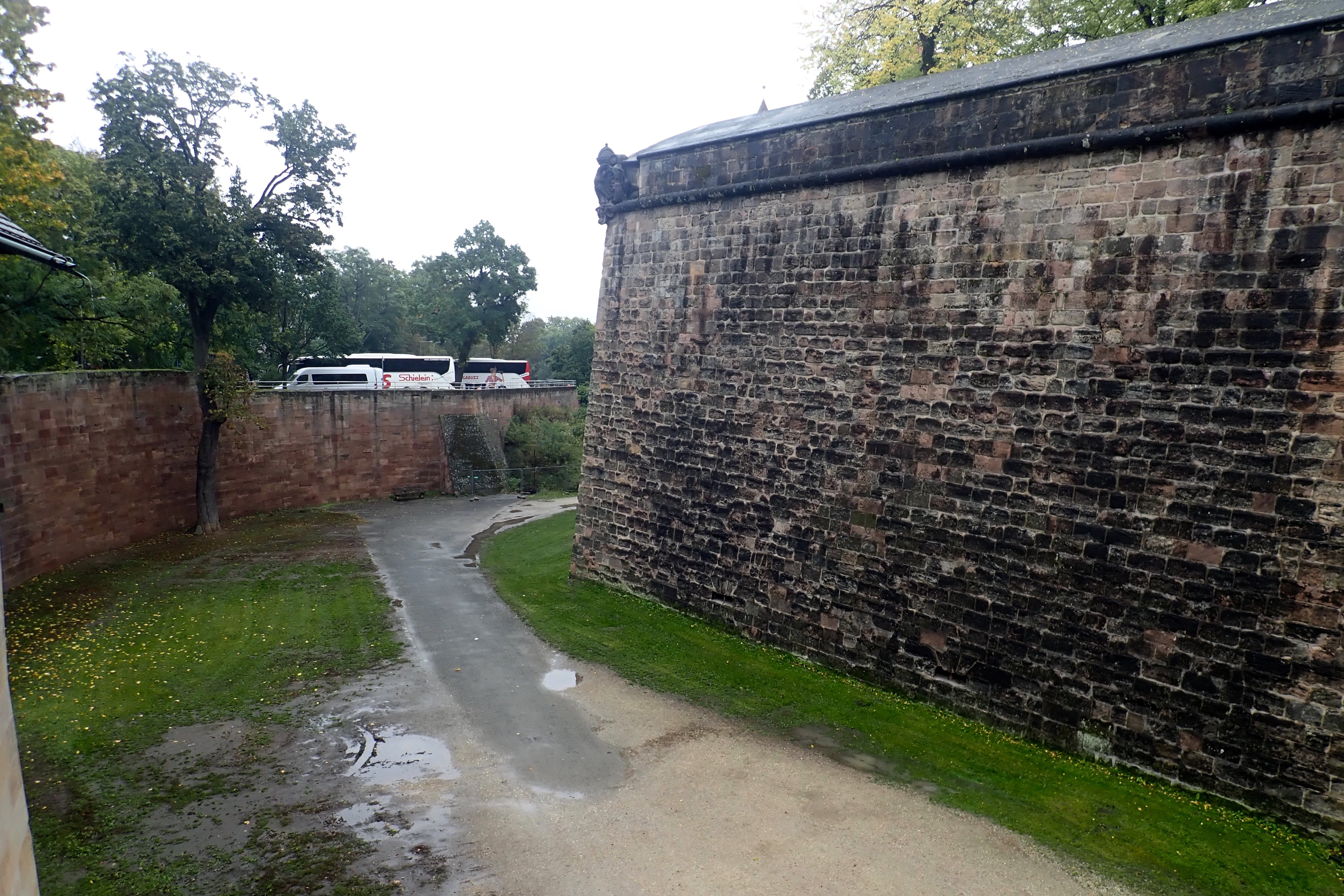
A curved uphill approach made a battering ram ineffectual.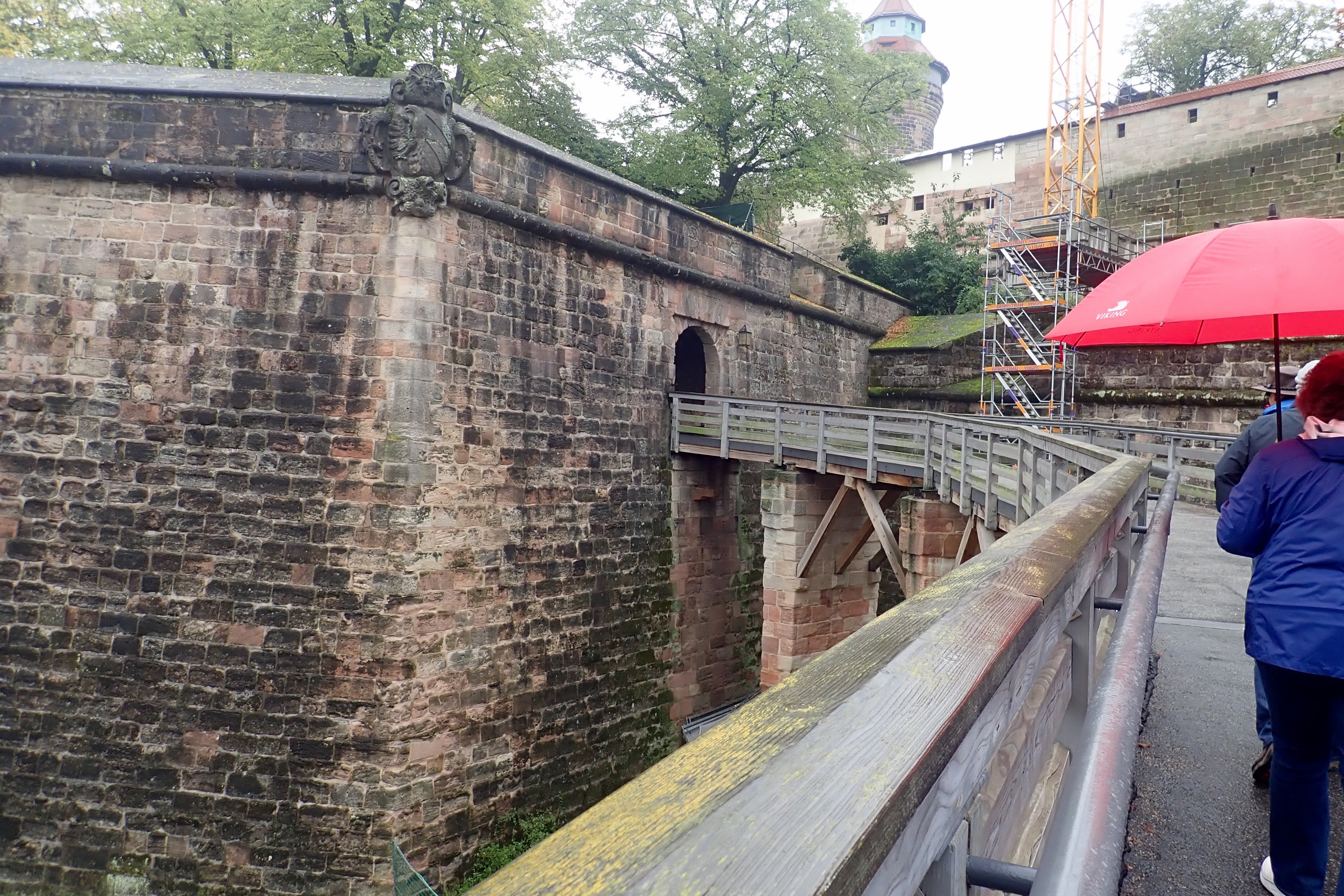
Then an uphill tunnel with ceiling openings – great way to pour boiling oil onto intruders.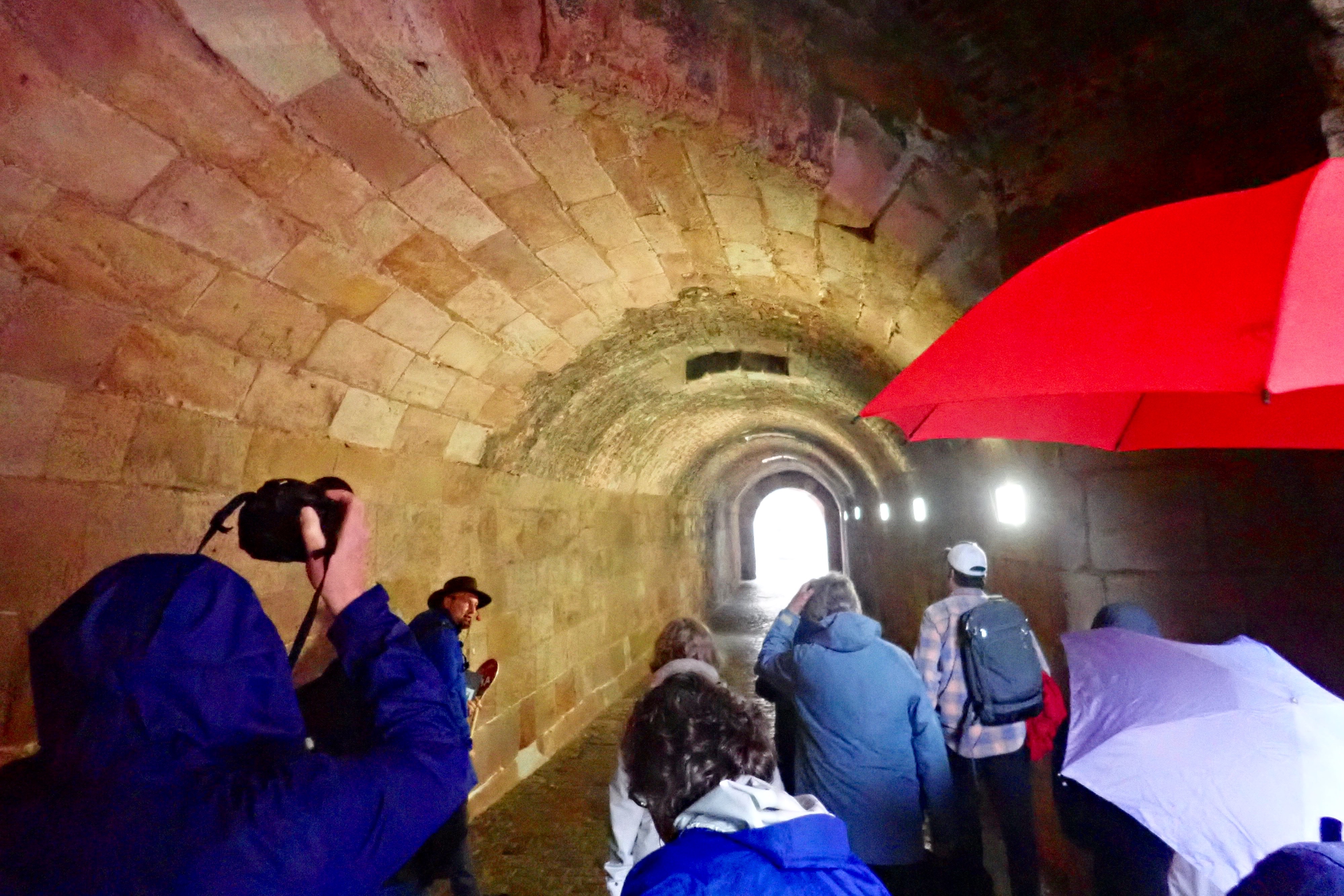
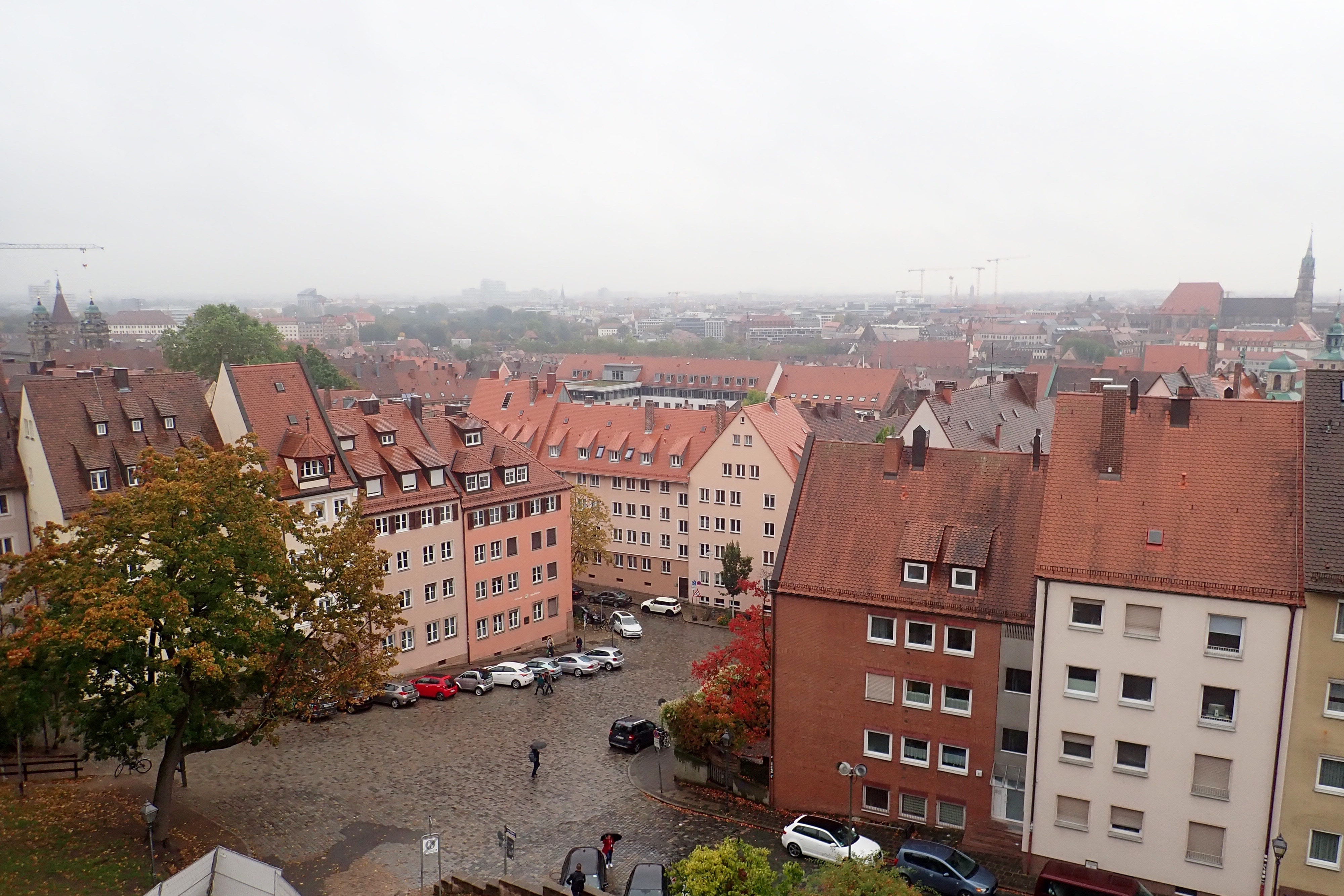
Views of Nuremberg from the top.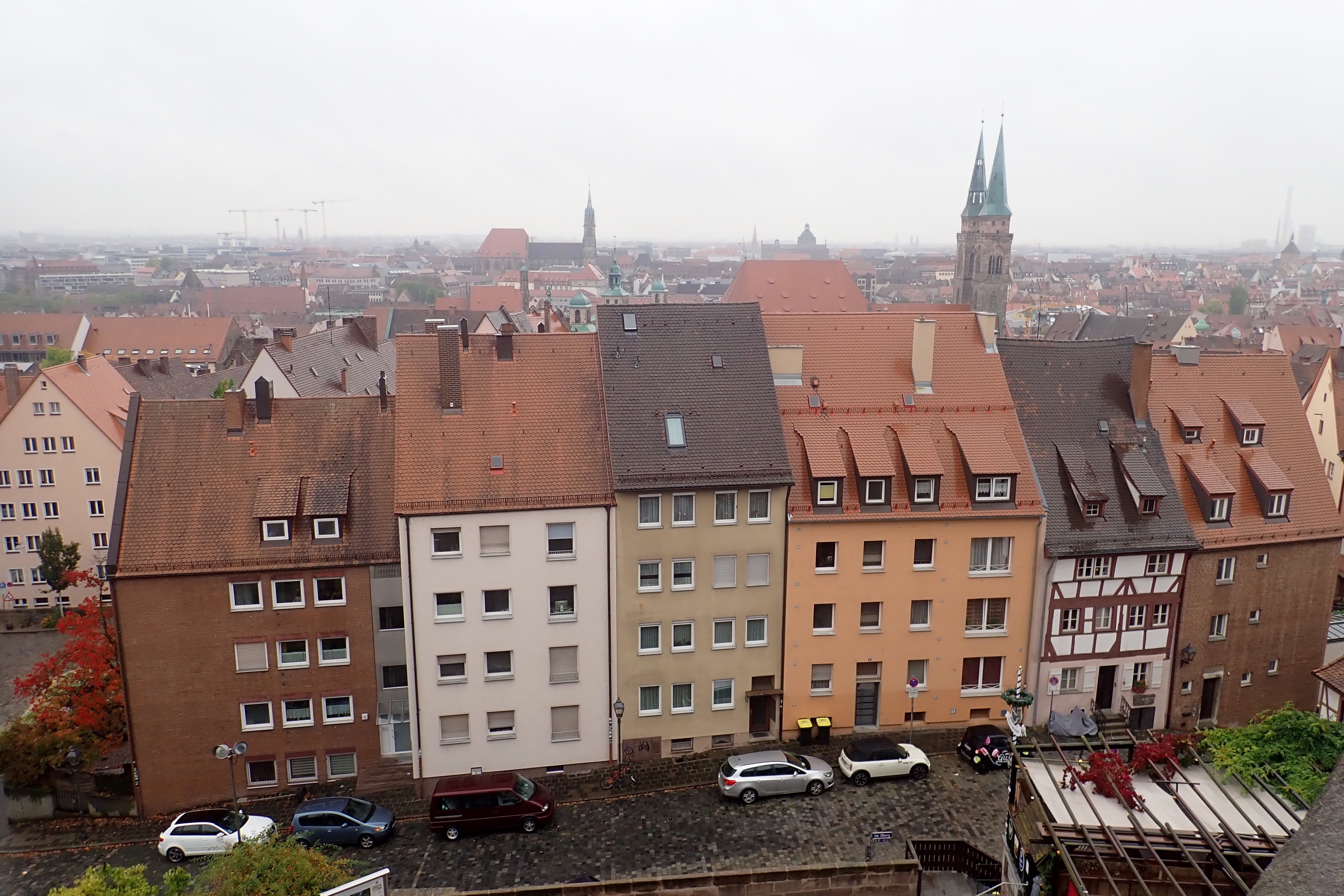
Where Albrect Durer was born: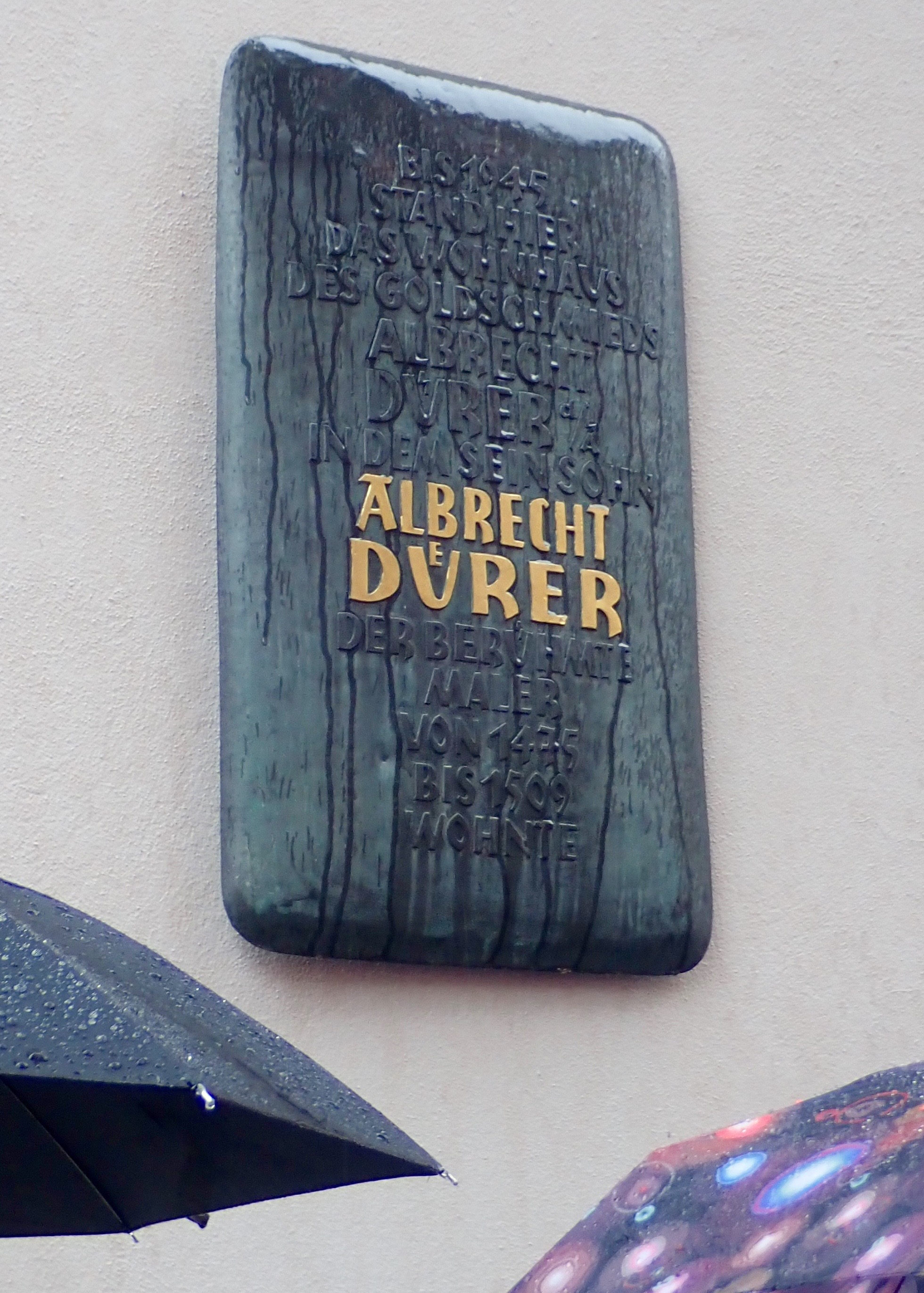
In our free time, we headed straight for an indoor cafe for gingerbread – not the best from my pov, there was a chewy nougat layer on the bottom – but we were inside, dry and warm.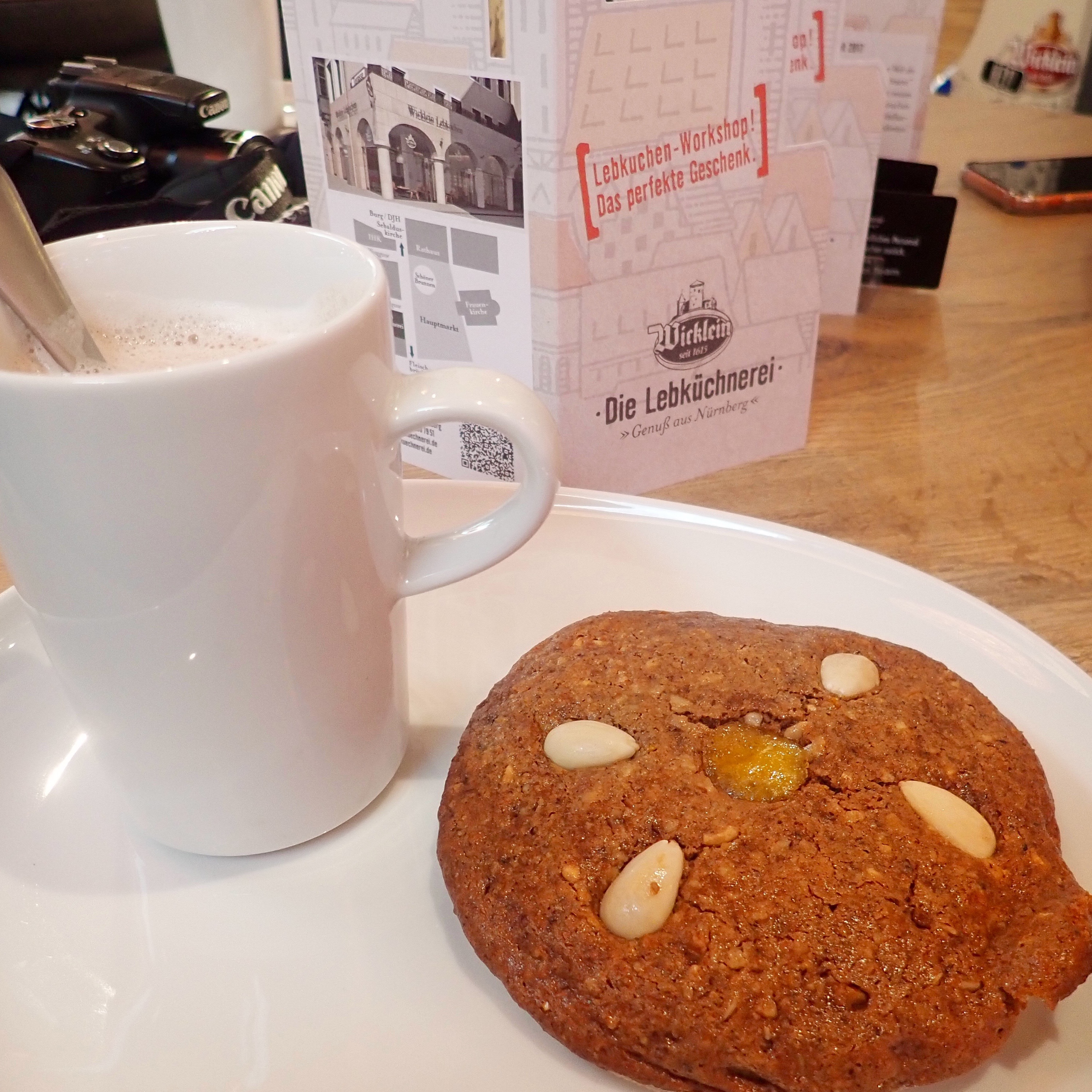
Still raining.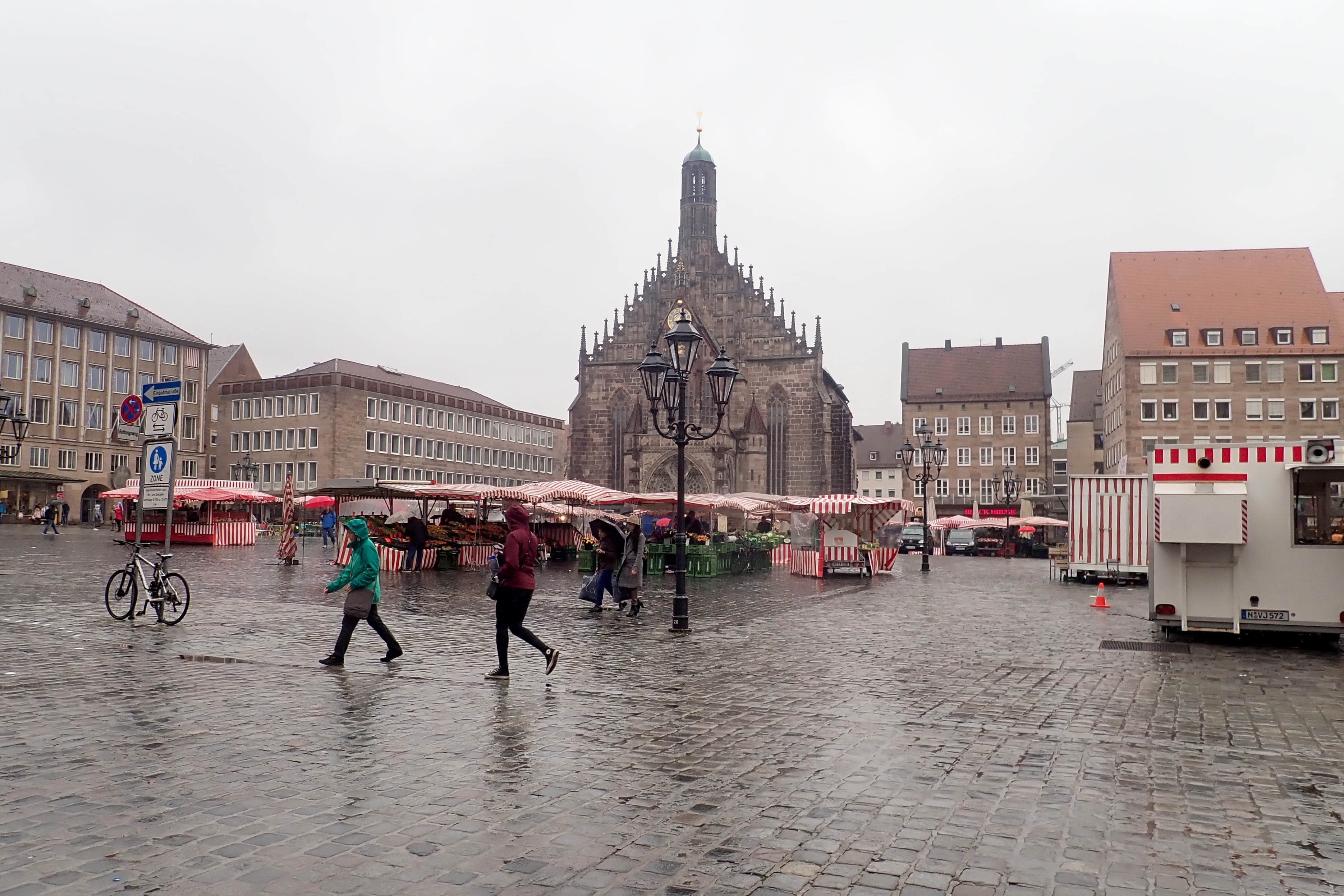
Five busloads of Viking passengers met at The Beautiful Fountain to go back to the ship.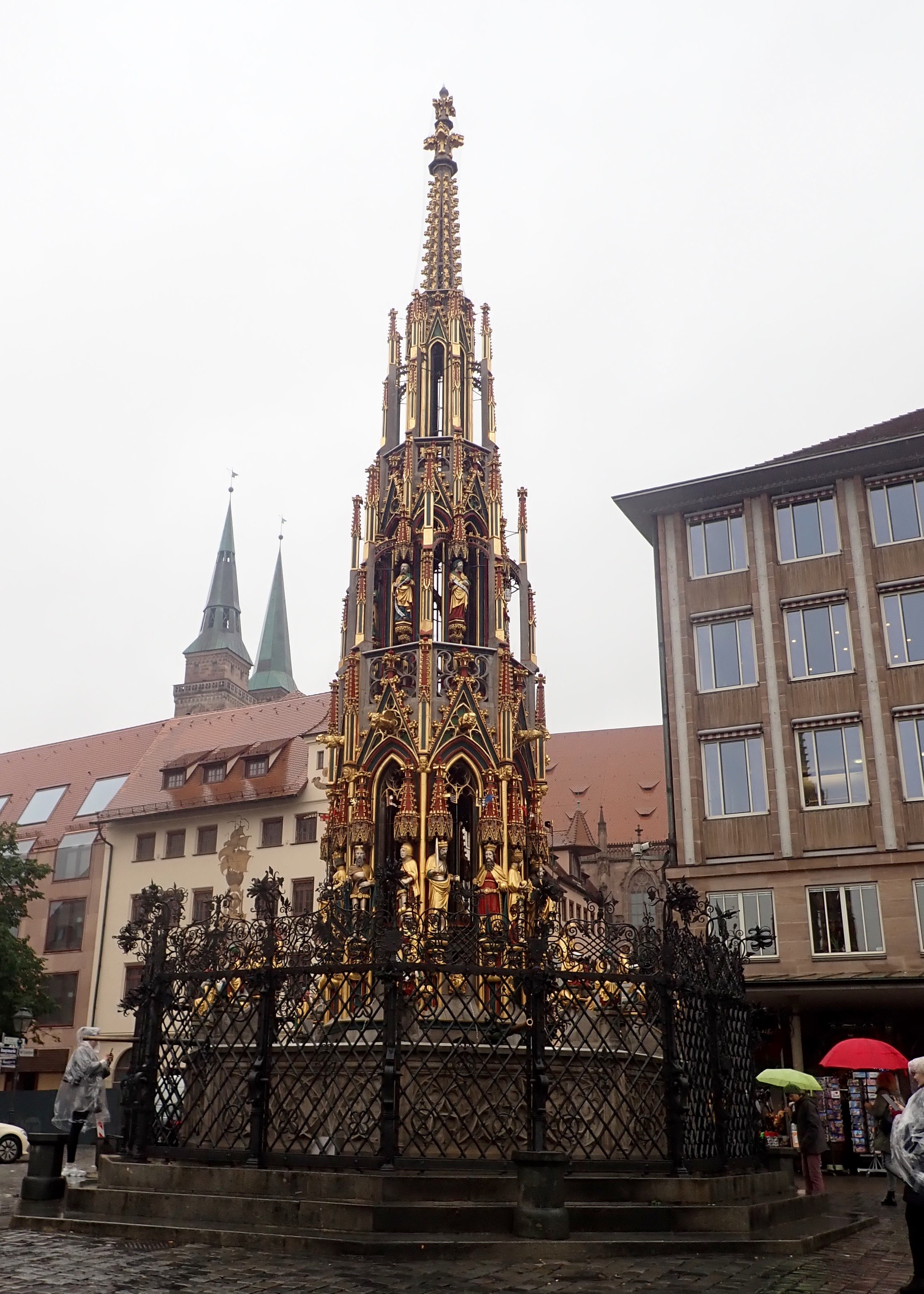
Regensburg
In the morning we went on a walking tour of Regensburg, sometimes called “Italy’s northernmost city”. It was a short walk to Old Stone Bridge.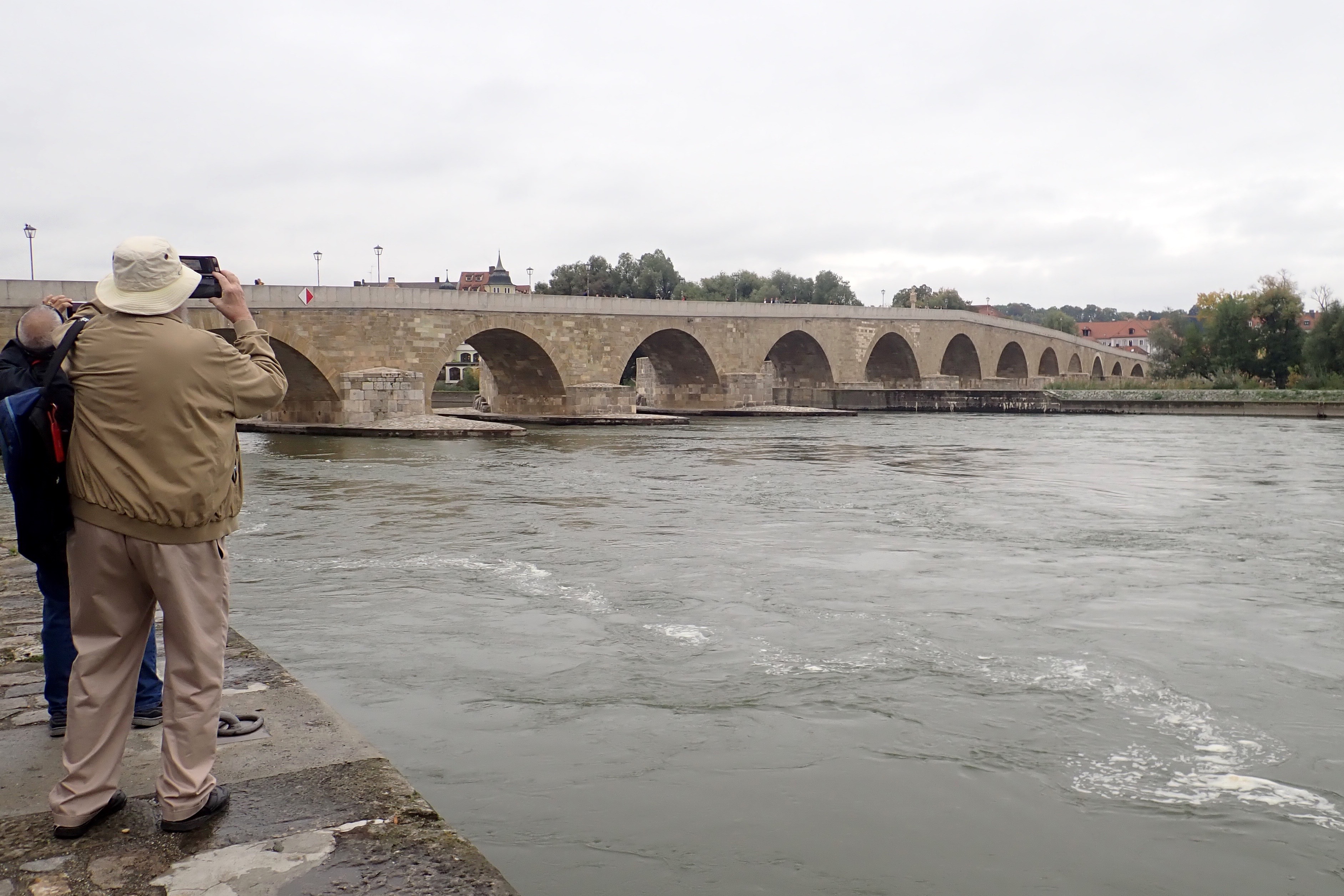
A model of Regensburg in Medieval times.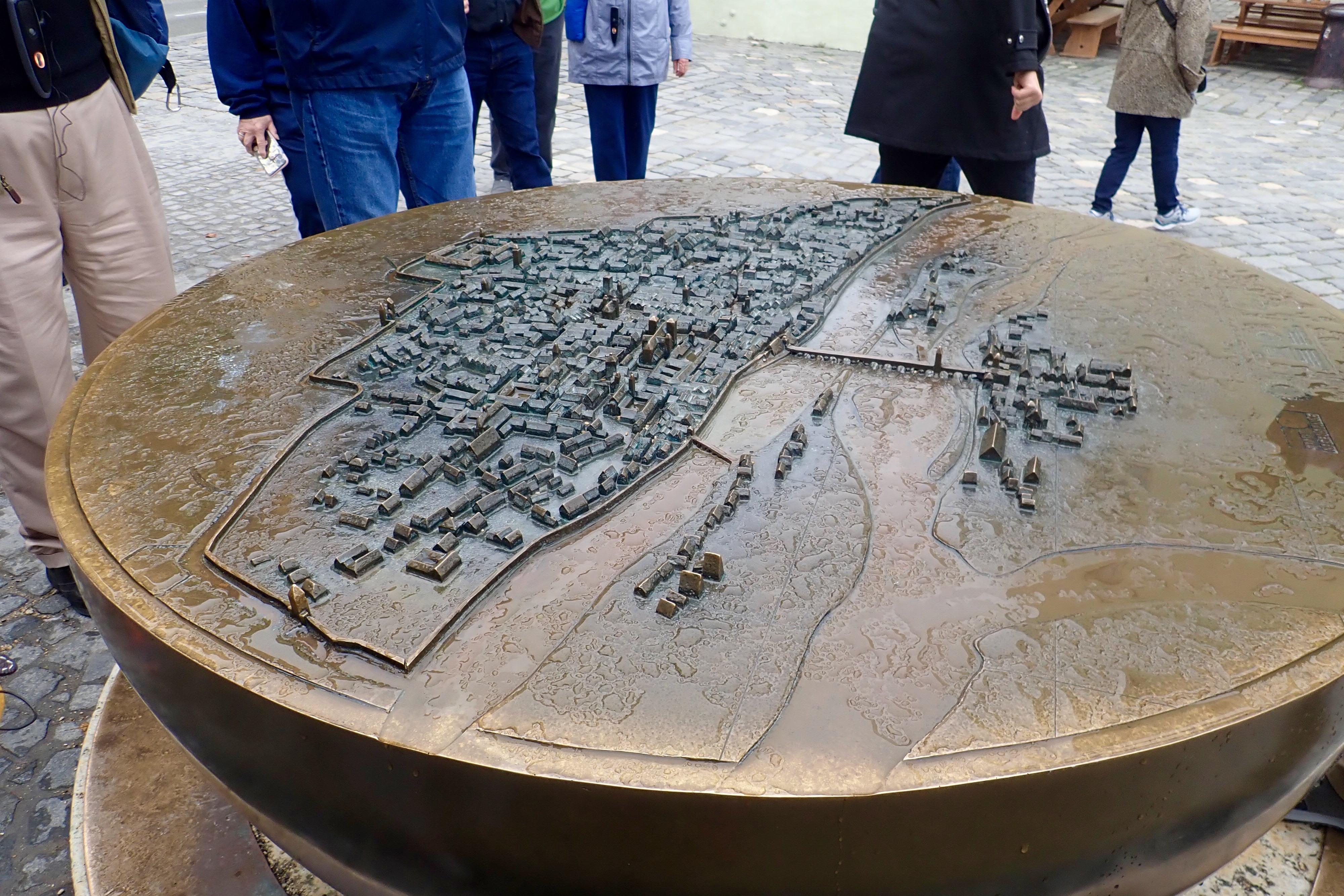
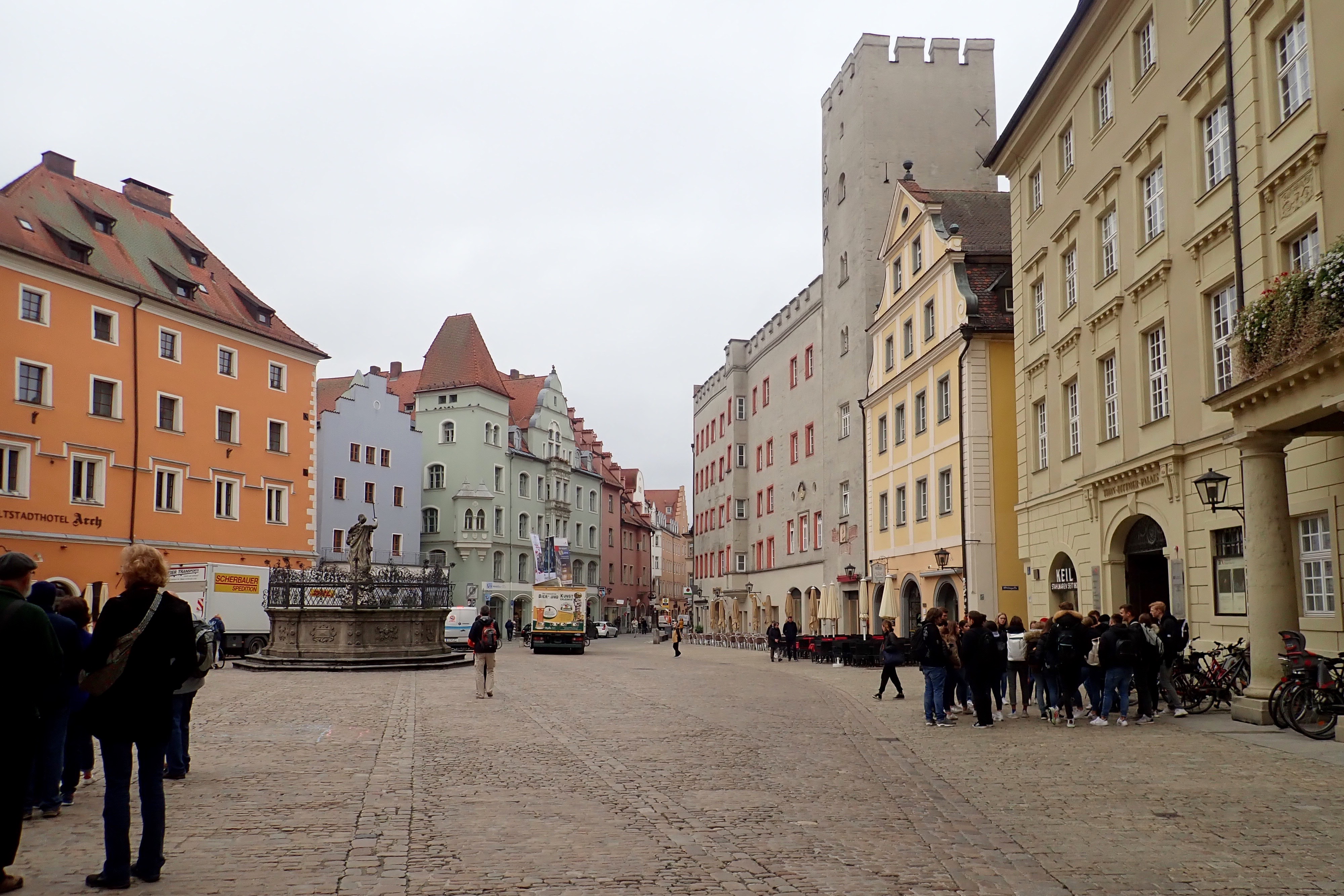
St Stephen’s Cathedral, first started in 1273, the building was considered finished in 1872. There is a mixture of styles (even on the same level) and materials used (limestone and sandstone).
The Goliath House, a successful merchant’s house built in 1260. When the painting was added in 1573, a green-coated town official would walk by every day to ask when the painting would be finished. Annoyed, the artist added a little green frog in the lower right corner. The most recent restoration of the painting eliminated the original frog’s mustache and glasses.
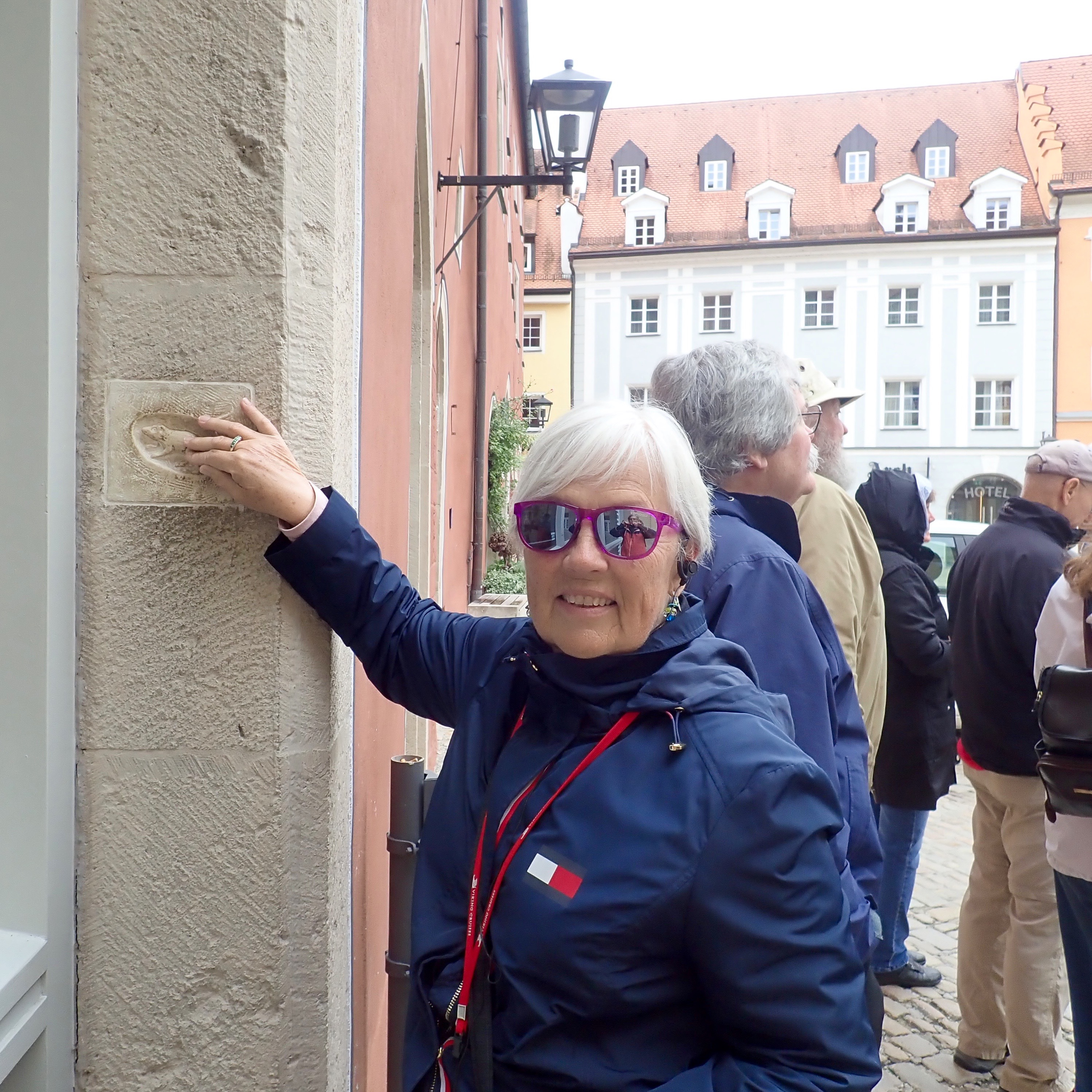
If you rub the little mouse, you will come back to Regensburg. Every town has been wonderful to visit, but Regensburg is one we would both like to visit again. So many large squares and narrow streets filled with little shops and cafes – all perfectly picturesque.
While we had lunch, the ship moved to a new location not far away. For the afternoon excursion we walked back into town, across Old Stone Bridge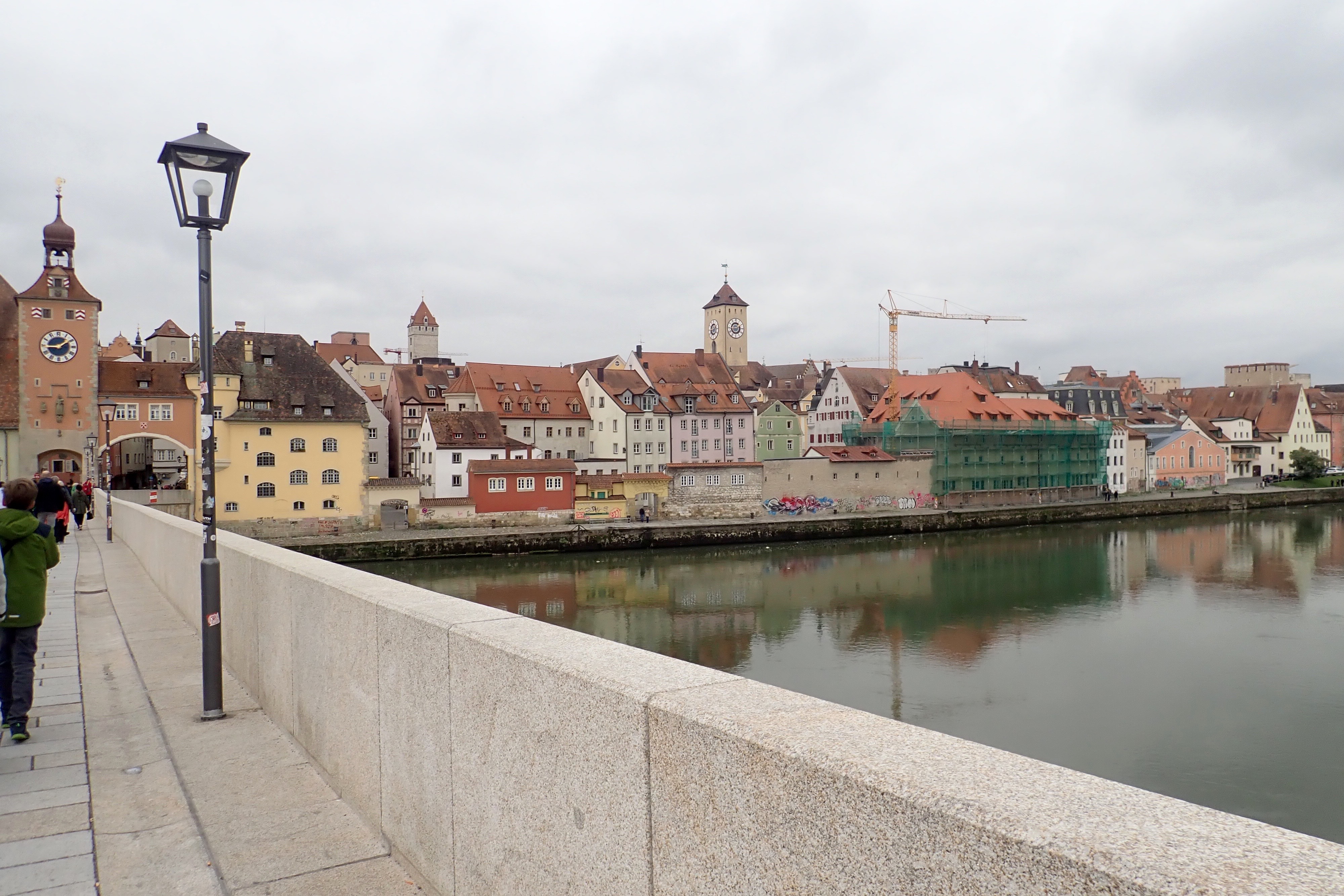
to the basement of Ratskeller
to make weisswurst – a Bavarian specialty – made with beef, veal, pork, and seasoned with onions, parsley, lemon zest, cardamom, mace and ginger.
Everyone got to work!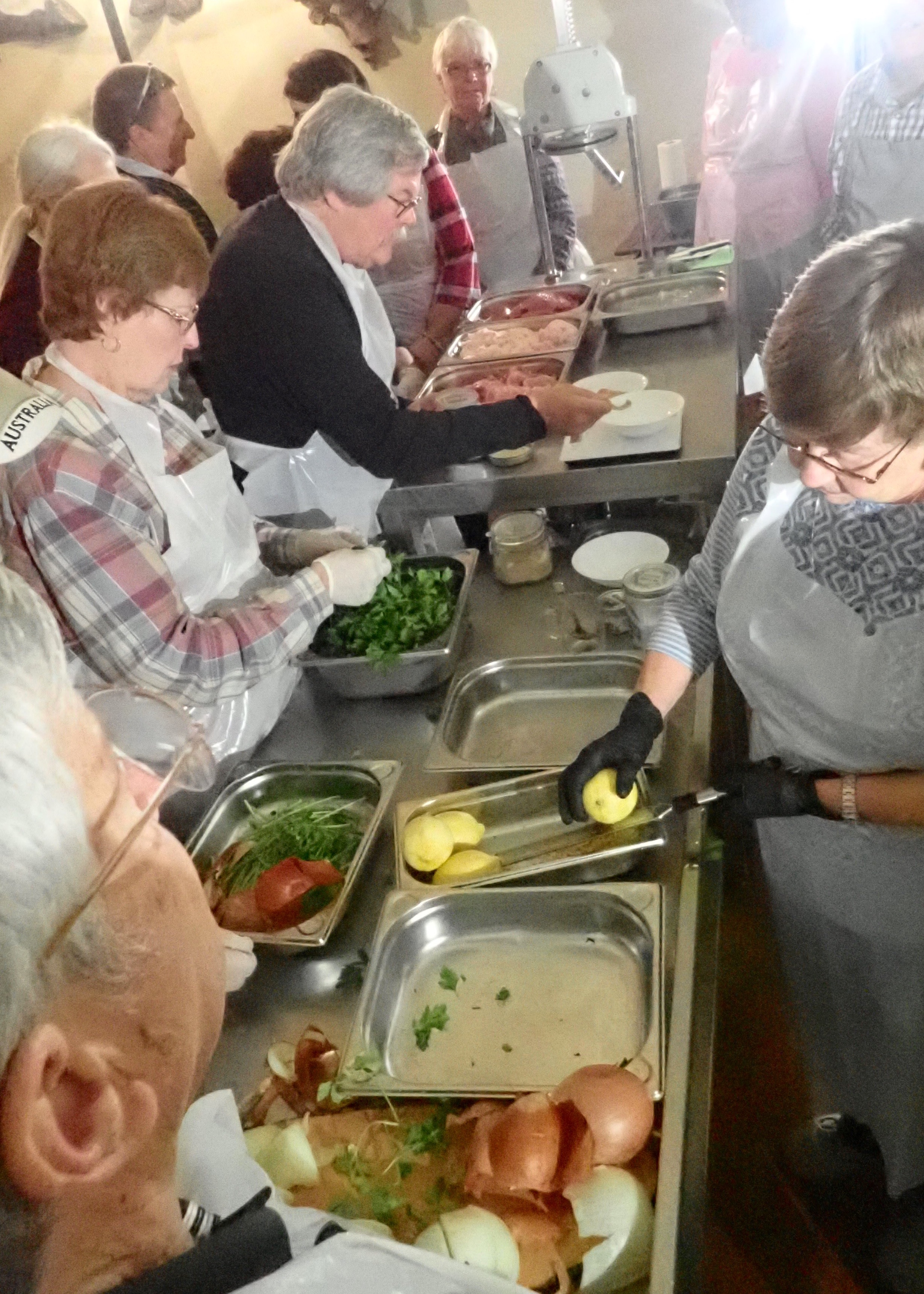
Ingredients were added in a specific order along with ice to maintain a specific temperature. Parsley was added near the ended to insure green flecks could be seen in the final product.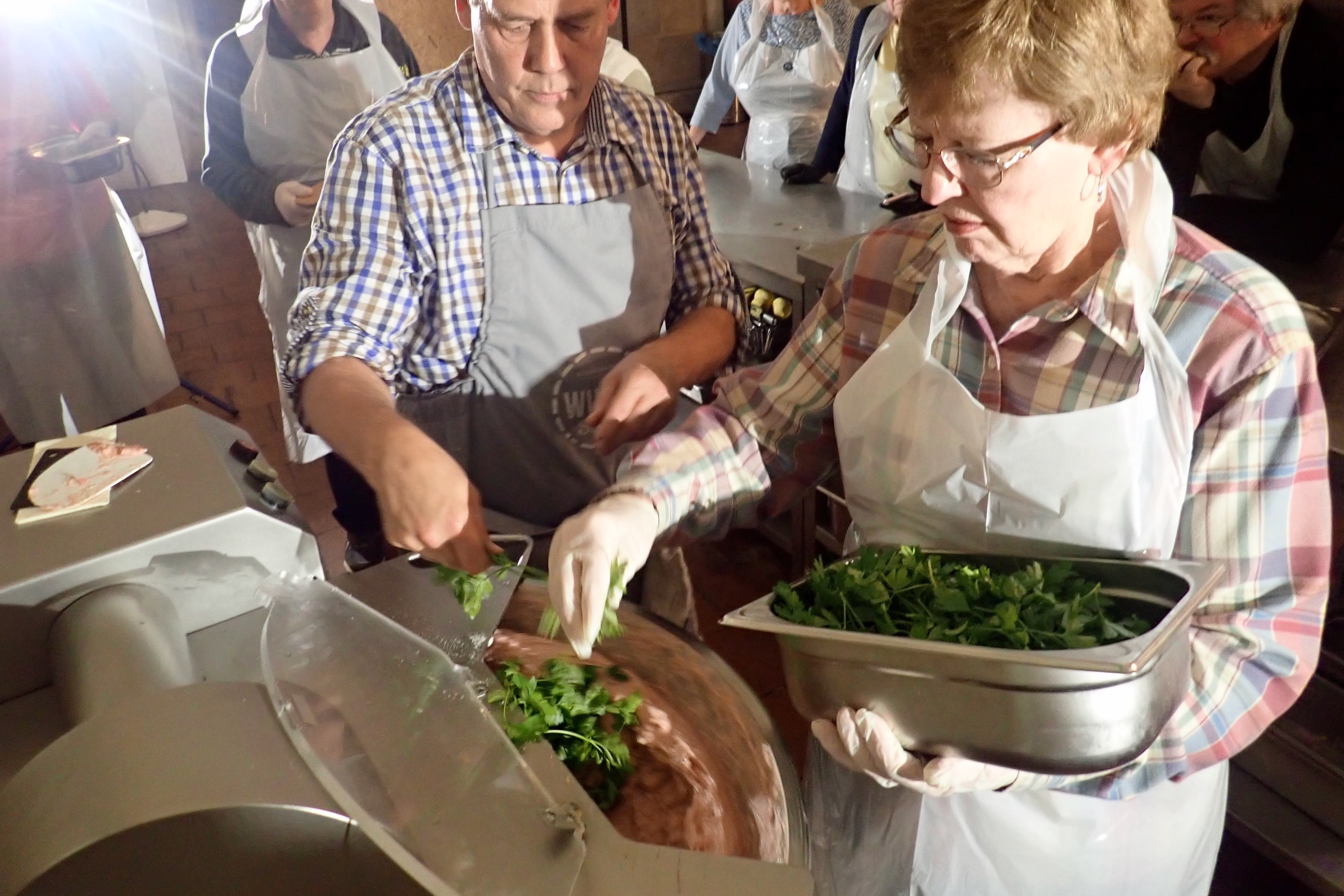

Time to pinch and twist into 10cm lengths:
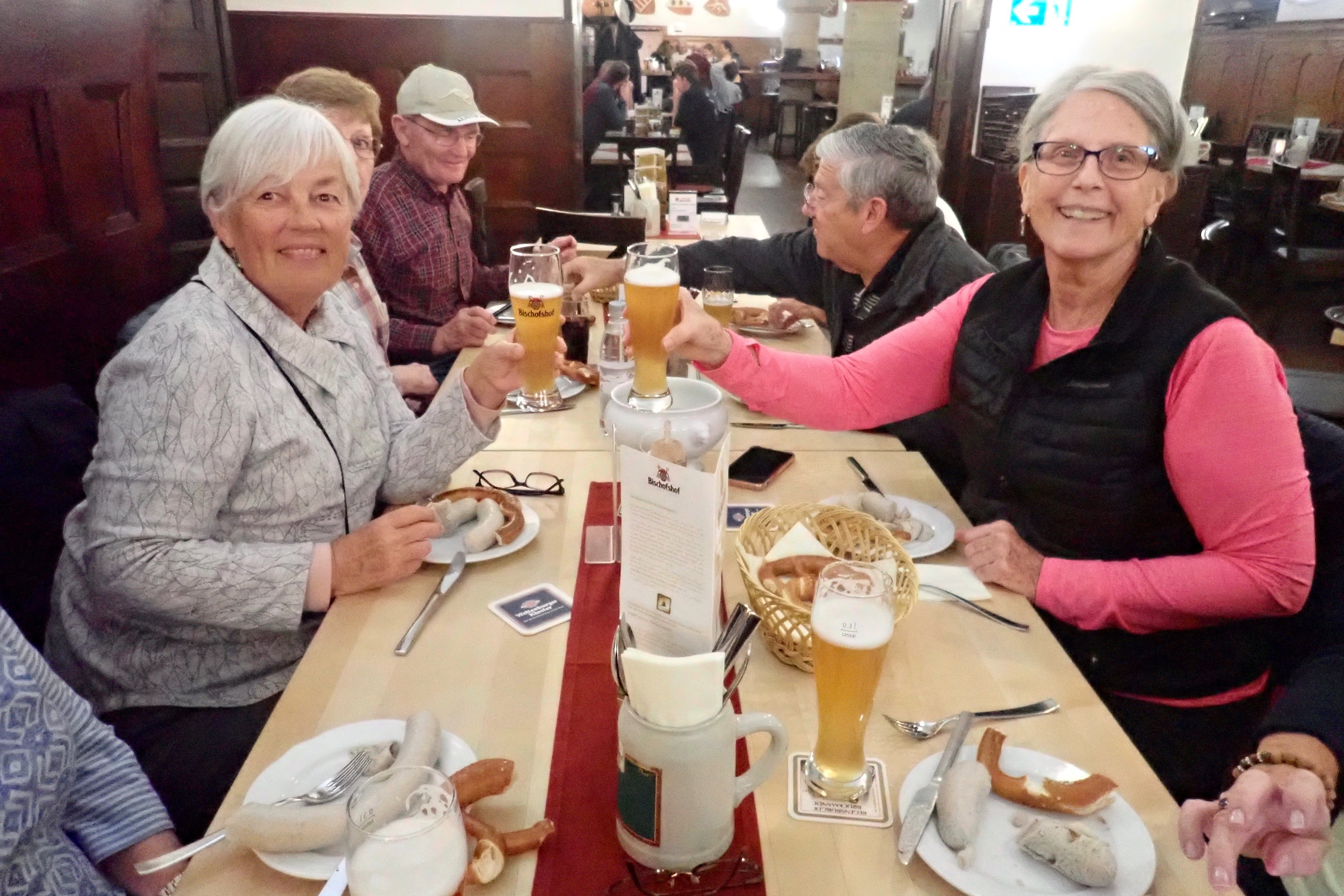
We ate the sausages we’d created in the traditional way – with beer, pretzels, and sweet German mustard. These sausages are simmered (not boiled) for 15-20 minutes because the pork casings are delicate. 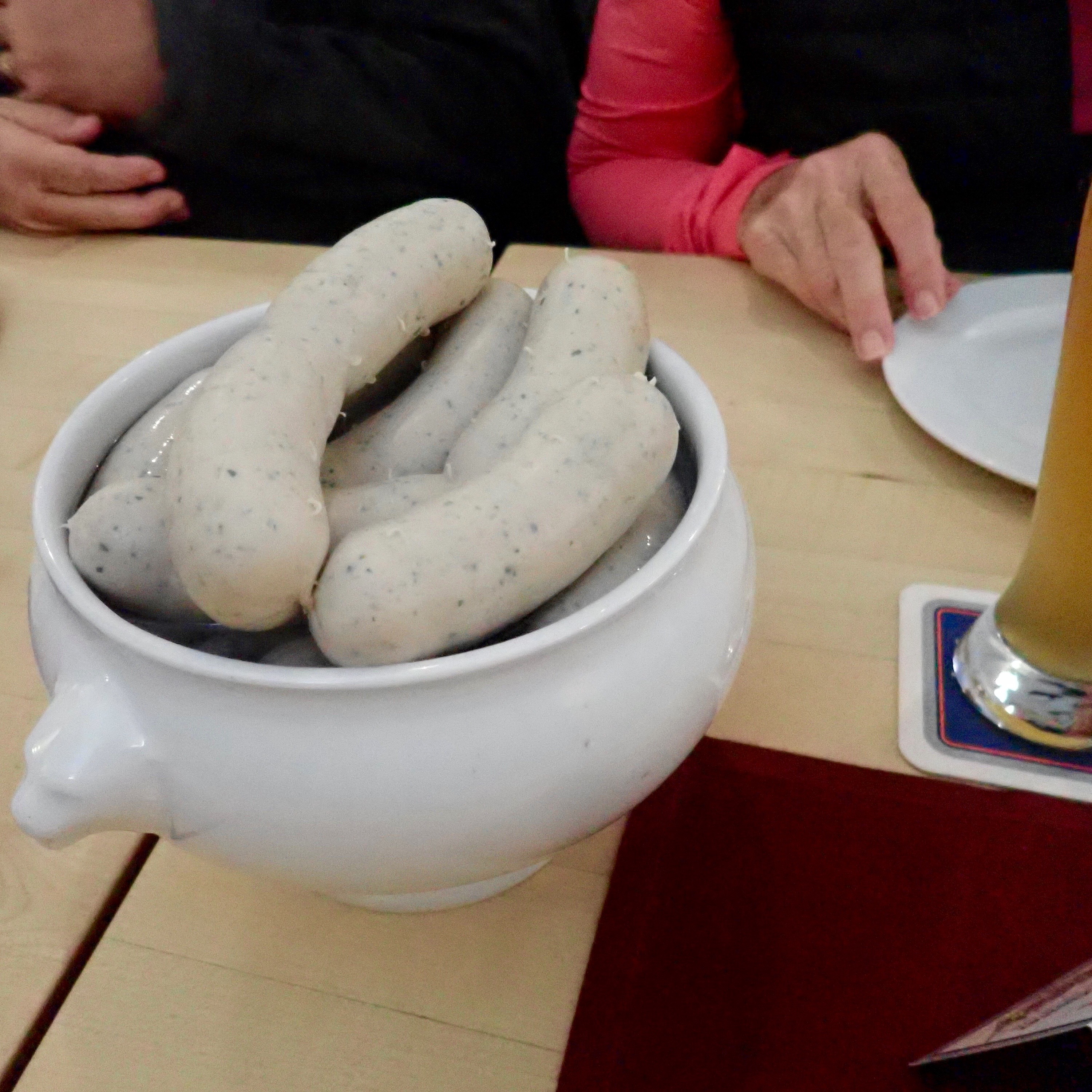
To eat them, open one end and eat the filling but not the casing (delicate for cooking, impossible for chewing).
Schoolgirls on their way to Dunkin Donuts before heading home: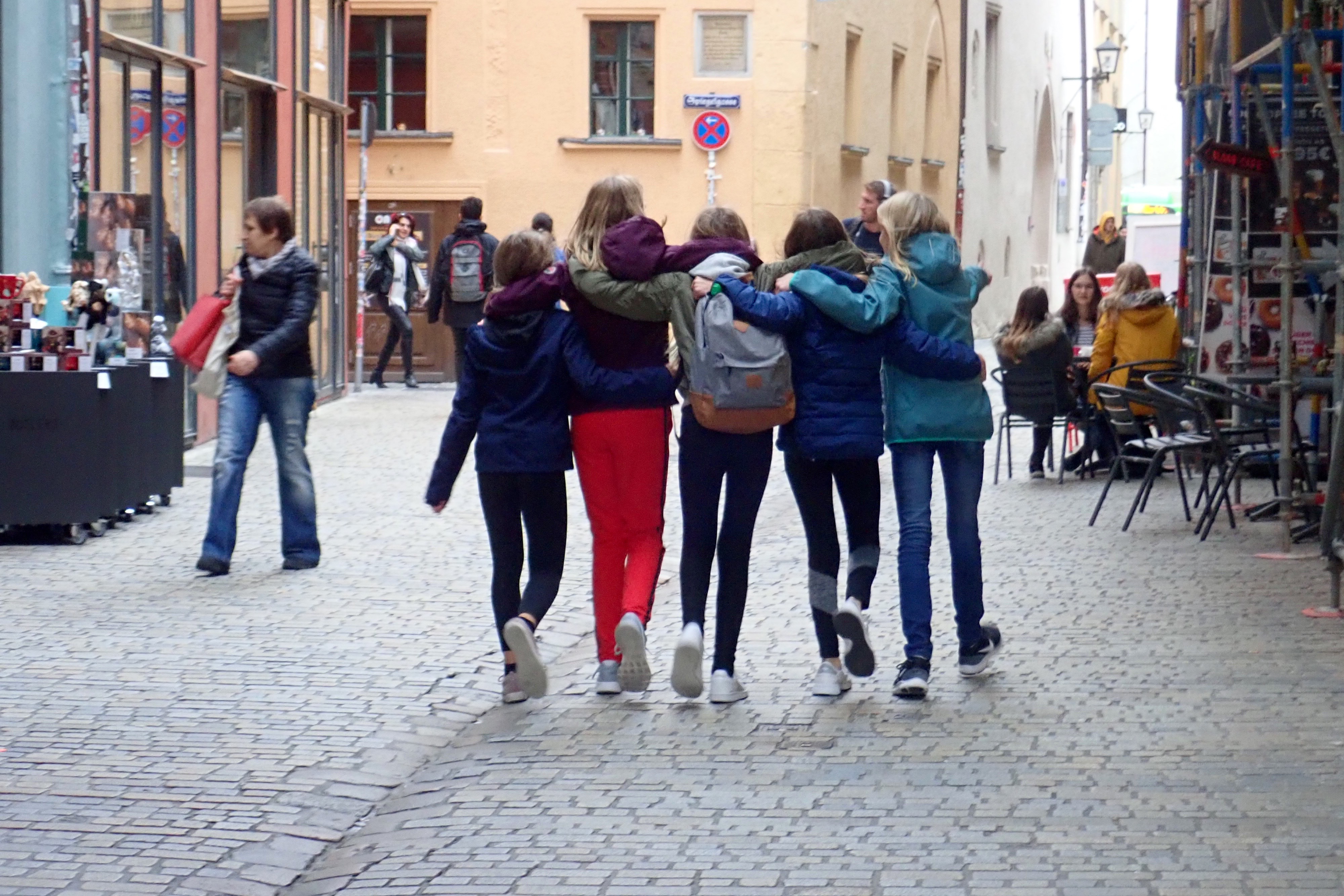
Walking back to the shuttle bus, I was the slowest person in the group, my ankle hurt, my feet hurt. I found out one good reason later – we walked 6 miles today – walking on cobblestones was certainly a factor.
Passau Germany
In the morning I went on a walking tour of Passau (Adrienne took an all-day tour to Salzburg Austria – a Sound of Music-related excursion). It was quite chilly this morning, everyone was bundled up.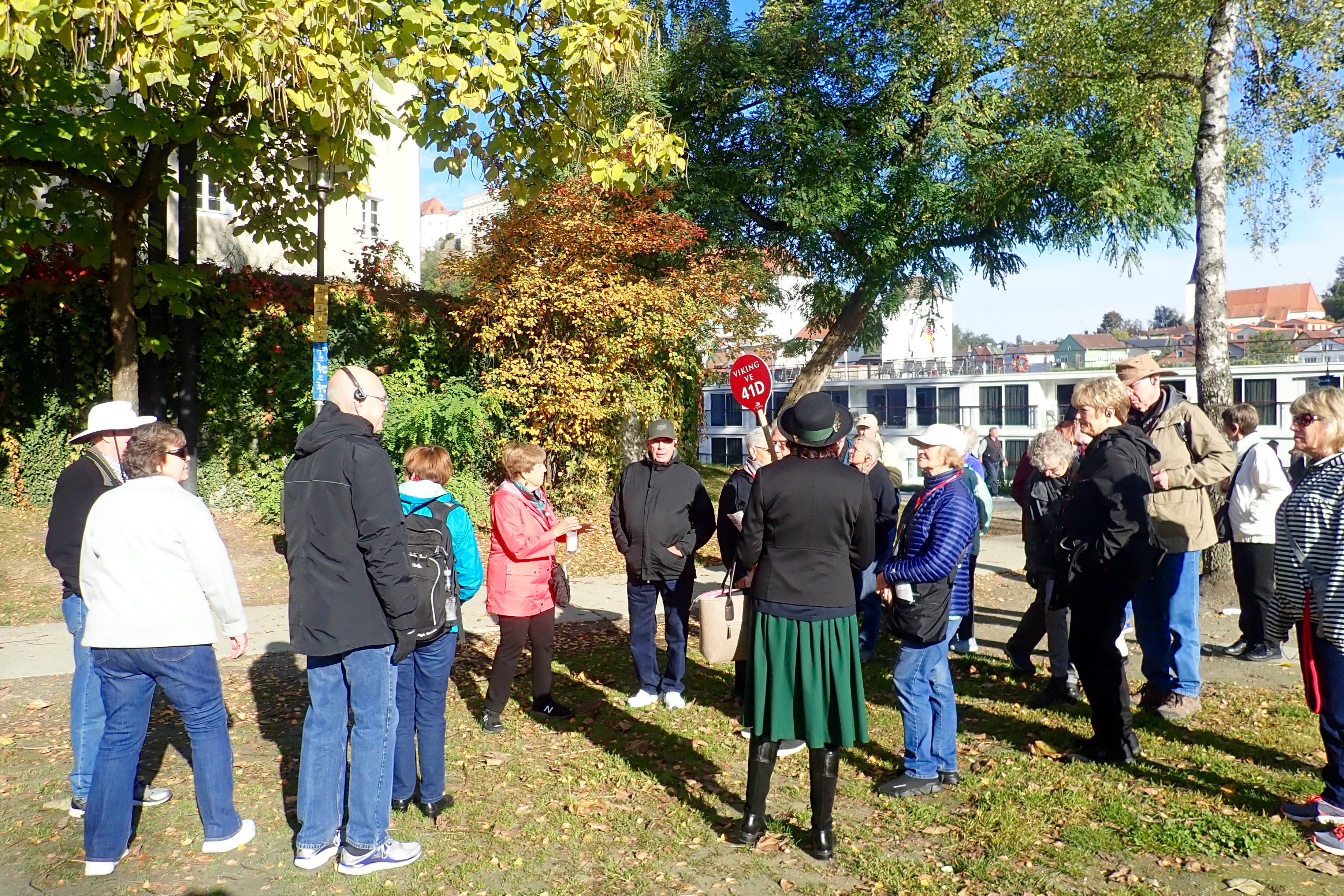
Since it was Sunday, most shops are required to be closed – cafes and souvenir shops are exempt.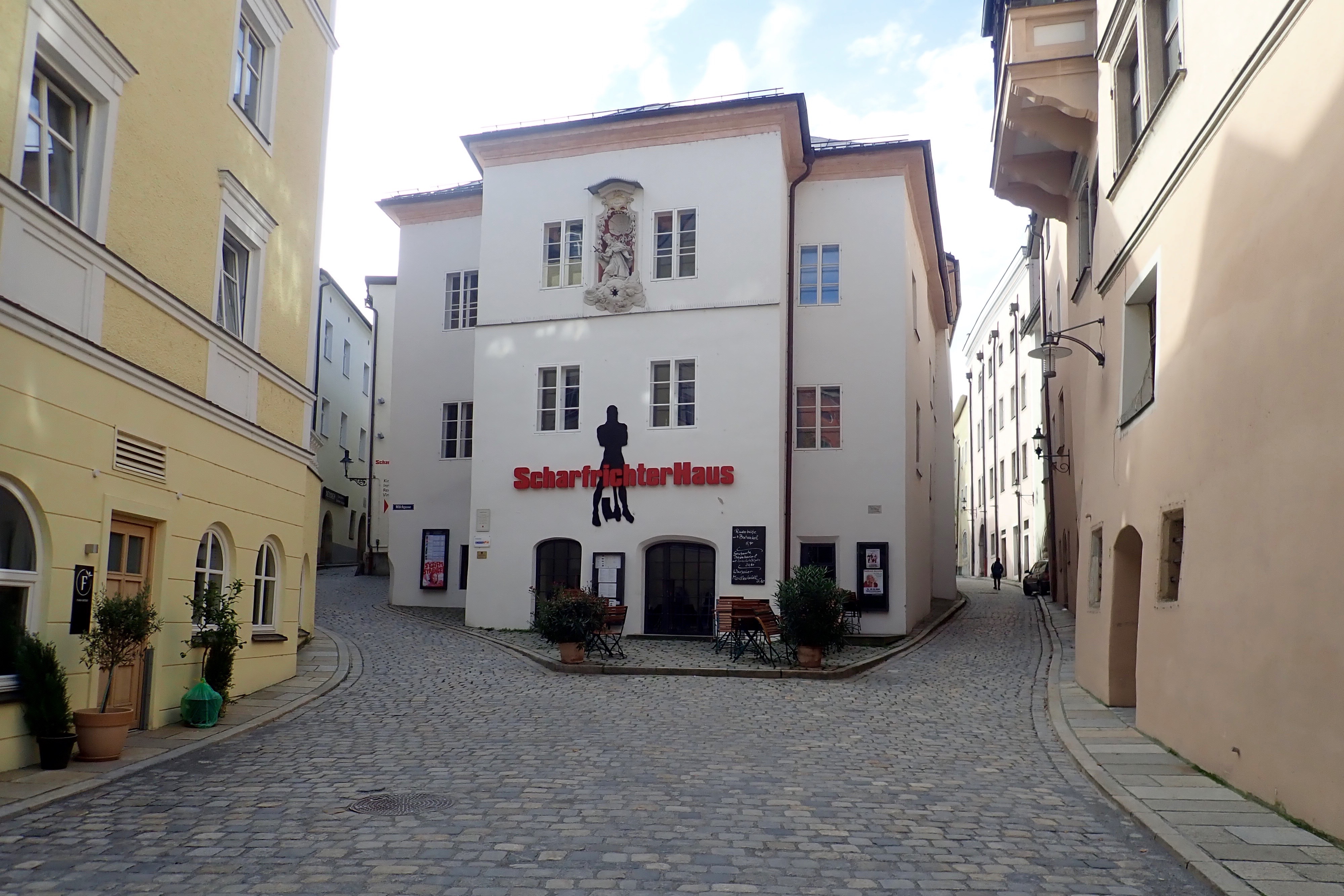
Passau is at the convergence of three rivers as shown on this banner at a construction site. Note the different colors. On the right, Ilz, which comes down from the forests. In the middle, the Danube, which must be blue. On the left, the Inn which is greenish due to limestone sediments. Only the Danube is navigable.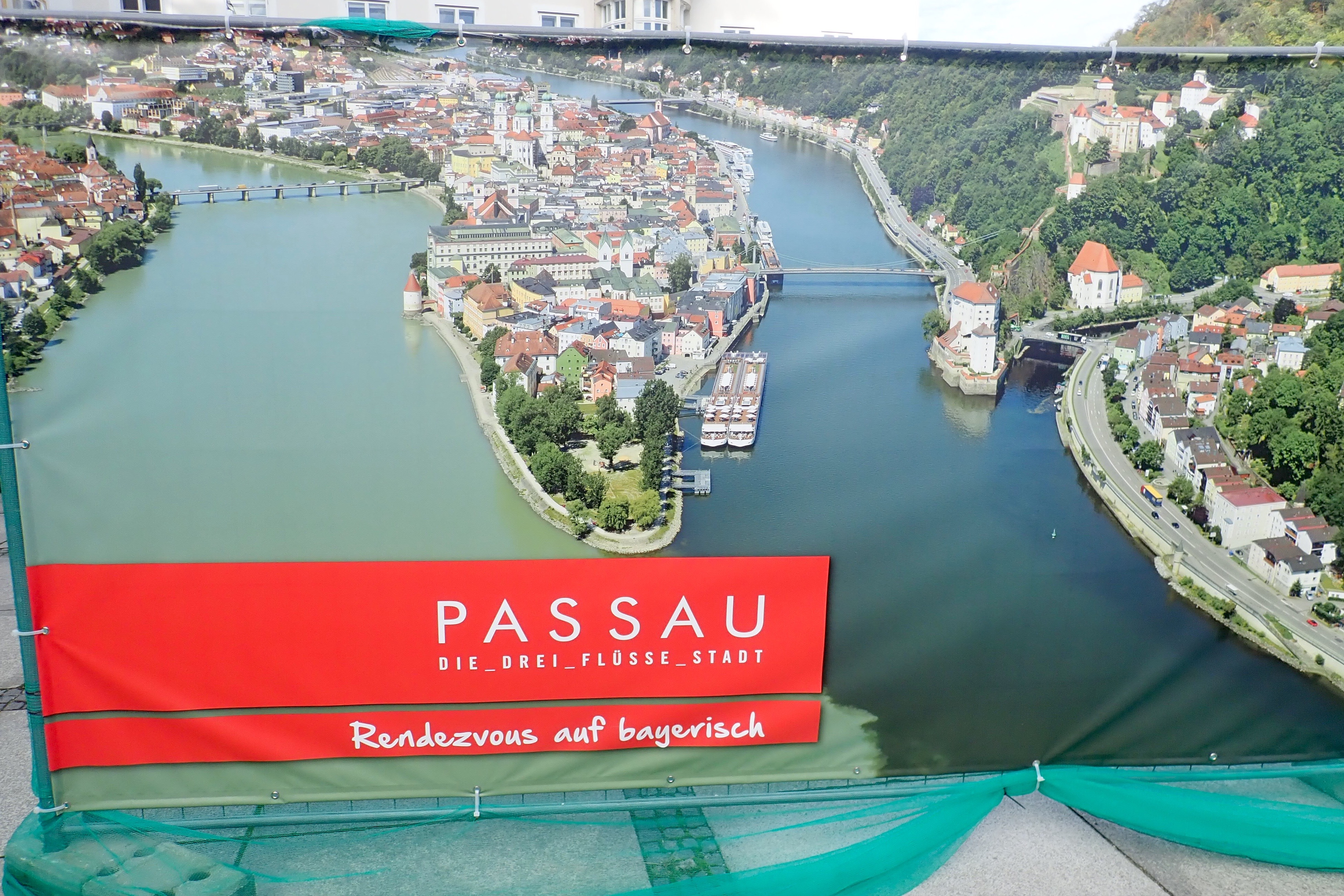
Marks on a building to show height of biggest floods: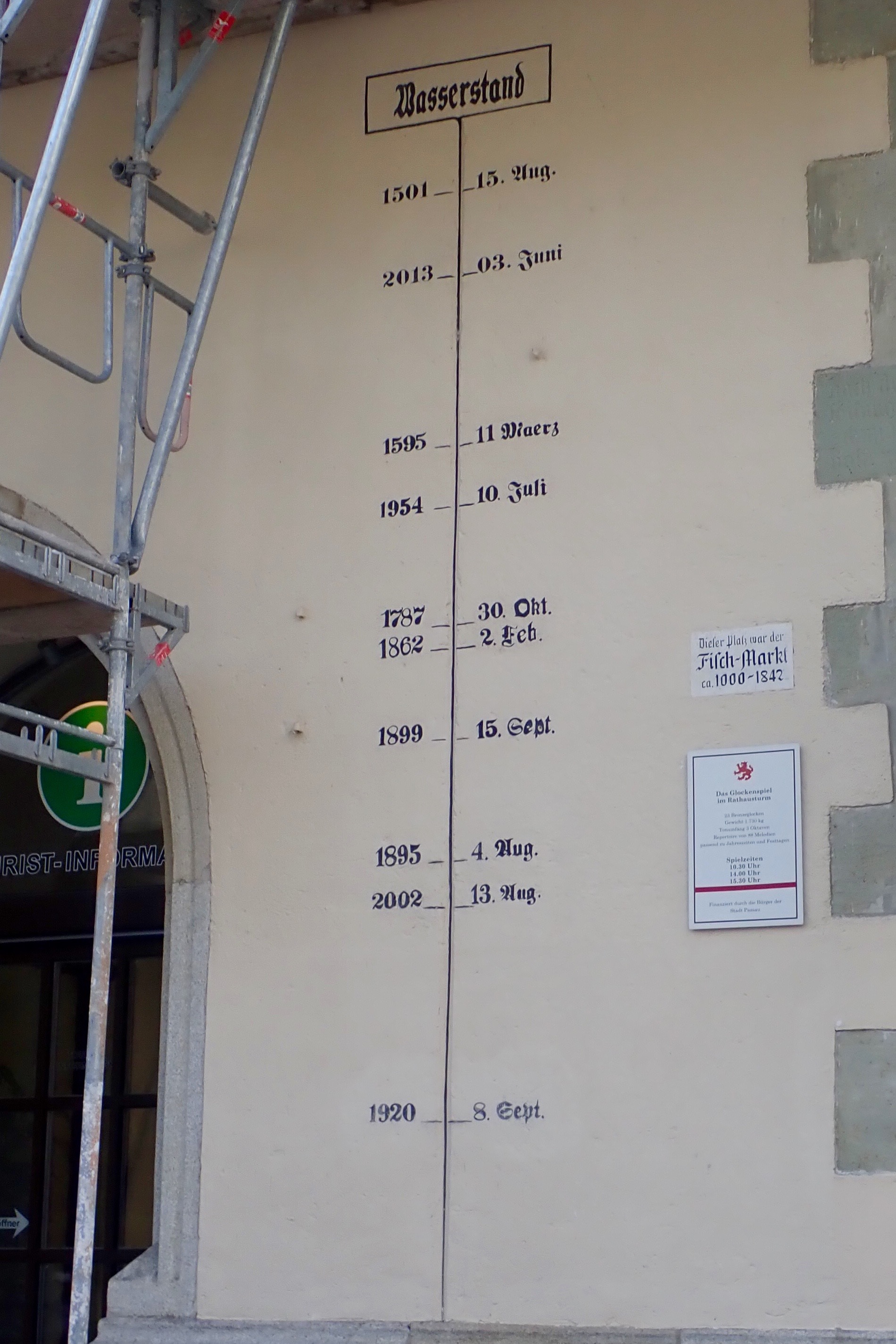
St Stephen’s Cathedral: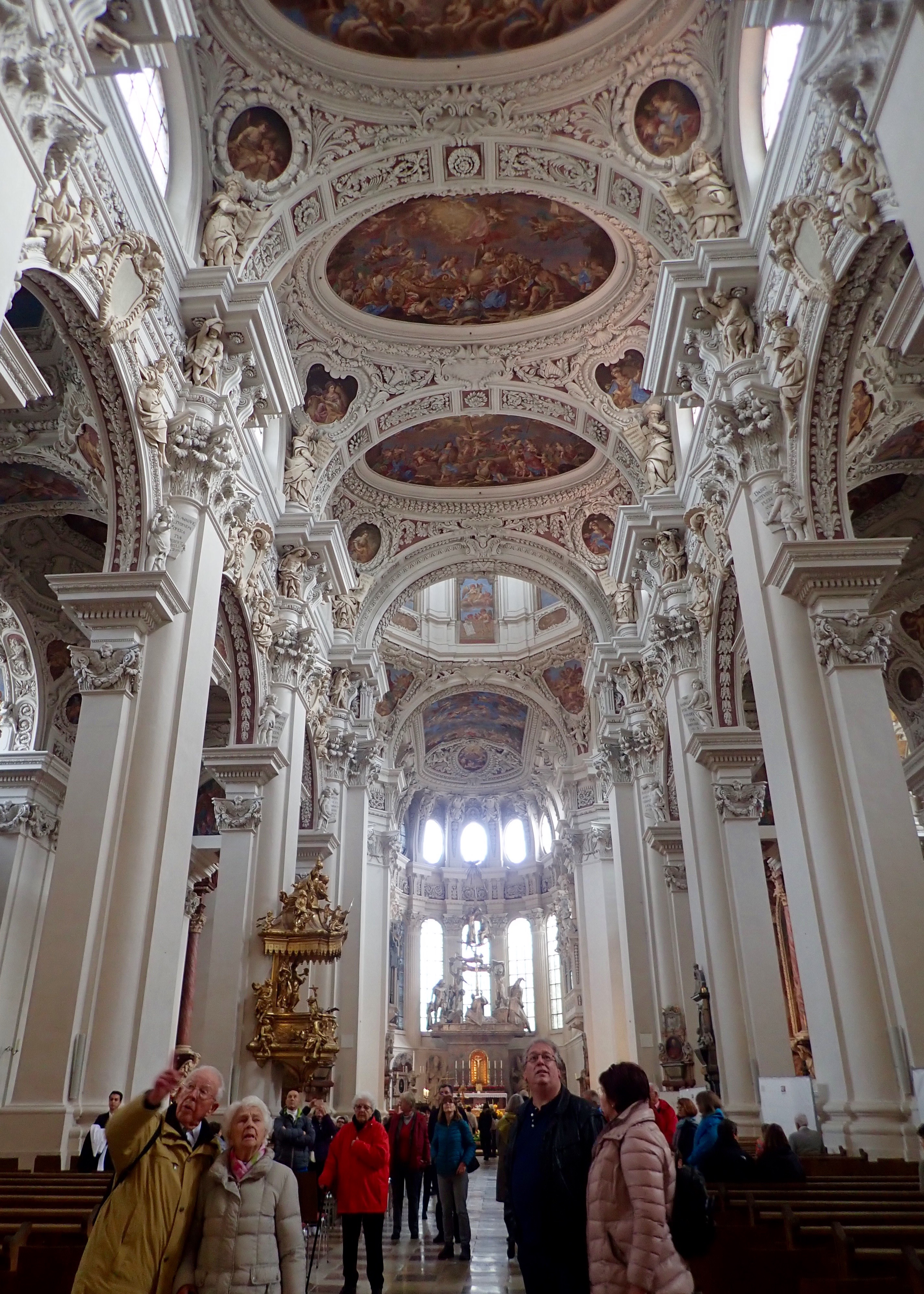
The pipe organ is one of the largest in the world, almost 18000 pipes, 5 separate organs, all played from one central location.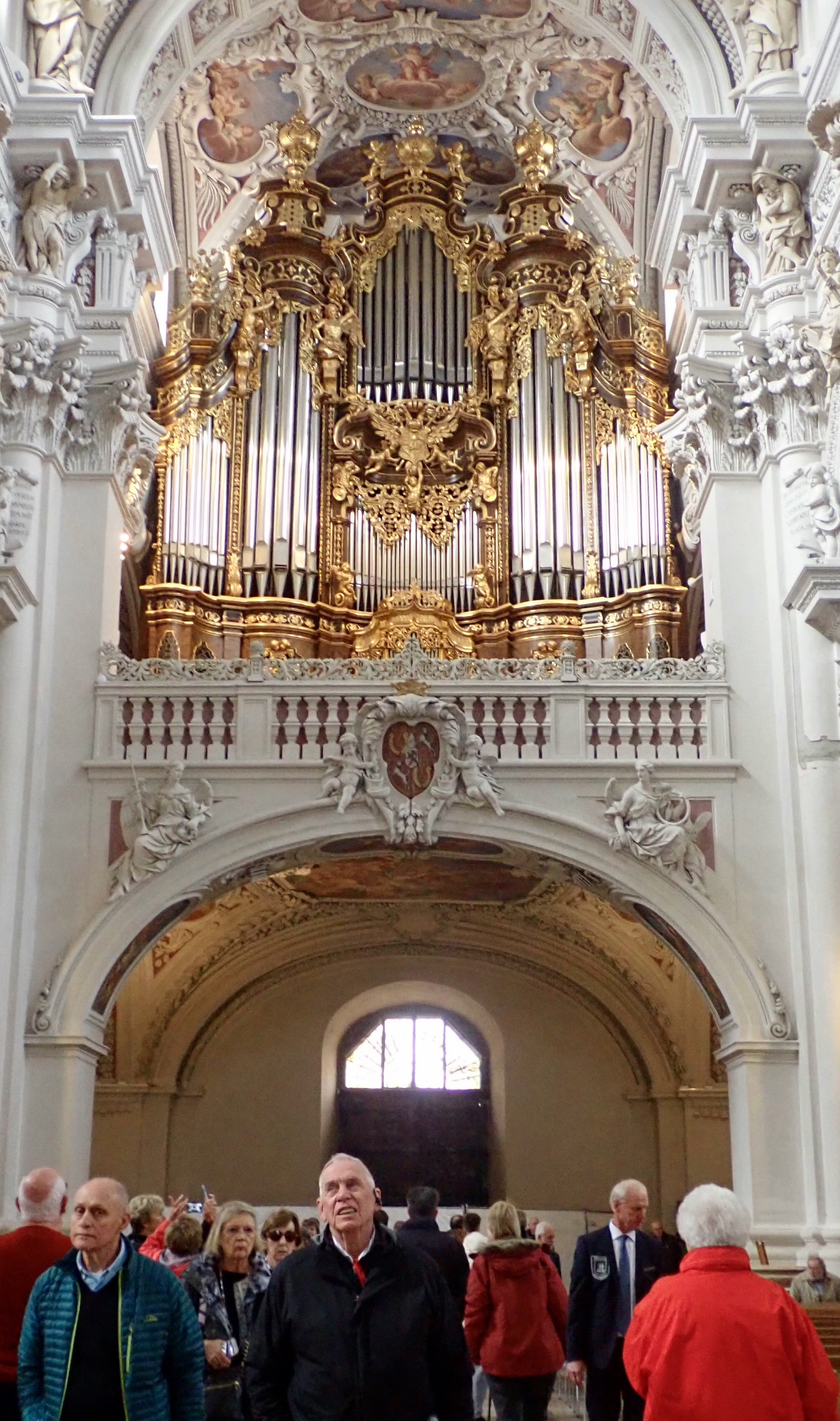
In the afternoon, I went on an excursion to Scharding. Crossing the moat (now a parking area) into the main square of town:
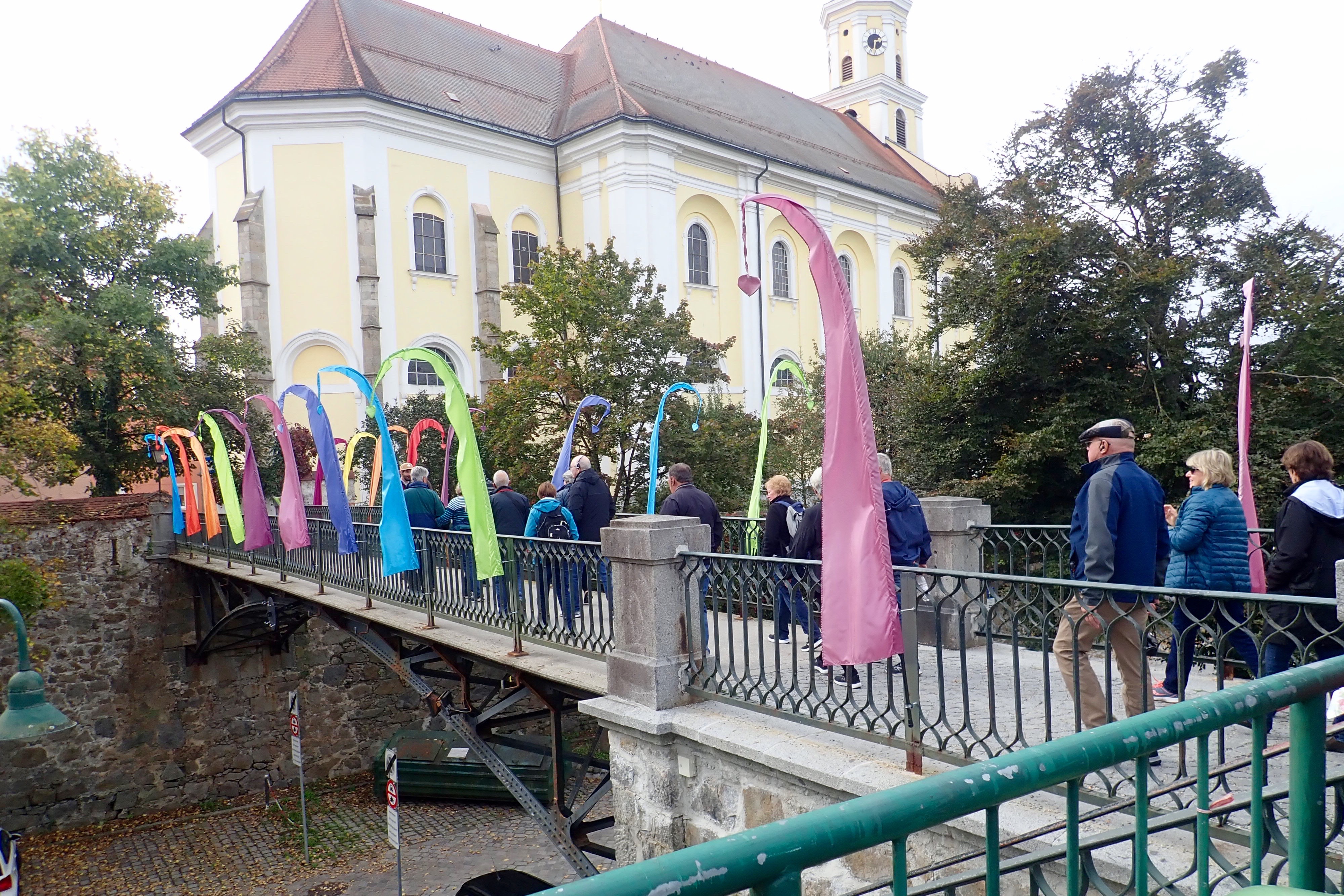
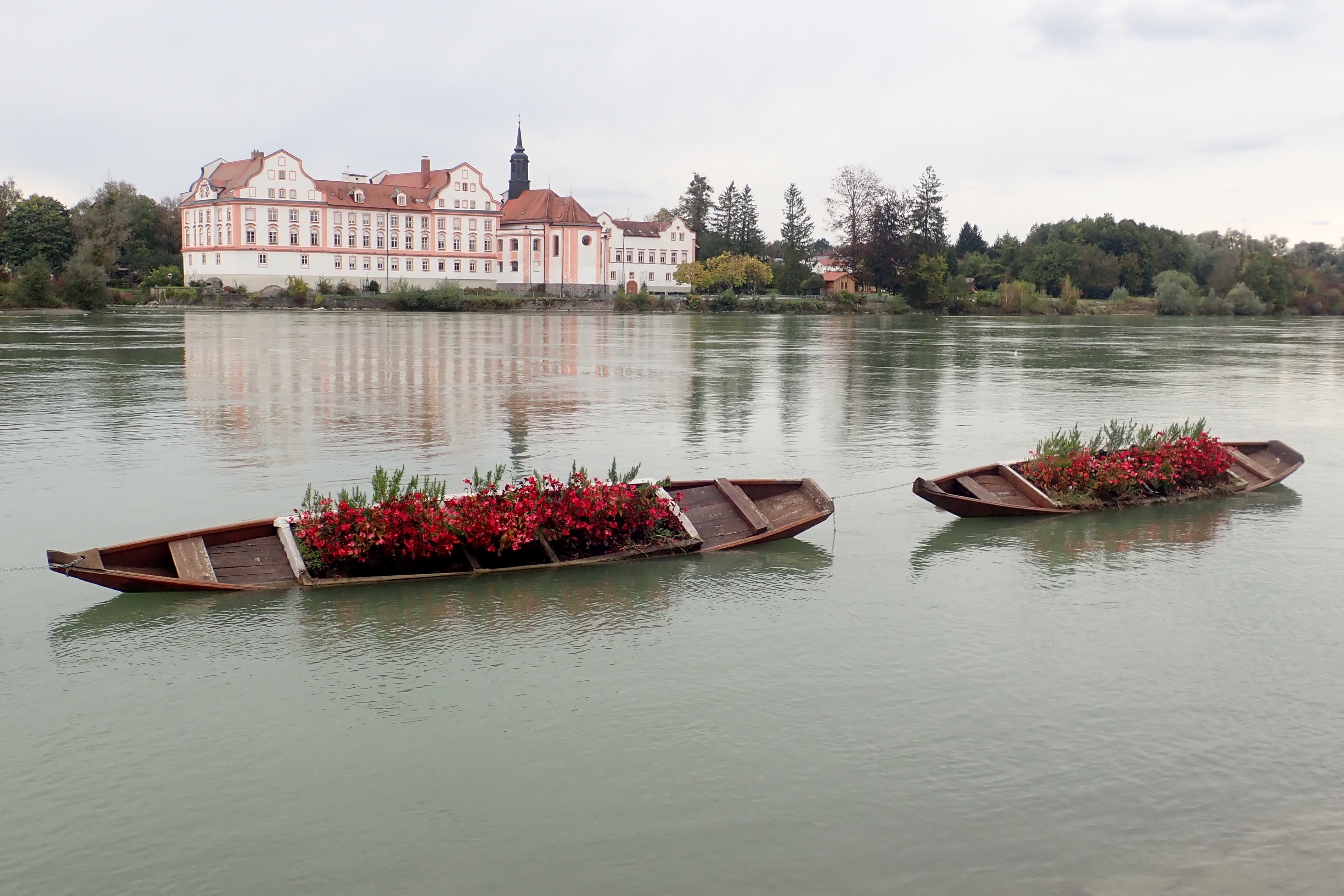
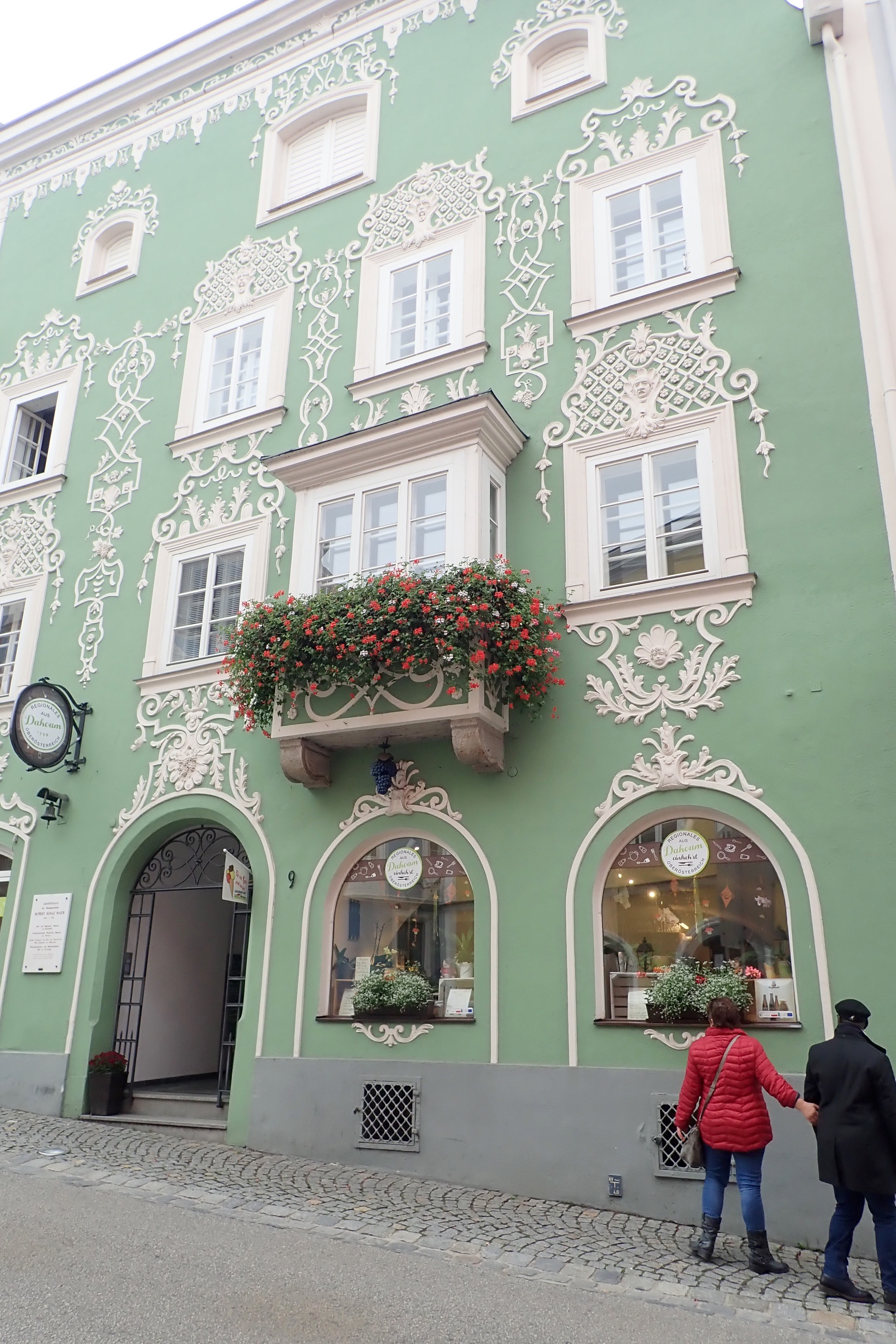
Next we took a little cruise on a small boat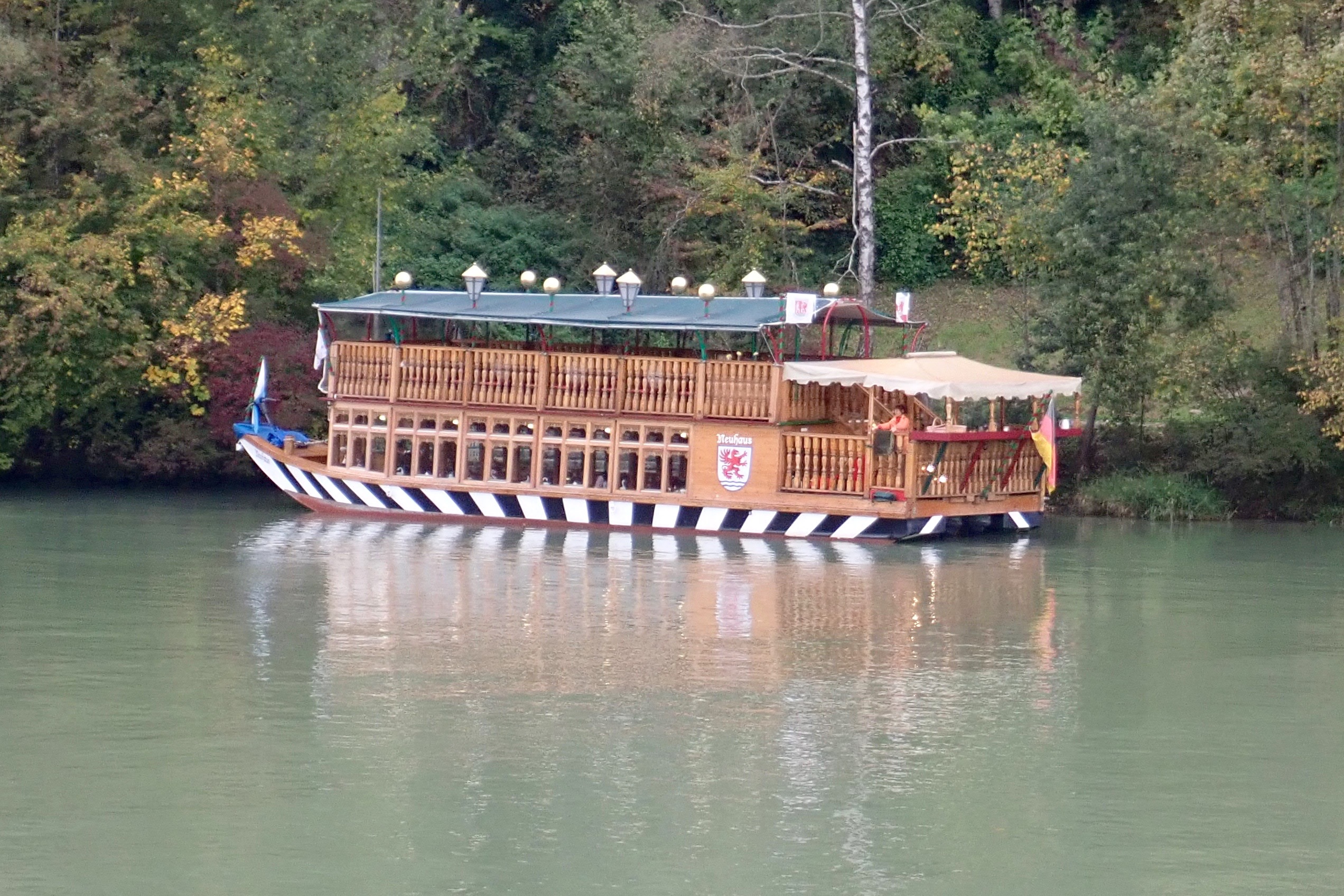
where we had beer, pretzels, and a delicious cheese spread.
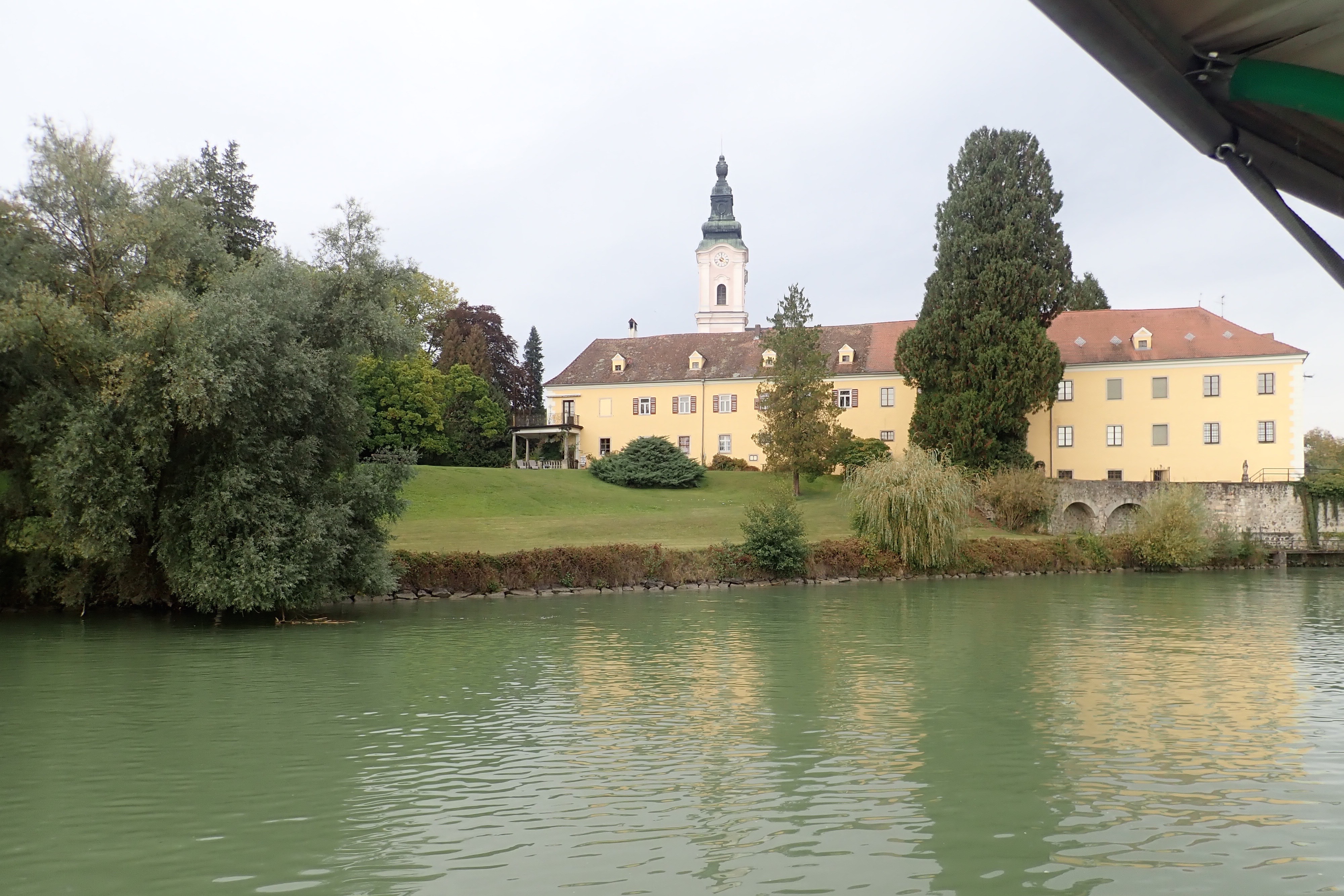
Back to Scharding: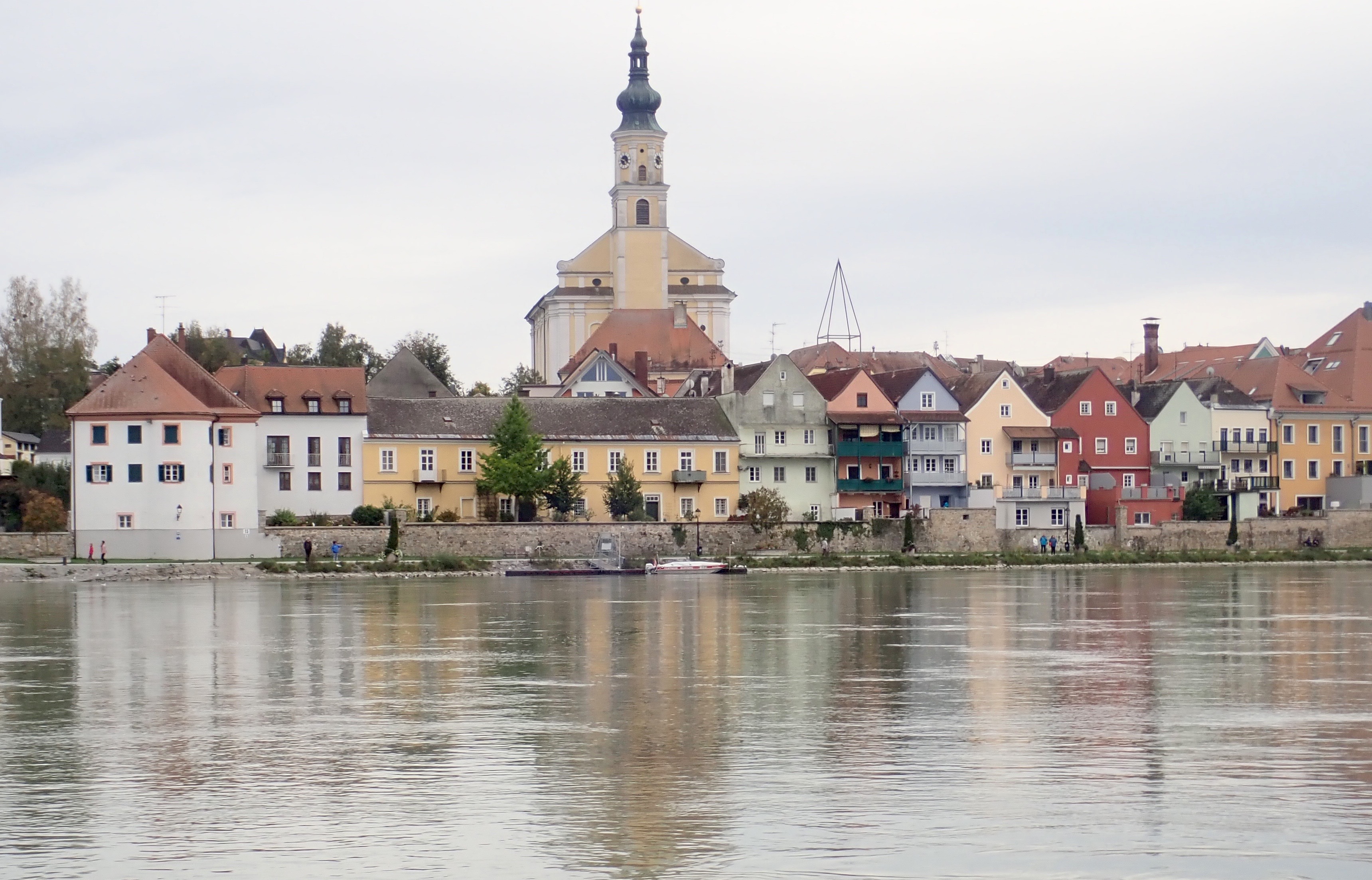
Good news tonight: the rivers are just high enough that we get to STAY on this ship – the Gefjon – and don’t have to pack up tonight to switch to another ship for the second week!
 arletelouise