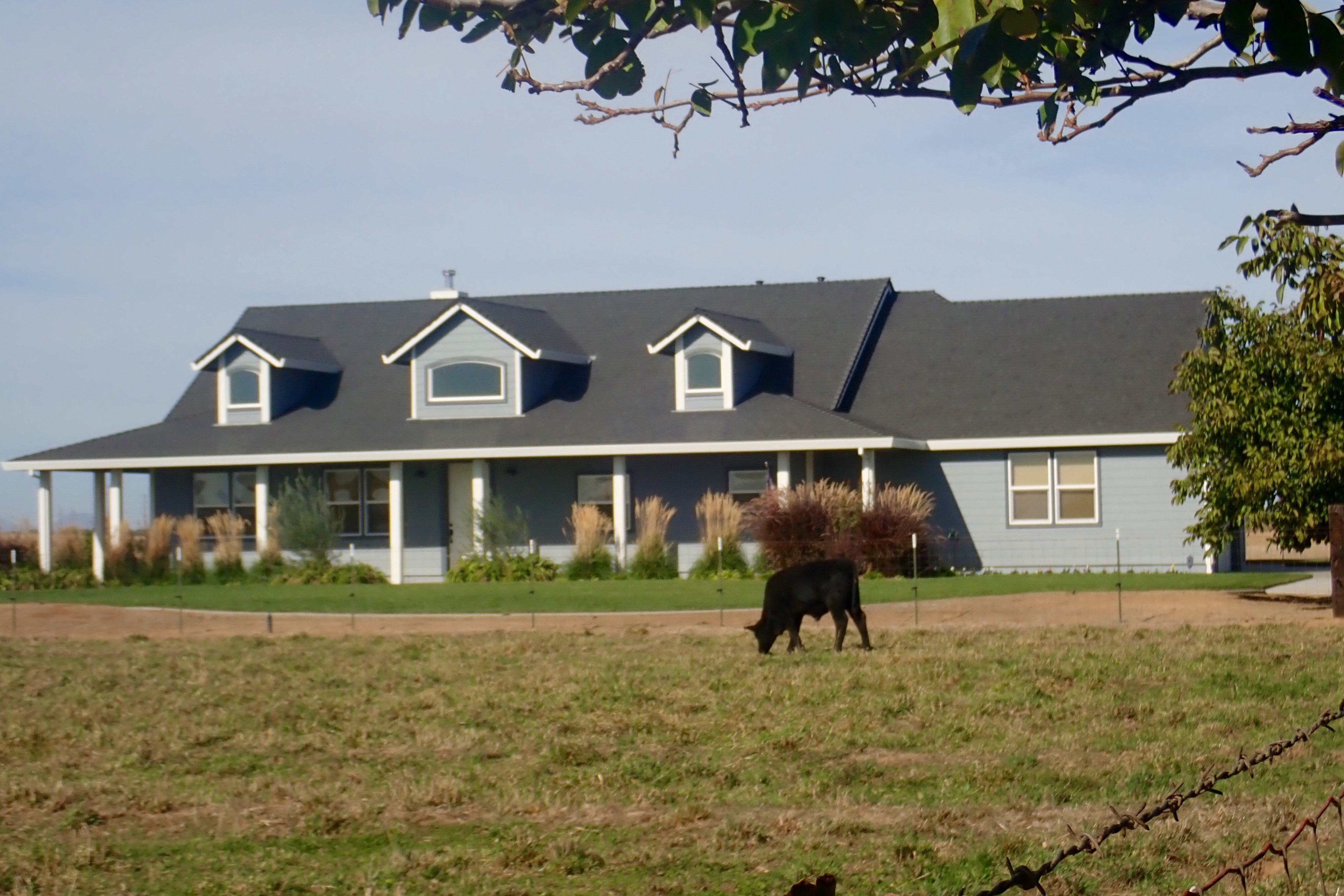
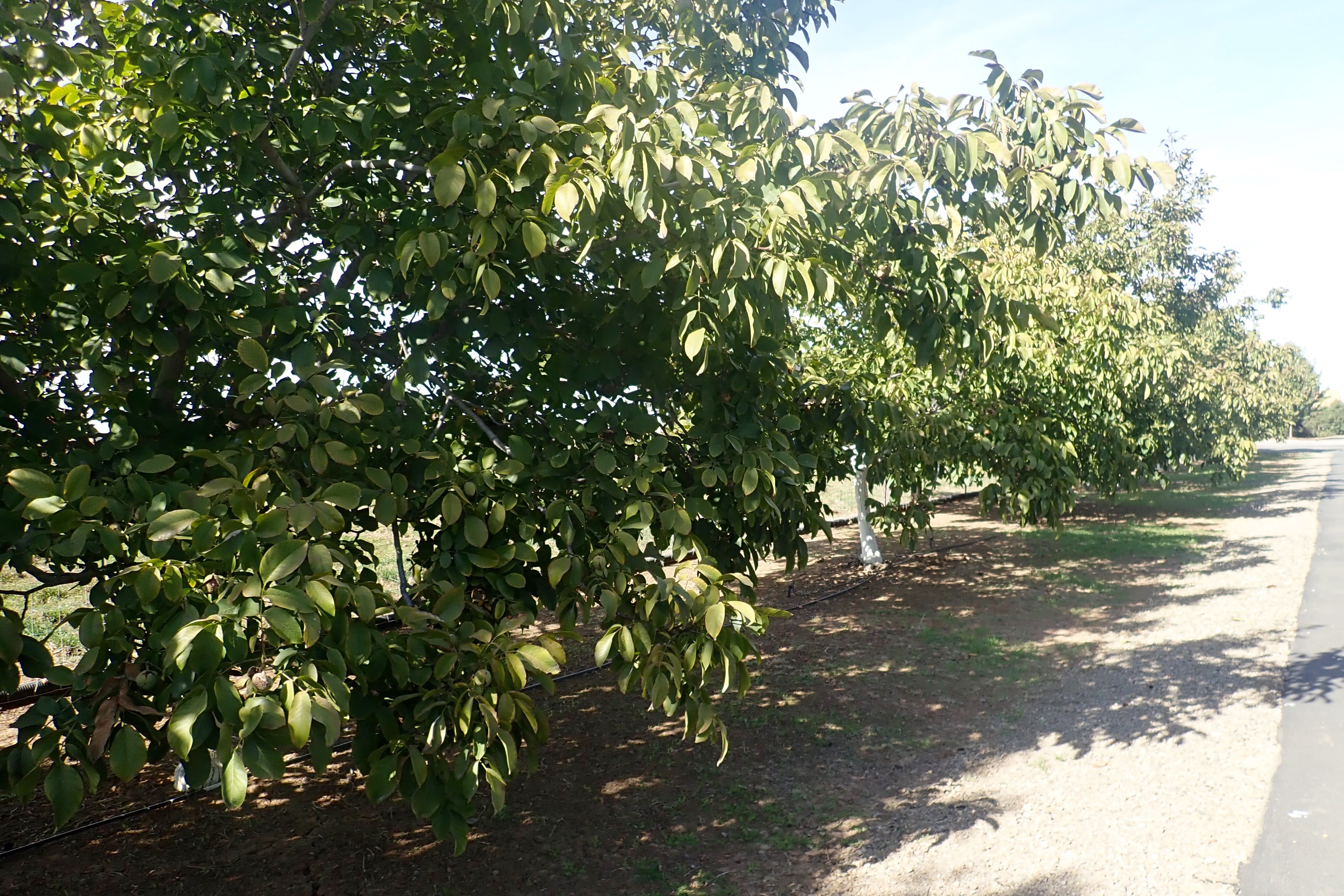
While I was away, Justin gathered walnuts for me (thank you!) and sent me a picture.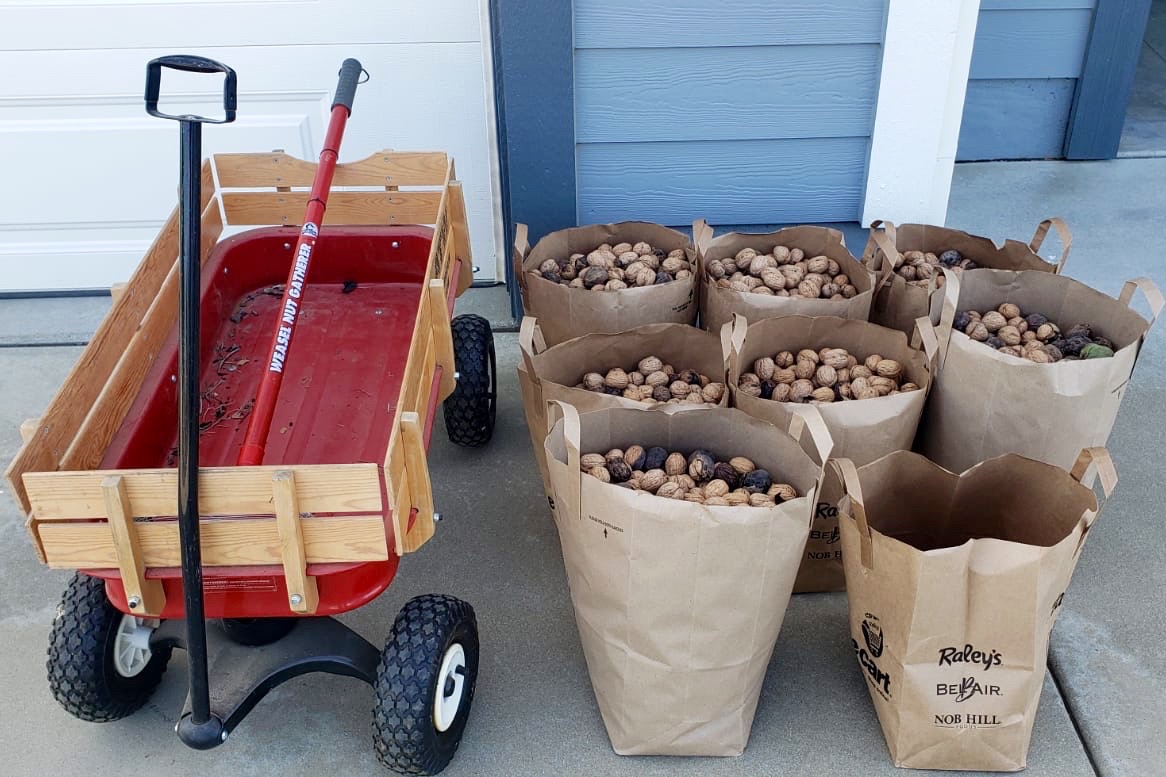
The last pile after 4 hours of raking and gathering. 10 1/2 bags!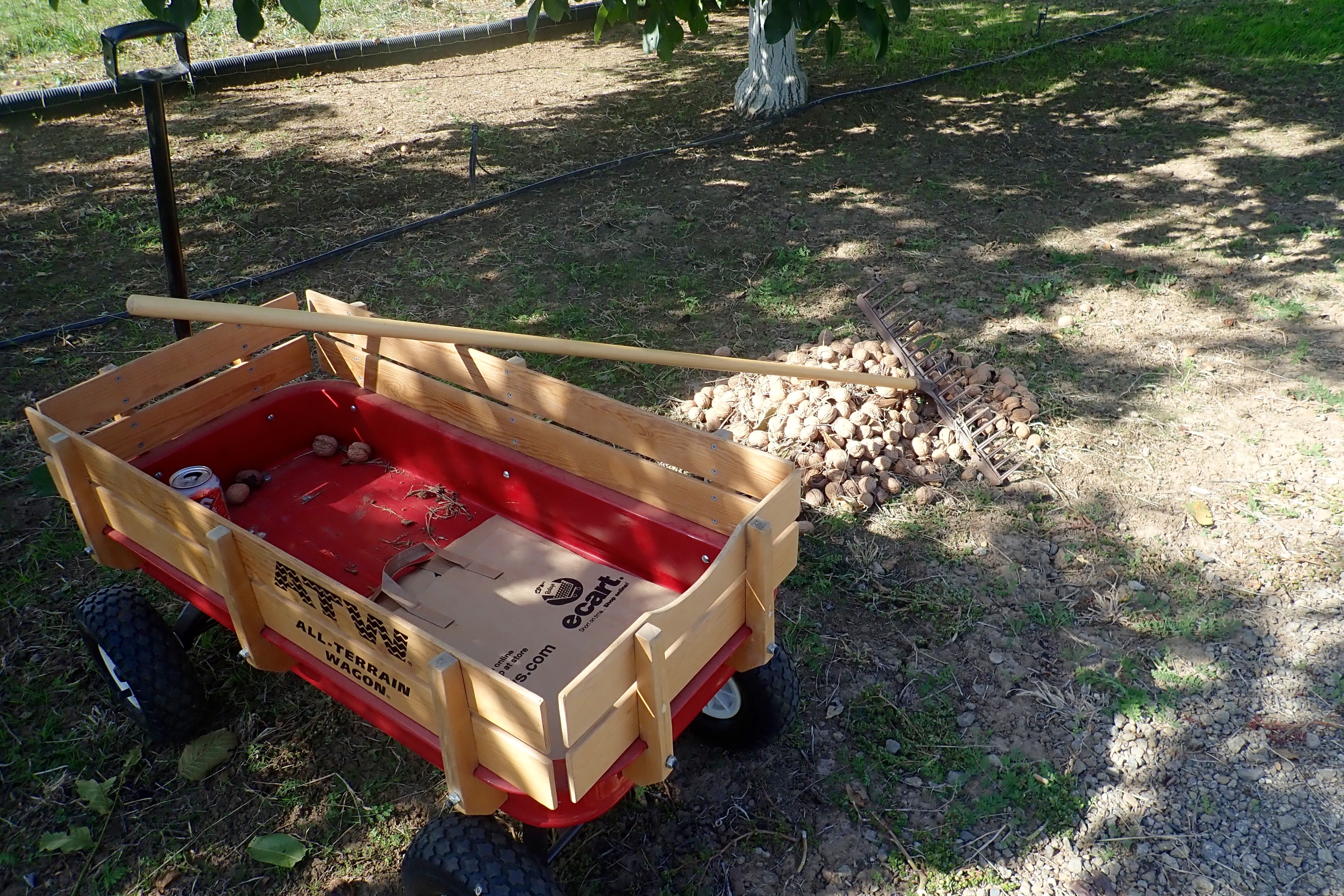
I weighed everything and now it’s time to start the drying rotation.
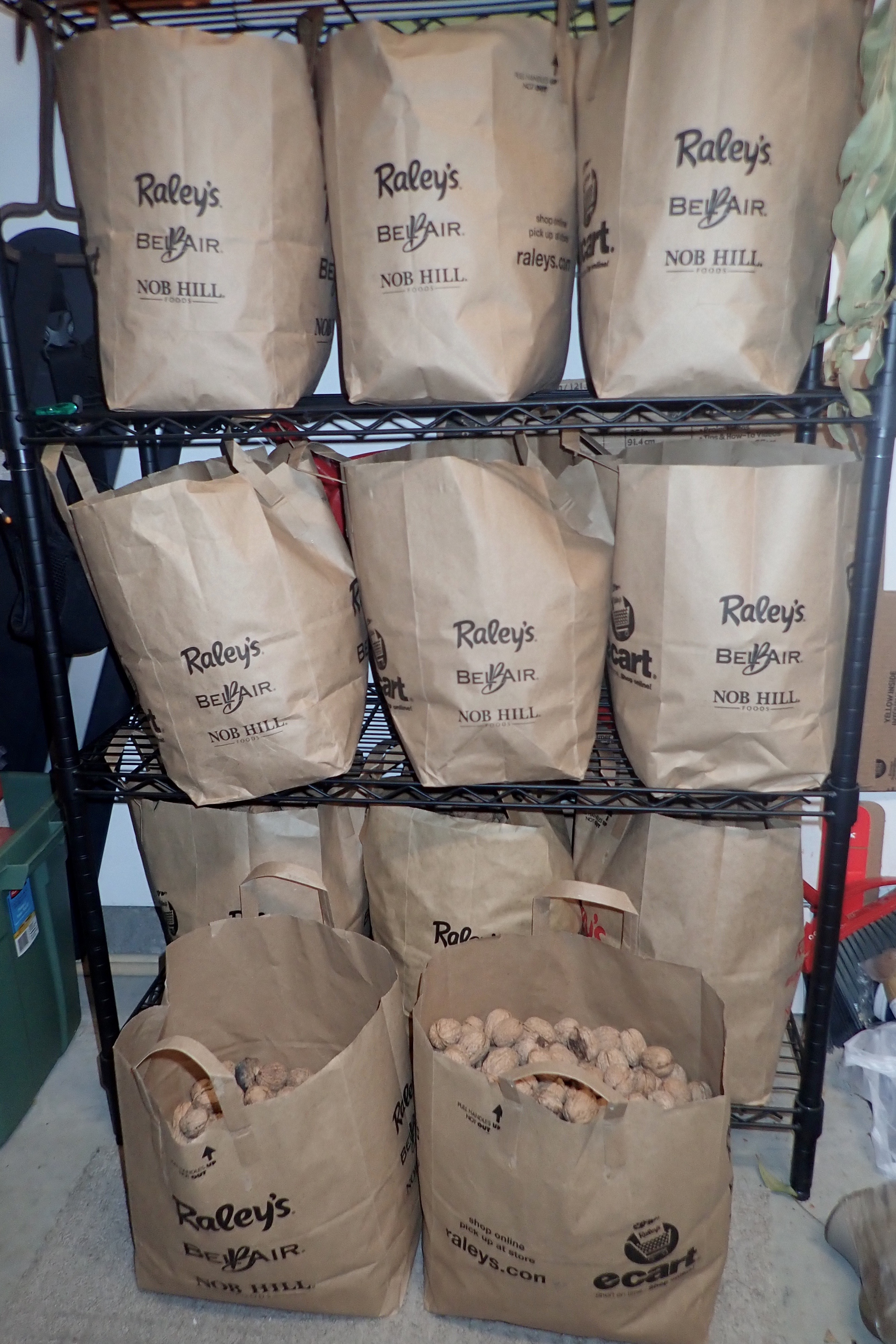
Total so far = 239 pounds
Thursday at Merrilyn’s
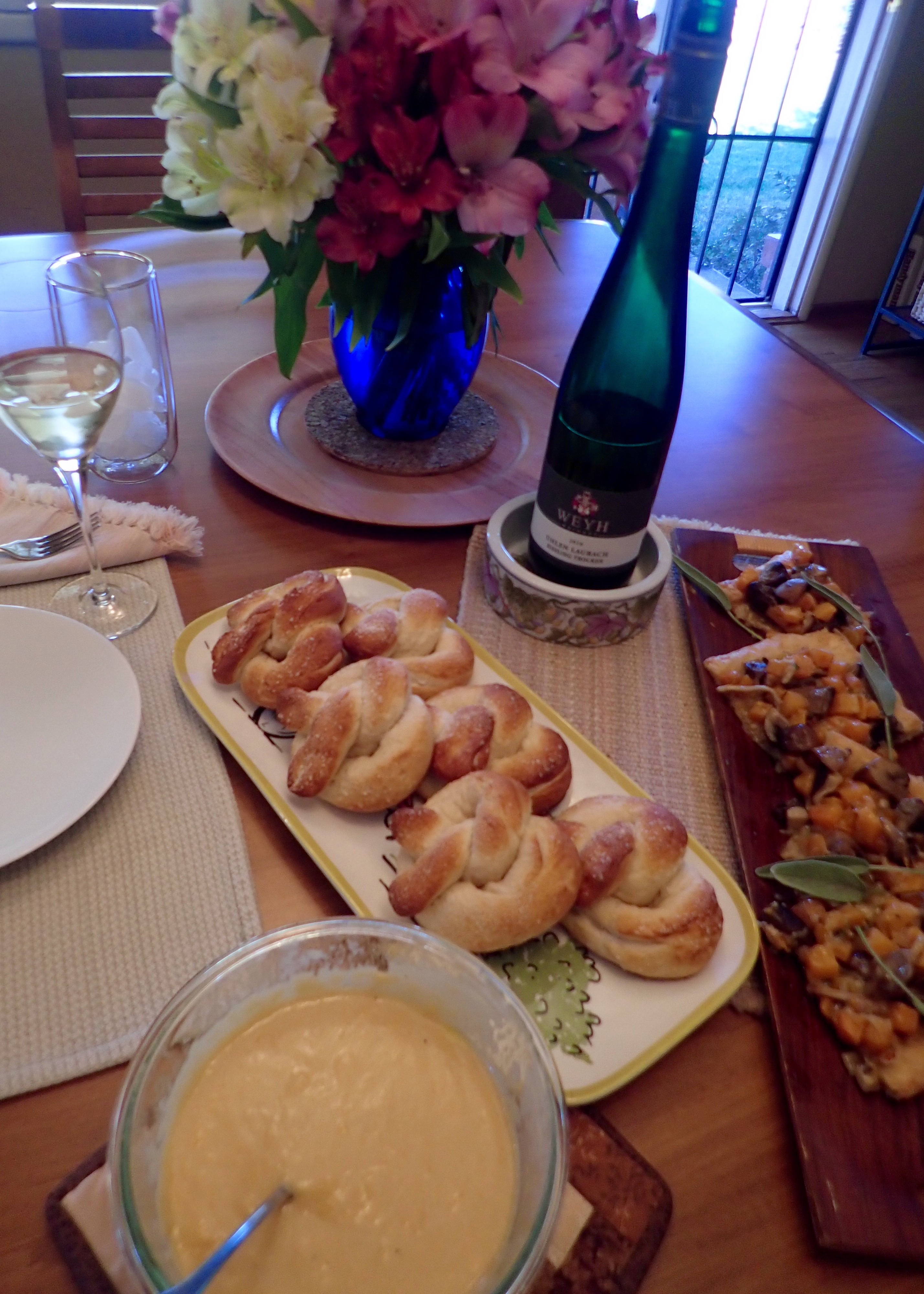
I made big soft German-style pretzels and a beer cheese dipping sauce. Merrilyn made Mushroom, Butternut Squash & Gruyere Tart – delicious!
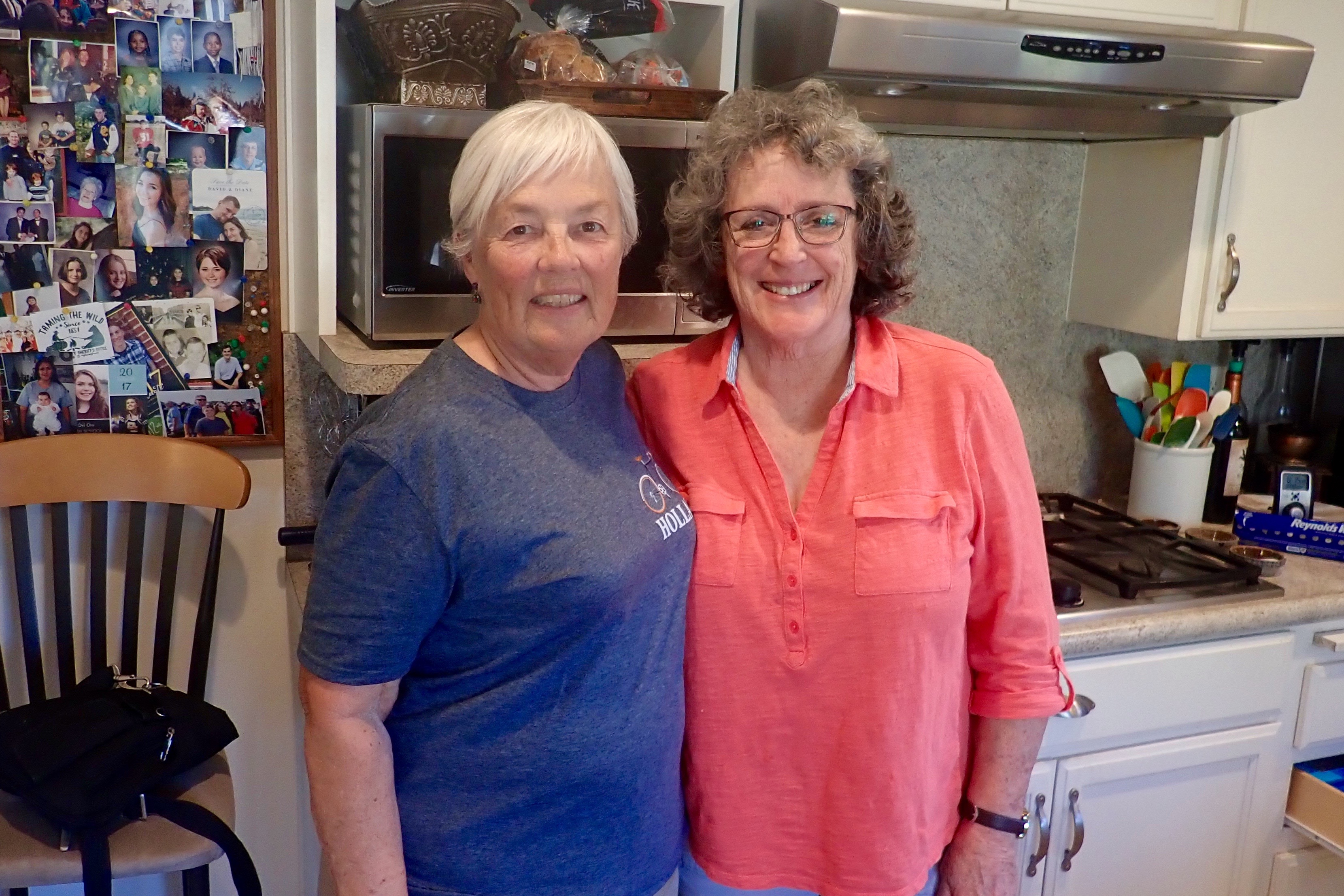
Always fun!
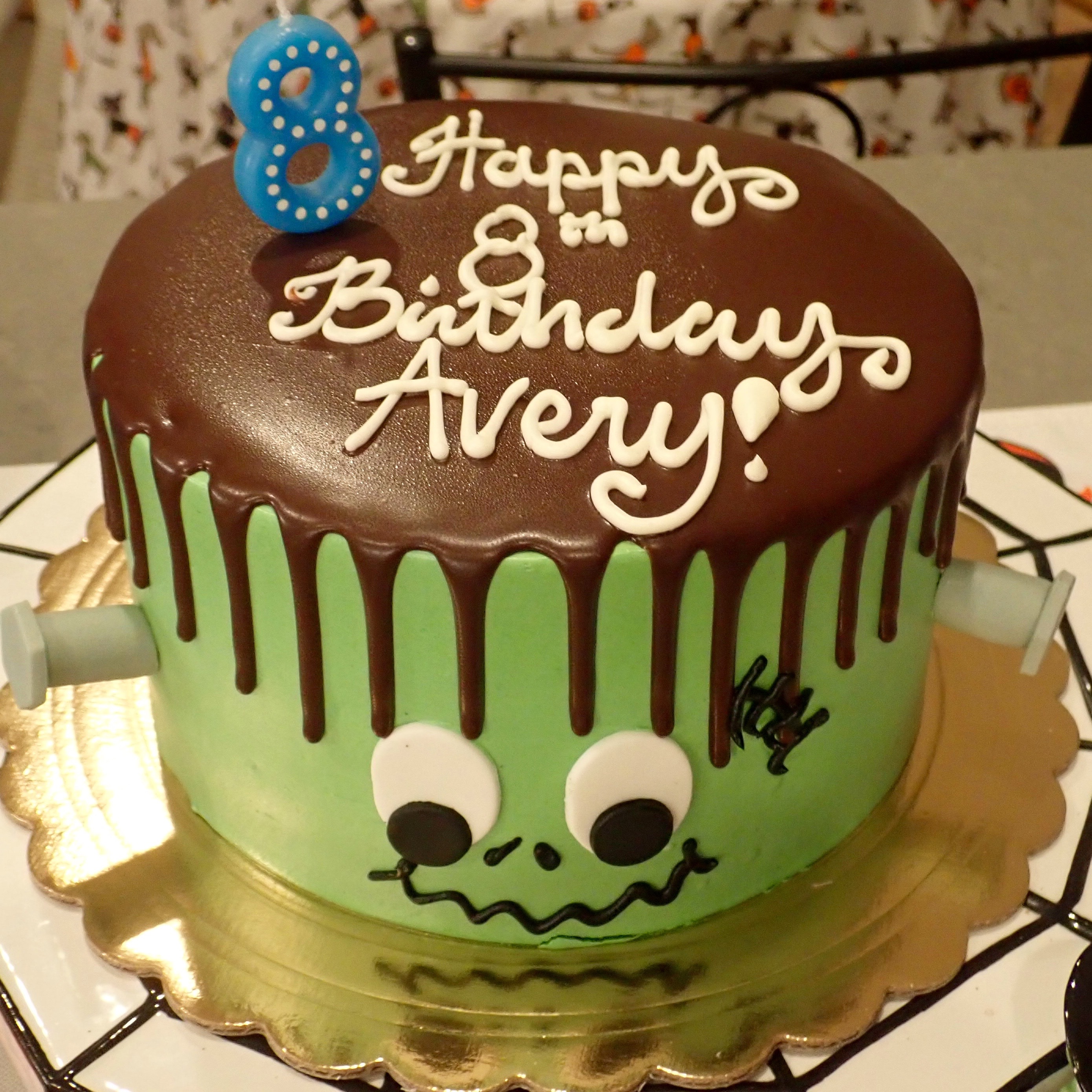
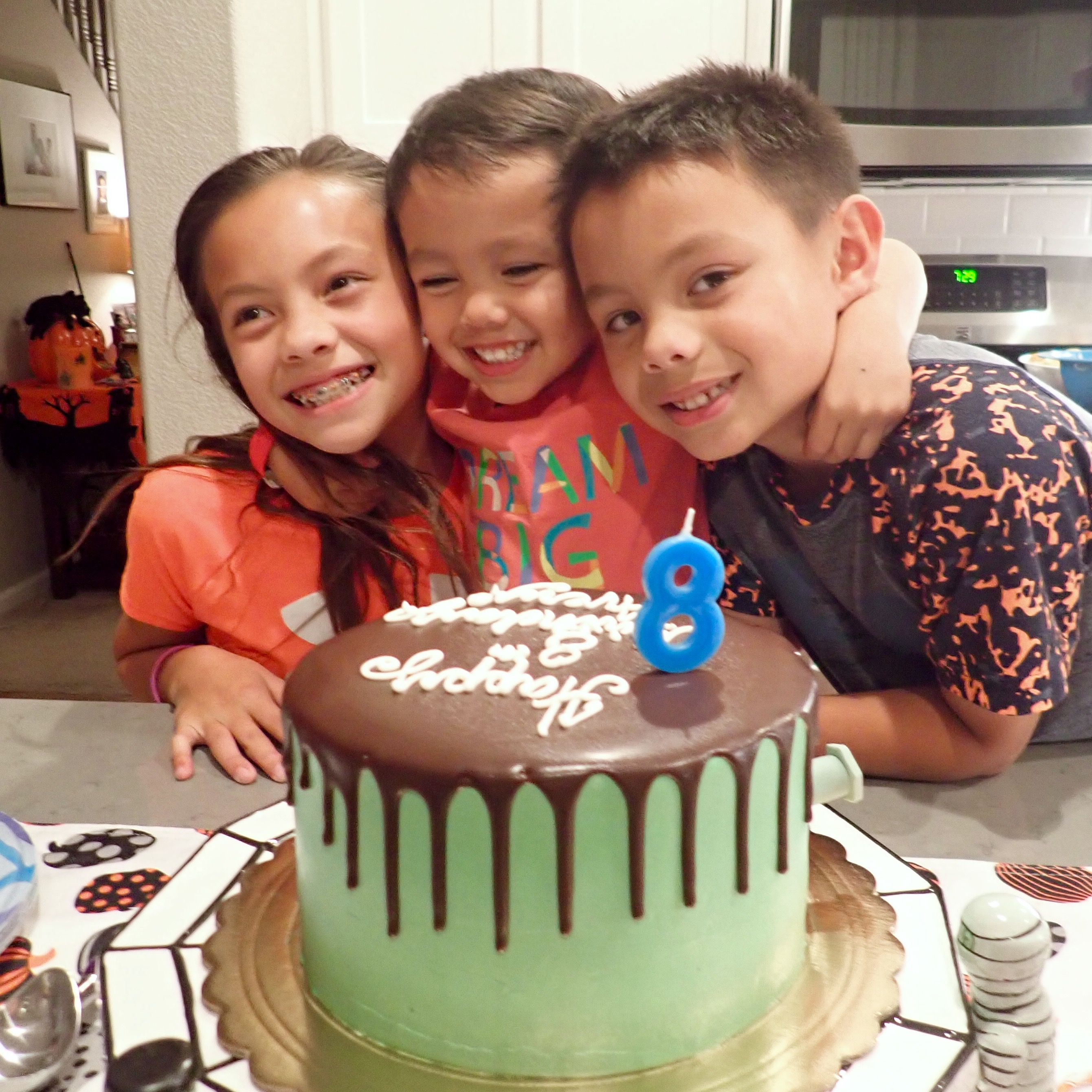
Happy Birthday Avery
As soon as Adrienne dropped me off after .. flying from Brussels to London to San Francisco and driving to Sacramento, I drove over the Jeff and Leah’s for Avery’s family birthday party.

Brussels
This was our only whole day to explore Brussels. We walked to Grand Place – a huge plaza surrounded by huge ornate buildings and packed with people. 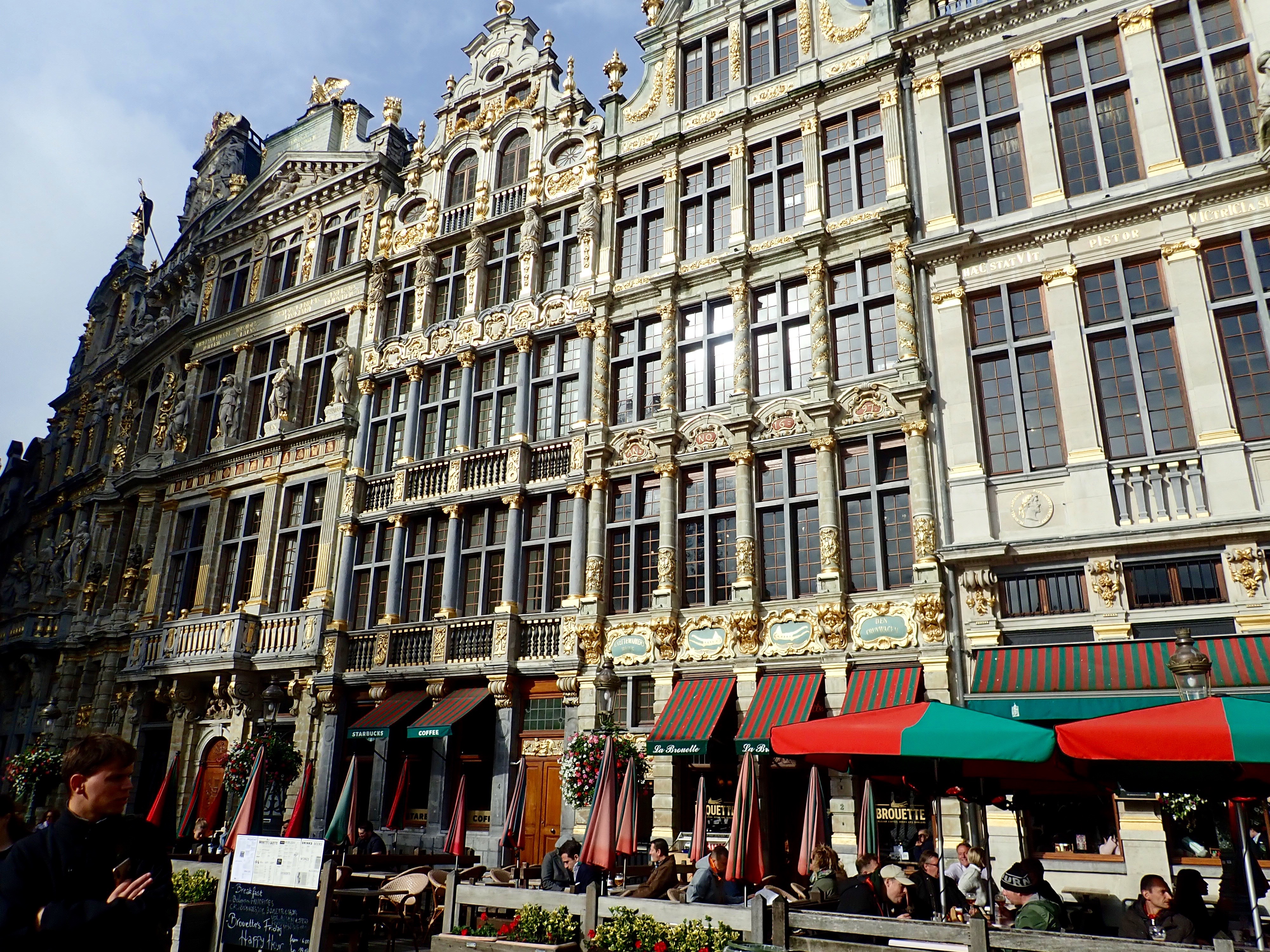
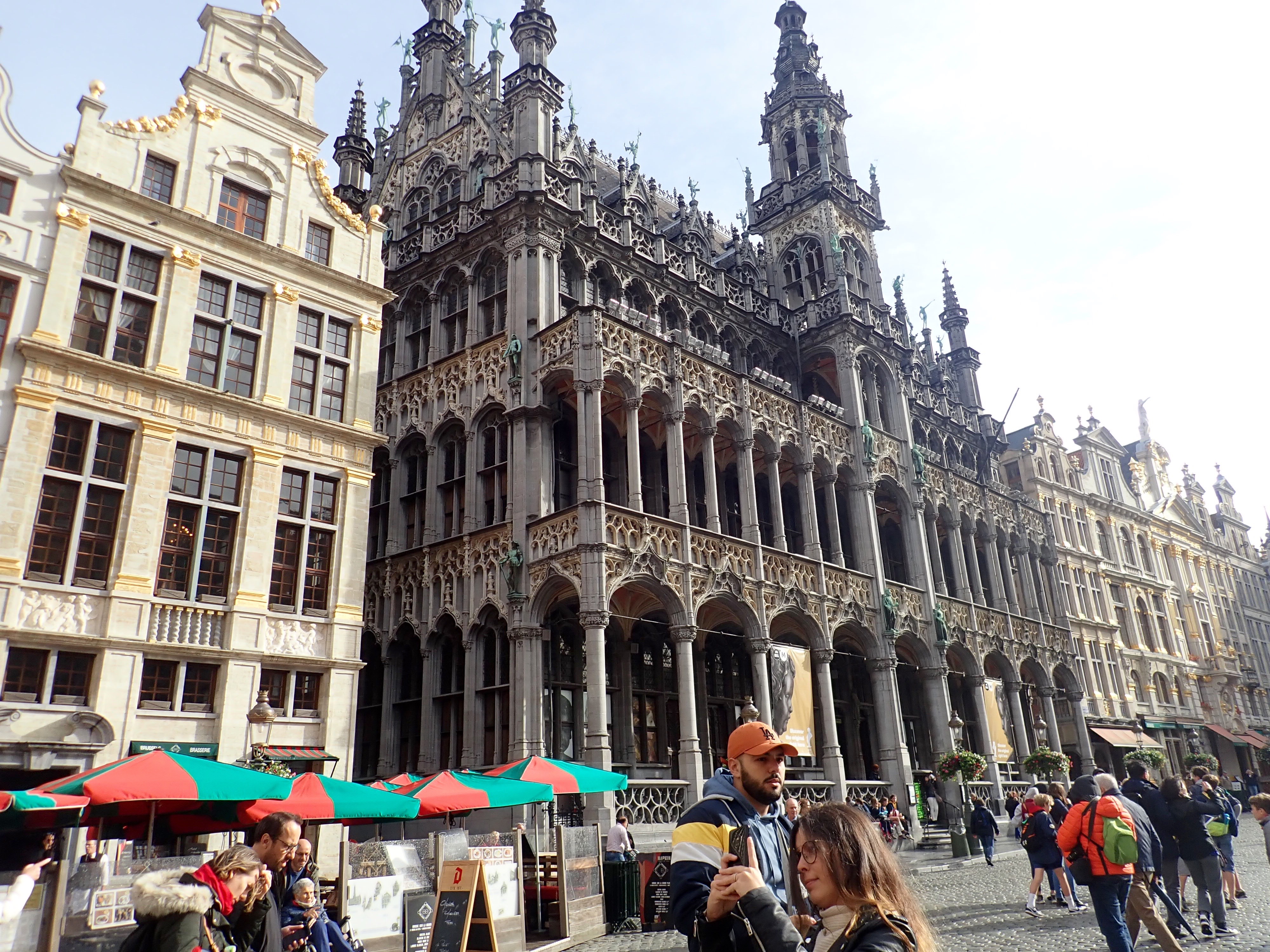
The most prolific shops sold Belgian chocolates.
We tried a Hop On Hop Off bus tour which was rather disappointing. In the distance you can (sort of) see the 335-foot tall Atomium – built for the 1958 World’s Fair – a model of an iron crystal molecule increased in size 165 billion times. Each sphere is 60 feet in diameter, five of them are habitable, the highest one is a restaurant.

National Basilica of the Sacred Heart
We lingered long enough in this chocolate shop to get two free samples.
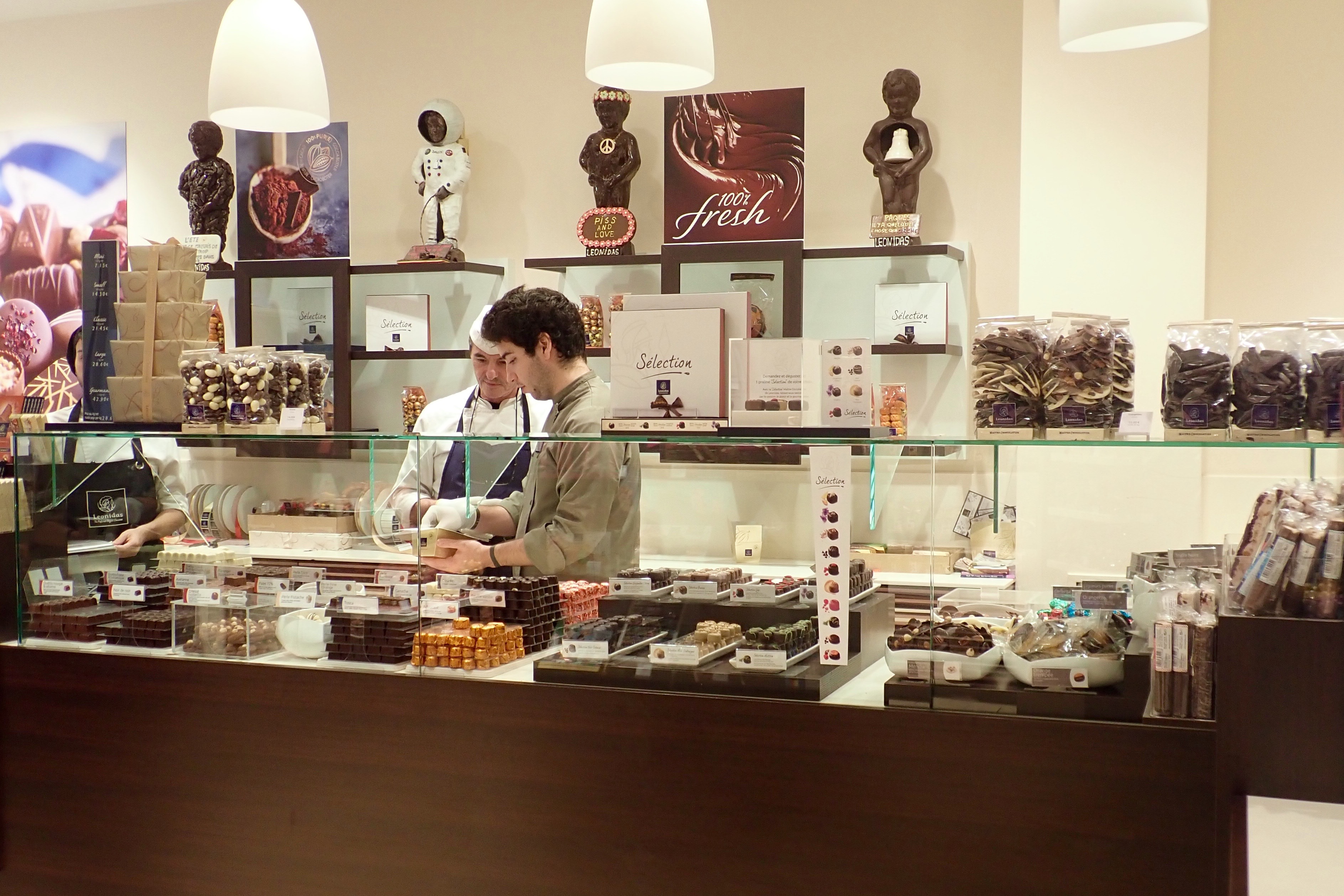
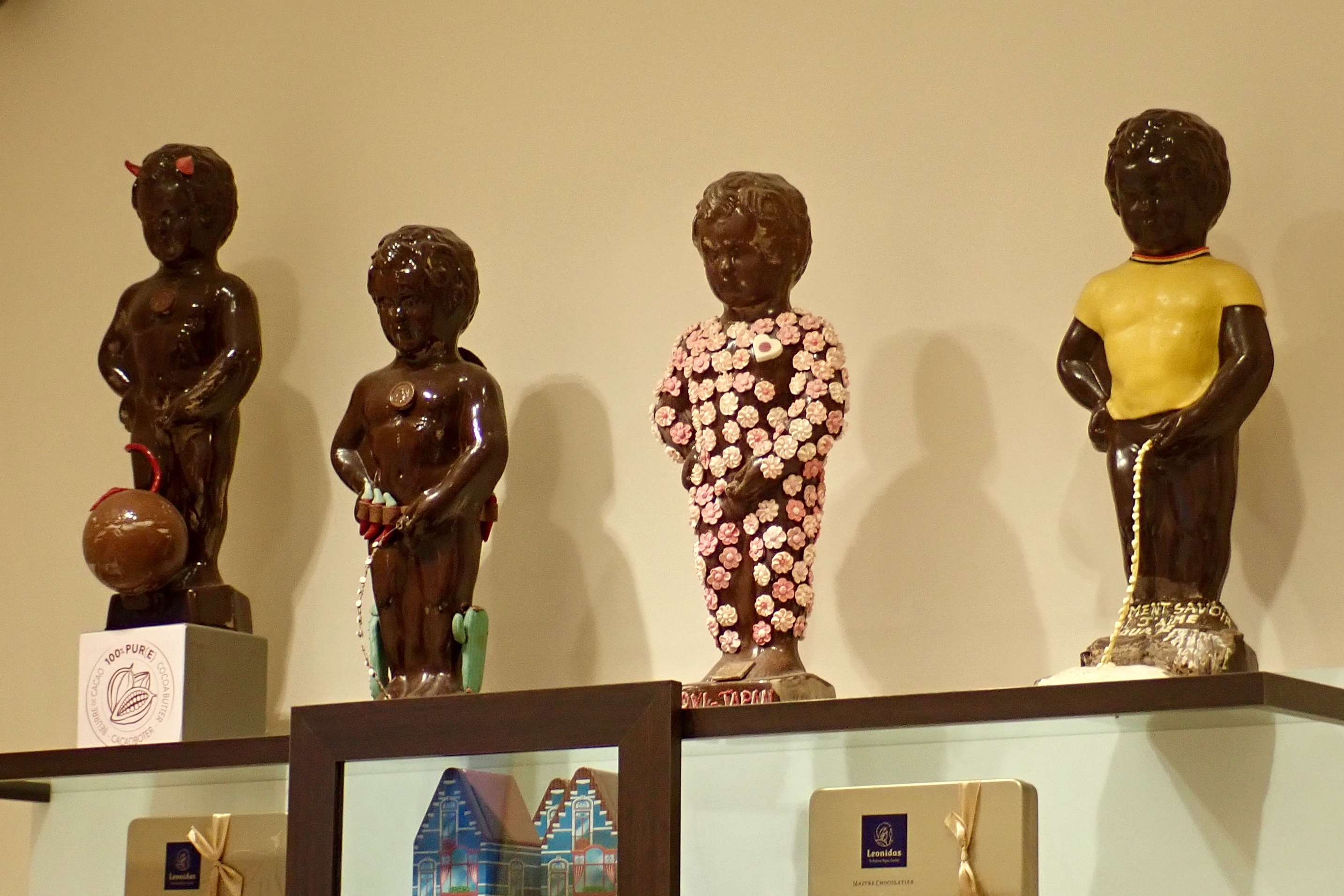
We wanted to find Manneken Pis – another famous Brussels landmark since 1451 – a 24-inch tall statue of a naked boy peeing into a fountain – but we were unsuccessful. Over the years, Manneken Pis has been clothed in a variety of costumes, to the point that he’s had 1000 outfits that now have a museum of their own. The best we could do see Manneken Pis made out of chocolate and decorated with other sweets in this shop.
Ready to sing? “California here we come. Right back where we started from.” Tomorrow!
To Brussels Belgium
Amsterdam Centraal Station: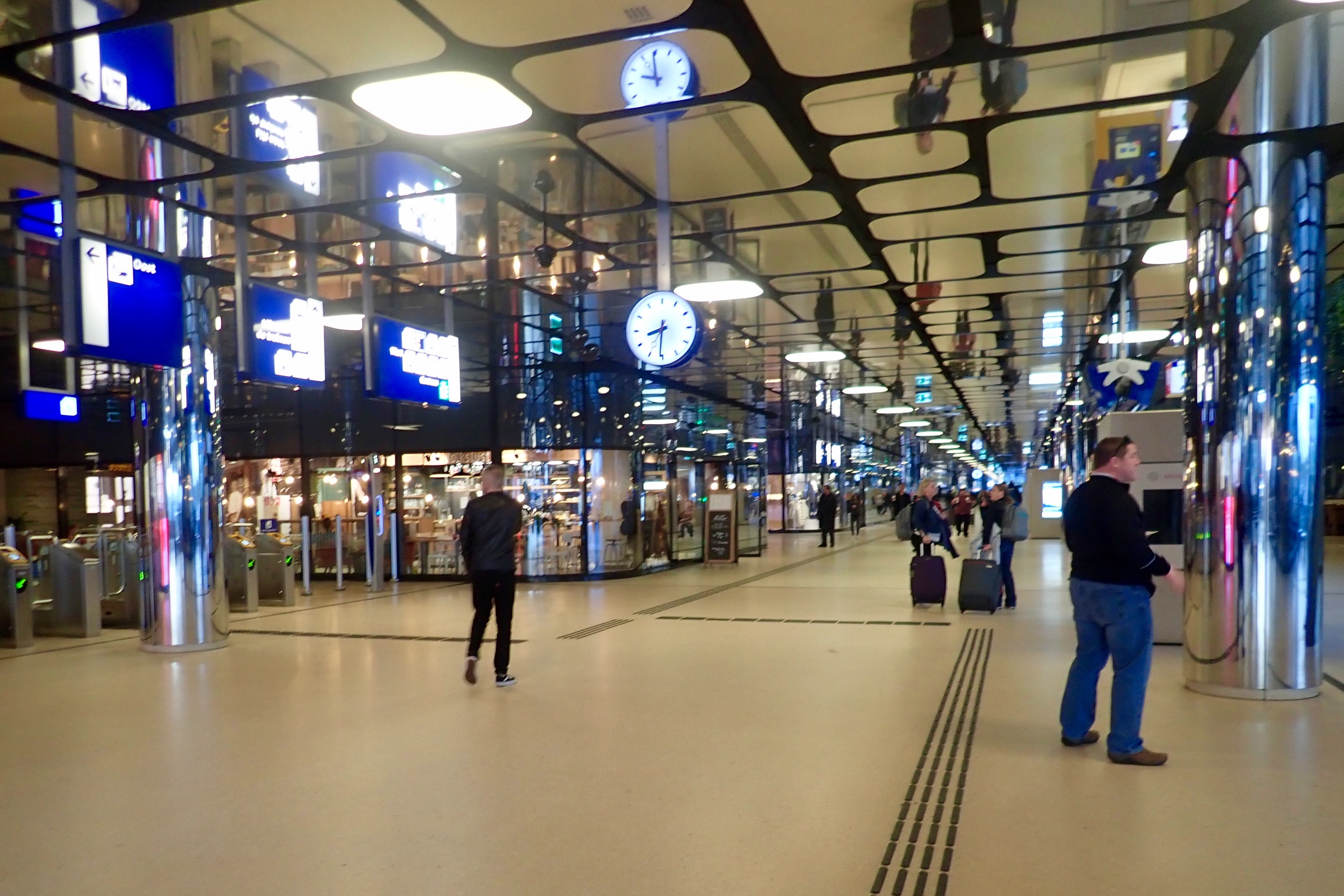
Waiting platform for the Thalys high-speed train:
Looking in the opposite direction. The unique white building is the Netherlands Film Institute.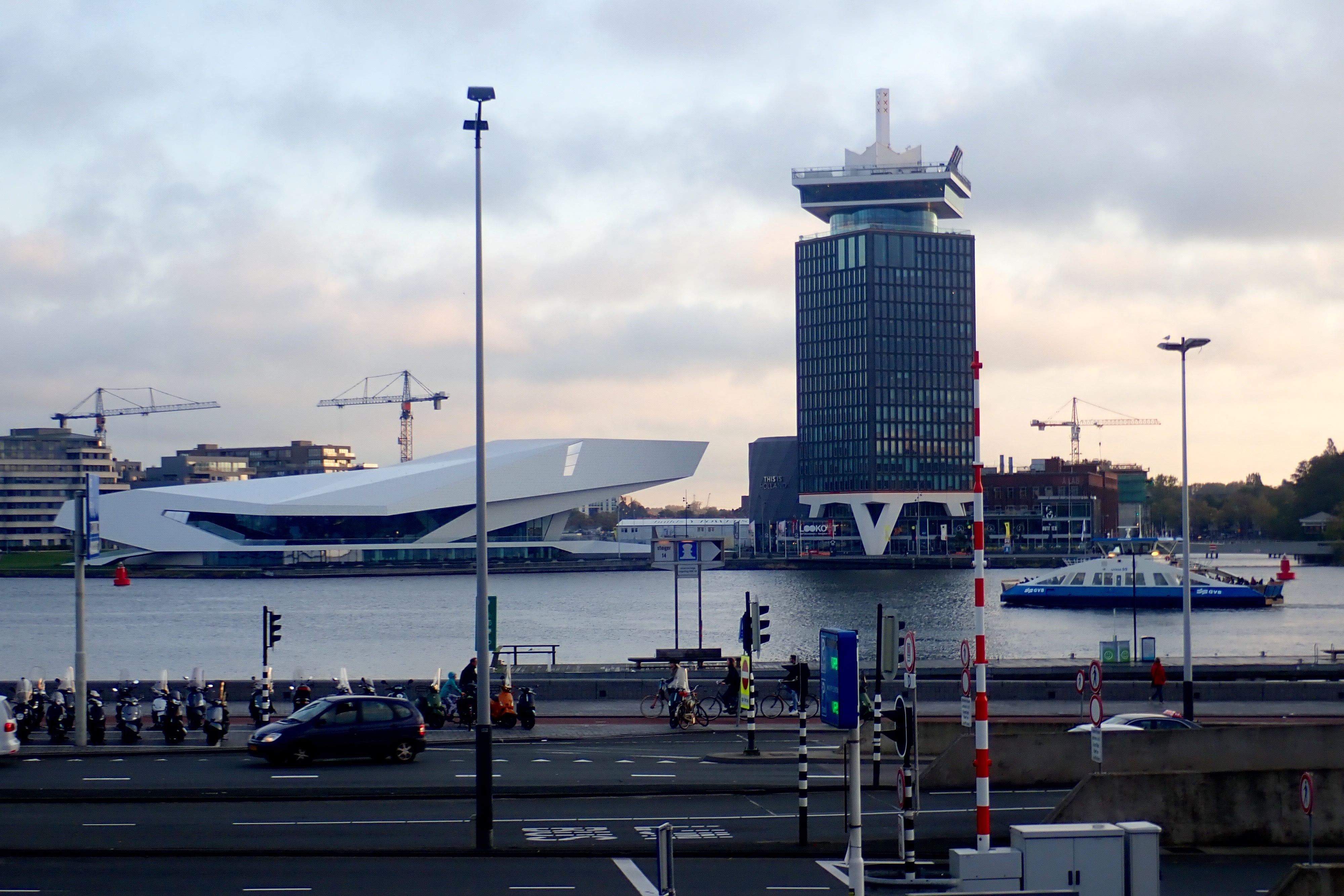
Two hours to Brussels in especially comfortable seats. After we checked into our hotel, we went for a walk and had lunch at Il Colosseo.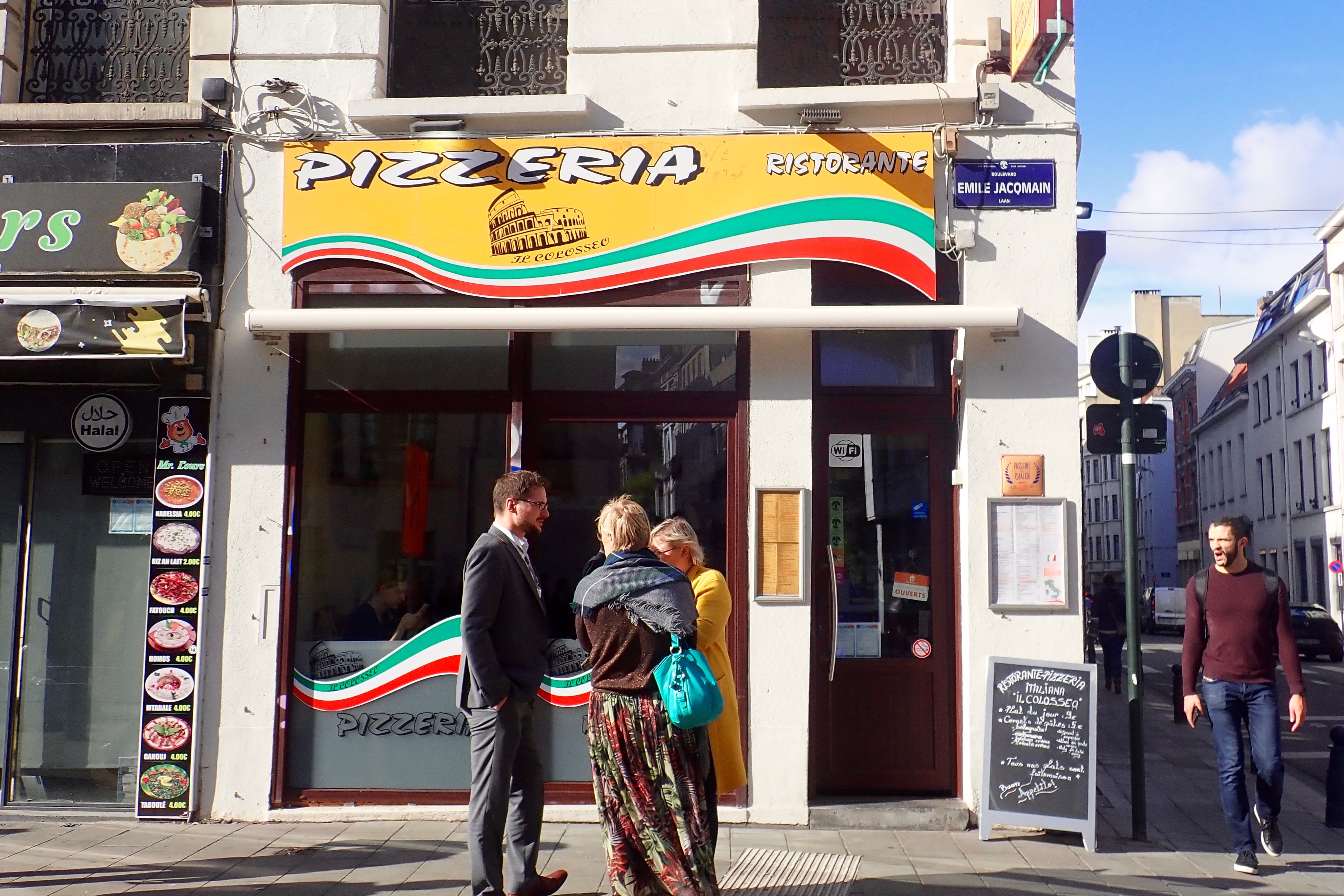
Tiny and crowded – see that little empty table – that’s where we ate. We could have gone upstairs but the steps looked too steep for my almost-healed ankle.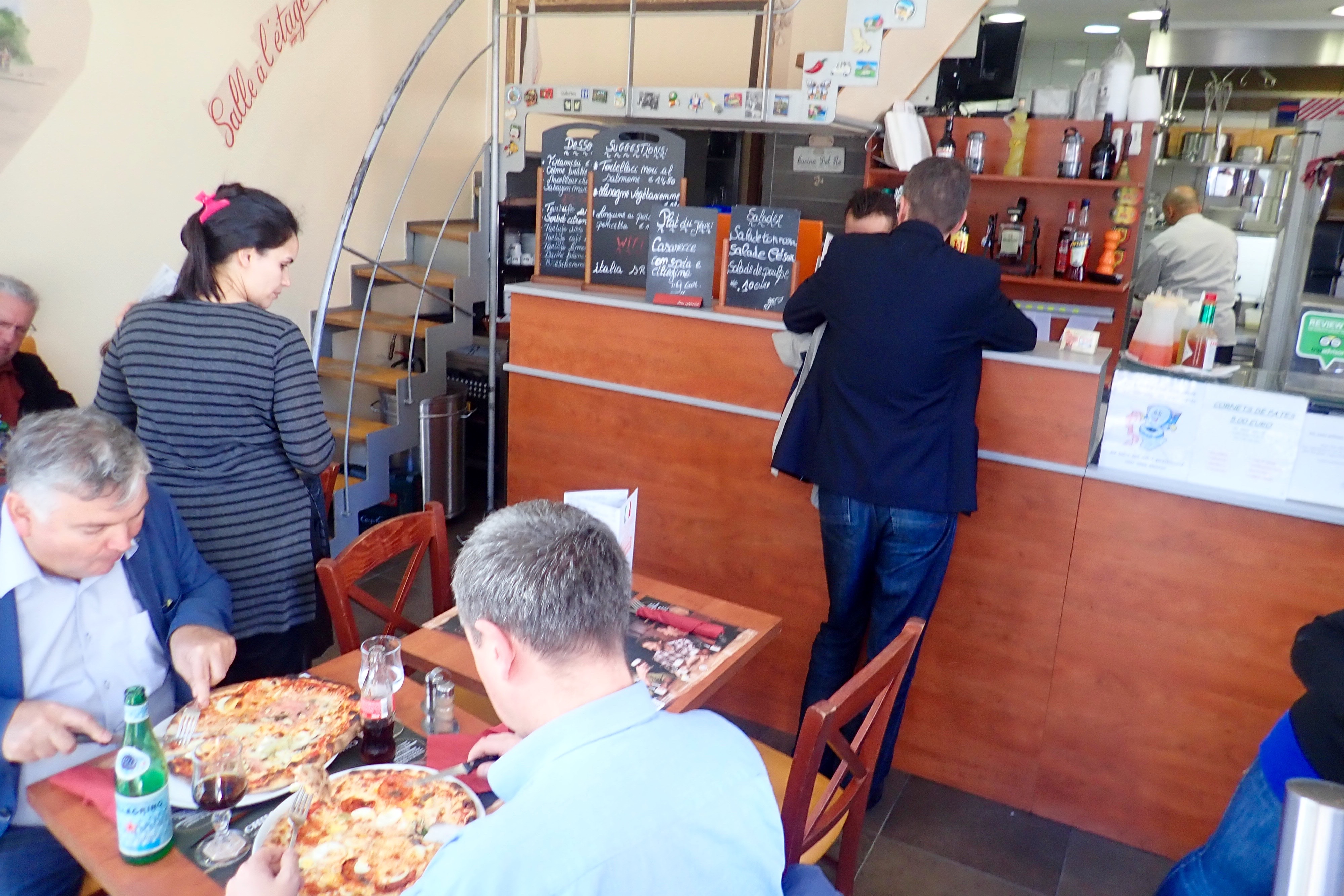
We continued walking in the area near our hotel, and then …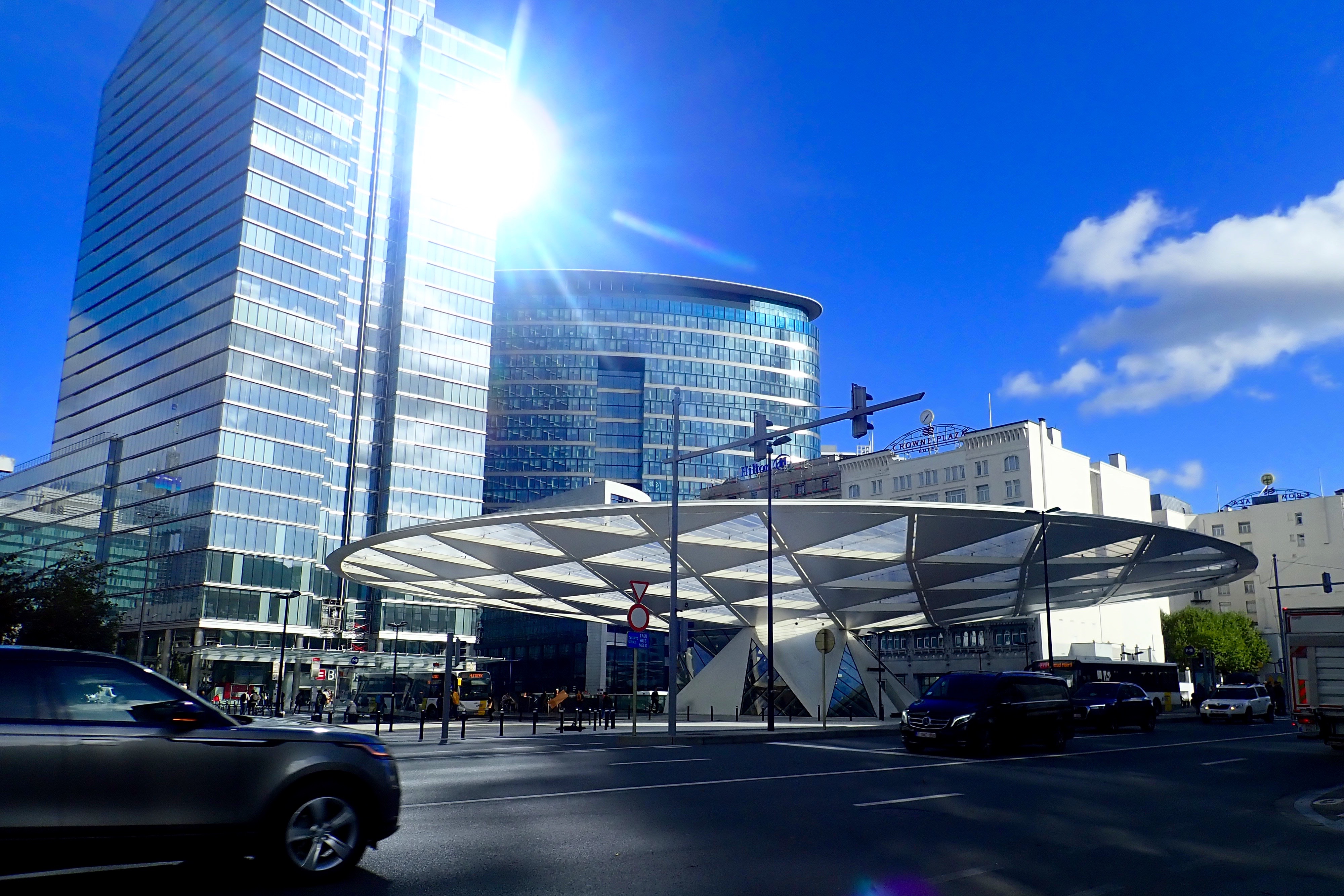
what do I spy with my little eye? Starbucks! – located in a most unusual building: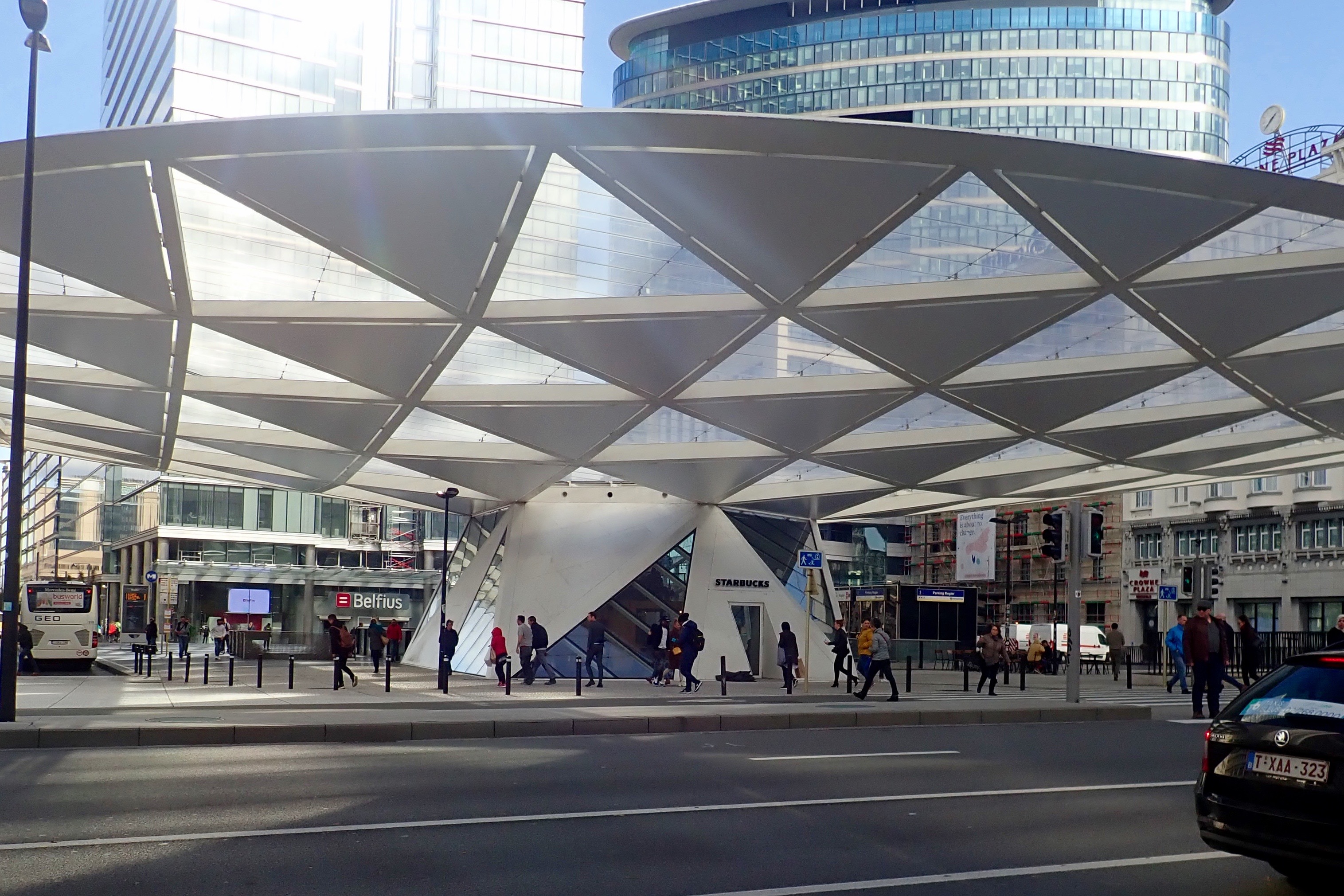
Amsterdam – day 3
Yesterday, we were helped by a University of Amsterdam student (from New Mexico) to figure out how to pay for our public transportation. He suggested we explore east Amsterdam, a short walk from our hotel. No sign of tourists here. We found a market with stalls that sold everything imaginable.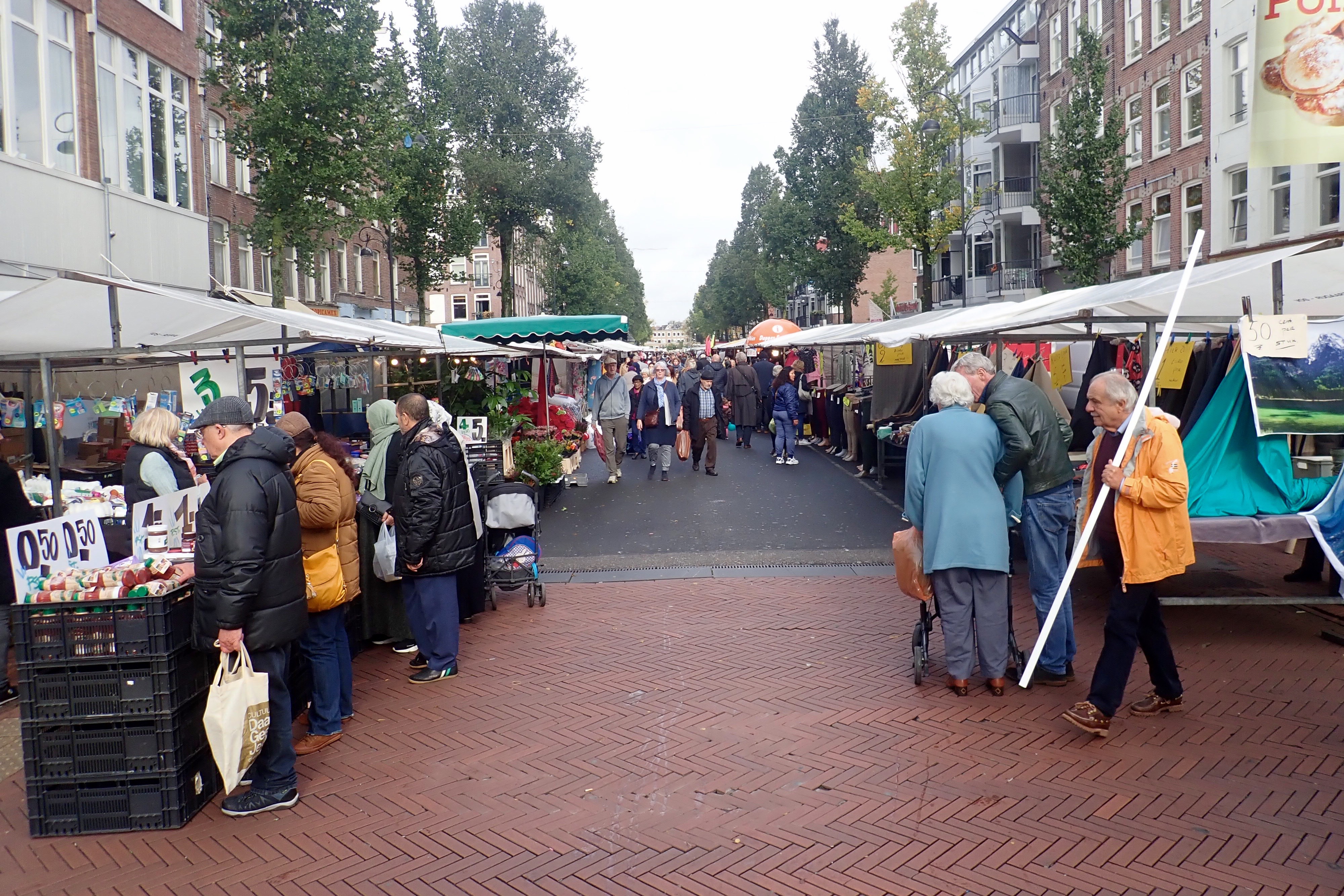
Even fabric.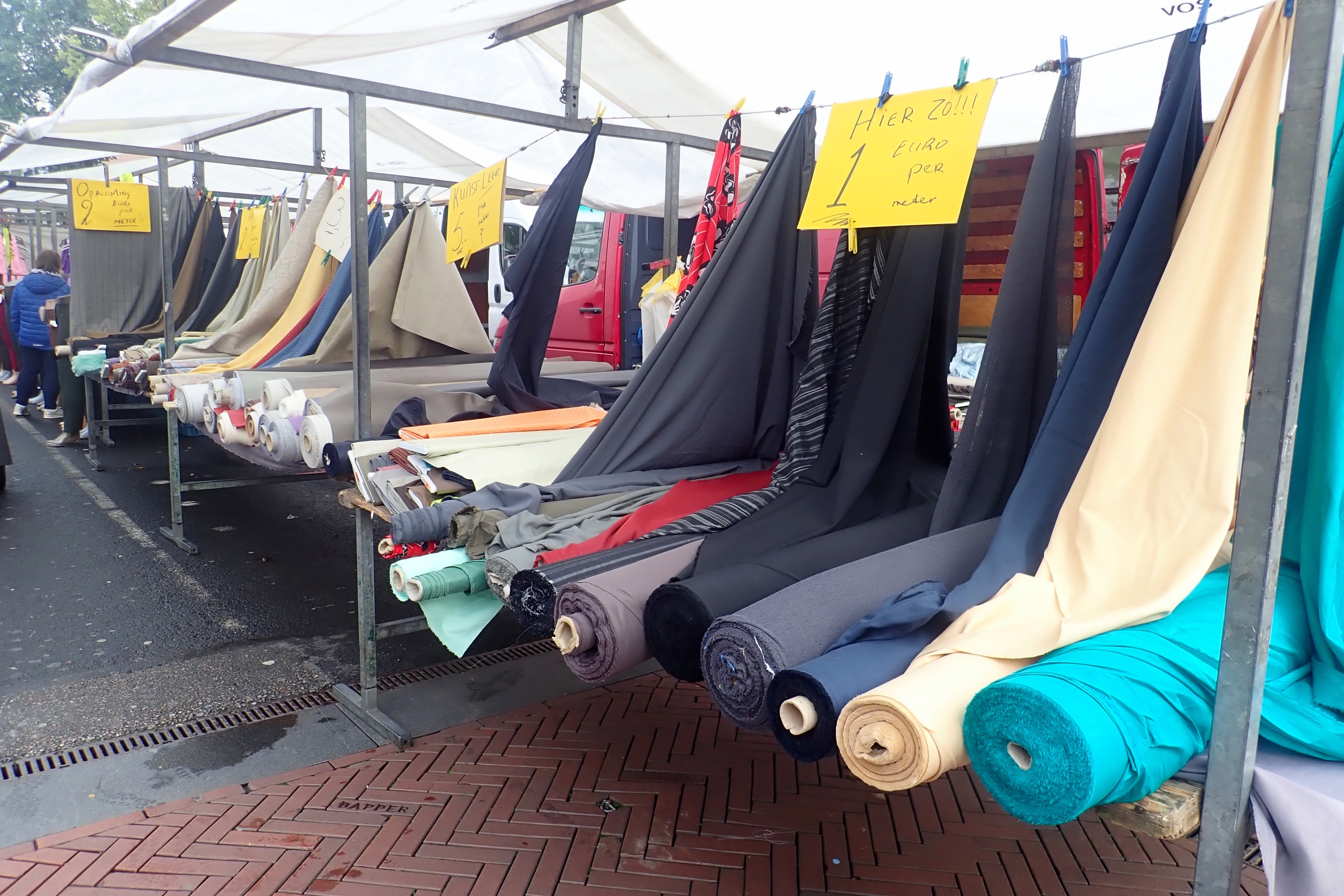
Oostpoort (“east gate”) shopping area.
We stopped for some hot chocolate. Much of the outdoor bench seating comes with pillows and blankets to cover up with if needed.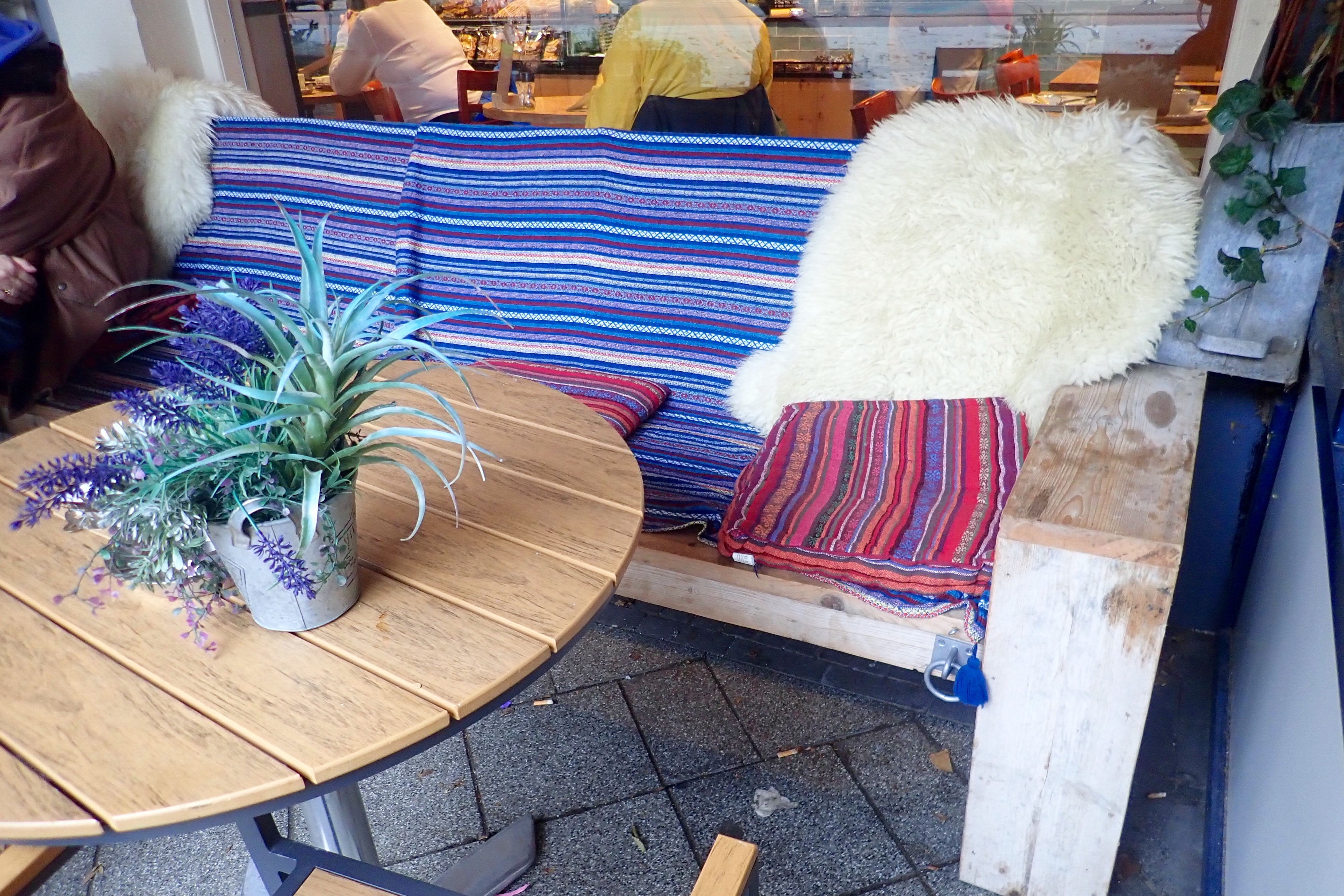
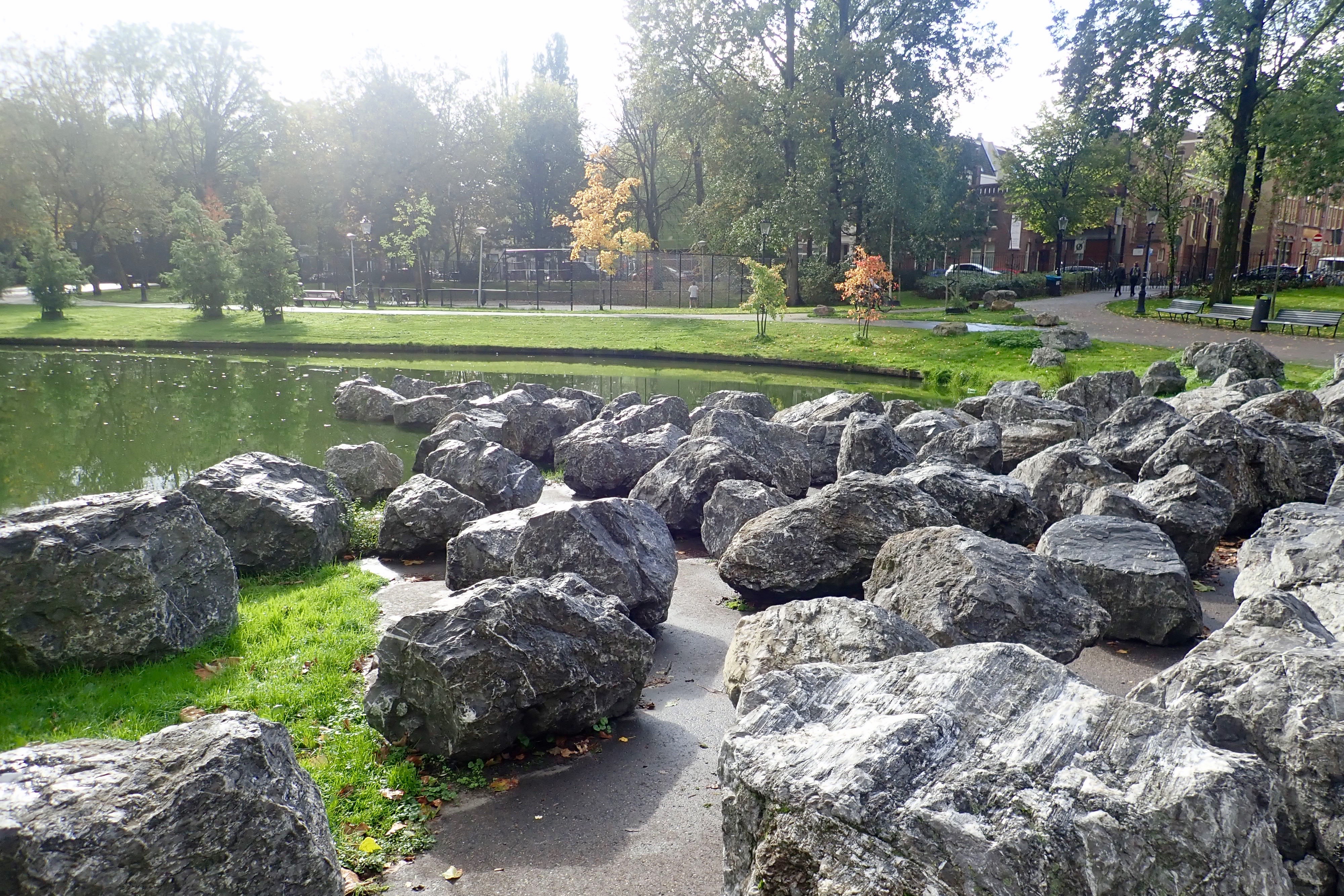
We walked back through Oostpark.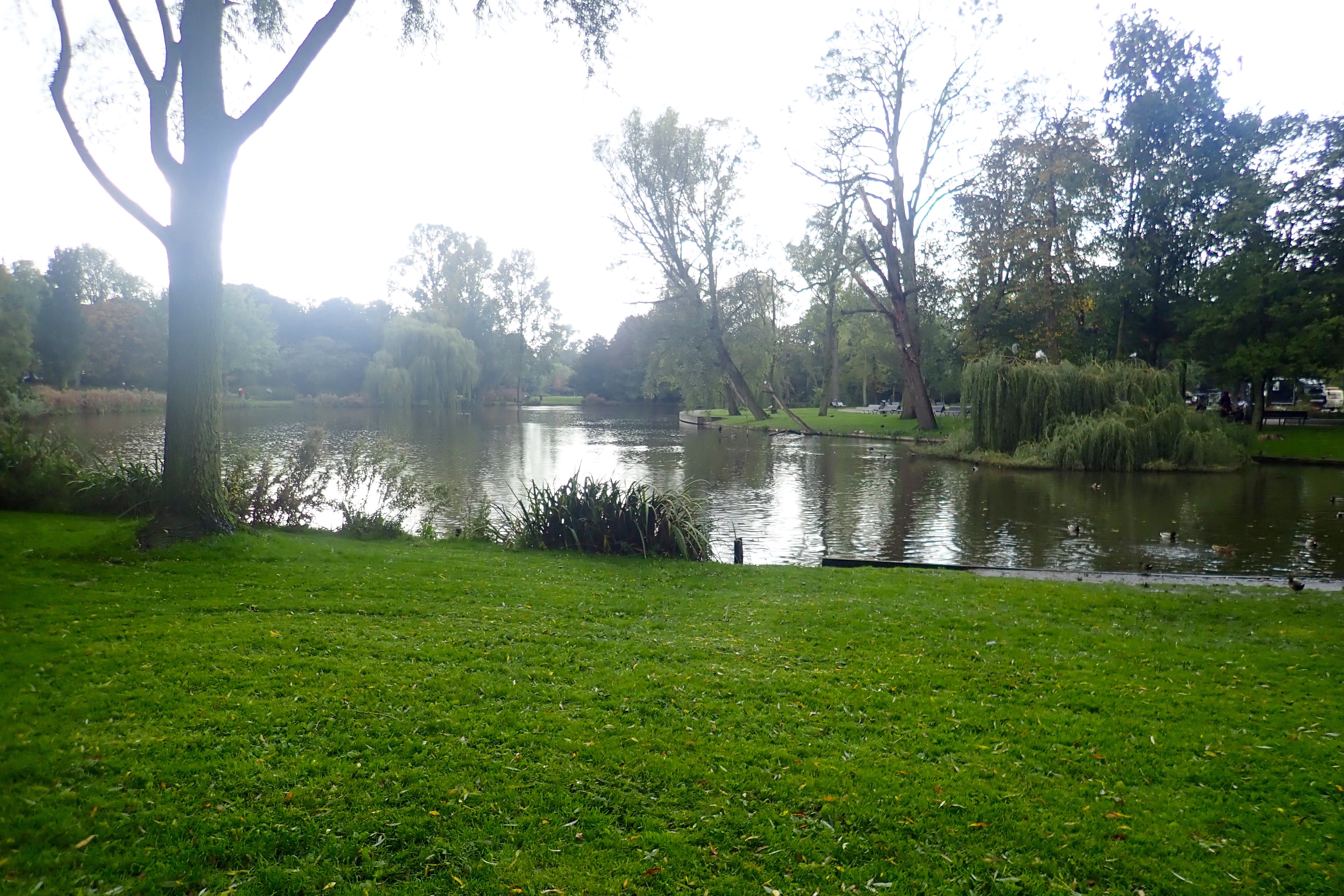
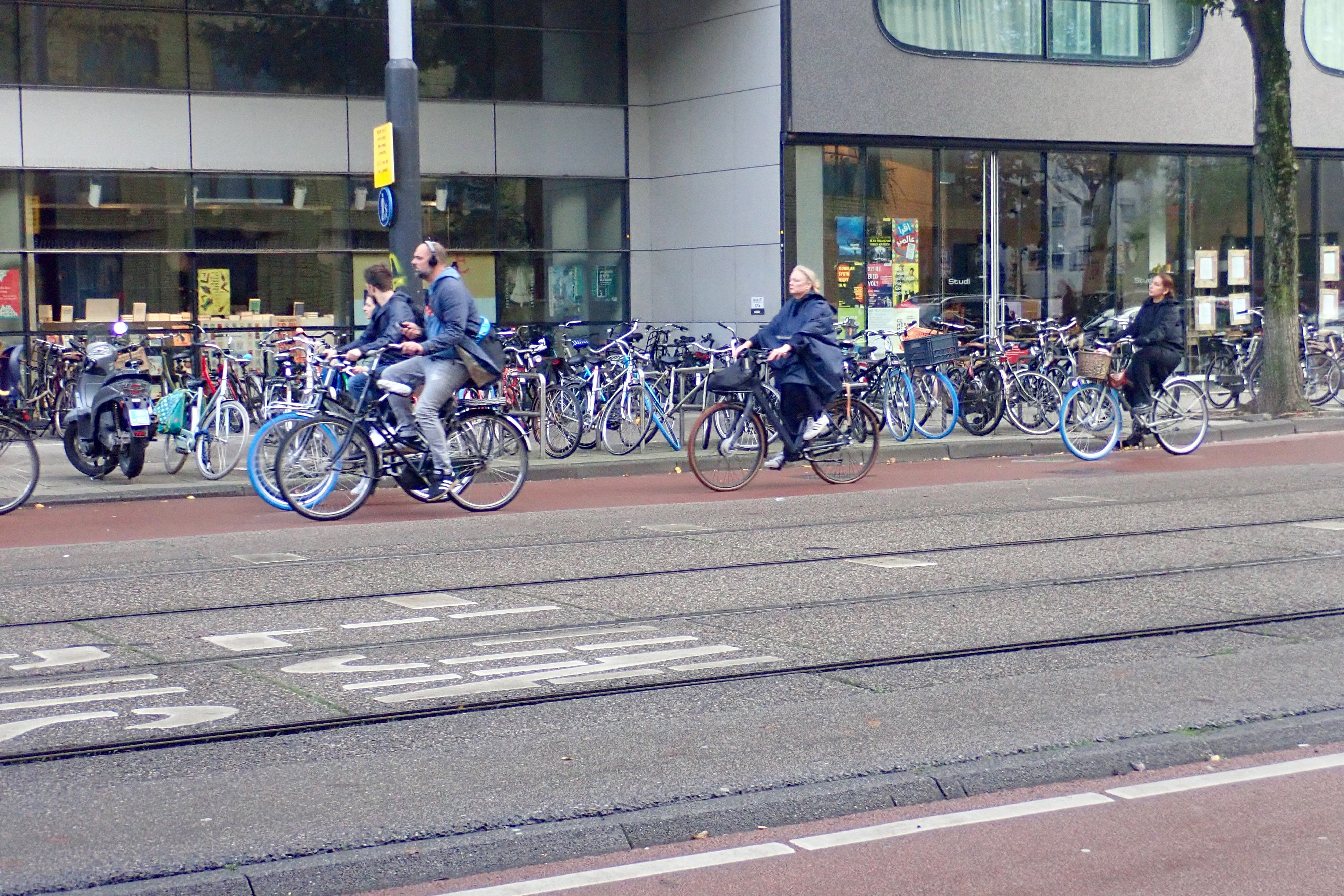
On our way to dinner, as we passed a very busy student area at the university, there was the biggest concentration of bicycles I’ve seen yet.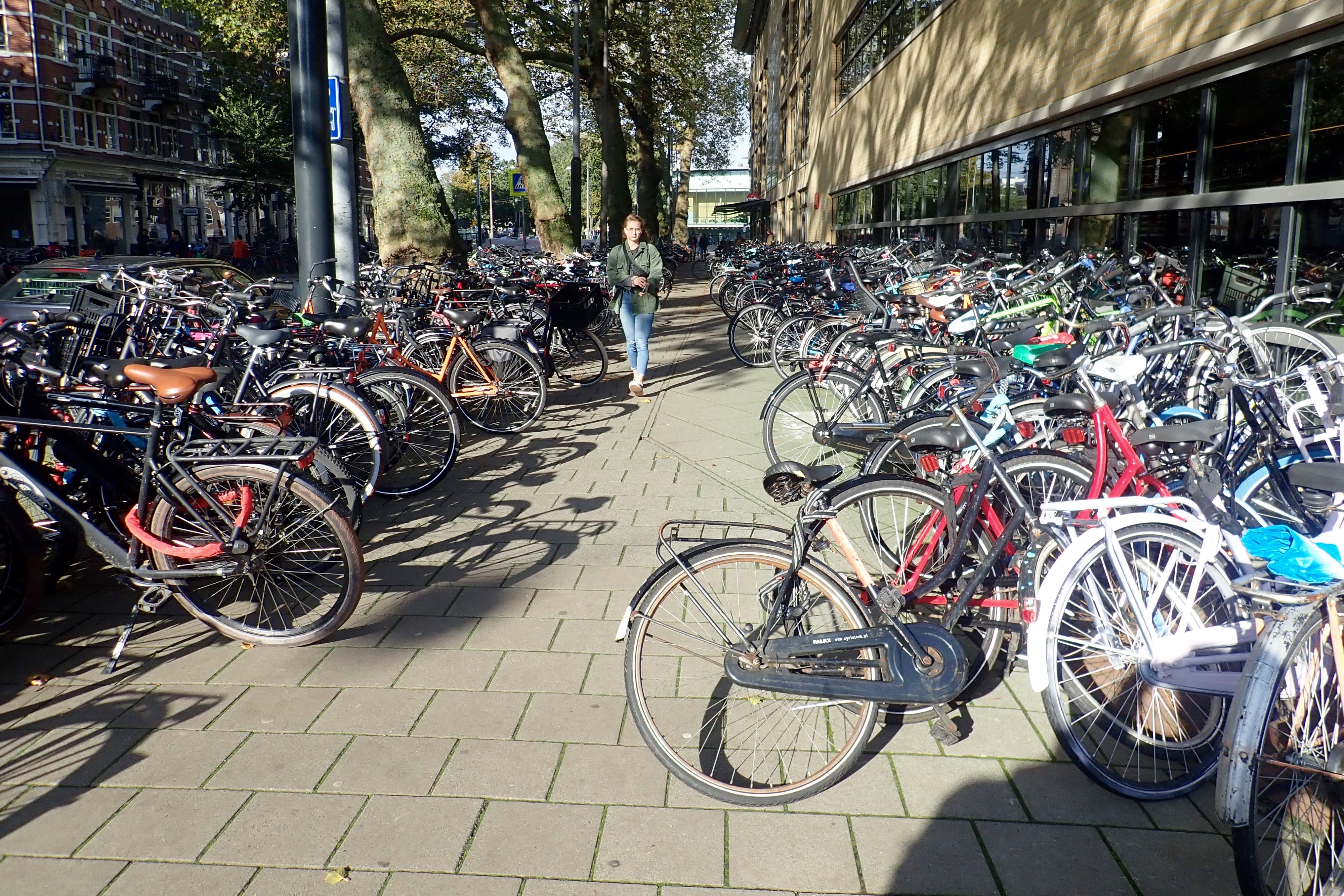
We ate at De Pizzabakkers. It was a good thing we went early, you need a reservation after 5:30 or so.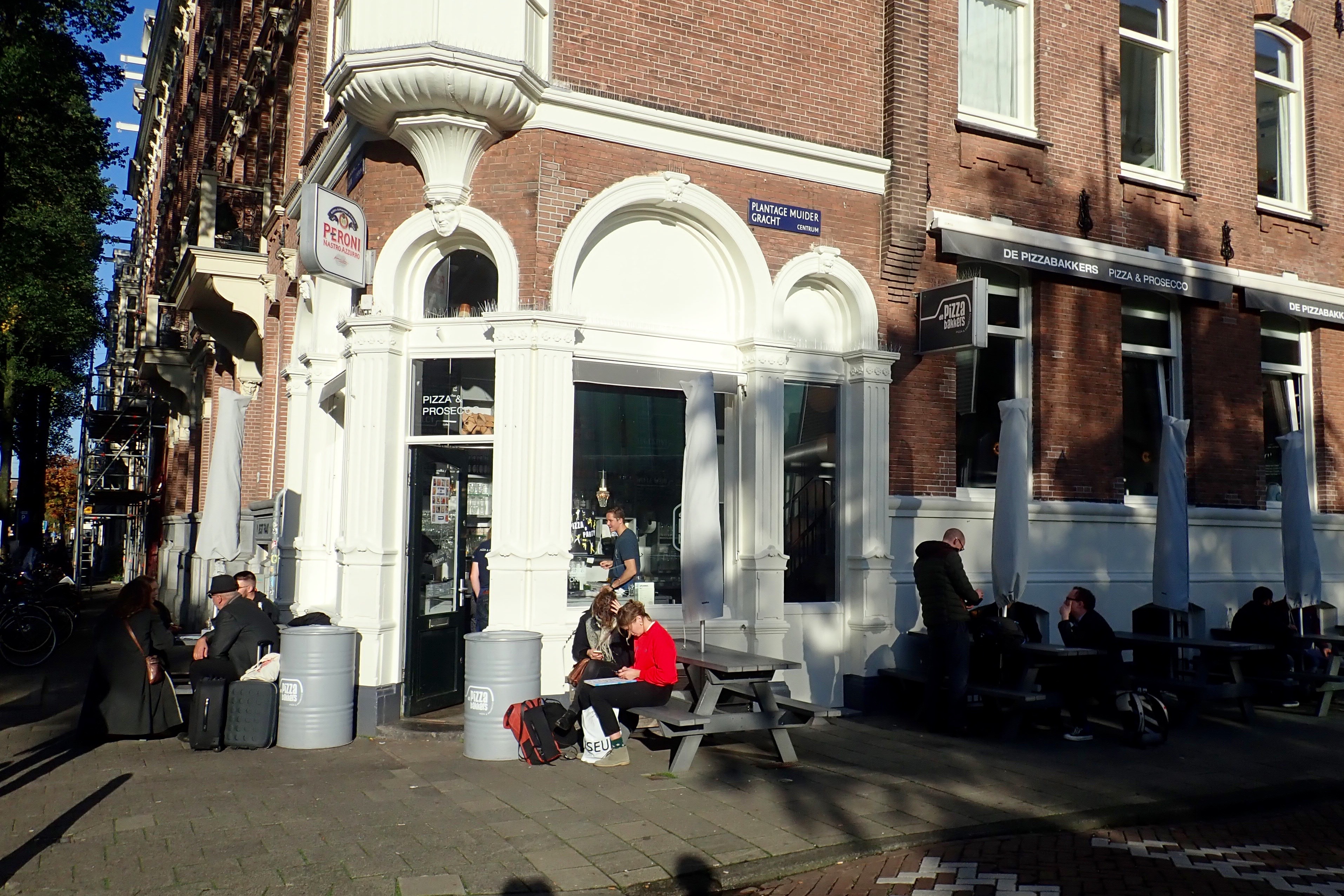
And you can order champagne to go with your pizza! Very delicious pizza too!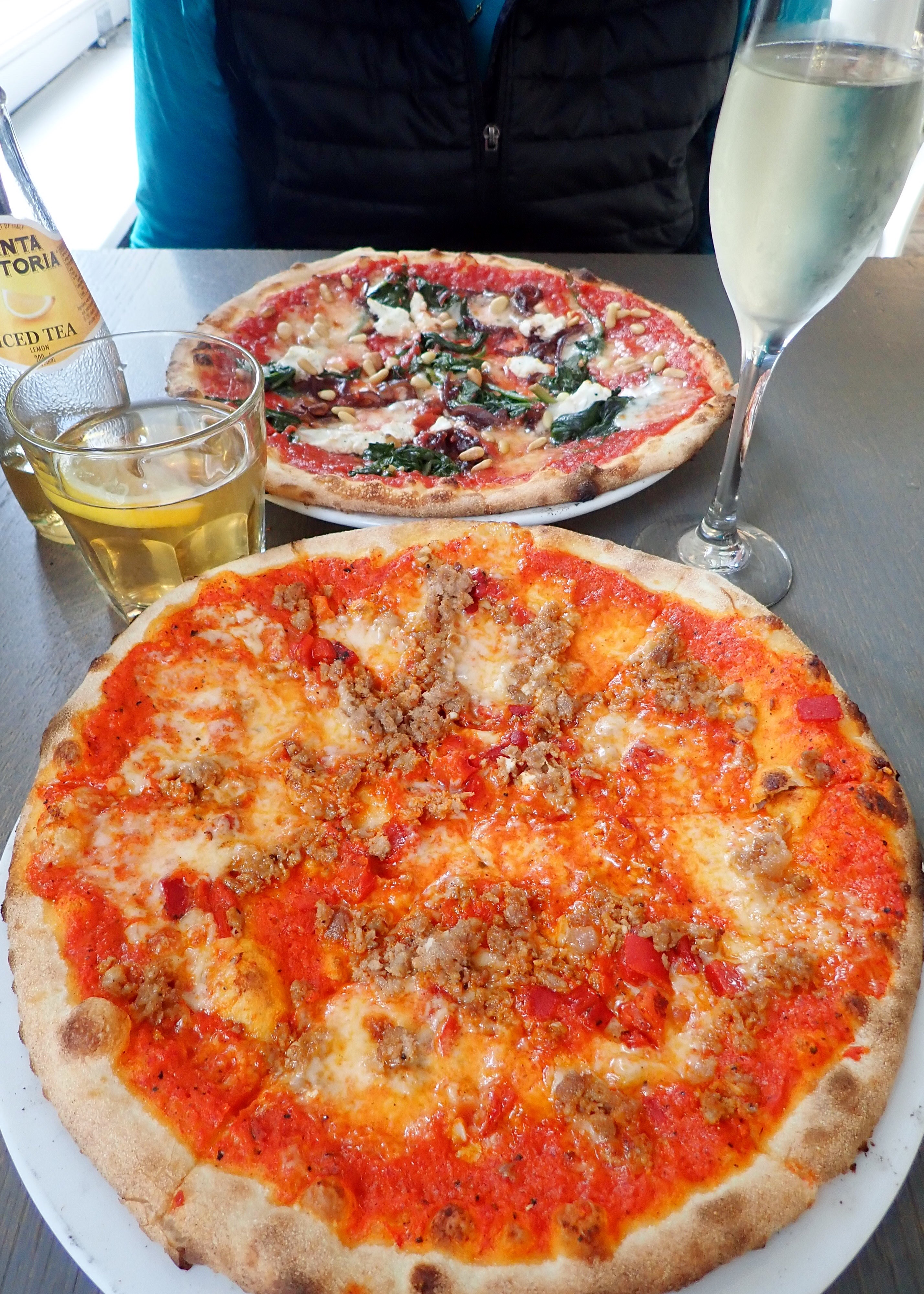
Amsterdam – day 2
We used public transportation to go to Dam Square. There were lots of shops along the way including a fabric store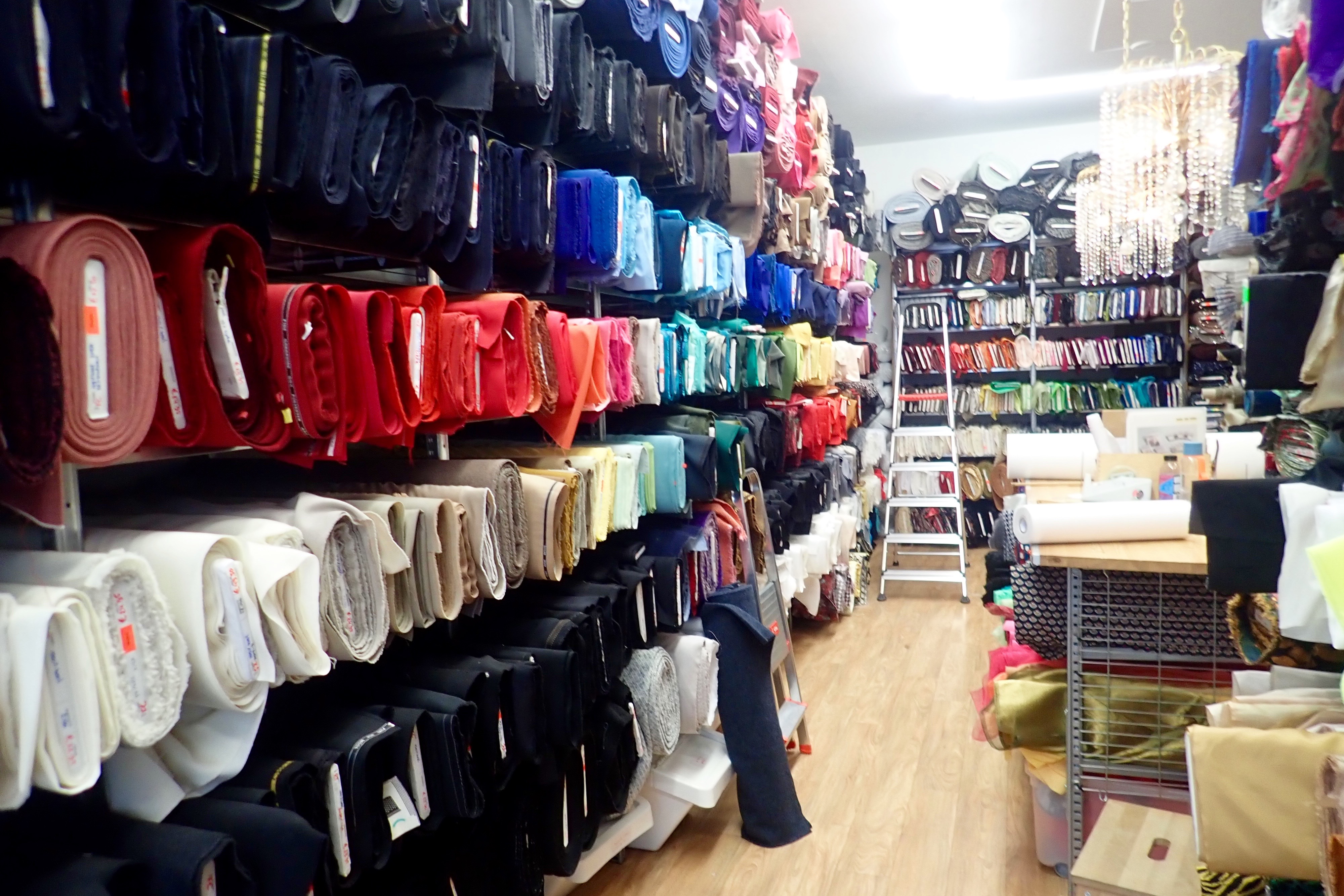
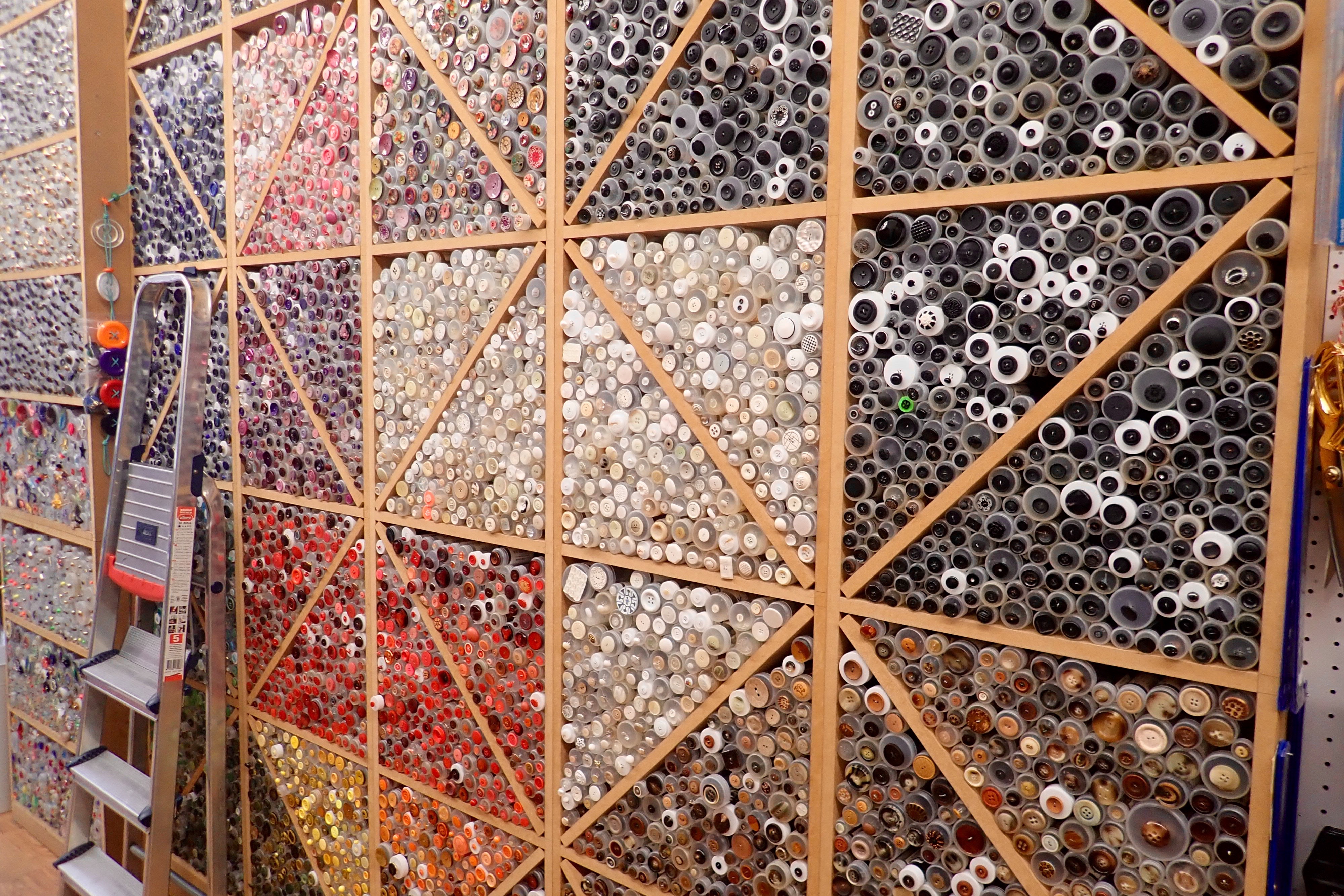
Wall of buttons
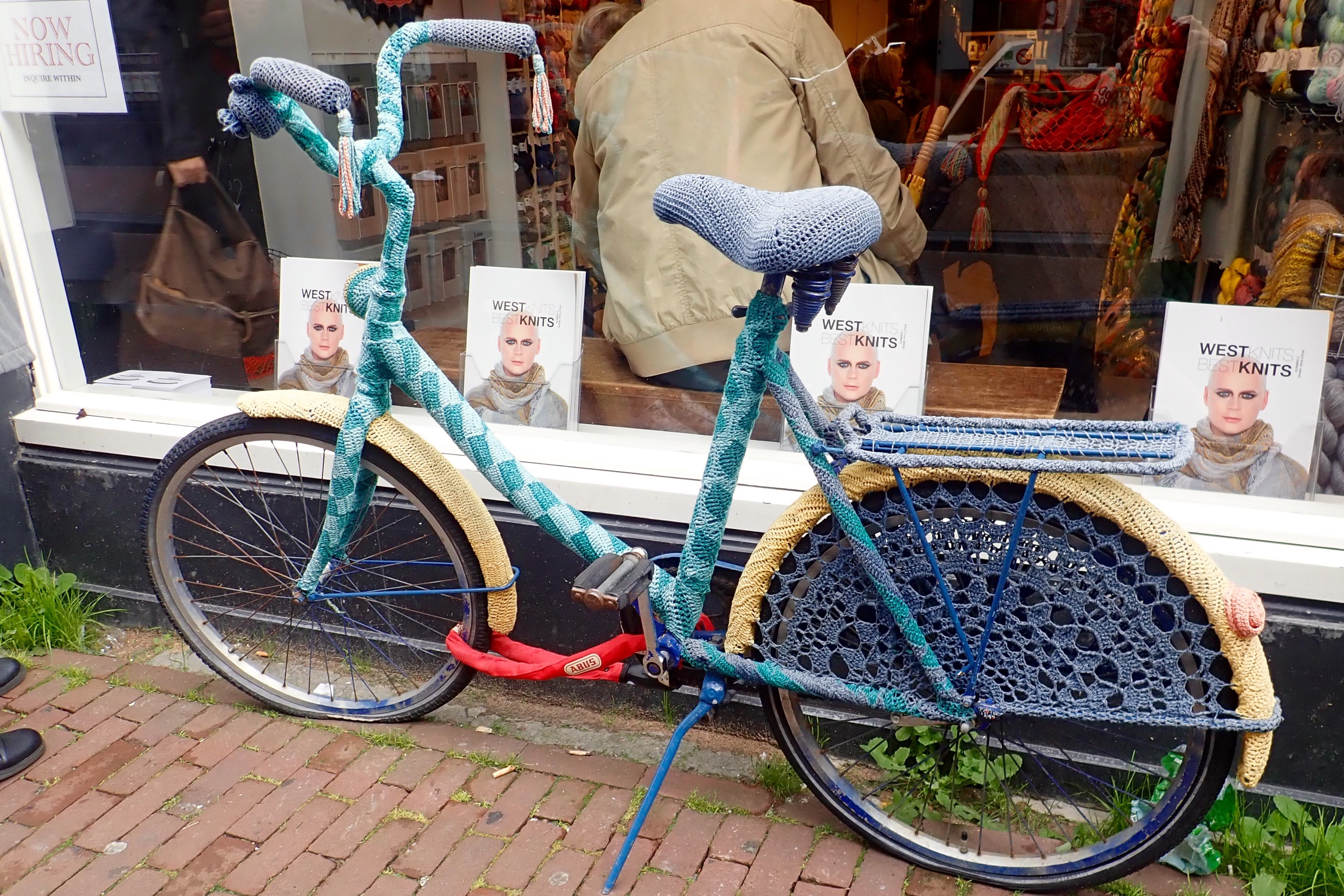
and a yarn shop.
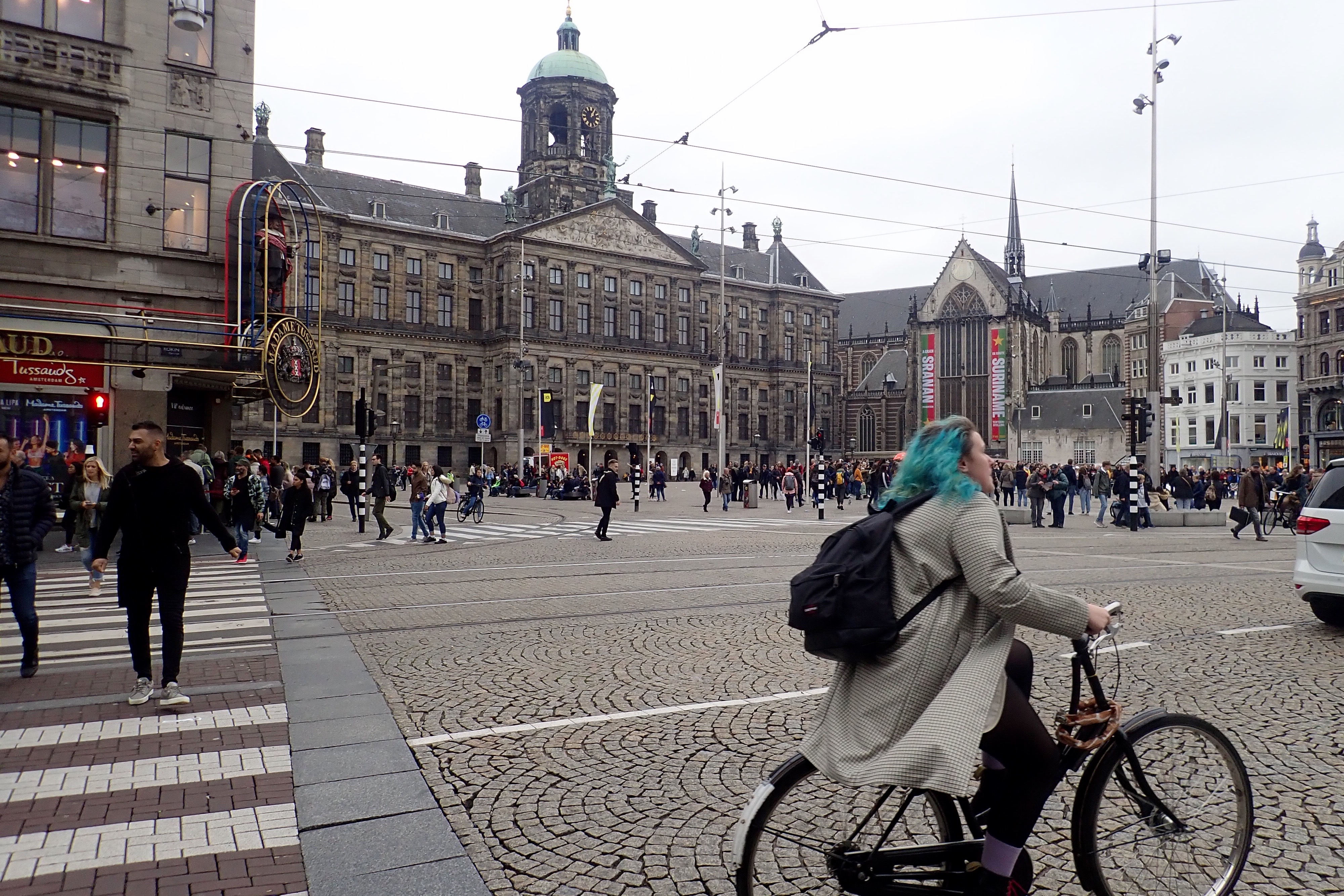
Dam Square:
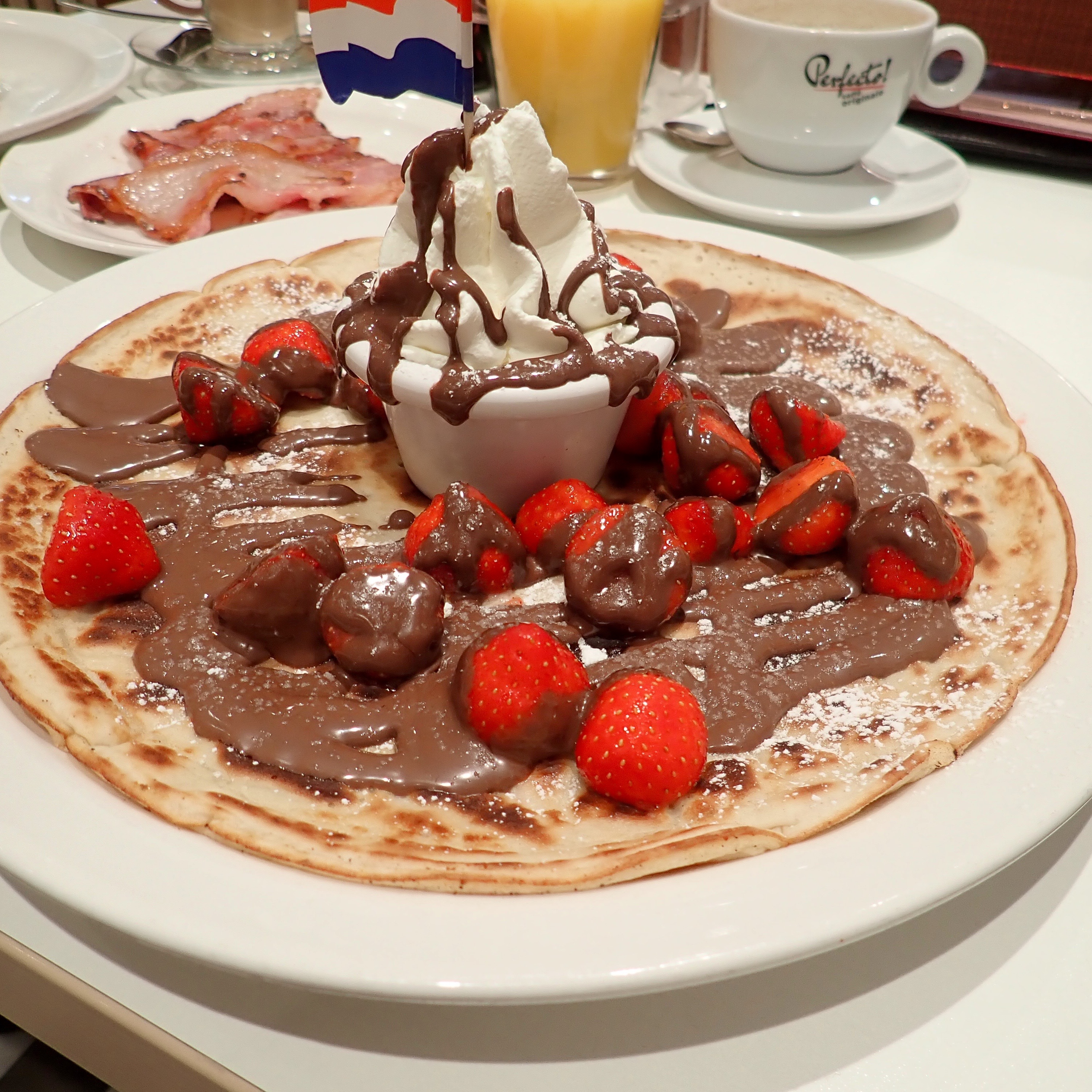
We stopped for lunch at Mama Pancake and ordered a savory pancake but were more impressed with the sweet one ordered by the person next to us.
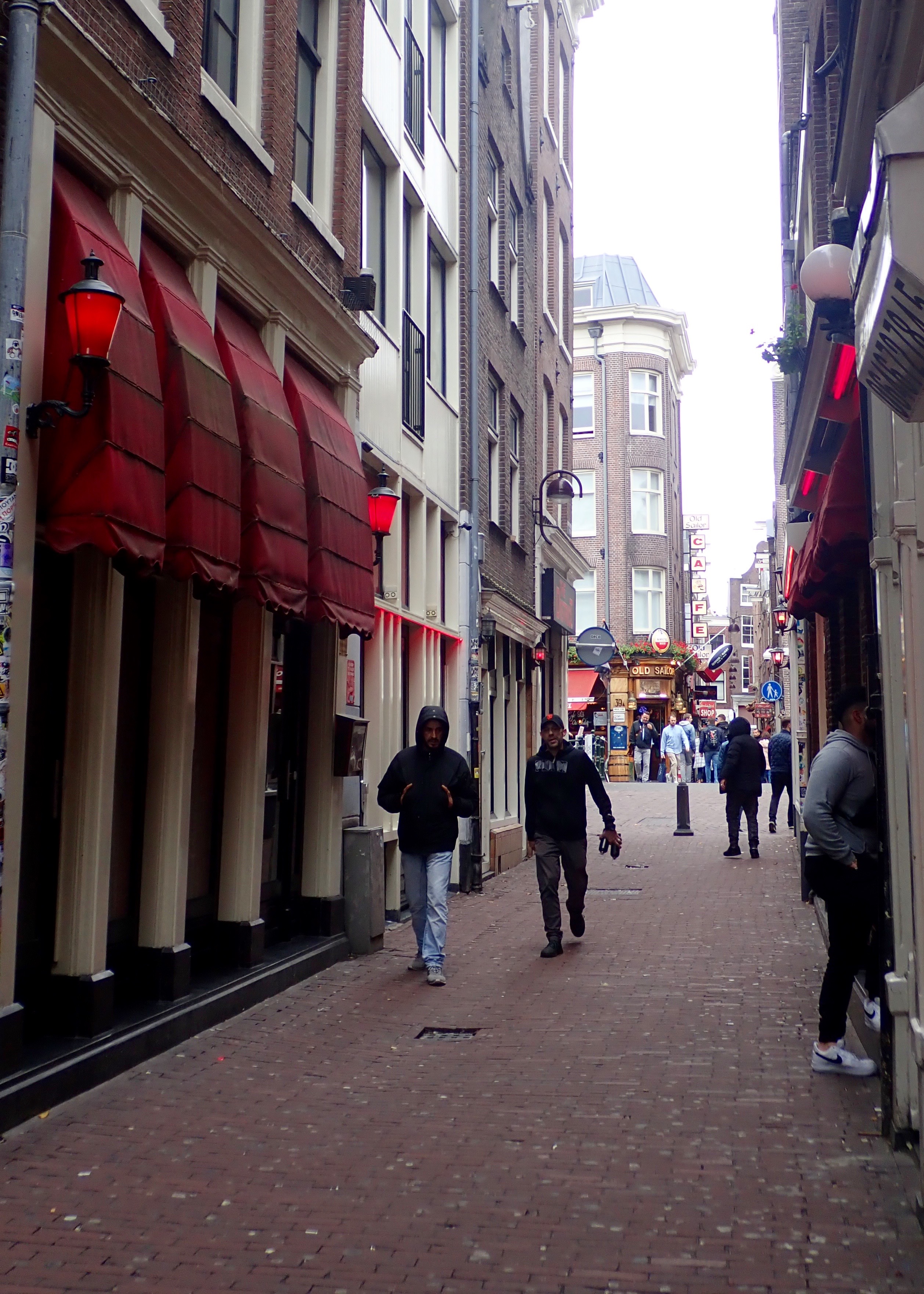
We walked through the Red Light District on our way back, and through this alley by accident. If a narrow window has the curtain drawn, no one was working. If the curtain was drawn back, you could see a scantily clad woman ready to do business.
Amsterdam
Everyone was pretty much off the boat by 9 am. Reasonable since the next load of passengers would be boarding in just 6 hours.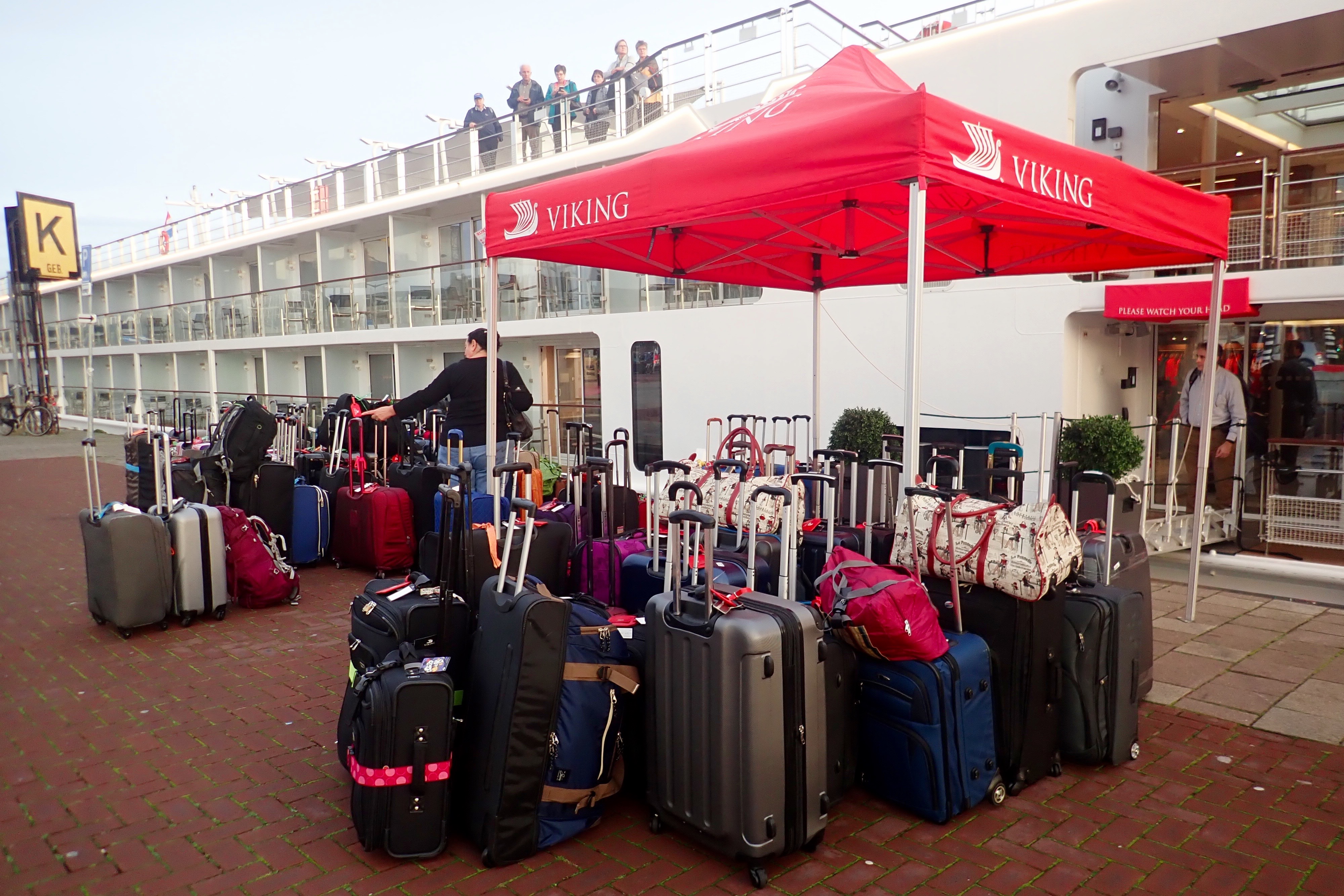
Those of us who had extended their stay in Amsterdam were transported to our hotel.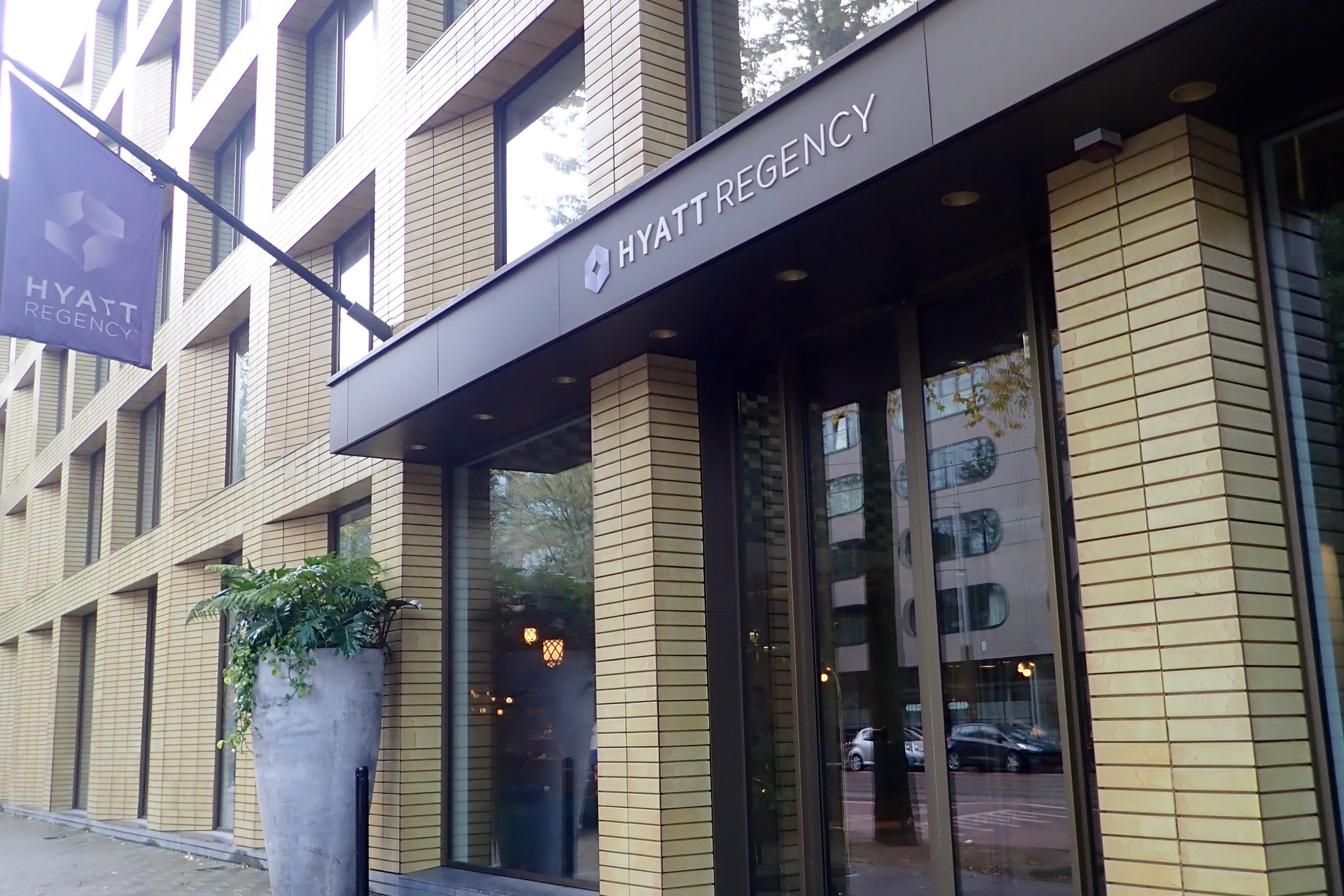
Typical traffic scenes. The reddish areas are for bicycles, skateboards, and Vespas (pedestrians take their life in their hands if you dare to set foot in this area). There is also a car parked on the sidewalk, a lane for buses/cars and tram tracks using the lanes. Everyone moves at breakneck speed. 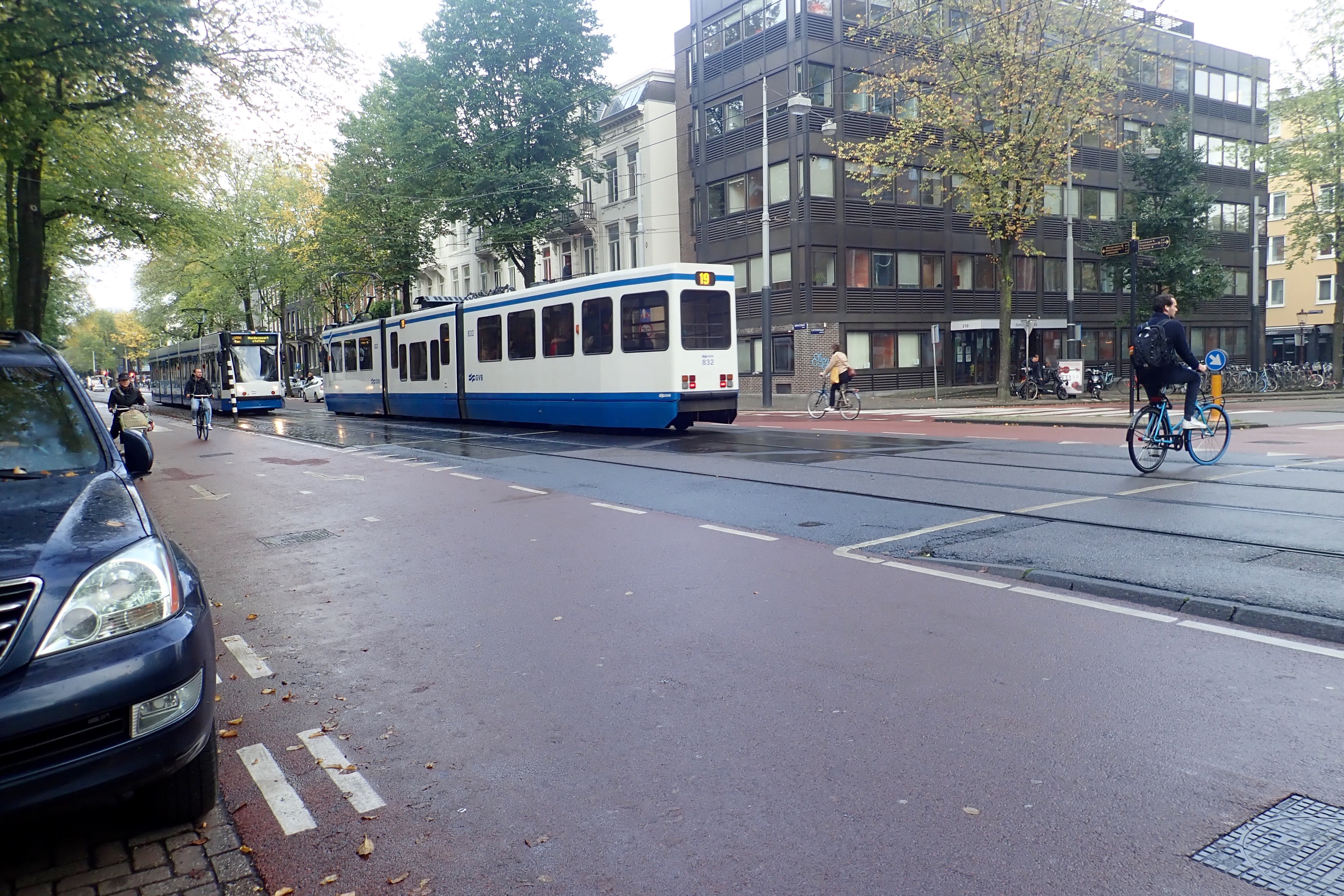
There is no jay-walking (way too dangerous), pedestrians use only the zebras (ZEB-ruhs, ZEB rhymes with Deb, aka crosswalks). There are green/red lights for bicycles, another for pedestrians. If it green walk signal starts blinking, hurry up! 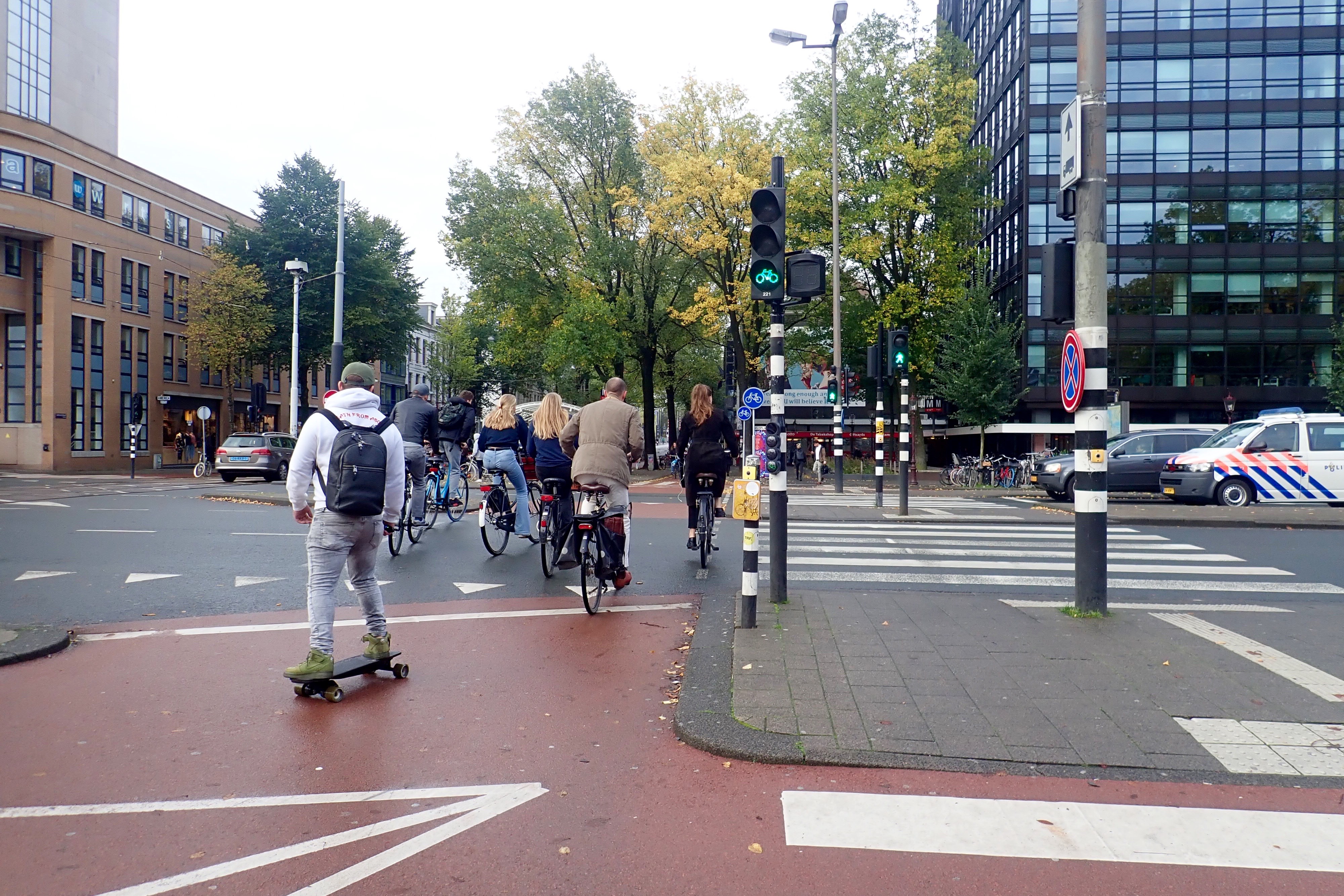
We took a walking tour in the morning. Houseboats along the canals are a popular place to live and very expensive.
This memorial stands at the site where the Nazis forced Amsterdam citizens to watch members of the Resistance get shot.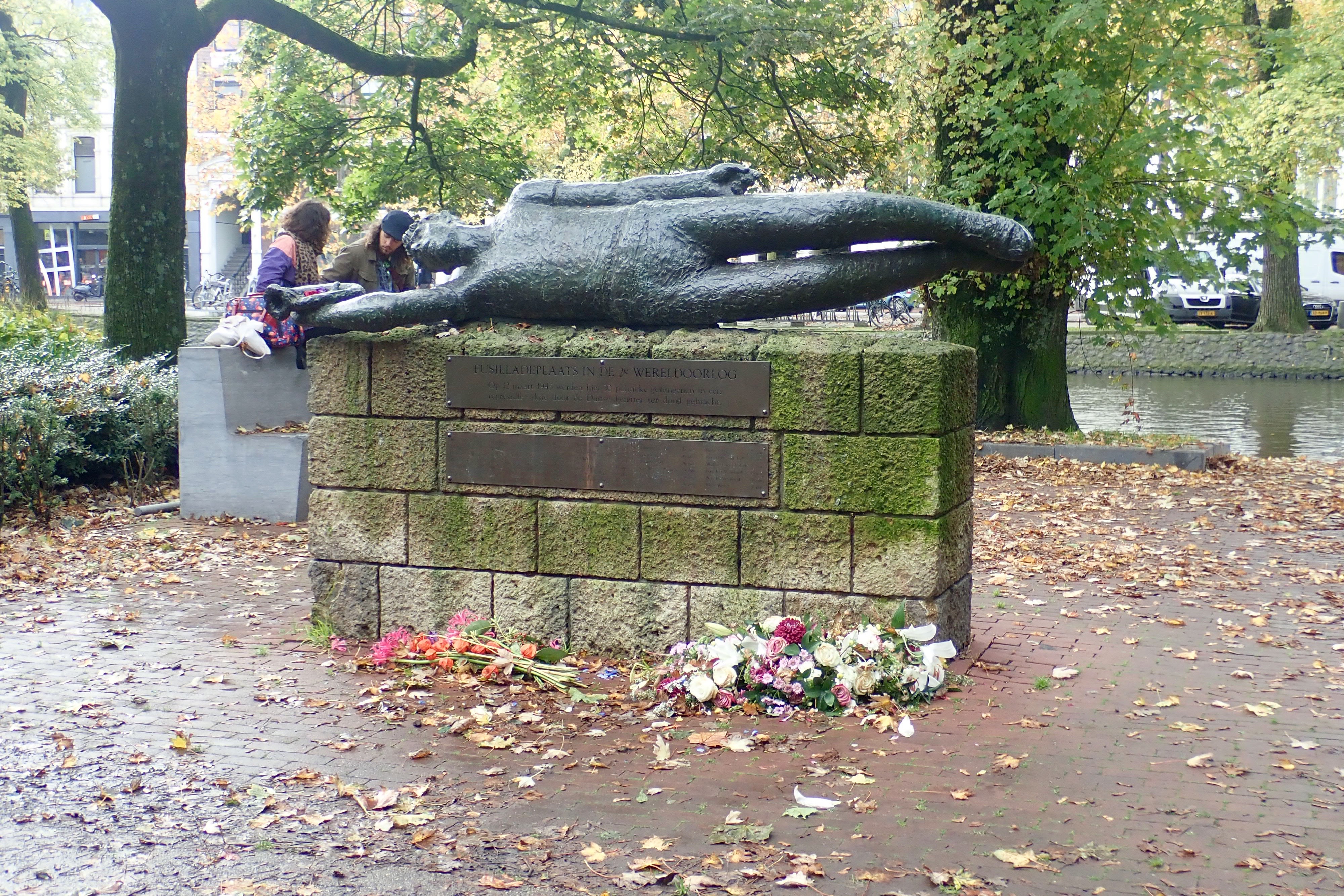
The National Gallery: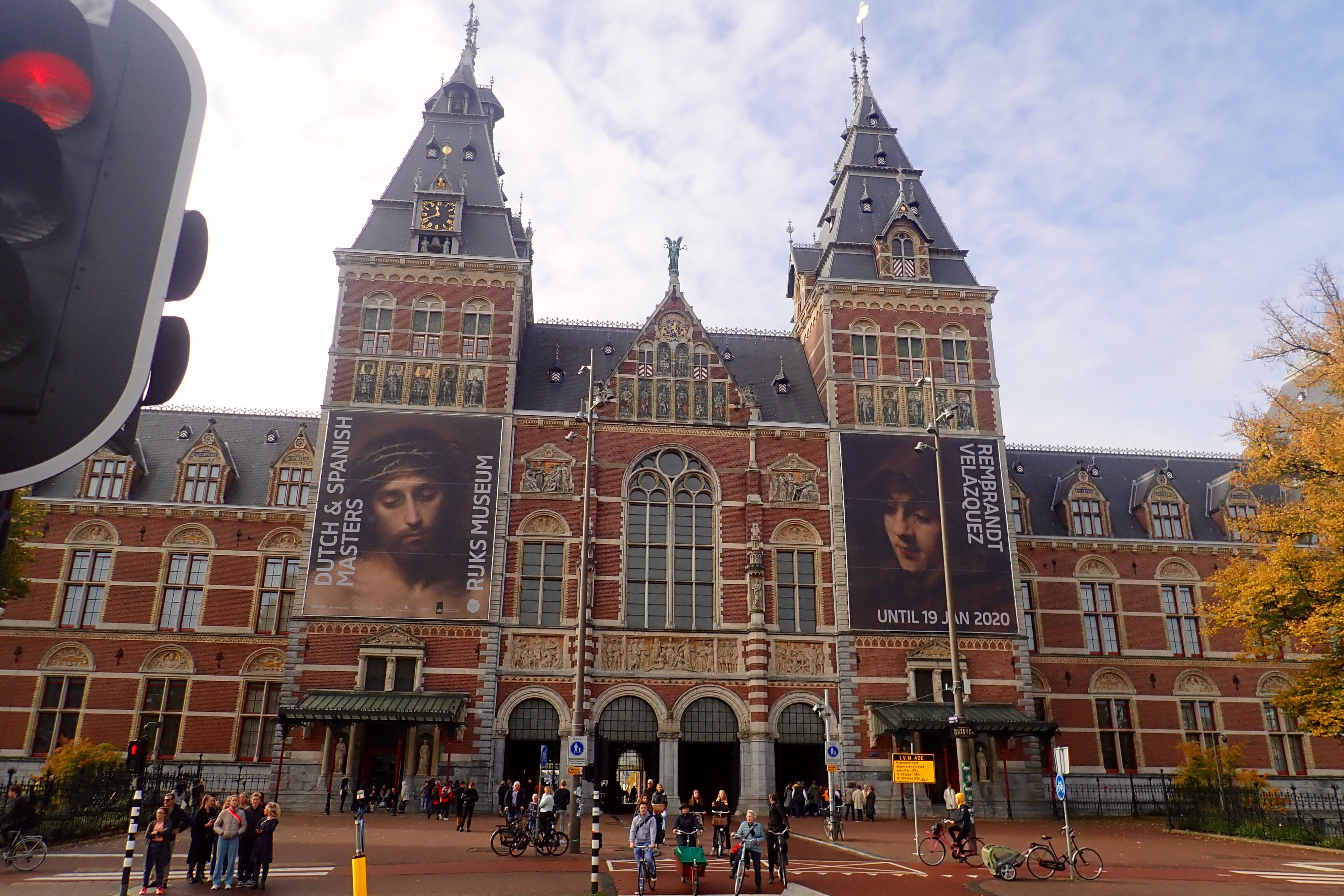
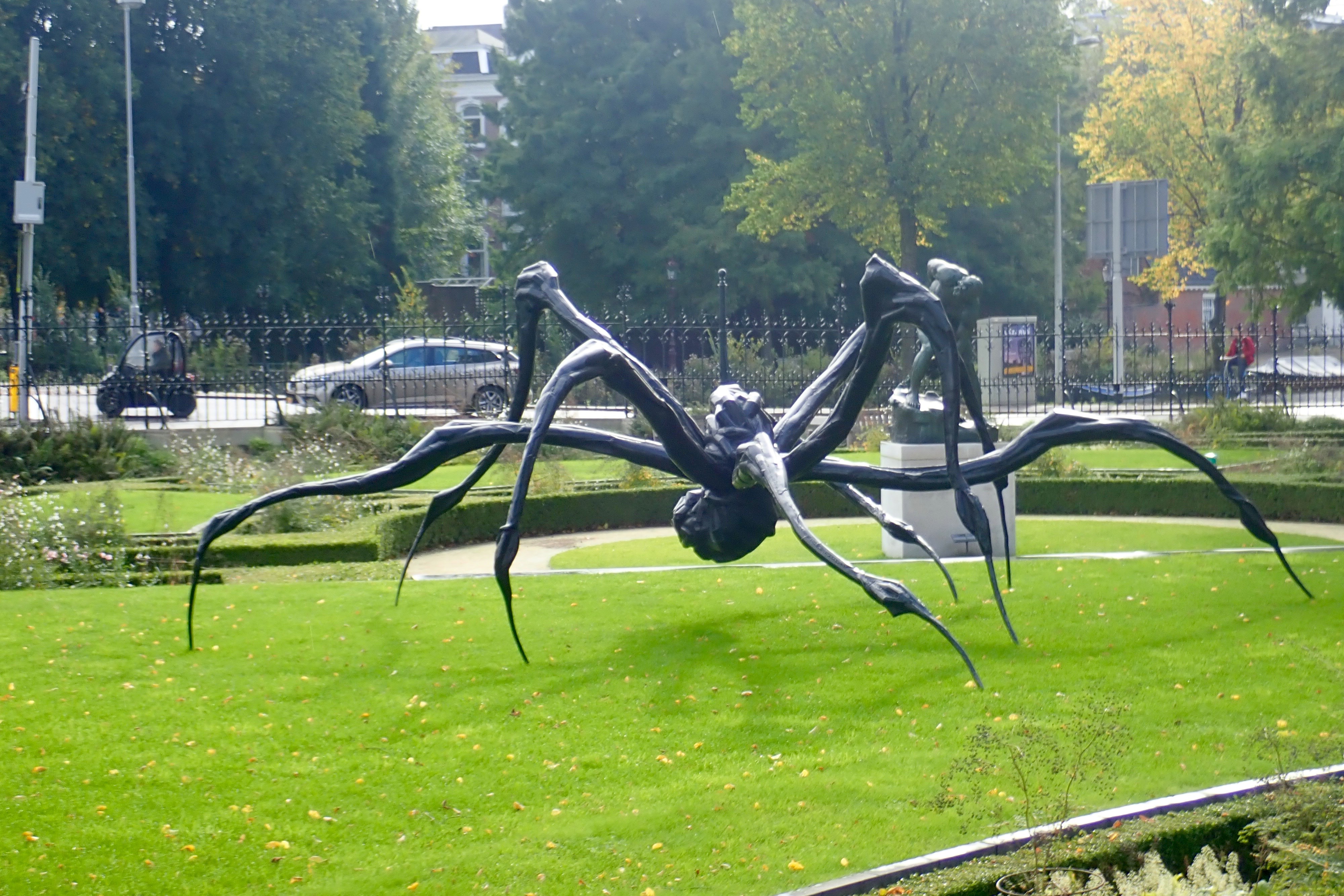
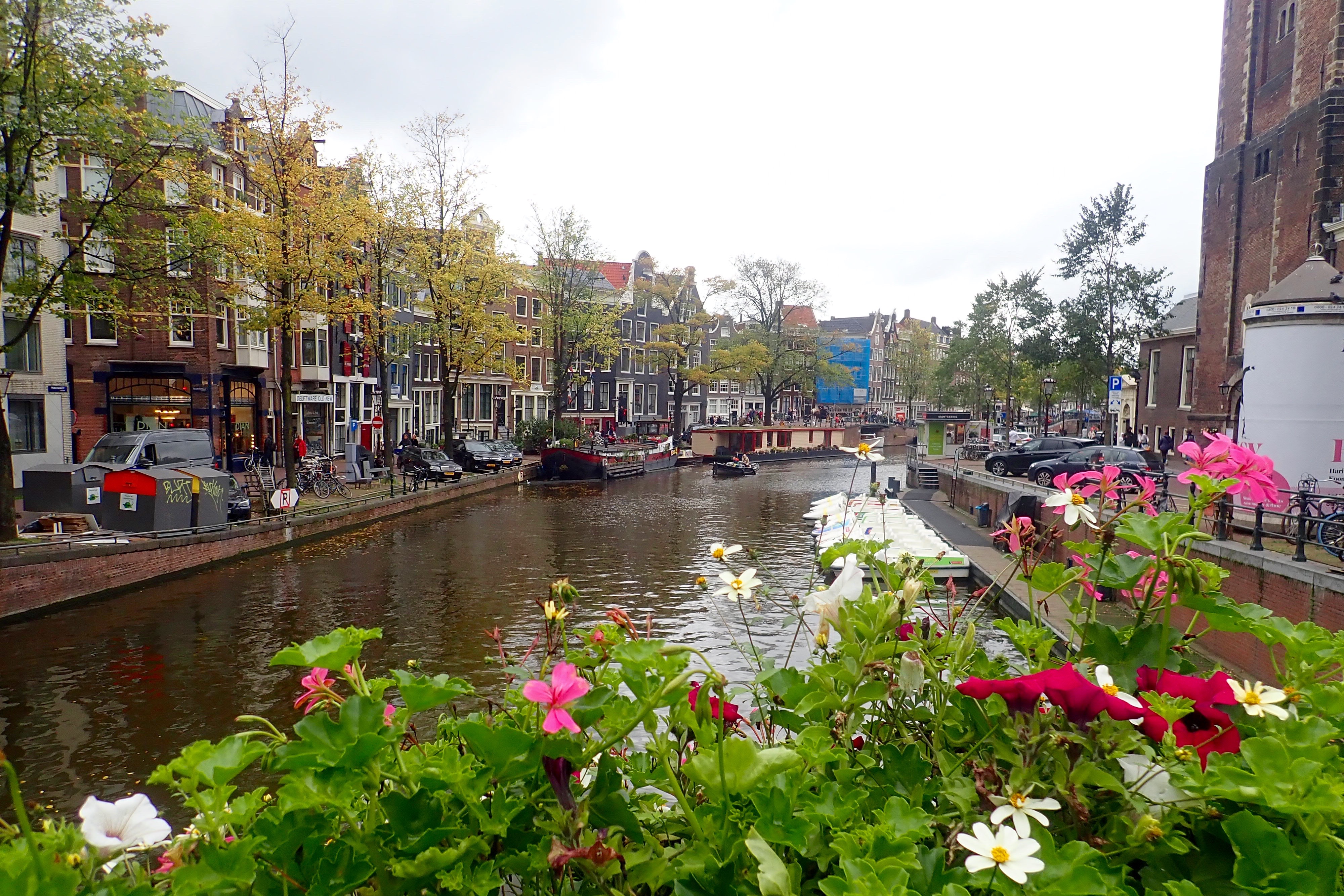
In the afternoon, we went on A Taste of Amsterdam tour and used the tram and subway system.
Our first stop was for tiny little pancakes cooked in a special cast-iron pan.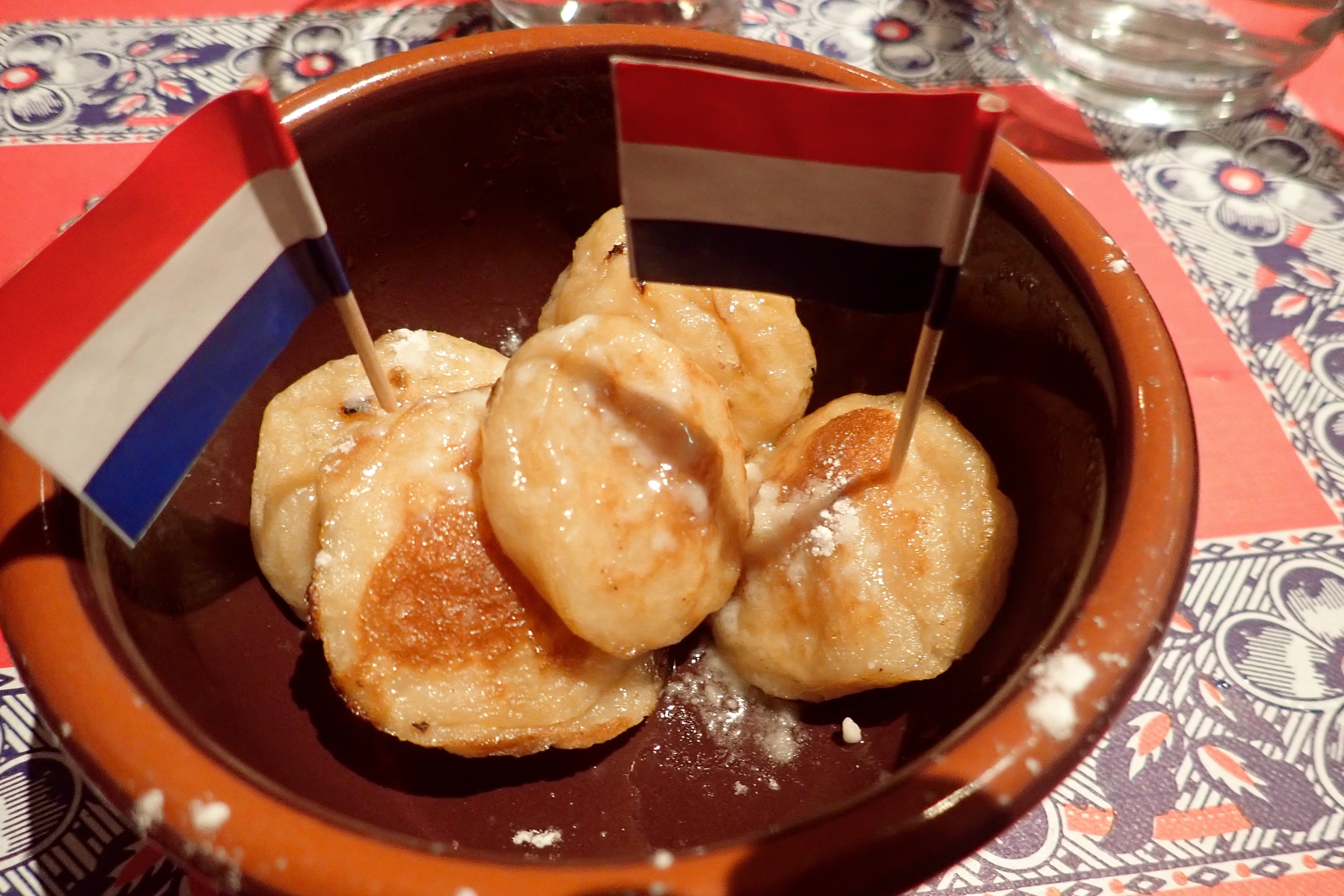
Then a cheese tasting.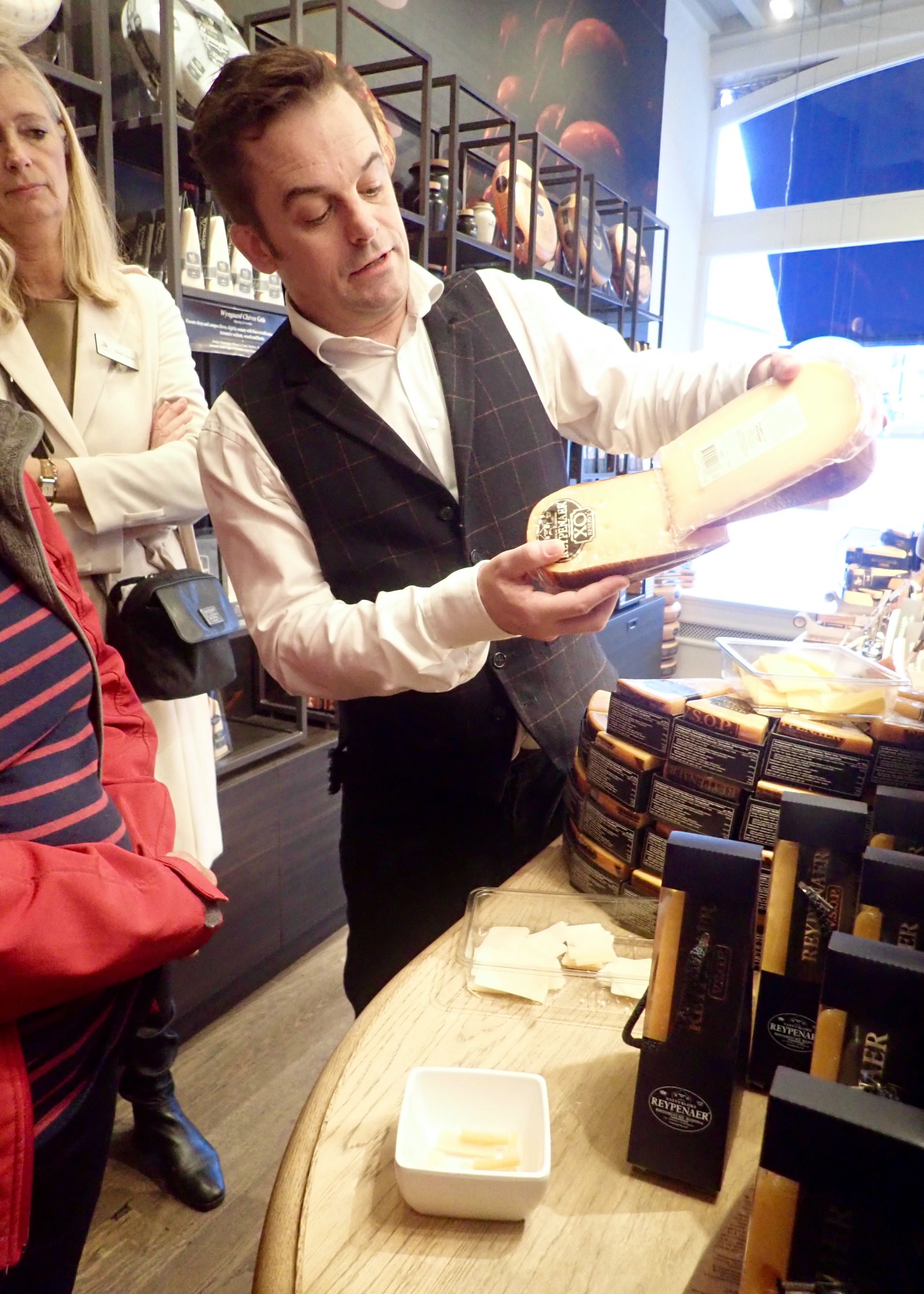
Finally a tasting of flavored gins (jenever). The tiny glass is filled to the very top, the proper way to begin is to slurp the first taste.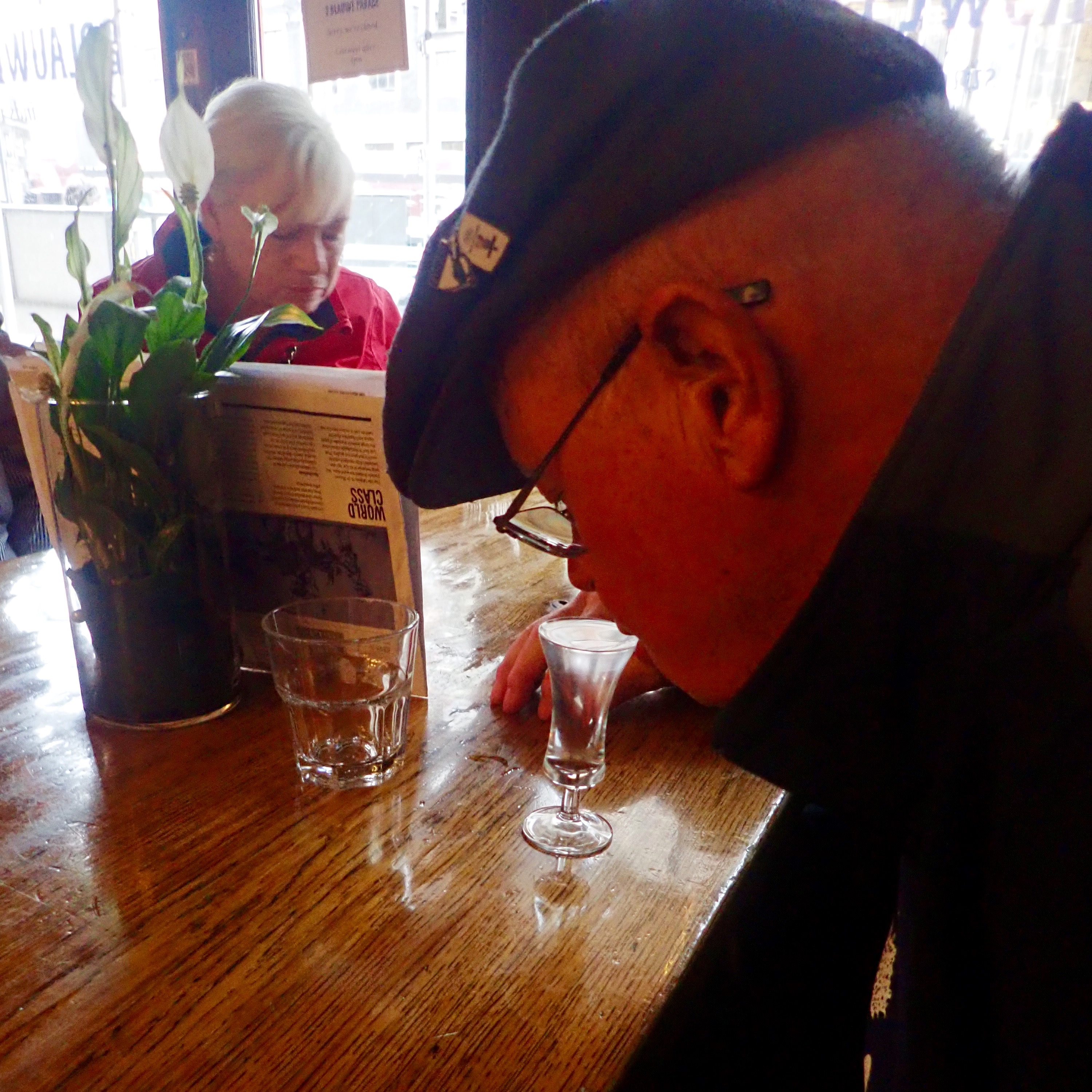
The width of the reddish house with the green arbor around the door is almost 5 feet – the narrowest house on the Canal Ring. It is occupied by a single woman. In the past, property taxes were assessed based on the width.
Back to the hotel during rush hour.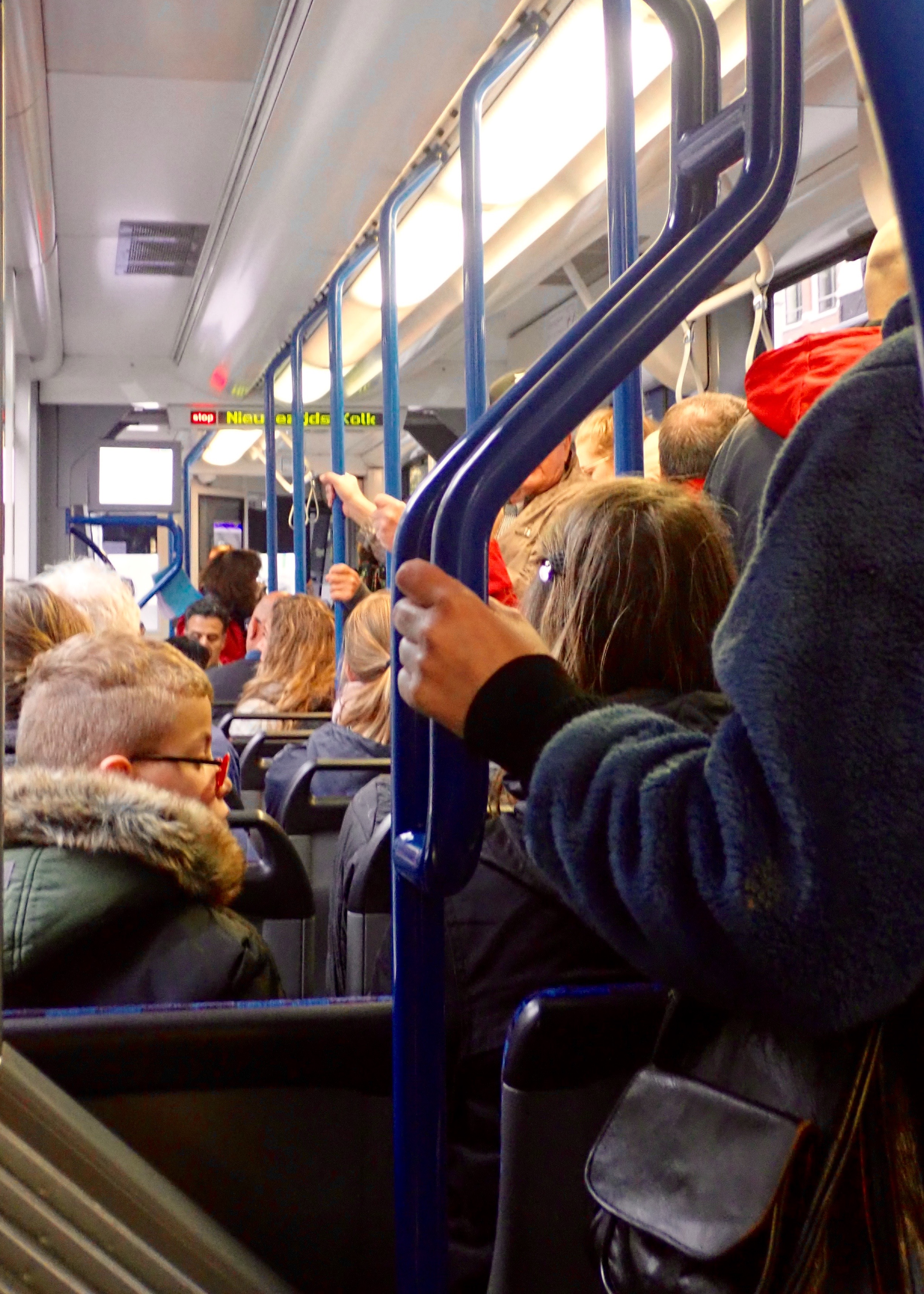
Kinderdijk Netherlands
In the late morning, everyone gathered in the lounge to listen to Richie, the program director, sing a few songs. Richie just completed his first 5 weeks as a program director for Viking. Before that he was part of a touring company on ocean cruises for 14 years – his most recent role as Frankie Valle. He first appeared on the London stage when he was 10 in Les Miserables and has performed for the Queen. Viking struck gold when they hired him.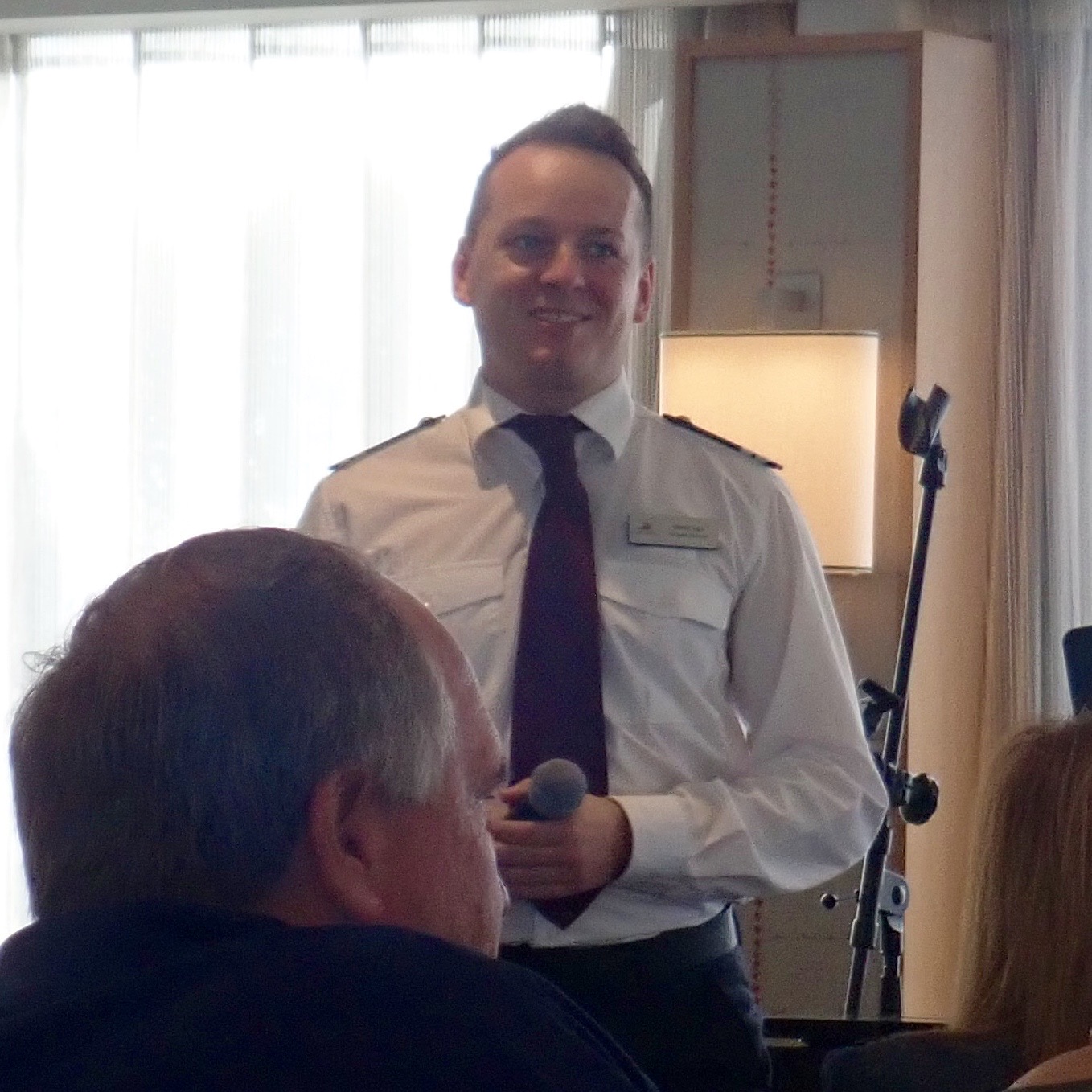
In the afternoon, we went on a tour of the windmills of Kinderdijk. Much of the Netherlands is below sea level. Polders are reclaimed land surrounded by dikes. The water level inside the polder is lower than the river level. When the water in the polder gets too high, it must be pumped out and dumped back in the river. Beginning in the 16th century, windmills did this job. Kinderdijk has a collection of 19 windmills.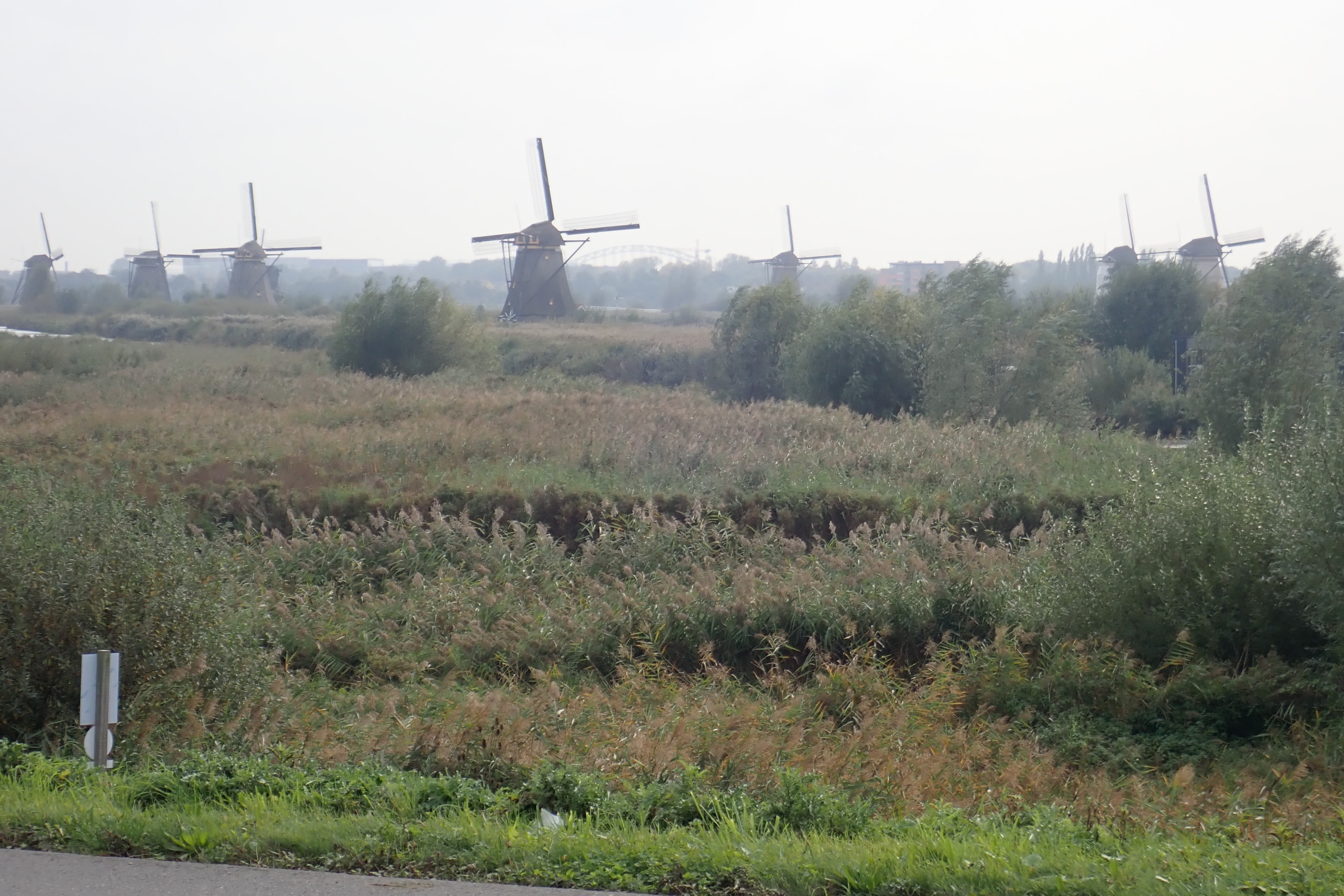
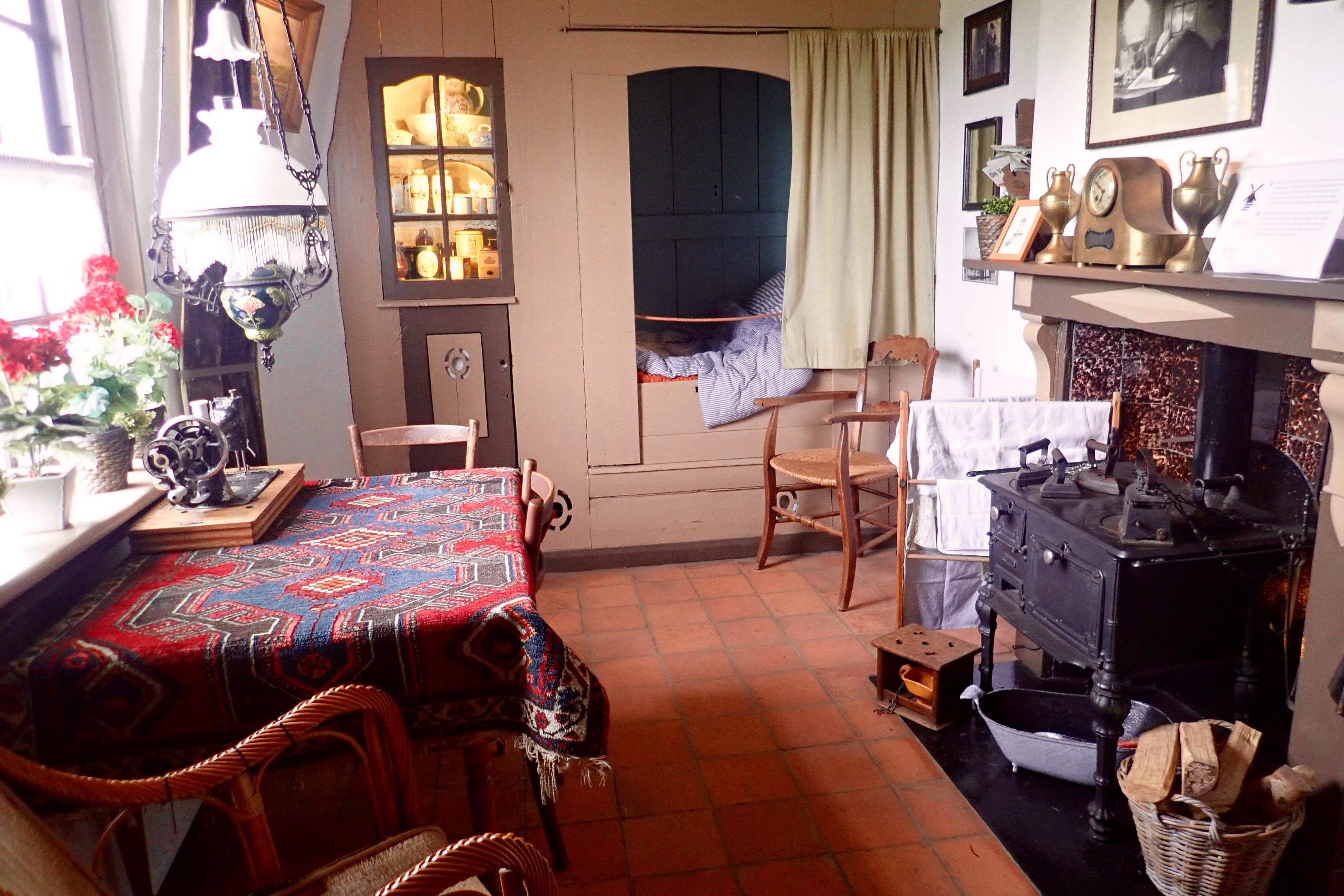
Life inside a windmill: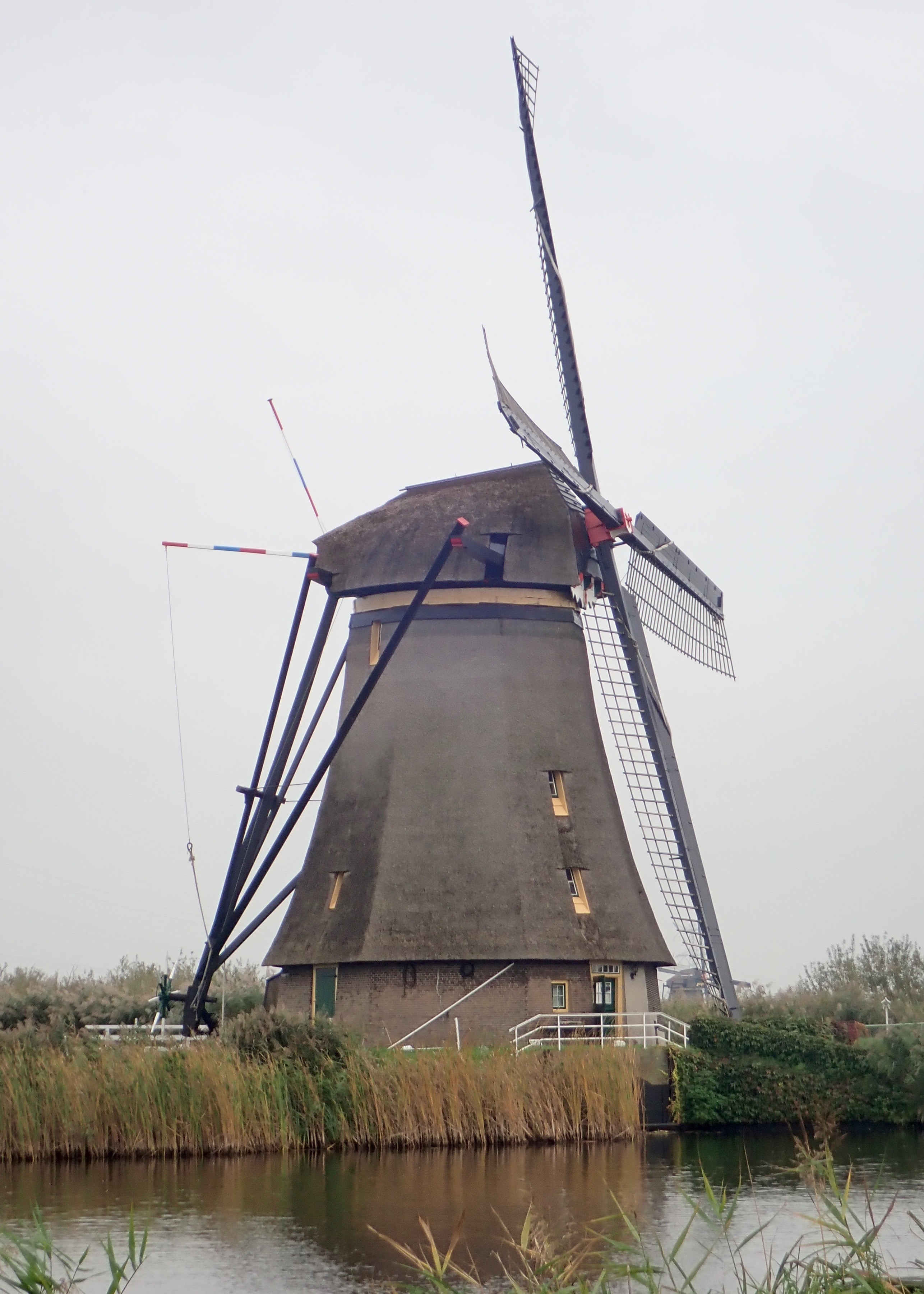
steep steps, many opportunities to hit your head, small spaces for beds and storage.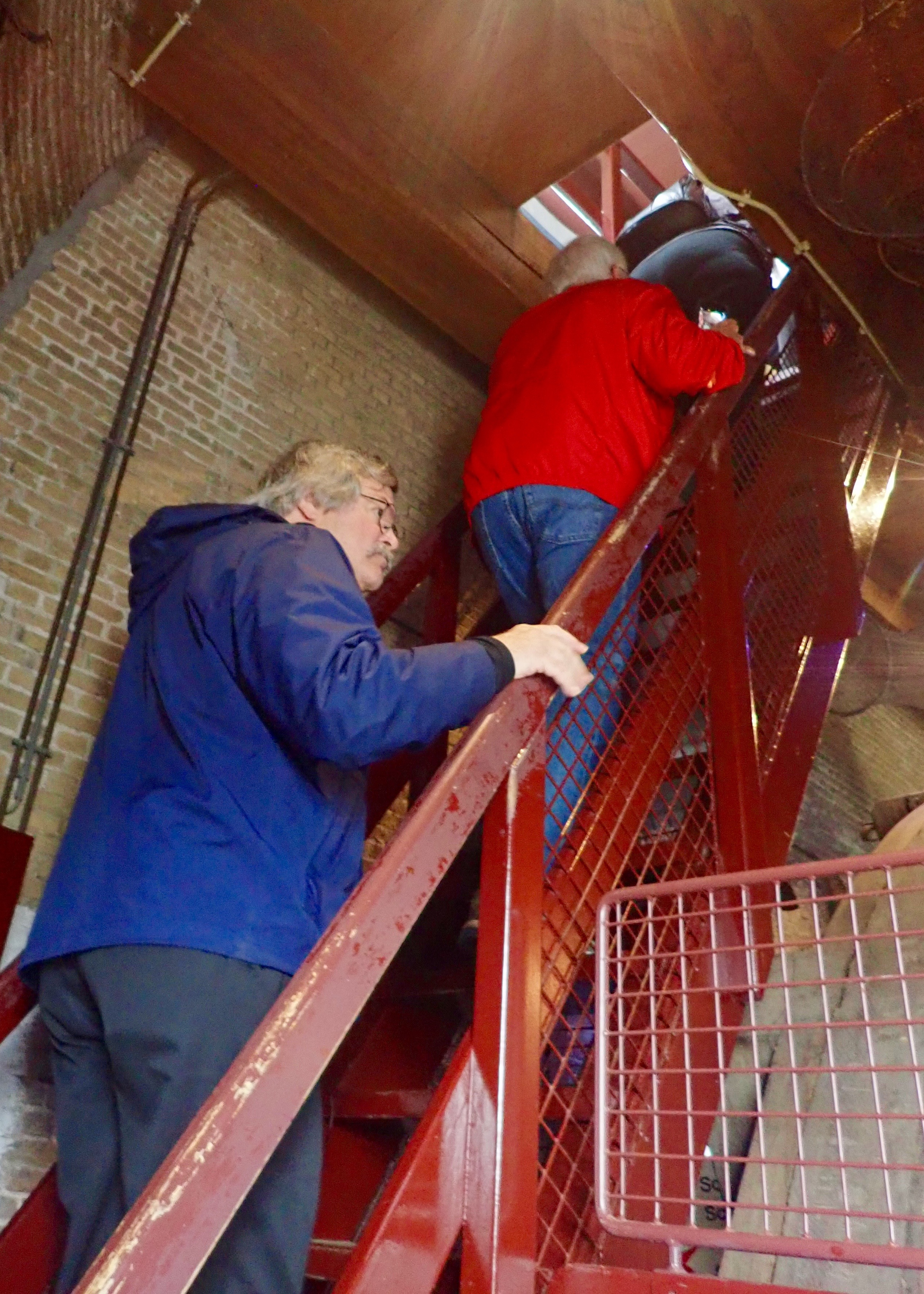

Then we drove through the countryside to a “cheese farm”.
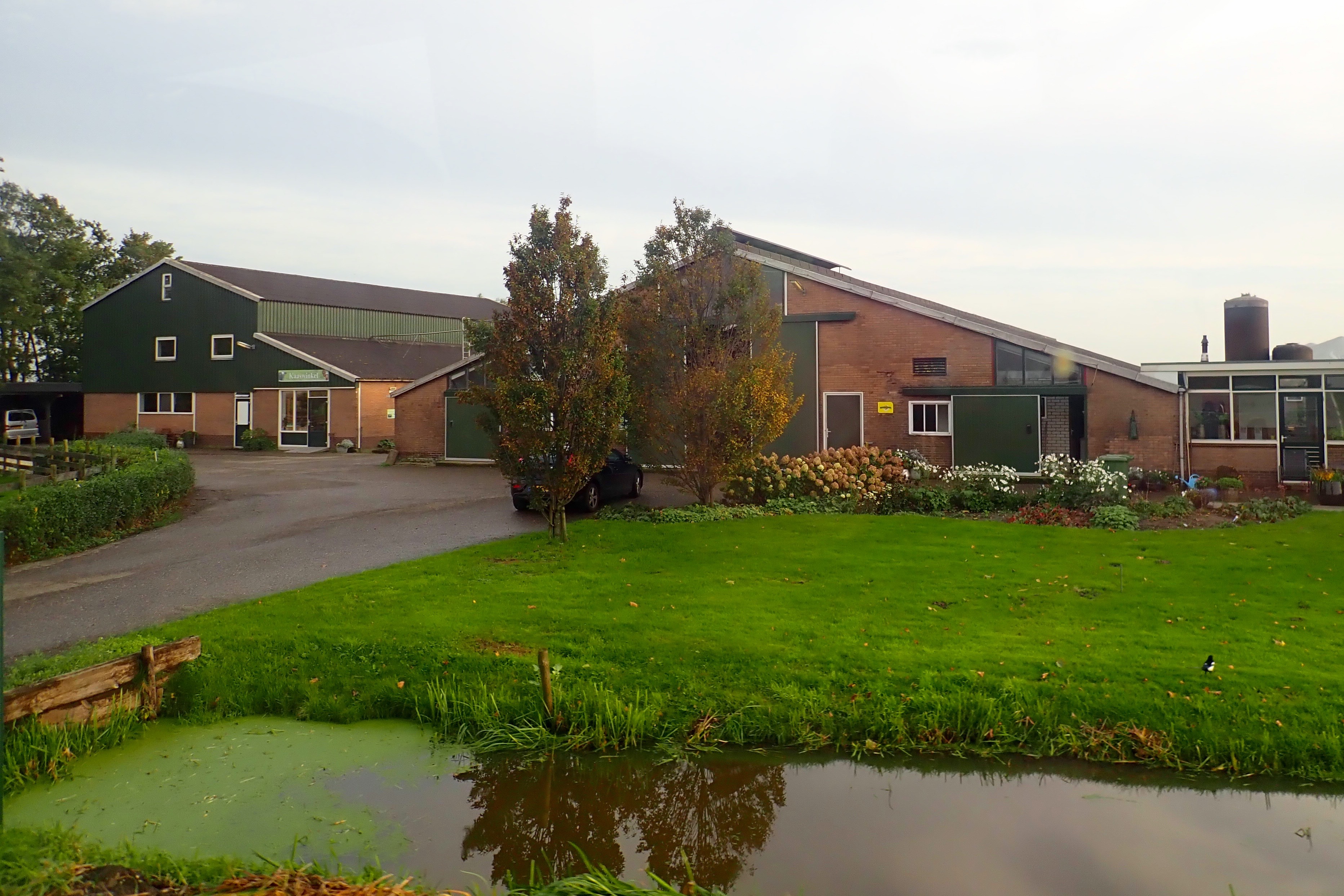
The farmer’s wife makes the cheese – mostly gouda, with many variations. 1600 gallons of milk/day yields about 1200 pounds of cheese – every day!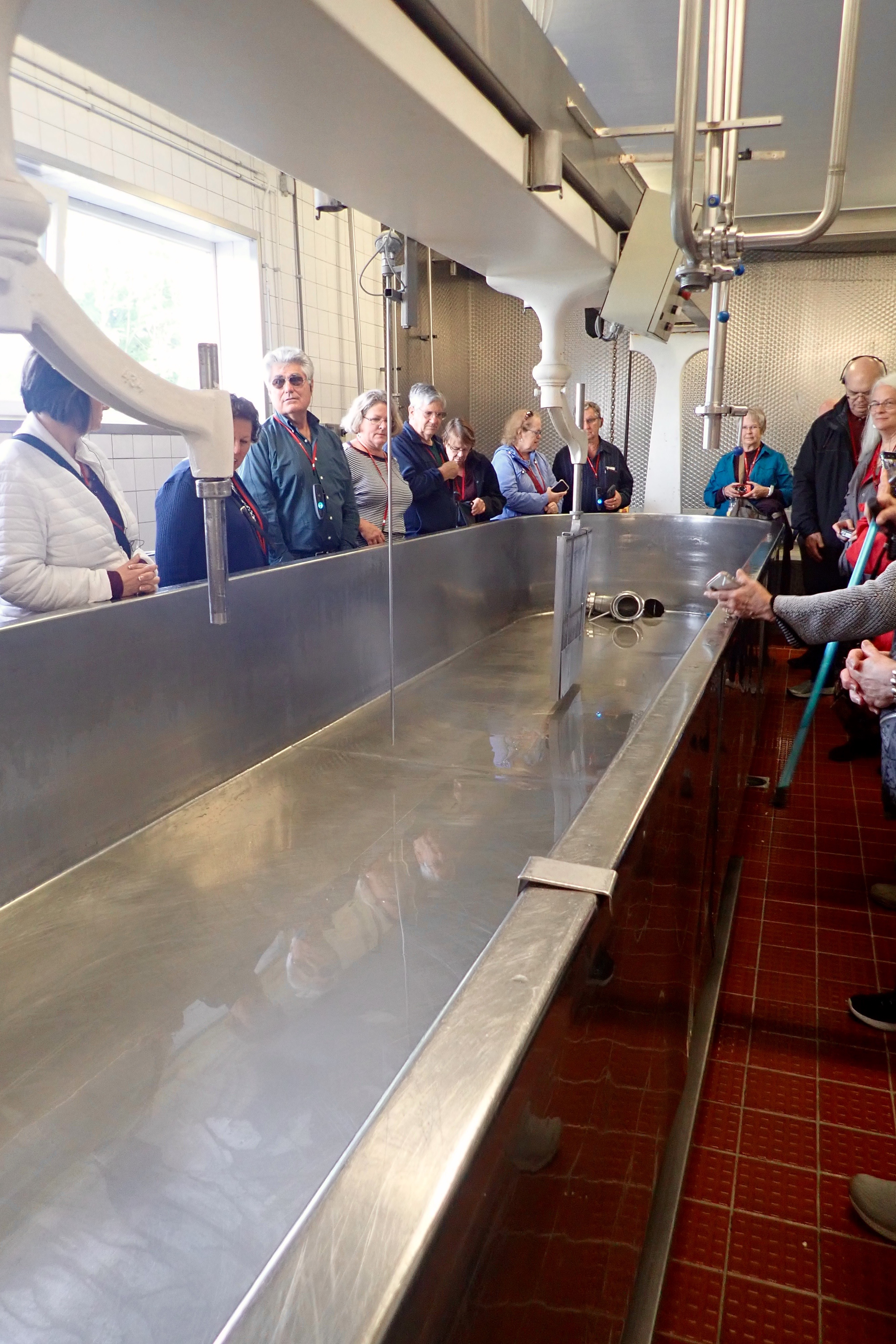
Three days in a salt brine bath.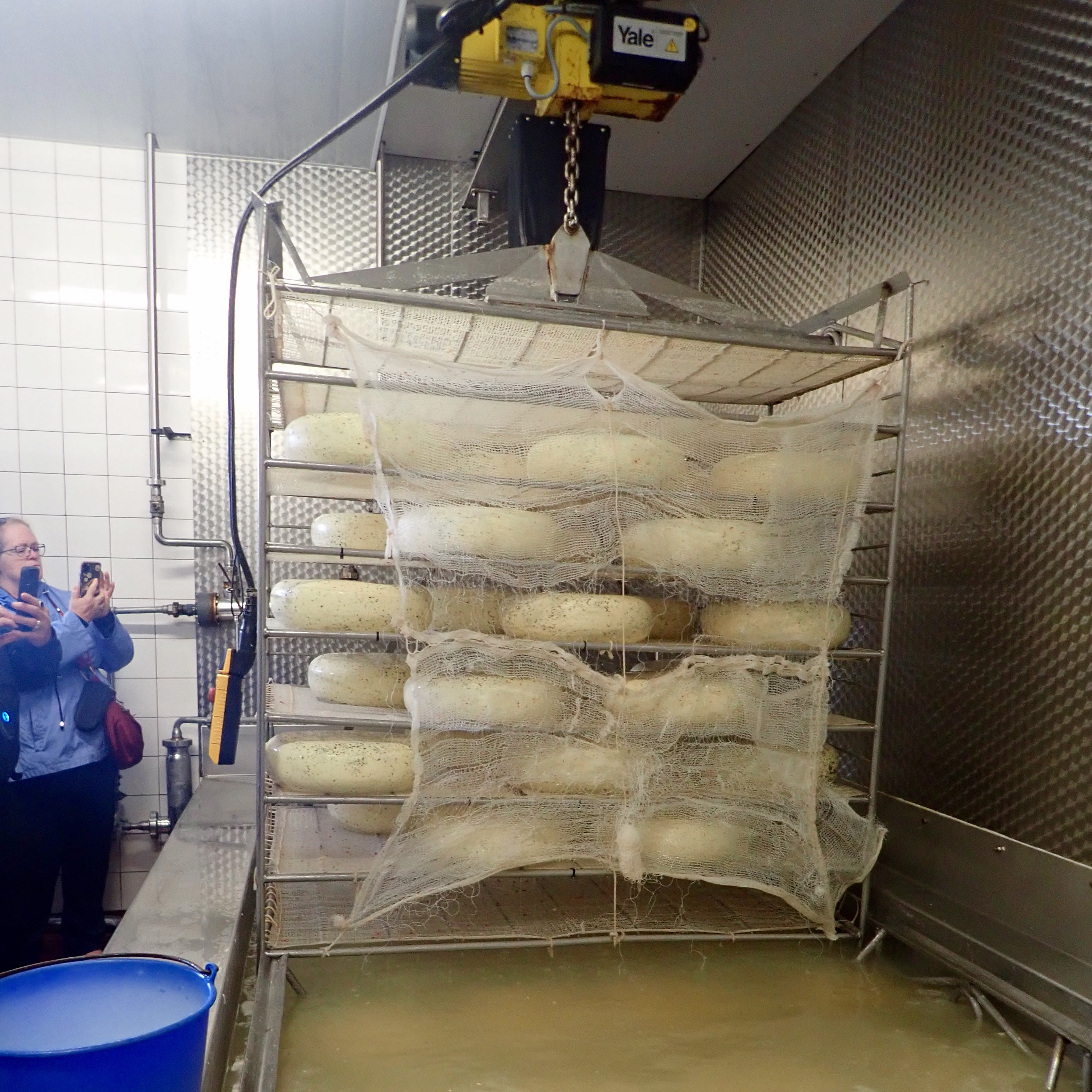
The temperature- and humidity-controlled aging room: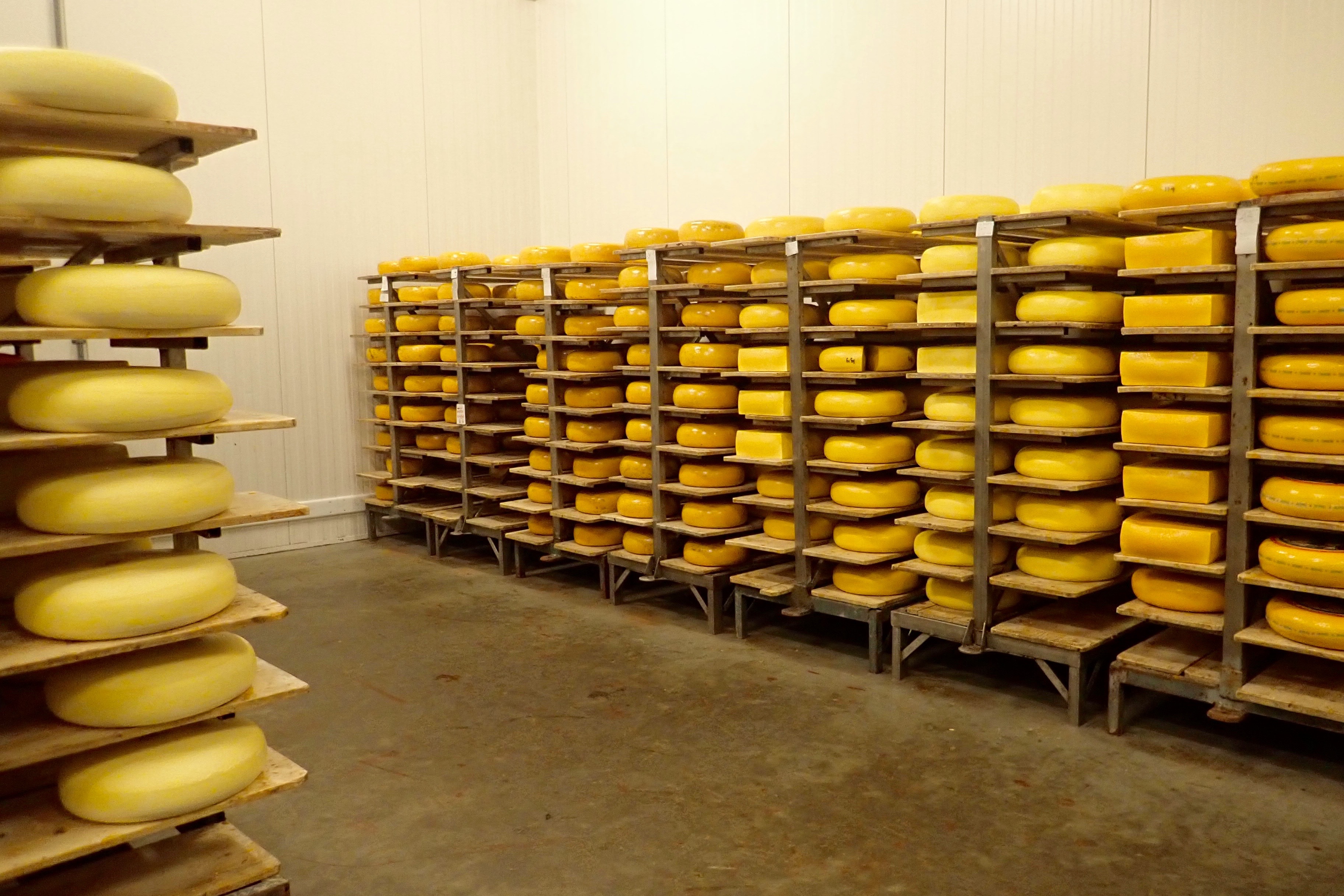
Then the farmer showed us his part of the business. About 5 babies are born every week. These cows are close to delivering.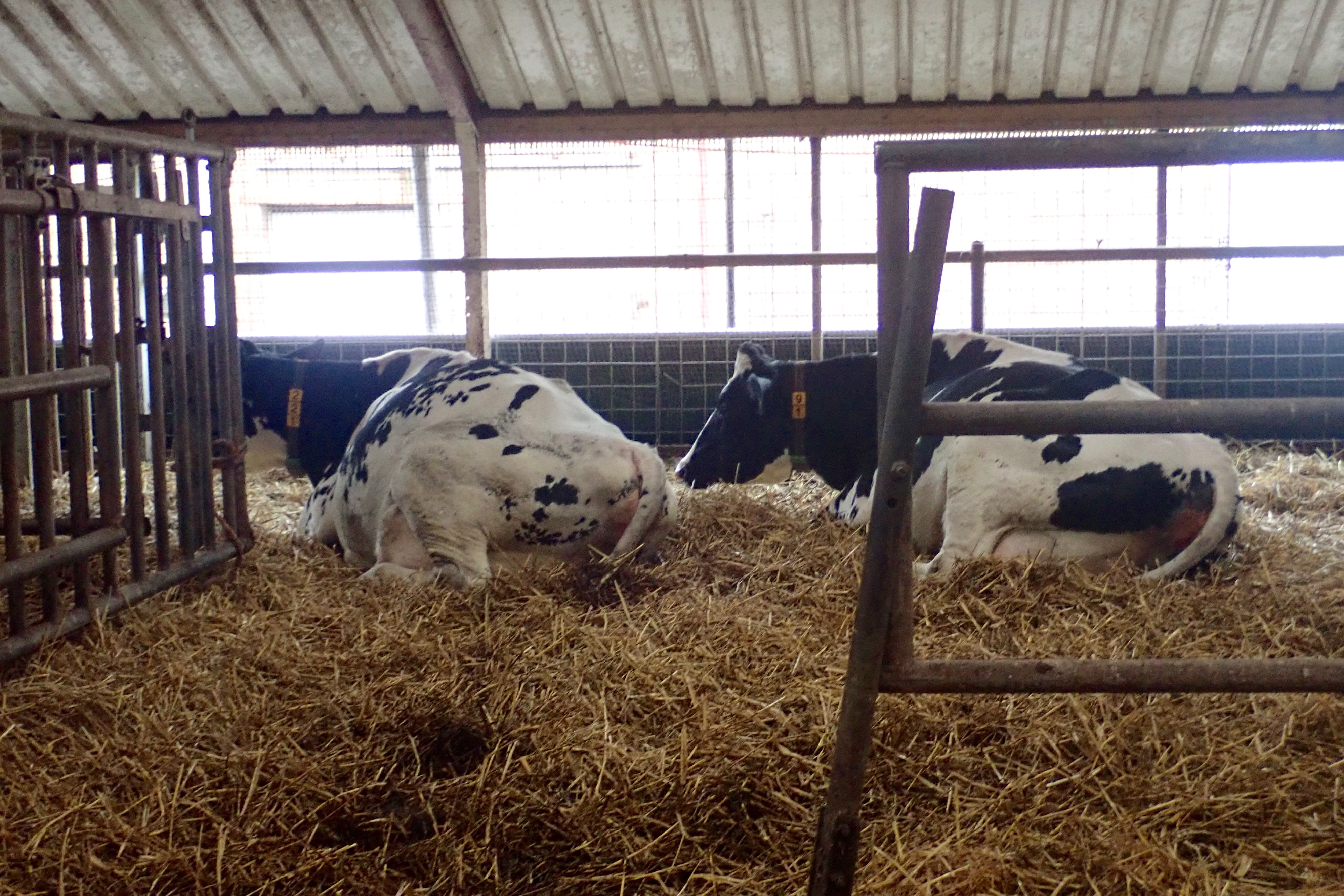
He has 258 milk-producing cows but also an ongoing breeding operation. He sells 45% of the calves but keeps the best for himself.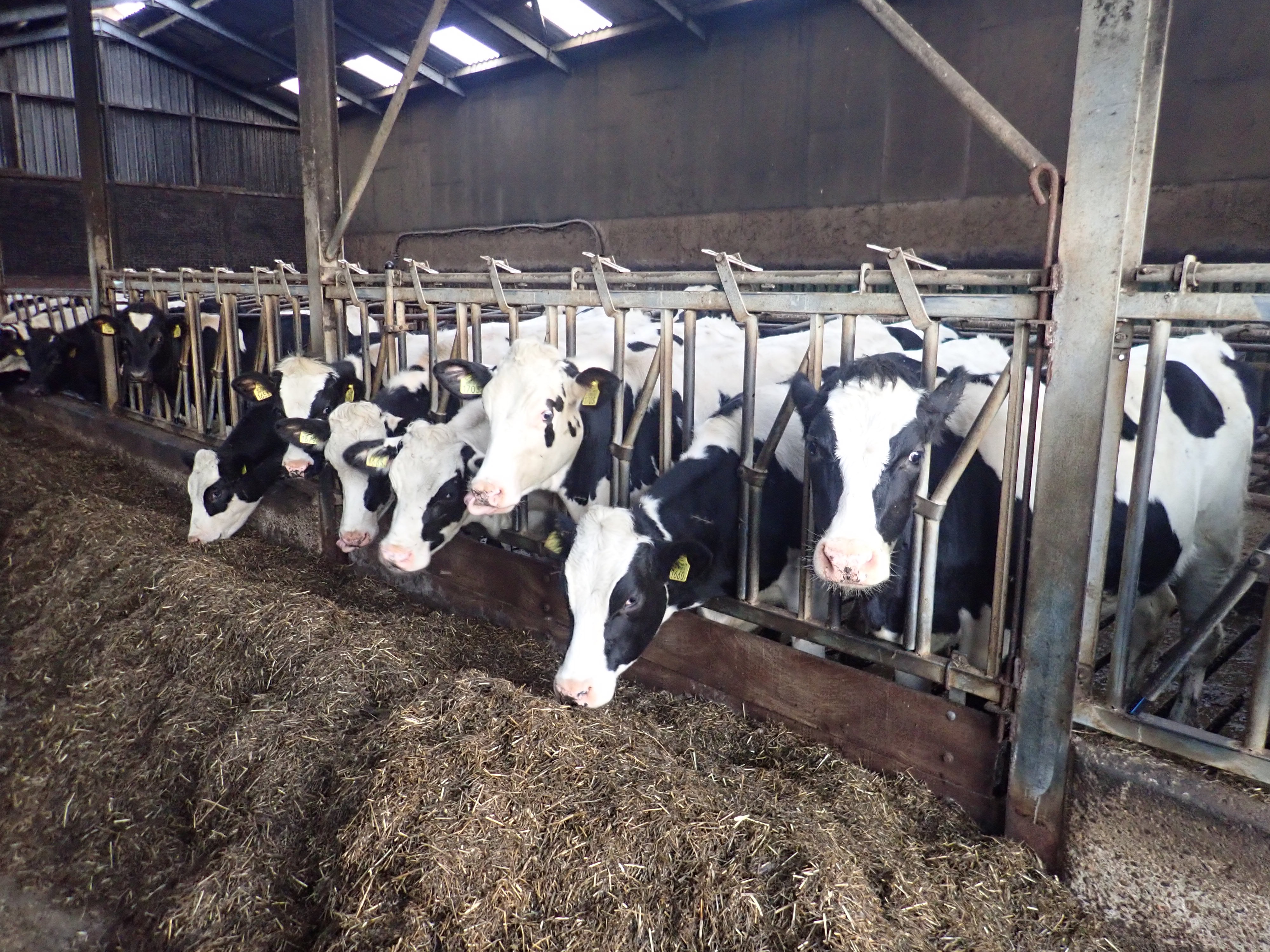
This is our last dinner on Viking Gefjon. Favorite waiter: Aldrin, but everyone called him Buzz. He really liked it that Lenin was Filipino and I had three grandchildren. He works 8 months on Viking ships, then goes home for 4 months. He will be home in just a few days.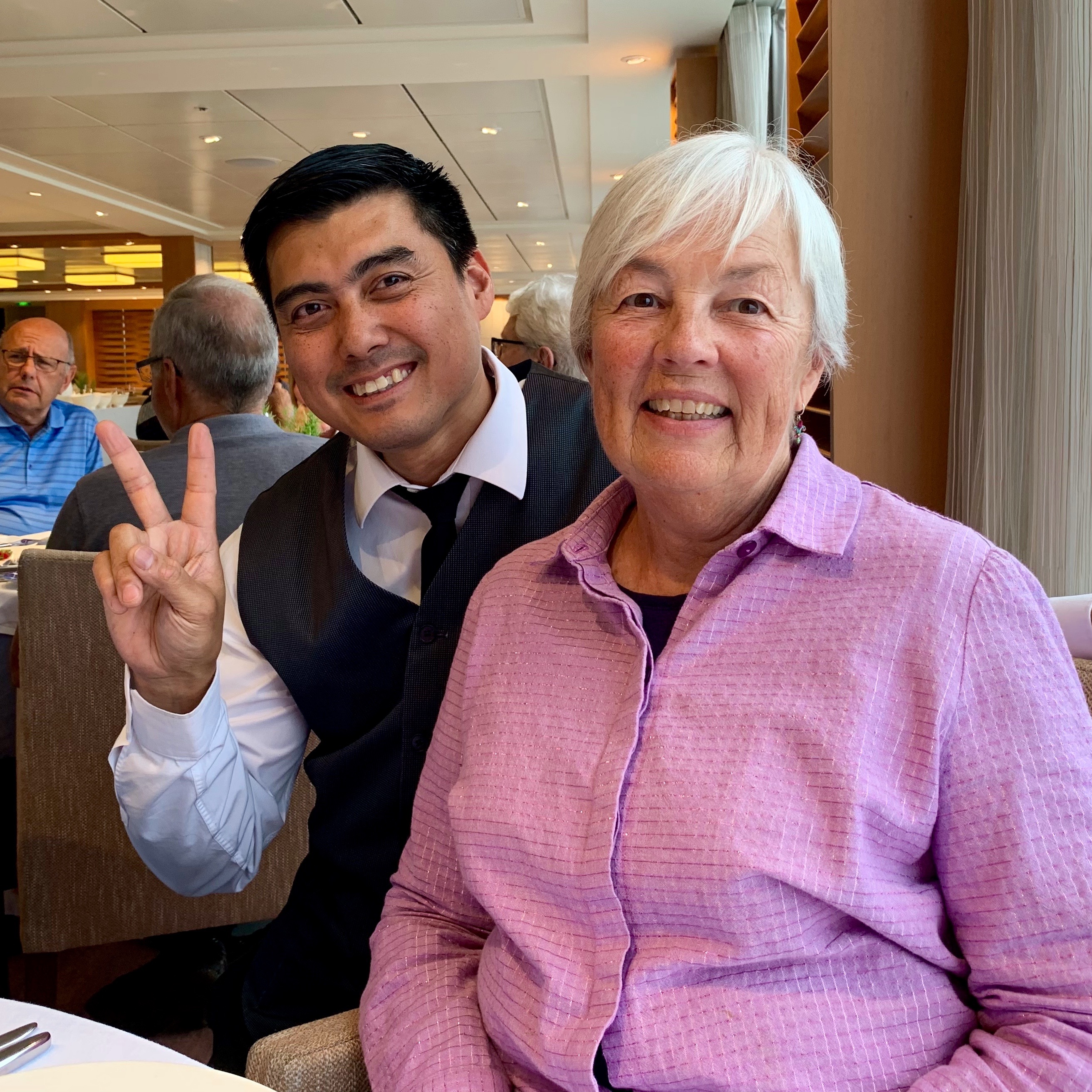
Tonight we sat with some of our favorite people. Pat and Richard from Montreal: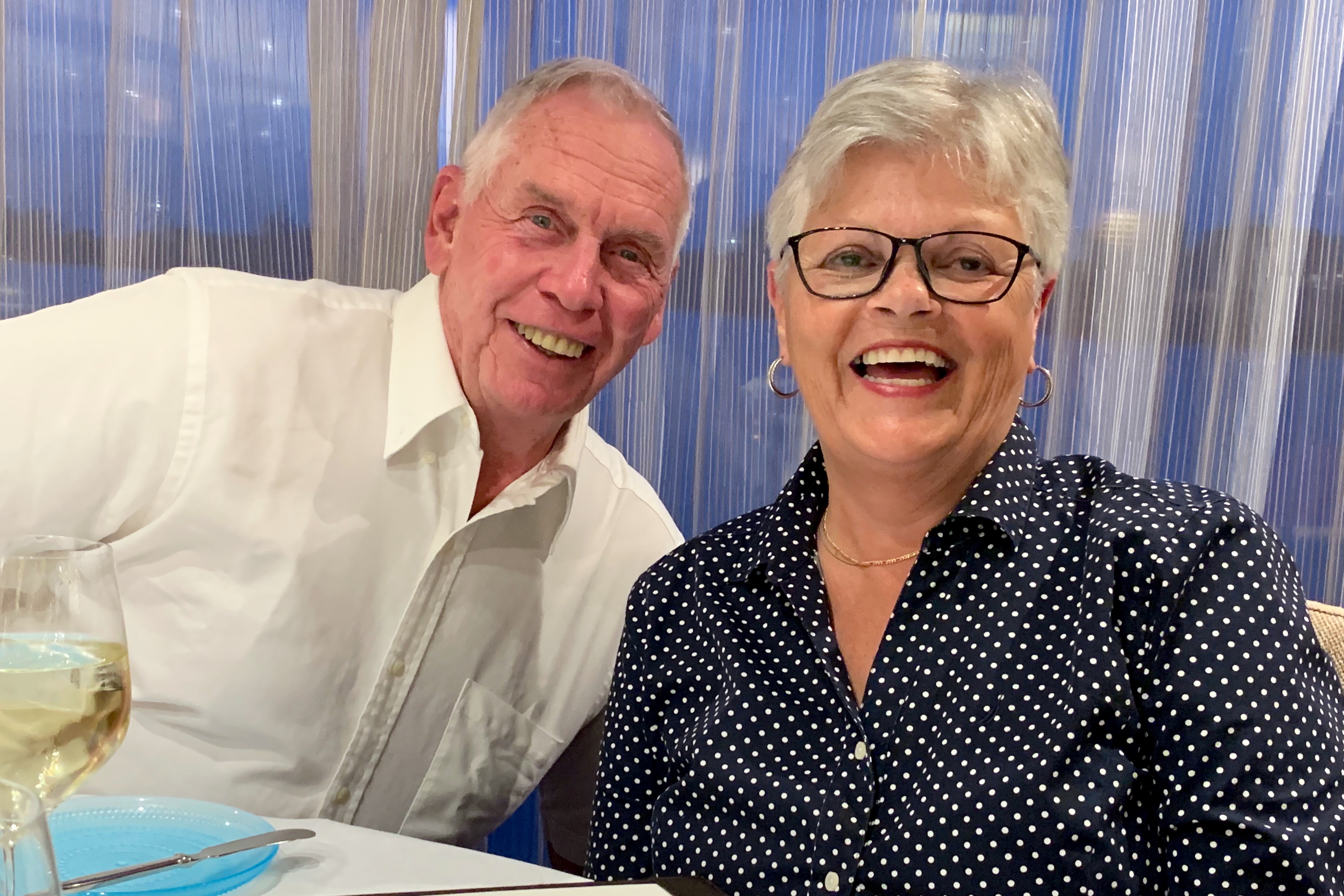
Theresa and Jeff from N Carolina: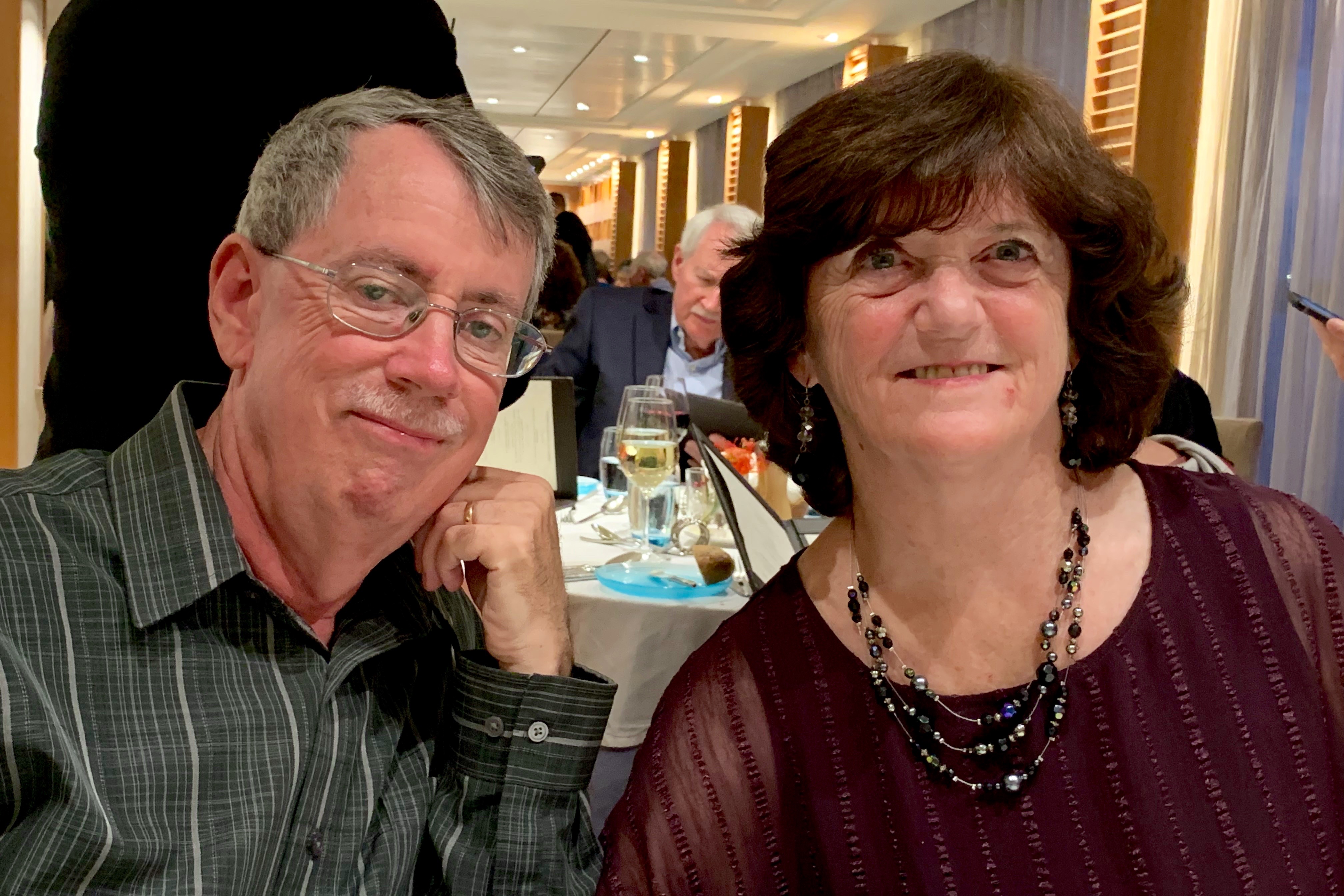
And finally, what I hope is the last dessert for a while – carrot cake. The food on this trip has been way too good.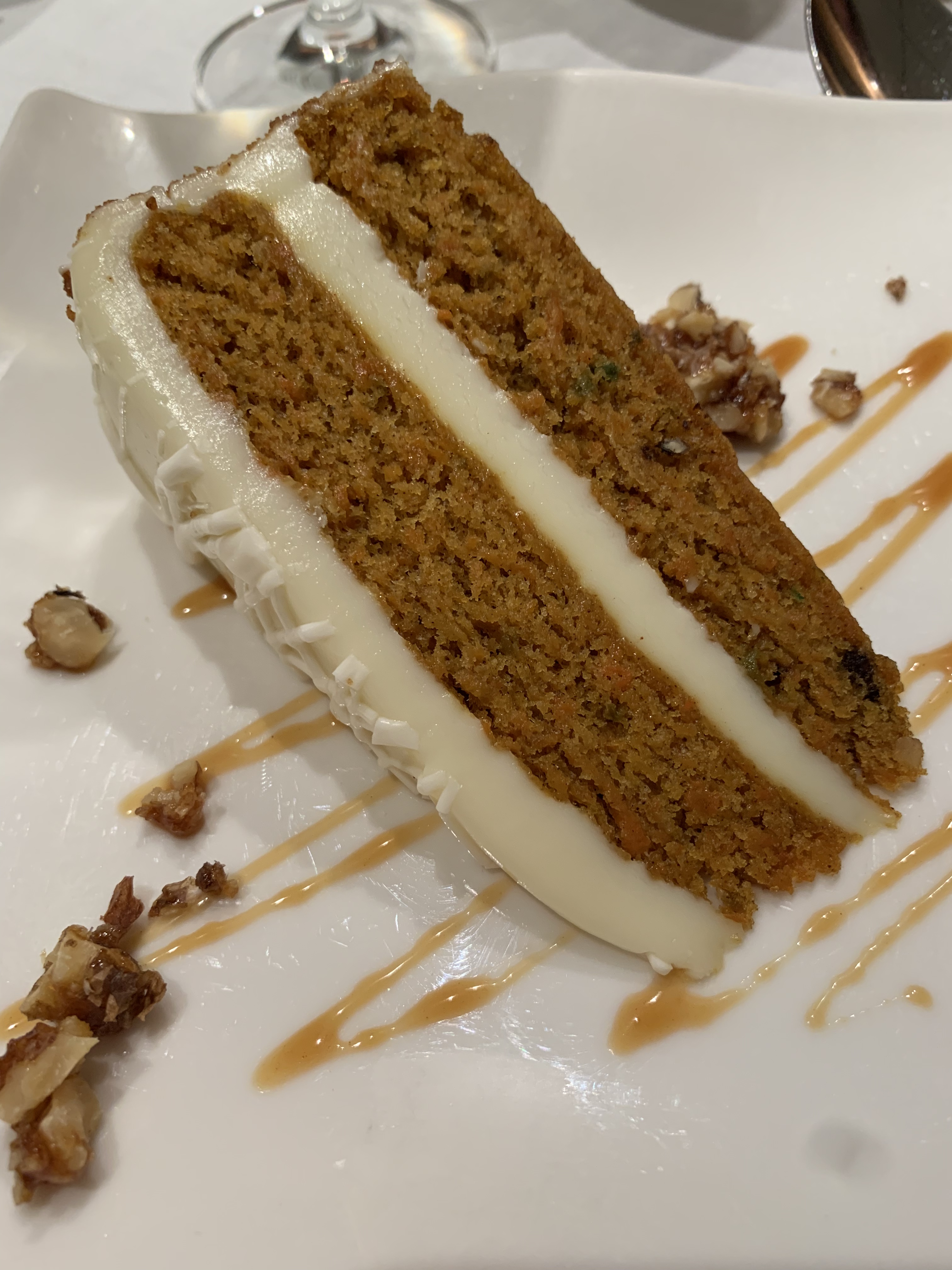
Cologne
We took a walking tour of Cologne in the morning. We crossed the train bridge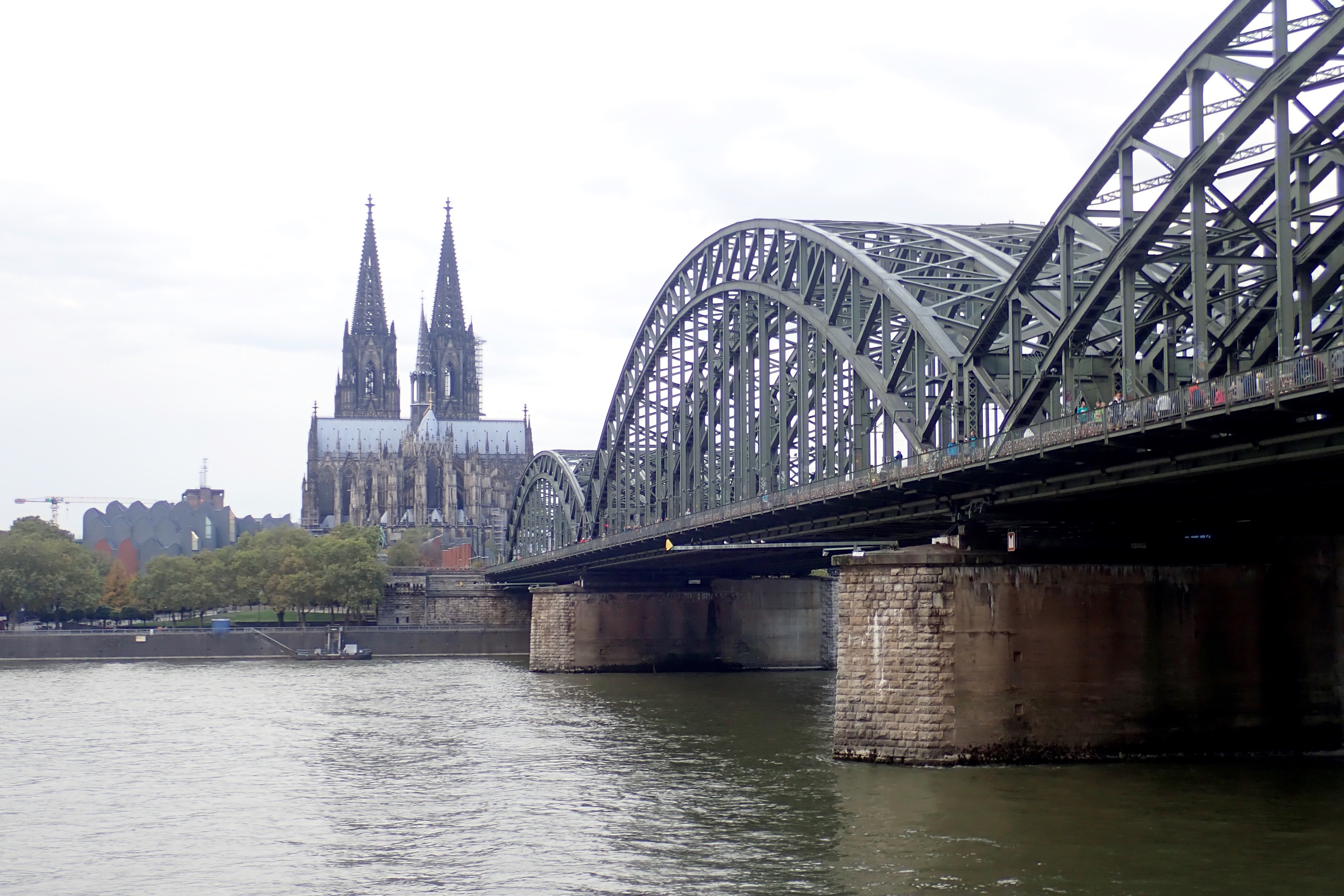
on the pedestrian/bicycle path which was packed with engraved padlocks.
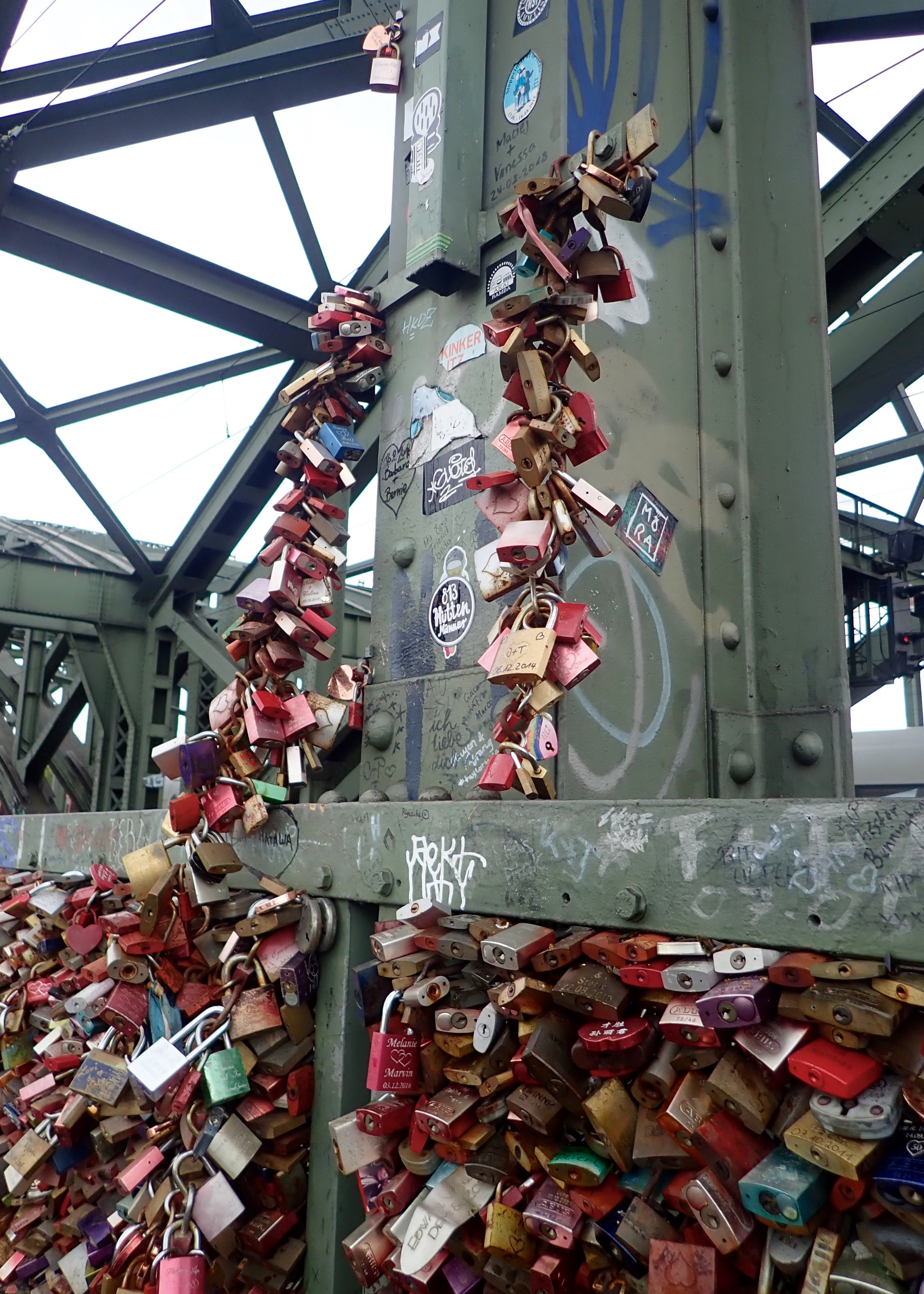
More than 1300 trains cross this bridge every day with connections to all major European cities.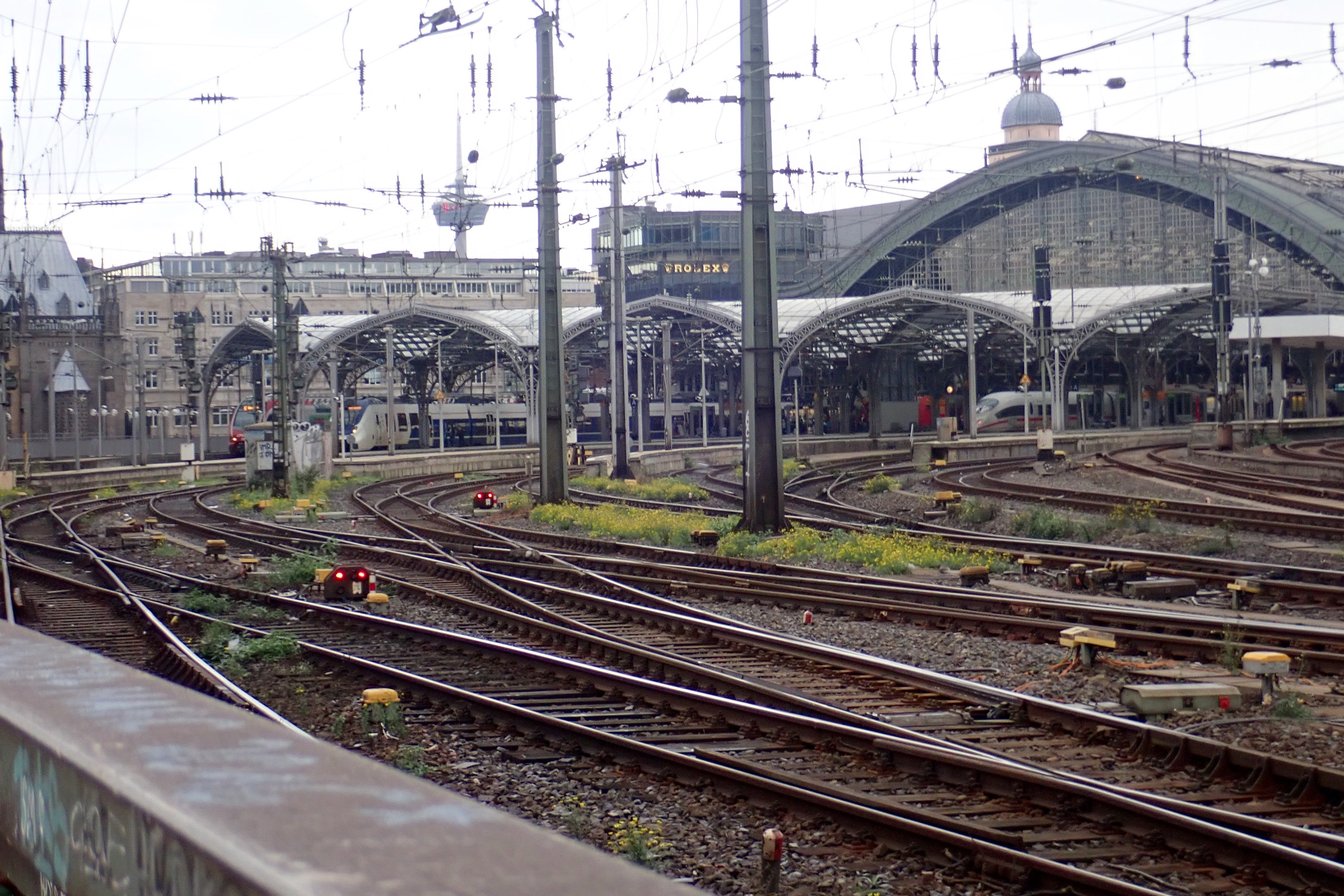
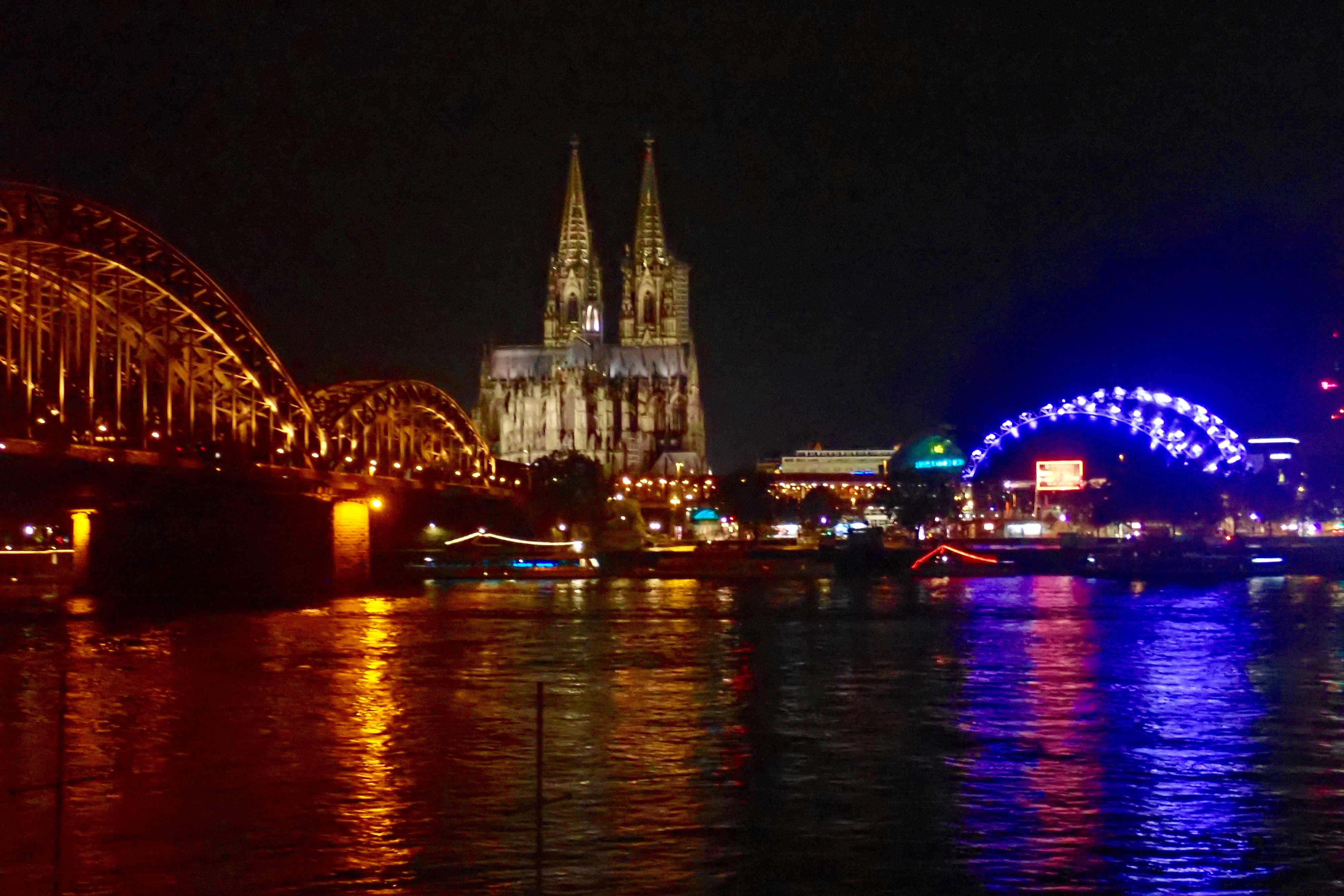
Construction of the Cologne Cathedral began in 1248, halted in 1473, restarted in 1840s and completed in 1880 – the original design was maintained.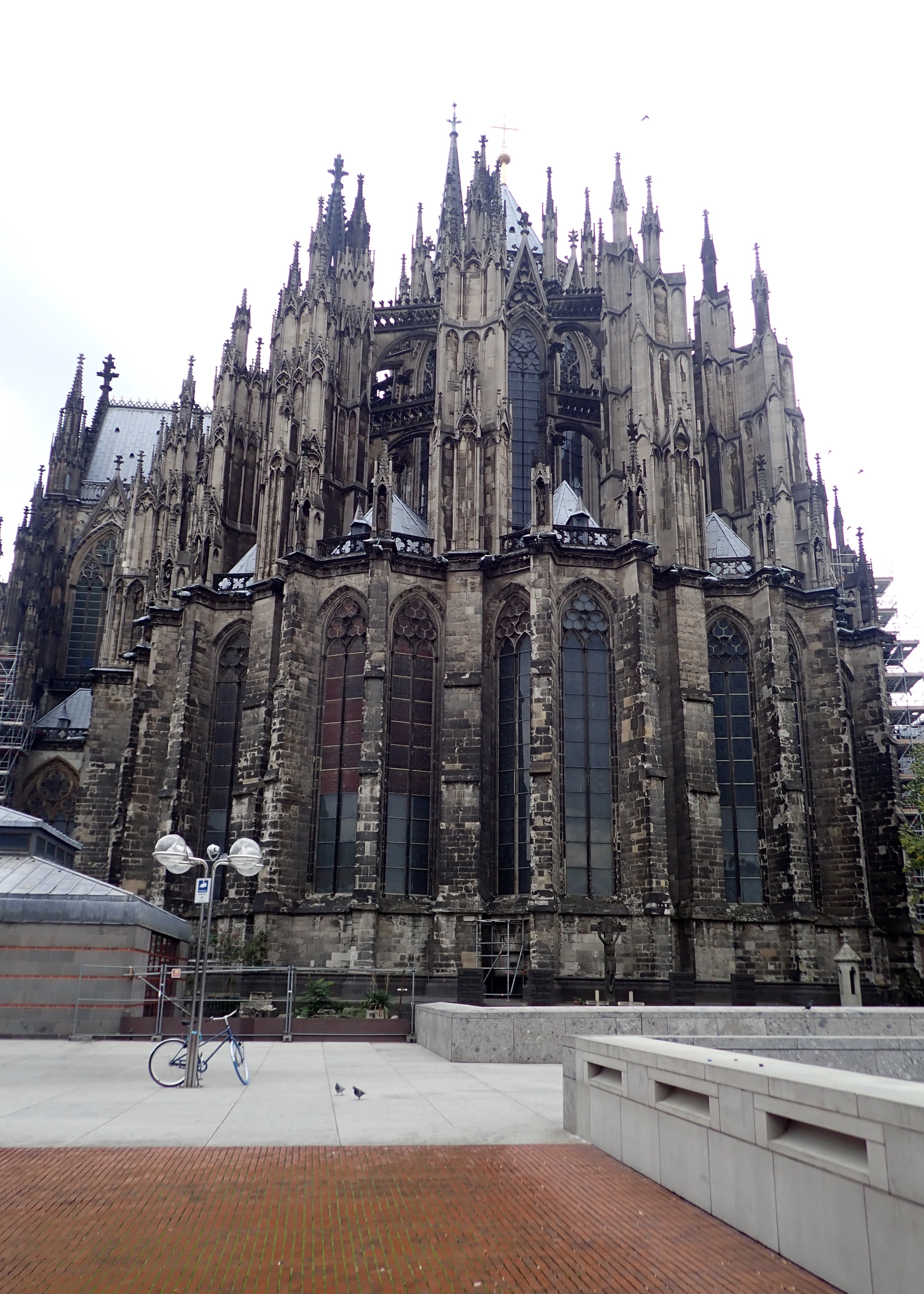
There was a big marathon today in downtown Cologne. Lots of people and closed streets.
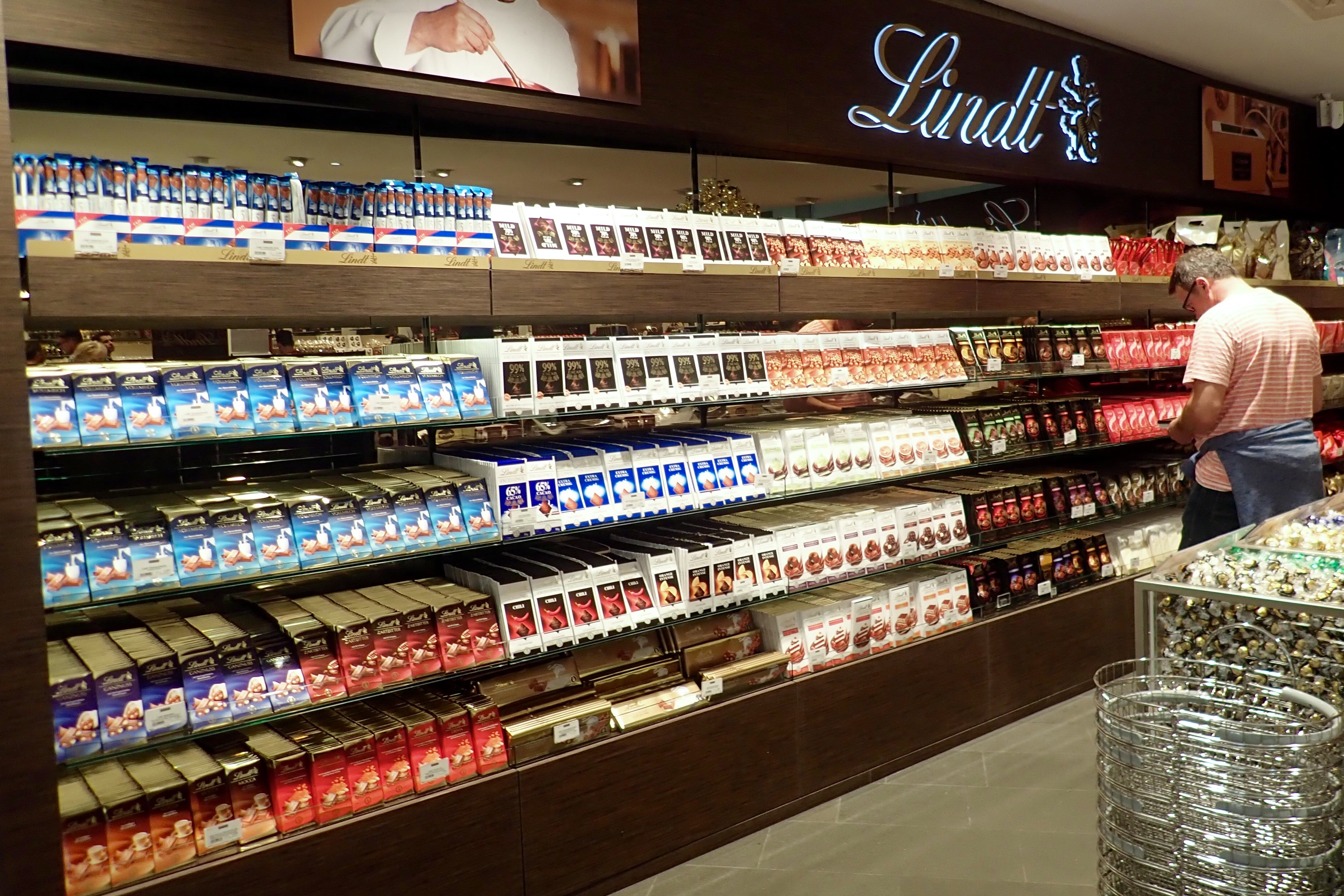
After the tour was over, we walked to the Lindt Chocolate Museum and store.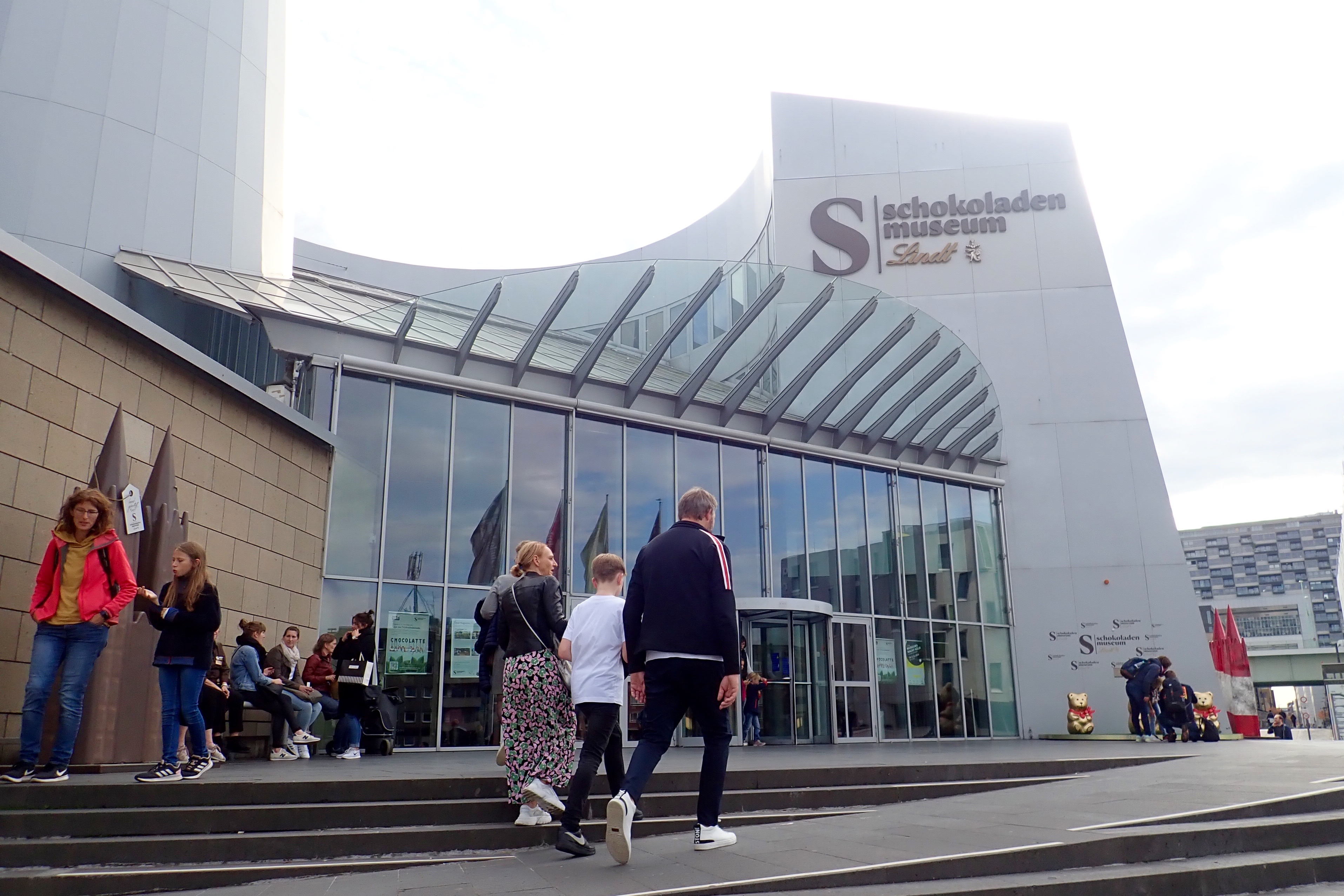
In the late afternoon, everyone was invited to the lounge for a farewell cocktail party with the captain, the hotel director and program director.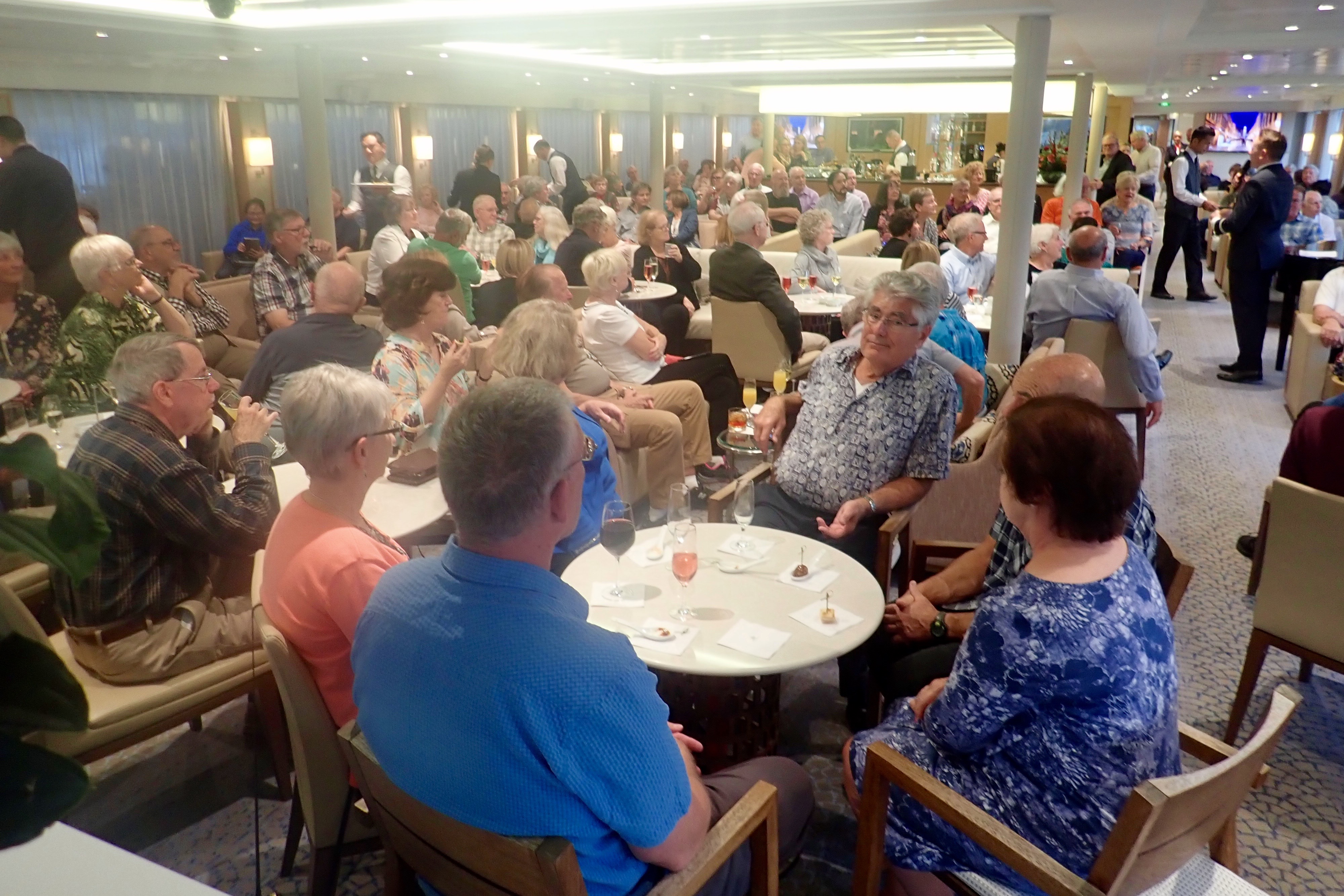
Instead of having dinner onboard, we went on an excursion called The Beer Culture of Cologne. Kolsch is the beer to have in Cologne – Kolsch can not be made anywhere else, each beer house has its own interpretation.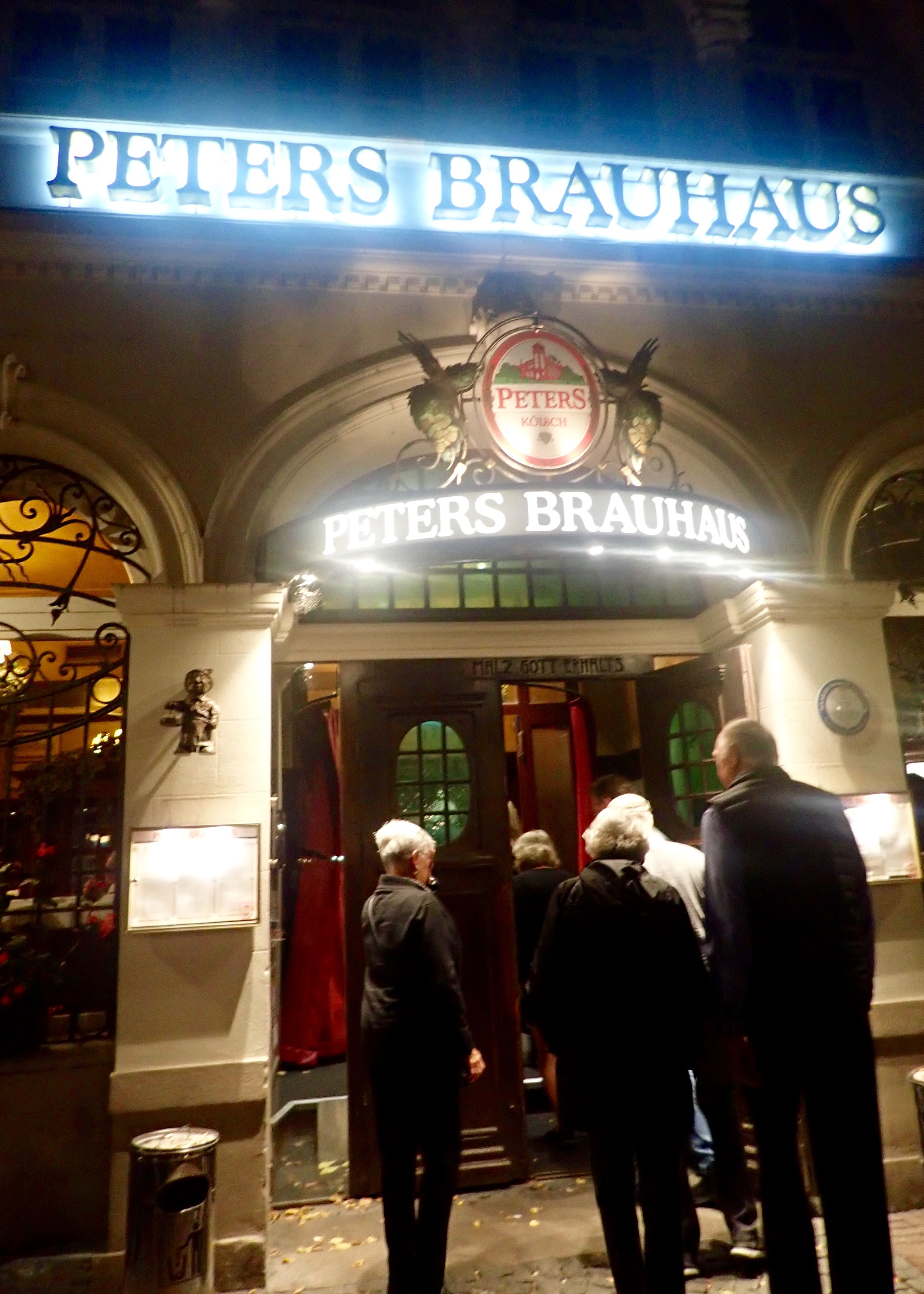
At our first stop, Peter’s Brauhaus, we got several small plates of German specialities along with the beer.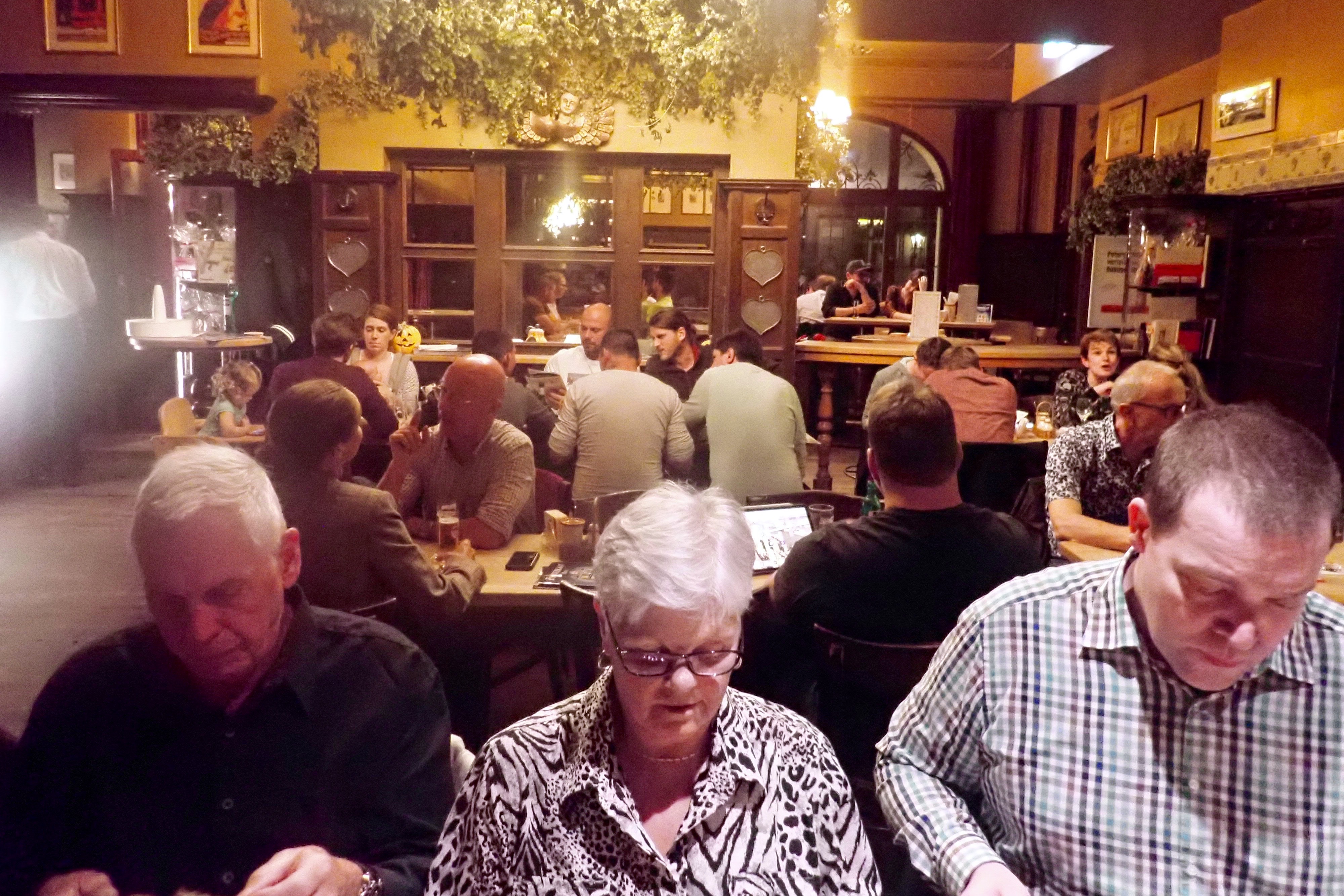
The glasses hold maybe 7 oz to make sure the beer stays cold until finished.
You never have to ask for another beer, they just keep coming until you put your coaster on top of the glass.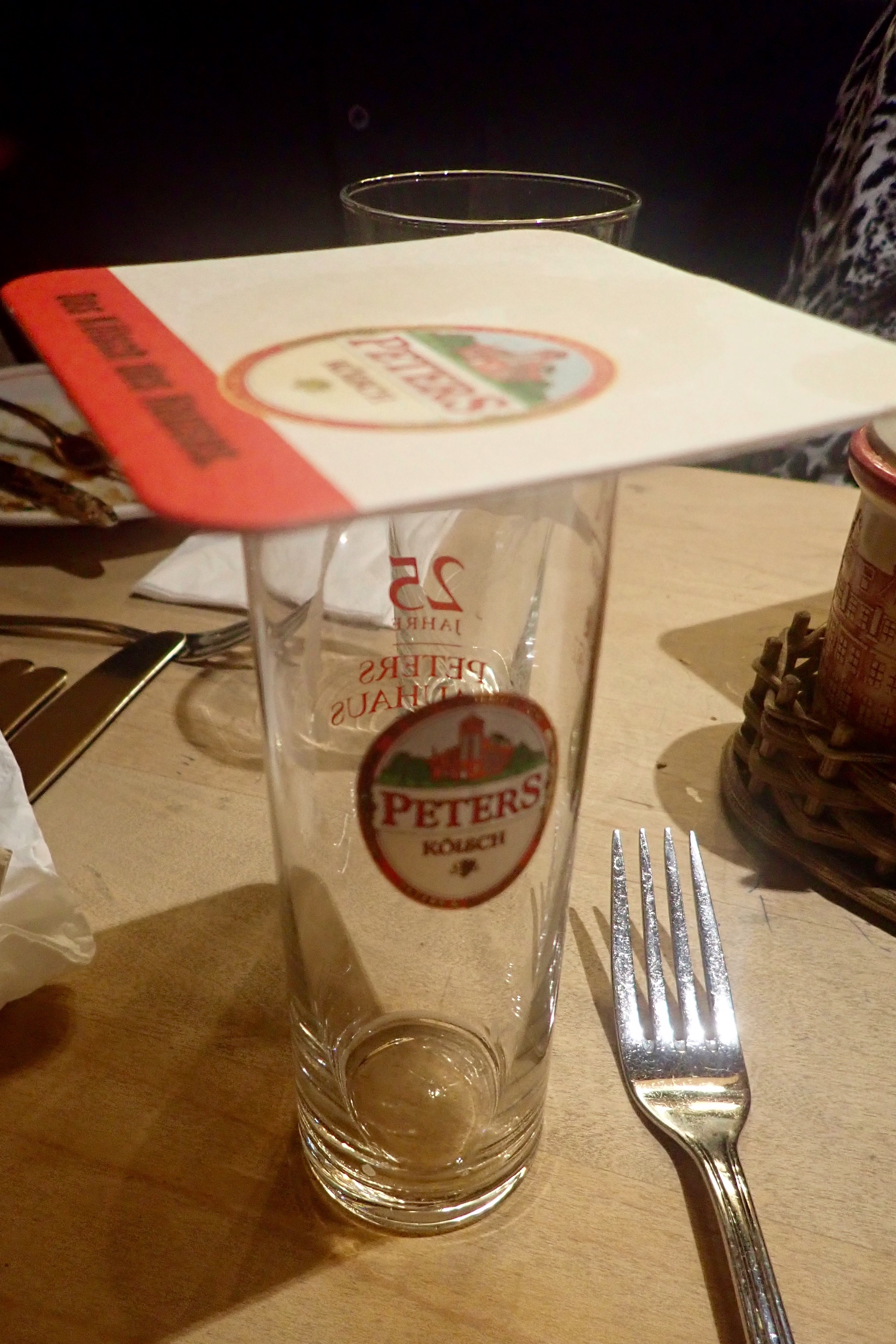
Second stop: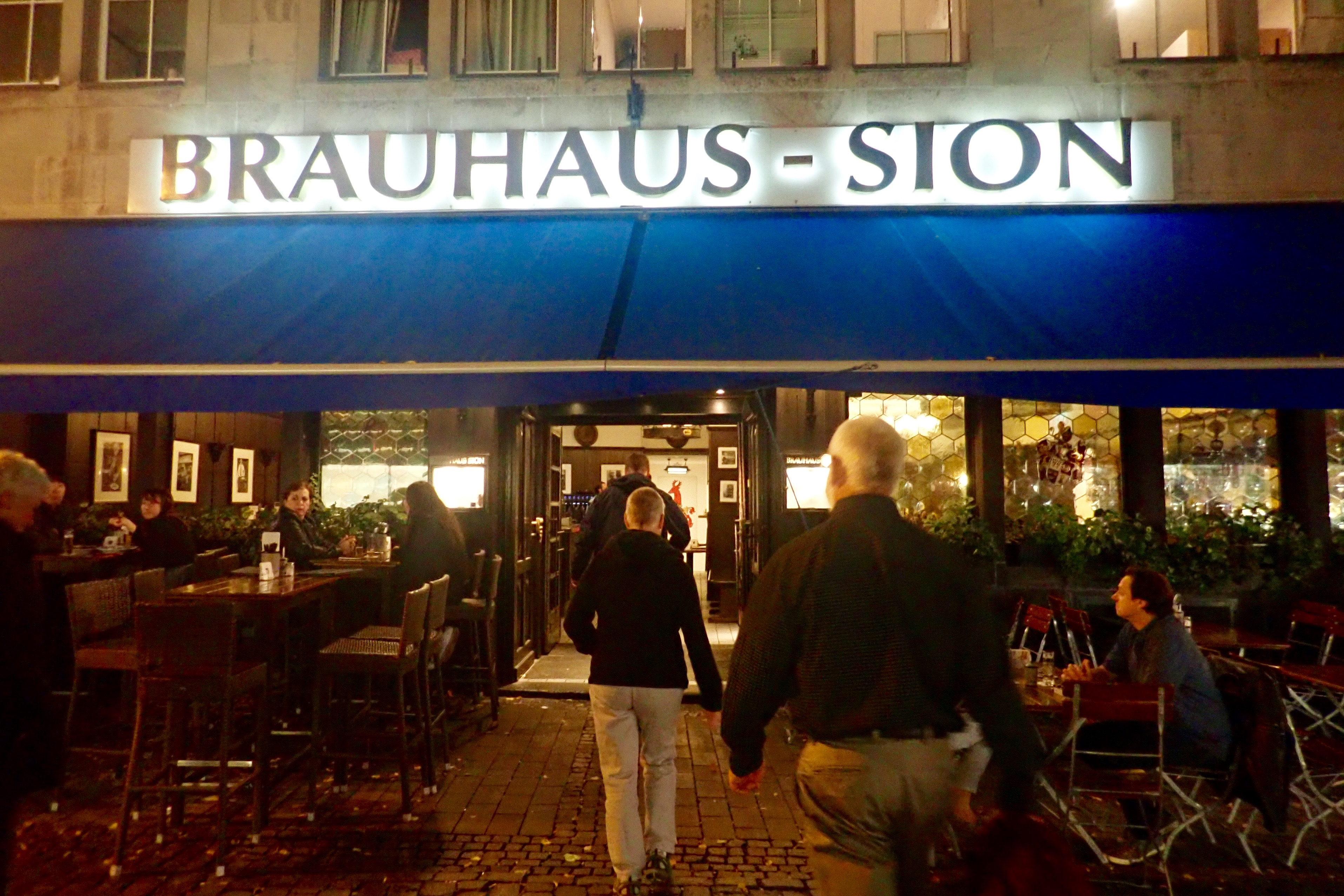
Note the beer carrier – the same style is used in every brauhaus: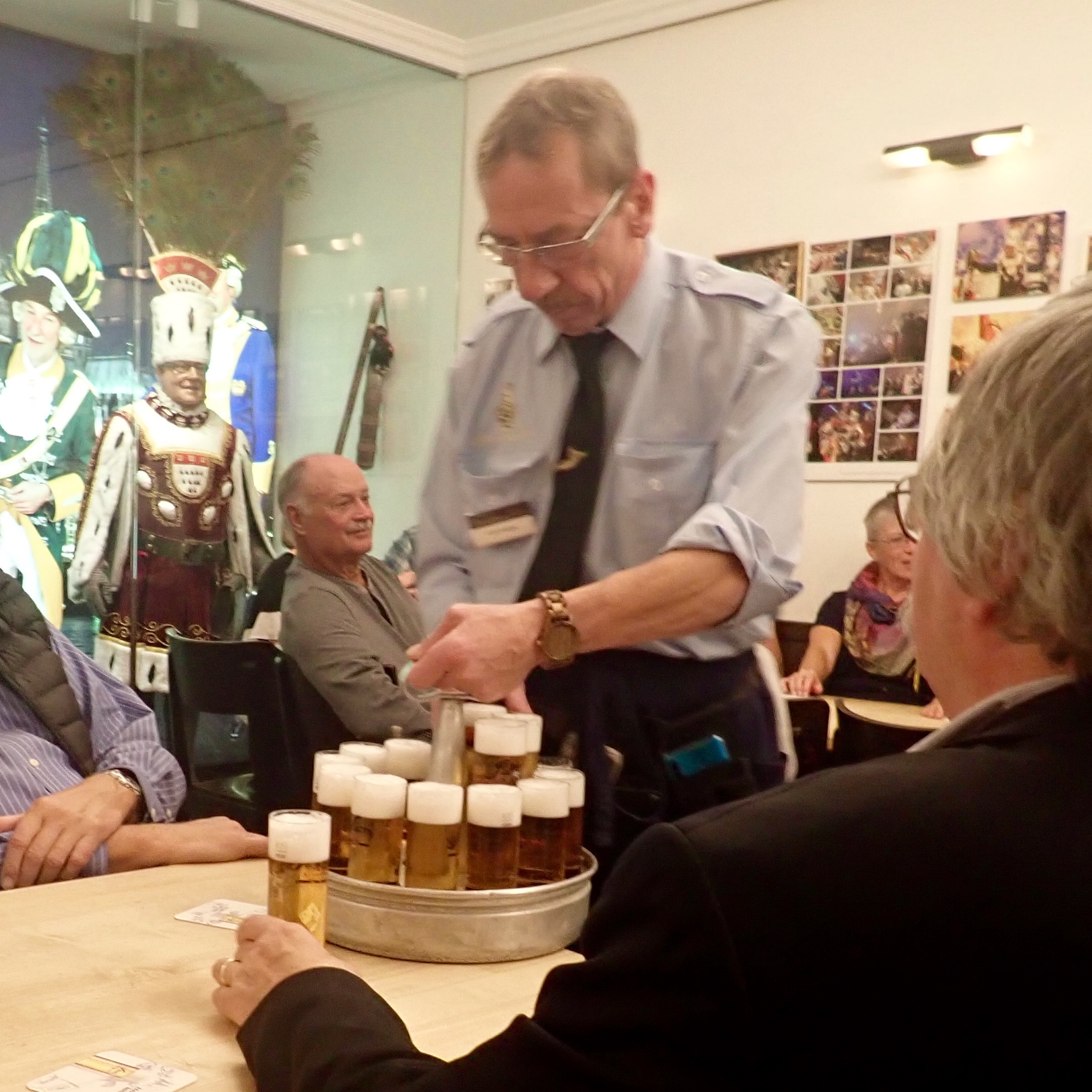
Stop #3 – Pfaffen Brauerei Aussehank (the last one!):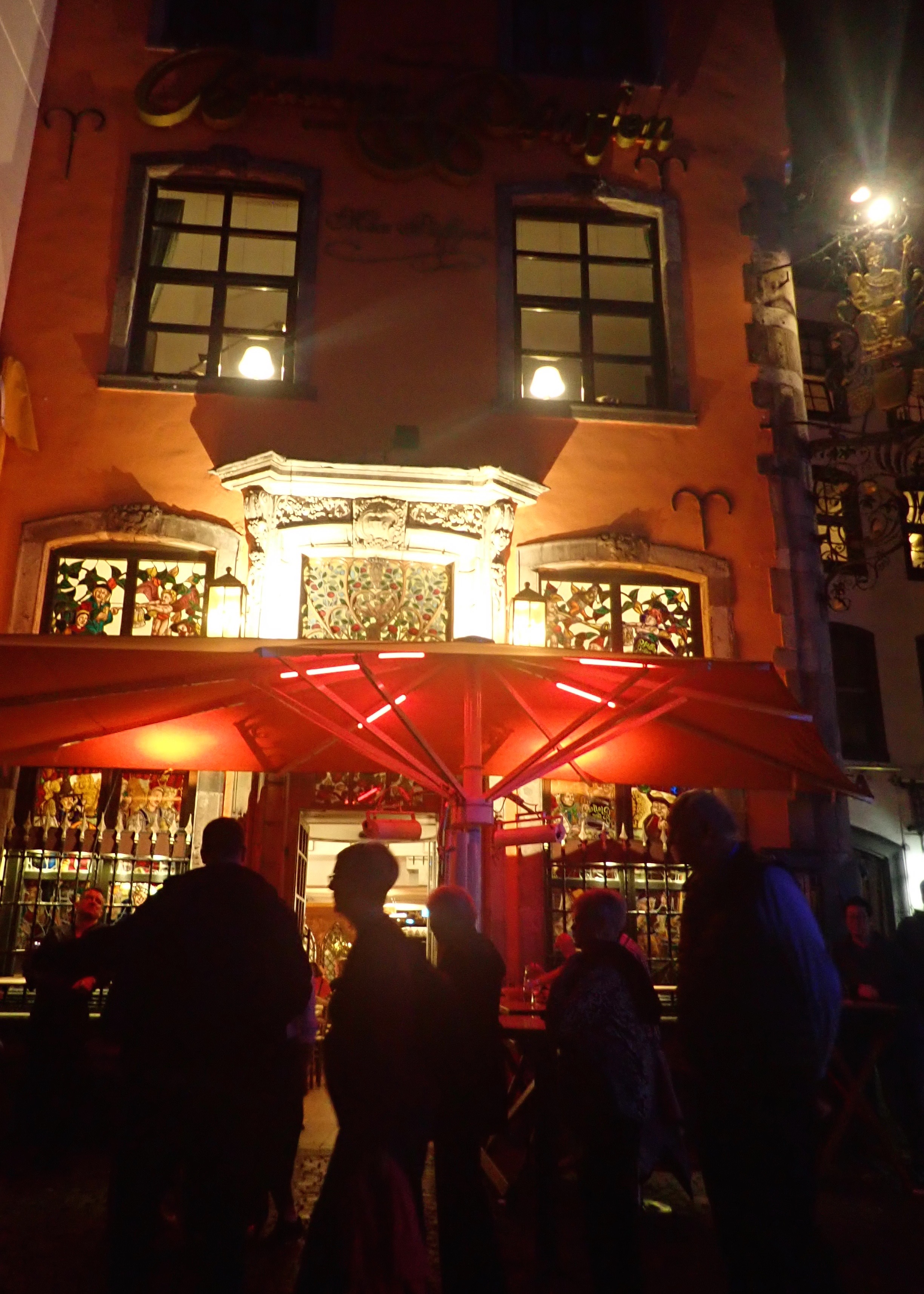
A view of the cathedral. We set sail in about a half hour.